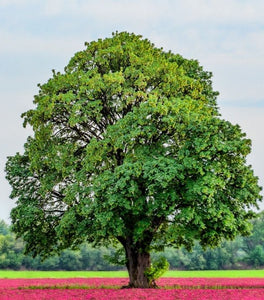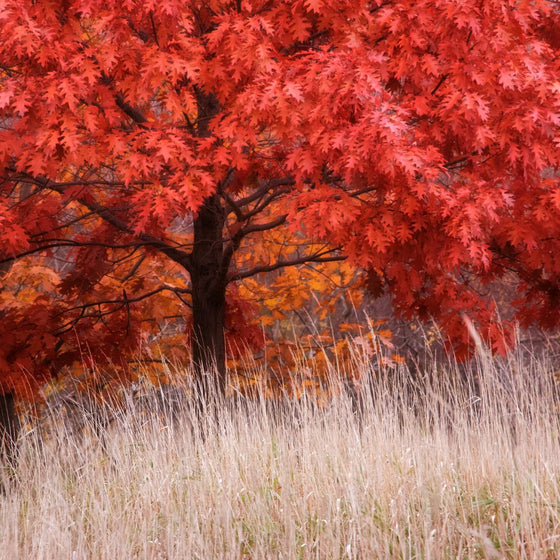


Images Depict Mature Plants
Red Oak Tree
Quercus rubra
Red Oak is a really strong choice when you want a native shade tree with the long-term value of an oak, but you also want something that gets moving a little faster. The broad canopy, glossy foliage, and fall color give it real ornamental value, and the wildlife benefit makes it even more worthwhile. For a large landscape where a tree should provide shade, beauty, and permanence, this is a smart one to plant.With its stunning fall color, hardiness to the elements and long lifespan, the Red Oak Tree works to bring an element of permanence into your life. Plant a Red Oak and watch it grow in life as you do.

20% OFF FOR EARTH DAY
Use Code EARTH20 At Checkout🌎
📦 Free shipping on orders over $99.
Delay shipping by leaving us a message at Checkout.
Share:


A Fast-Growing Native Oak with Shade and Fall Color
A Strong Native Shade Tree with Lasting Value
Red Oak is one of the most dependable native shade trees for larger residential landscapes. It offers the enduring strength and character of an oak, but with a faster growth rate than many homeowners expect, making it a smart choice for properties where shade, presence, and long-term value all matter.
This is the kind of tree that makes a landscape feel established. With its broad canopy, handsome branching, and substantial mature form, Red Oak brings real scale and permanence to the yard while still rewarding homeowners with visible growth along the way.
Glossy Green Foliage and Bold Autumn Color
During the growing season, Red Oak carries dark green, lustrous leaves with sharply pointed lobes, giving the canopy a crisp, classic oak texture. The foliage looks rich and refined through summer, helping the tree feel clean and substantial in the landscape.
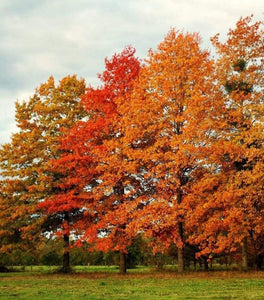
In fall, the color shifts into tones of red, reddish brown, and russet, bringing strong seasonal appeal before leaf drop. That autumn show is one of Red Oak’s biggest ornamental strengths and helps it stand out from large shade trees that offer little seasonal color.
A Broad Canopy for Meaningful Shade
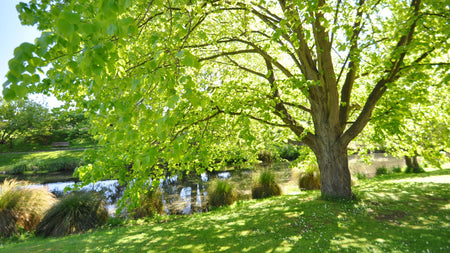
As Red Oak matures, it develops into a large, rounded to broad-spreading canopy tree that can cast significant shade over lawns, open seating areas, and larger planting spaces. That shade value is one of the reasons this tree remains such a favorite for homeowners with room to plant for the future.
Because it creates a real cooling cover over time, Red Oak works especially well in large yards and open landscapes where a substantial tree can improve both beauty and comfort. It is a practical tree, but it never feels merely functional.
An Excellent Choice for Lawns, Parks, and Large Properties
Red Oak is best used where it has room to develop its full structure. It performs beautifully as a lawn specimen, a park tree, or a major anchor in a spacious residential landscape where the tree’s size and shape can be fully appreciated.
It is also a strong fit for homeowners who want a native canopy tree with broader landscape meaning. Red Oak feels timeless and substantial, which makes it ideal for properties where the tree should add not just shade, but also identity and maturity to the overall setting.
Wildlife Value and Native Landscape Importance
As a native oak, Red Oak contributes important ecological value. Its acorns support birds, squirrels, and other wildlife, while the tree itself adds habitat, canopy structure, and native richness as it matures. That makes it a smart choice for homeowners who want a landscape that feels both beautiful and connected to its region.
For gardeners looking for a faster-growing native oak with broad shade, excellent fall color, and long-term landscape value, Red Oak is an outstanding choice. It combines strength, beauty, and environmental usefulness in one of the most trusted large shade trees available.
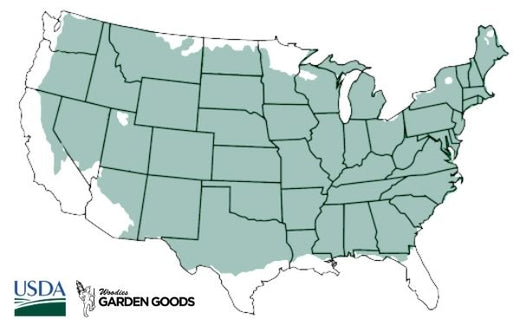
| Hardiness Zone: | 4-8 |
|---|---|
| Mature Height: | 50 to 75 feet |
| Mature Width: | 50 to 75 feet |
| Sunlight: | Full Sun |
| Soil | Well-drained soil; prefers acidic, sandy loam or loam |
| Water | Moderate; water regularly during establishment |
| Bloom Time / Color | Spring; inconspicuous yellow-green flowers |
| Ornamental Features | Lustrous dark green lobed leaves, rounded to broad-spreading canopy, red to reddish-brown fall color |
| Wildlife Value | Acorns support birds and mammals; strong native habitat value |
| Resistance (deer/disease/drought/etc.) | Tolerates some drought once established; sensitive to highly alkaline soil |
| Landscape Uses | Shade tree, lawn specimen, park tree, large residential landscape, native planting |
How to Care for Red Oak Tree
Be sure to read our planting instructions to ensure a healthy and happy Red Oak tree for years to come!
-v1775746023805.png?92x91)
How should I plant Red Oak Tree?
Plant Red Oak Tree in a location with full sun and plenty of room for its mature canopy. Dig a hole about twice as wide as the root ball and no deeper than the root ball itself, then set the tree so the root flare sits at or slightly above the surrounding soil level. This helps prevent the tree from being planted too deeply and supports better root establishment. Backfill with native soil, water thoroughly, and mulch around the root zone to help retain moisture and reduce weed competition. Keep mulch a few inches away from the trunk. Because Red Oak becomes a large, broad shade tree, it should be planted well away from structures and in a space where its canopy can develop naturally over time.
-v1775746042276.png?89x84)
How often should I water Red Oak Tree after planting?
Water Red Oak Tree deeply right after planting, then continue watering regularly during the establishment period. In most landscapes, that means a deep soaking once or twice per week depending on rainfall, temperature, and soil conditions. The goal is evenly moist soil while the tree develops a strong root system. Once established, Red Oak becomes more tolerant of short dry periods, but it still benefits from deep watering during extended drought, especially while young. Deep watering is much better than frequent shallow watering because it encourages stronger roots and better long-term stability.
-v1775746060756.png?90x89)
When should I fertilize Red Oak Tree?
Fertilize Red Oak Tree only if needed, especially if growth appears weak or a soil test suggests a nutrient issue. If feeding is necessary, early spring is usually the best time to apply a balanced fertilizer or compost to encourage steady growth without pushing excessive soft growth. Avoid unnecessary fertilization, especially in soils with a higher pH. Red Oak performs best in acidic soil and may struggle in strongly alkaline conditions, so correct siting and soil quality usually matter more than aggressive feeding. Good planting and consistent establishment care are often the most important factors.

When and how should I prune Red Oak Tree?
Red Oak Tree usually needs only structural pruning when young and occasional removal of dead, damaged, or awkwardly placed branches as it matures. Late winter is generally the best time to prune, before active spring growth begins and while the branching pattern is easier to see. Pruning should focus on improving long-term strength, clearance, and overall form rather than forcing the tree into an unnatural shape. Because Red Oak naturally develops into a handsome broad canopy tree, thoughtful light pruning is usually all that is needed to keep it healthy and attractive.