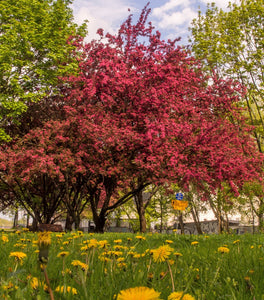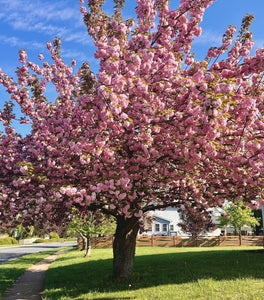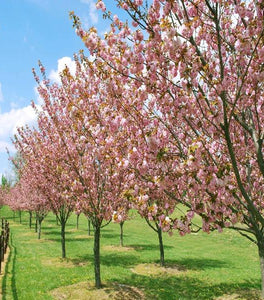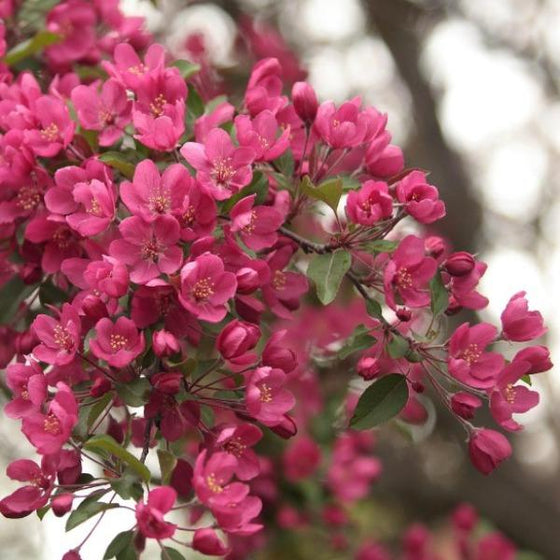
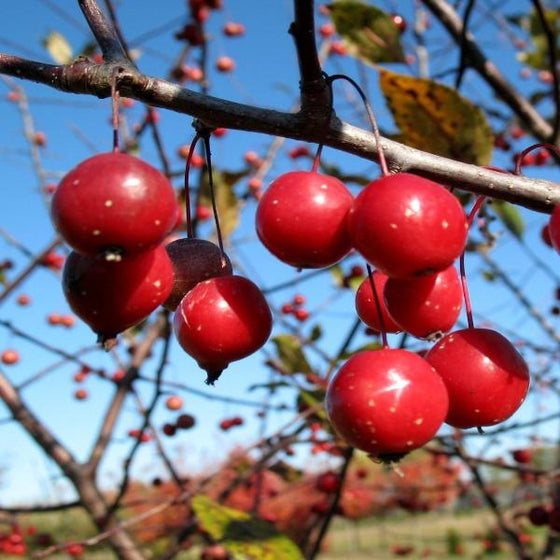


Images Depict Mature Plants
Prairifire Crabapple Tree
Malus x 'Prarie Fire'
Prairifire Crabapple is a really strong choice when you want a flowering tree that keeps working after spring bloom is over. I like it because the deep-pink flowers are showy, the reddish new foliage adds color, and the dark fruit keeps it interesting later in the season. It is a great fit for homeowners who want a front-yard ornamental with strong four-season value and a little less worry.

15% OFF WITH CODE PLANTING15
Save 15% Off Your Entire Order! Limited time.
📦 Free shipping on orders over $99.
Delay shipping by leaving us a message at Checkout.
Share:


Deep Pink Spring Blooms and Four-Season Color
A Flowering Crabapple With Bold Spring Bloom
Prairifire Crabapple Tree is a beautiful ornamental choice for homeowners who want more than just a short spring show. In early spring, rose-red buds open into rich deep pink flowers that cover the tree and create a vivid display in the landscape. It has all the charm people love in a flowering crabapple, but with a stronger, more colorful look than many standard selections.
That spring bloom is one of the biggest reasons people plant it in front yards, entry gardens, lawn islands, and focal-point beds. When placed where the flowers can be appreciated from windows, patios, or the street, Prairifire Crabapple gives the landscape a bright, cheerful, and established look that feels instantly rewarding.
Colorful New Foliage Keeps the Tree Interesting After Flowering
One of the strongest reasons to choose Prairifire Crabapple is that it stays ornamental after the petals are gone. New leaves emerge in reddish to purple-bronze tones before maturing to a deeper green through the season. That color transition gives the tree more visual impact than a flowering tree that fades into the background once bloom time ends.
This changing foliage also makes Prairifire especially useful in landscape design. It pairs beautifully with evergreens, dark mulch, stone, and lighter shrubs or perennials. It can serve as a specimen on its own or help create contrast and depth in a mixed planting. For homeowners who want a flowering tree that continues to contribute after spring, this is a very strong choice.
A Compact Ornamental Tree for Front Yards and Focal Planting
Prairifire Crabapple Tree is especially practical for residential landscapes because it offers a strong impact without becoming a massive shade tree. Its upright habit when young matures into a rounded canopy, giving it enough presence to anchor a front-yard design while still staying manageable for small to medium properties.
That makes it an excellent fit for lawn islands, front-yard focal points, ornamental borders, and foundation-adjacent planting areas. It is large enough to feel like a true tree, but not so large as to overwhelm the home or surrounding beds. For homeowners looking for a flowering specimen tree with year-round character, Prairifire is an outstanding option.
Dark Fruit and Four-Season Interest Add Lasting Value
Prairifire Crabapple offers more than flowers and foliage. After bloom, it develops small, dark red to red-purple ornamental fruit that can persist well into the season, keeping the tree visually active after summer. That fruit adds another layer of value and helps make the tree feel lively long after the spring bloom has finished.
This is part of what makes Prairifire such a rewarding planting. It does not peak once and disappear. Instead, it brings deep pink spring bloom, colorful new growth, ornamental fruit, and attractive branch structure over multiple seasons. For homeowners who want a tree that keeps giving year-round, Prairifire is a smart and versatile choice.
Easy-Care Performance With the Right Placement
Prairifire Crabapple performs best in full sun and well-drained soil. It is happiest where it has enough air movement and room to develop its natural, rounded canopy. It is also widely valued for strong disease resistance, which makes it a particularly appealing crabapple for homeowners who want beauty without constant maintenance headaches.
Once established in the right place, it becomes a dependable flowering ornamental with strong visual appeal and relatively simple care. For homeowners who want a tree with deep-pink spring blooms, colorful new foliage, ornamental fruit, and a four-season presence, the Prairifire Crabapple Tree is one of the strongest choices available.
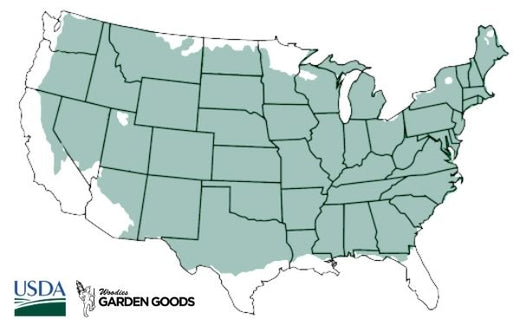
| Hardiness Zone: | 4-8 |
|---|---|
| Mature Height: | 15 to 20 feet |
| Mature Width: | 15 to 20 feet |
| Sunlight: | Full Sun |
| Bloom Time / Color | Spring; deep pink flowers from rose-red buds |
| Soil Condition: | Well-drained soil |
| Water Requirements: | Regular moisture during establishment; average moisture once established |
| Ornamental Features | Reddish new foliage, dark green mature leaves, dark red-purple fruit, rounded form |
| Wildlife Value | Ornamental fruit can provide seasonal bird interest |
| Resistance (deer/disease/drought/etc.) | Good disease resistance, easy care, and urban tolerance |
| Landscape Uses | Specimen tree, front yard focal point, lawn island, ornamental border tree, foundation accent |
How to Care for Prairifire Crabapple Tree
Be sure to read our planting instructions to ensure a healthy and happy Prairifire Crabapple Tree for years to come!

How should I plant Prairifire Crabapple Tree?
Plant Prairifire Crabapple Tree in full sun in well-drained soil where it has room to develop its rounded canopy. Dig a hole two to three times as wide as the root ball but no deeper than the root ball itself, and set the tree so the root flare sits at or slightly above grade. Choose a site with enough space away from buildings or crowded shrub masses so the tree can mature naturally. This tree works especially well in front yards, lawn islands, and focal-point beds where the spring flowers, foliage color, and ornamental fruit can be appreciated throughout the season. It is best used where its full form can develop and where it has enough room to function as a true specimen.
-v1774621747992.png?89x84)
How often should I water Prairifire Crabapple Tree after planting?
Water deeply right after planting and keep the soil evenly moist during the establishment period. Deep watering is more helpful than frequent shallow watering because it encourages stronger root development and helps the tree settle in successfully during its first growing season. Once established, Prairifire Crabapple prefers average moisture and should not sit in soggy soil. Mulch helps regulate soil temperature and moisture, especially during hot or dry weather. During drought periods, extra watering may be needed to keep the tree healthy and looking its best.
-v1774621766855.png?90x89)
When should I fertilize Prairifire Crabapple Tree?
Prairifire Crabapple usually does not need heavy feeding. In most landscapes, a light application of balanced slow-release fertilizer in early spring is enough if the tree appears to need support. Good soil, proper watering, and mulch are often more important than frequent fertilization. Too much fertilizer can encourage overly soft growth and reduce the balanced ornamental habit that makes this tree so useful. A moderate approach is usually best for a flowering ornamental grown mainly for bloom, foliage, and structure.

When and how should I prune Prairifire Crabapple Tree?
Prairifire Crabapple usually needs only light pruning. Remove dead, damaged, or crossing branches and preserve the tree’s natural rounded structure rather than trying to force it into a tighter shape. If shaping is needed, prune carefully during dormancy or soon after flowering, depending on the goal. The main objective is to maintain good structure, healthy air circulation, and a clean ornamental form without over-pruning a tree that already has strong natural beauty.