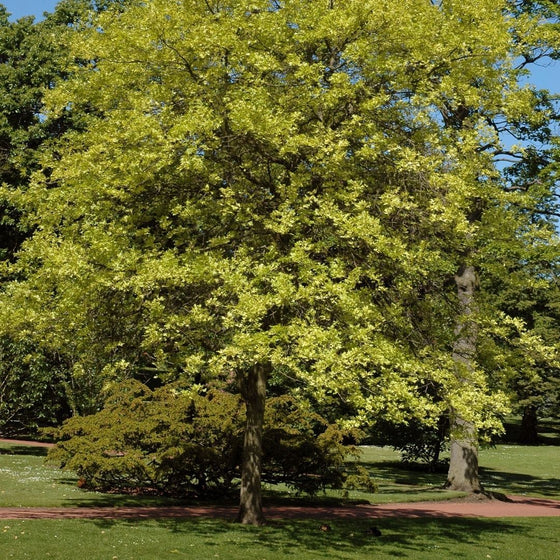
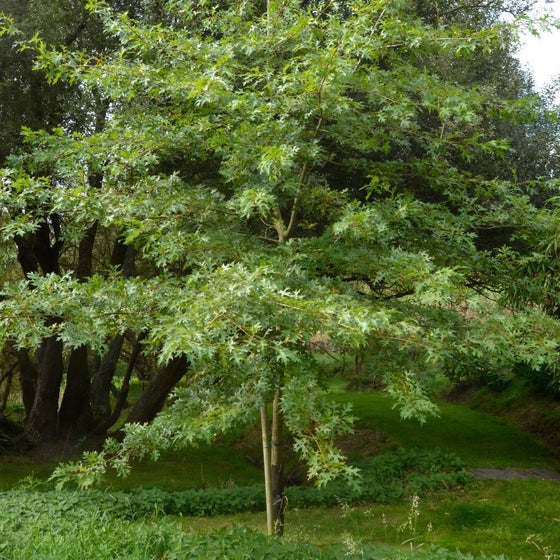


Images Depict Mature Plants
Pin Oak
Quercus palustris
Pin Oak is a great tree when you want the long-term strength of an oak but also want something that starts making an impact sooner. It grows faster than a lot of people expect, throws good shade, and has a really handsome branching habit that gives it more character than a basic shade tree. Add in the red fall color and wildlife value, and it is a smart choice for larger properties where a tree should really earn its place.

15% OFF WITH CODE PLANTING15
Save 15% Off Your Entire Order! Limited time.
📦 Free shipping on orders over $99.
Delay shipping by leaving us a message at Checkout.
Share:


A Fast-Growing Oak with Strong Shade and Fall Color
A Classic Shade Tree with Faster Growth
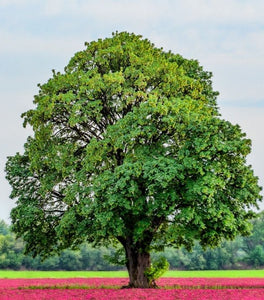
Pin Oak is one of the most popular oak trees for residential landscapes because it offers the long-term value of an oak with a growth rate that is quicker than many homeowners expect. It develops into a tall, handsome shade tree with a straight trunk and a strong presence that makes it ideal for large lawns, open yards, and expansive planting areas.
For homeowners who want a tree that feels substantial and lasting, Pin Oak is an excellent choice. It has the strength and character people associate with oaks, but it gets established quickly enough to make a visible difference in the landscape sooner.
Glossy Green Foliage and Rich Fall Color
During the growing season, Pin Oak carries glossy, dark green leaves with deeply cut lobes that give the canopy a clean, refined texture. The foliage looks crisp and handsome in summer, helping the tree read as polished rather than coarse.
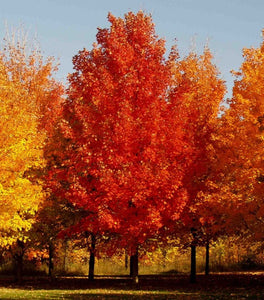
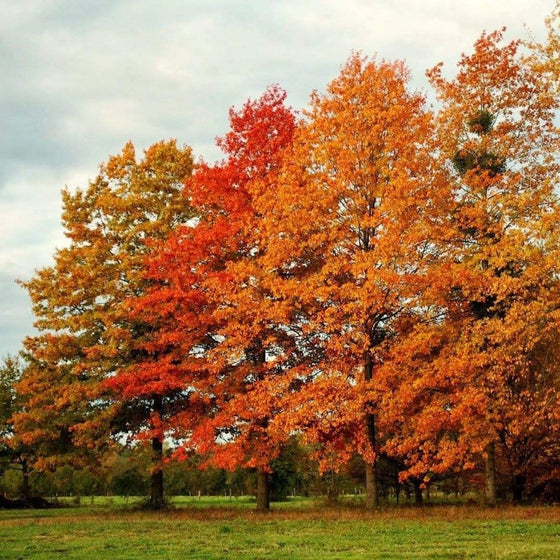
In fall, the leaves turn shades of red, bronze, and russet, adding a strong seasonal display before winter. That autumn color is one of the reasons Pin Oak remains such a reliable landscape favorite. It offers not just shade, but a real seasonal moment that makes the tree feel dynamic and rewarding.
A Distinctive Branching Pattern
One of the most recognizable features of Pin Oak is its branching habit. Younger trees often show a strongly pyramidal form, with upper branches angled upward, middle branches more horizontal, and lower branches drooping downward. This creates a graceful, layered silhouette that gives the tree more personality than a generic round-canopied shade tree.
That unique form makes Pin Oak especially appealing where there is room for the full structure to be appreciated. In the right setting, it becomes more than a shade tree. It becomes a true landscape feature with a classic, elegant outline.
Excellent for Lawns, Parks, and Large Residential Landscapes
Pin Oak is best used where it has room to mature into a broad canopy. It works beautifully as a lawn specimen, a large shade tree for open residential spaces, or a long-term anchor in parks, golf-course-style landscapes, and other expansive plantings where scale matters.
Because it grows into a substantial tree, it provides homeowners with a real return on their planting decision over time. It can cool a yard, define a landscape, and add lasting property value while bringing the beauty and permanence that mature oaks are known for.
A Tough Native Tree with Wildlife Value
Pin Oak is native to much of the eastern and central United States and brings ecological value as well as ornamental appeal. Its acorns support wildlife, and its branching structure offers habitat value as the tree matures. It also tolerates a range of site conditions better than some homeowners expect, especially when planted in full sun with suitable soil.
For gardeners who want a fast-growing native shade tree with strong fall color, long-term durability, and classic oak character, Pin Oak is an easy recommendation. It is a tree that brings immediate promise and lasting landscape presence.
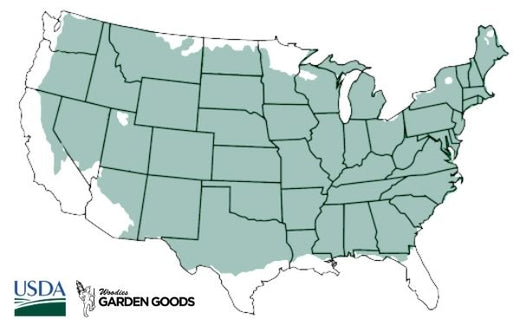
| Hardiness Zone: | 4-8 |
|---|---|
| Mature Height: | 60 to 80 Feet |
| Mature Width: | 40 to 50 Feet |
| Sunlight: | Full sun |
| Soil | Well-drained soil; prefers acidic soil and tolerates moist conditions |
| Water | Moderate; water well until established |
| Bloom Time / Color | Spring; inconspicuous yellow-green flowers |
| Ornamental Features | Glossy green deeply lobed leaves, pyramidal youth form, red to russet fall color, distinctive branching habit |
| Wildlife Value | Acorns support wildlife; provides habitat and shade |
| Resistance (deer/disease/drought/etc.) | Mild deer resistance; tolerates wet soils and some drought once established |
| Landscape Uses | Shade tree, lawn specimen, park tree, large residential landscape, native planting |
How to Care for Pin Oak
aBe sure to read our planting instructions to ensure a healthy and happy Pin Oak for years to come!
-v1775680871234.png?92x91)
How should I plant Pin Oak?
Plant Pin Oak in a location with full sun and plenty of room for its mature canopy. Dig a hole about twice as wide as the root ball and no deeper than the root ball itself, then set the tree so the root flare sits at or slightly above the surrounding soil level. This helps prevent planting too deep, which is one of the most common causes of decline in newly planted trees. Backfill with native soil, water thoroughly, and apply mulch around the root zone to help hold moisture and reduce weed competition. Keep mulch a few inches away from the trunk. Because Pin Oak becomes a very large shade tree, it should be planted well away from structures and in a space where the branching pattern and canopy can develop naturally over time.

How often should I water Pin Oak after planting?
Water Pin Oak deeply right after planting, then continue watering regularly during the establishment period. In most landscapes, that means a deep soaking once or twice per week depending on rainfall, heat, and soil type. The goal is to keep the root zone evenly moist while the tree settles in and begins producing new roots. Once established, Pin Oak becomes more tolerant of both periodic moisture and drier conditions, but it still benefits from deep watering during extended drought. Deep watering is far better than frequent shallow watering because it encourages stronger root development and improves long-term stability.
-v1775680906350.png?90x89)
When should I fertilize Pin Oak?
Fertilize Pin Oak only if the tree appears to need it or if a soil test shows a nutrient issue. If feeding is necessary, early spring is usually the best time, using a balanced fertilizer or compost to support steady growth without pushing overly soft new growth. Avoid unnecessary fertilization, especially in soils with a high pH. Pin Oak performs best in acidic soil and can develop chlorosis in alkaline conditions, so site quality and soil chemistry matter more than heavy feeding. In many cases, proper planting and watering are the most important factors for success.

When and how should I prune Pin Oak?
Pin Oak usually needs only structural pruning when young and occasional removal of dead, damaged, or awkwardly placed branches as it matures. Late winter is generally the best time to prune, before active spring growth begins and while the tree’s structure is easier to see. Because the tree has a naturally distinctive branching pattern, pruning should focus on clearance, strength, and long-term form rather than trying to force a different shape. If lower branches become an issue near drives or walkways, selective pruning can help raise the canopy while preserving the tree’s graceful character.