Images Depict Mature Plants
Pocomoke Crape Myrtle
Lagerstroemia indica 'Pocomoke'
Pocomoke is one of the best small-space crape myrtles out there. It gives homeowners that long summer bloom season and hot-weather toughness they want from a crape myrtle, but in a size that fits neatly into borders, patio pots, and tighter foundation beds without becoming a maintenance project.

15% OFF WITH CODE PLANTING15
Save 15% Off Your Entire Order! Limited time.
📦 Free shipping on orders over $99.
Delay shipping by leaving us a message at Checkout.
Share:



Big Summer Color in a True Dwarf Crape Myrtle
A compact crape myrtle with outsized flower power
Pocomoke Crape Myrtle is a true dwarf variety that delivers the classic beauty of crape myrtle in a much more manageable size. It stays naturally compact and mounded, making it an excellent fit for homeowners who want vibrant summer blooms without dedicating space to a large shrub or small tree. This is the kind of flowering plant that has a strong seasonal impact in tight spaces while still feeling refined and intentional.
Rosy-pink blooms brighten the hottest part of summer
One of the biggest strengths of Pocomoke Crape Myrtle is its long bloom season. Rich, rosy-pink flower clusters appear in summer and keep the landscape lively well into late summer and often early fall. When many other plants begin to fade in the heat, this compact crape myrtle steps up with a fresh wave of color that keeps borders, entry plantings, and patio containers feeling energetic.
Attractive foliage and seasonal color add even more interest
The flowers may be the headline feature, but the foliage adds to the show. New growth often emerges with maroon or bronze tones before maturing to glossy green, and the leaves can take on attractive reddish-bronze fall color as the season shifts. That layered interest makes Pocomoke more than just a blooming shrub. It is a compact ornamental that contributes across multiple seasons.
Ideal for containers, borders, and small-space landscapes
Because of its dwarf size, Pocomoke Crape Myrtle is especially useful in foundation beds, sunny borders, edging schemes, and decorative patio containers. It can be used as a single accent, repeated in a small mass planting, or combined with evergreens, ornamental grasses, and perennials for a long-lasting color contrast. Homeowners who want the look of crape myrtle on a smaller scale often find this variety especially easy to work into existing landscapes.
Heat-loving, drought-tolerant, and relatively easy to grow
Pocomoke performs best in full sun and well-drained soil, where it develops the strongest flowering and the cleanest habit. Once established, it handles heat and periods of dryness well, and it is also noted for good resistance to common crape myrtle issues such as powdery mildew. Deer resistance is often listed for this variety, but the most accurate way to describe it is as relatively or moderately deer-resistant rather than fully deer-proof in high-pressure browsing areas.
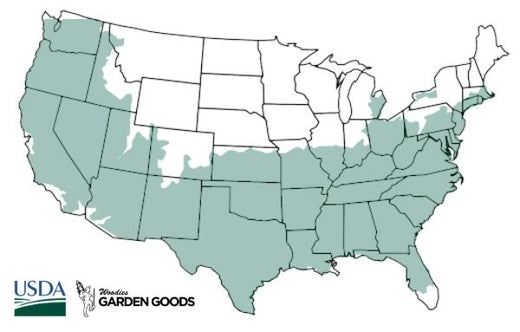
| Hardiness Zone: | 6-9 |
|---|---|
| Mature Height: | 2 to 5 feet |
| Mature Width: | 3 to 5 feet |
| Sunlight: | Full sun |
| Soil | Well-drained soil |
| Water | Moderate during establishment; drought tolerant once established |
| Bloom Time / Color | Summer into early fall; rosy-pink flowers |
| Foliage: | New growth may emerge maroon-bronze, maturing to green with bronze-red fall color |
| Ornamental Features | Dwarf habit, long bloom season, vibrant pink flowers, compact mounded form |
| Wildlife Value | Pollinator-friendly flowers that attract bees and butterflies |
| Resistance (deer/disease/drought/etc.) | Relatively deer resistant, drought tolerant once established, good powdery mildew resistance |
| Landscape Uses | Containers, borders, foundation beds, small gardens, accent plantings, mass plantings |
How to Care for Pocomoke Crape Myrtle
Be sure to read our planting instructions to ensure a healthy and happy Crape Myrtle Pocomoke Shrub for years to come!
-v1745961657471.png?92x91)
How should I plant Pocomoke Crape Myrtle?
Plant Pocomoke Crape Myrtle in full sun and well-drained soil so it can develop strong flowering and a compact, healthy habit. Dig a hole about twice as wide as the root ball and no deeper than the root ball itself, then set the plant so the top of the root ball sits level with the surrounding soil. Backfill with the native soil, water thoroughly, and add a light layer of mulch around the base to help conserve moisture and regulate soil temperature. If you are planting this dwarf crape myrtle in a container, choose a pot with good drainage and use a quality potting mix that does not stay soggy.
-v1745961716091.png?89x84)
How often should I water Pocomoke Crape Myrtle after planting?
Water Pocomoke Crape Myrtle deeply right after planting, then keep the soil evenly moist during the first growing season while the roots establish. In most landscapes, that means watering about once or twice per week depending on rainfall, heat, and soil drainage. Once established, this compact crape myrtle becomes more drought tolerant and usually needs supplemental water only during hot, extended dry spells. Container-grown plants will dry out faster than those planted in the ground, so they often need more frequent monitoring during summer.
-v1745961737703.png?90x89)
When should I fertilize Pocomoke Crape Myrtle?
Fertilize Pocomoke Crape Myrtle in early spring as new growth begins, using a balanced slow-release fertilizer for flowering shrubs. A moderate spring feeding supports healthy foliage and encourages strong summer blooming without forcing weak, overly lush growth. Avoid overfertilizing, especially with high-nitrogen products, because that can reduce flowering and push excessive leaf growth. In average garden soil, one thoughtful feeding in spring is often enough for the season.

When and how should I prune Pocomoke Crape Myrtle?
Prune Pocomoke Crape Myrtle in late winter or very early spring before new growth begins. Since crape myrtles bloom on new wood, this timing allows you to shape the plant and remove dead or weak stems without sacrificing the coming season’s flowers. This dwarf variety usually needs only light pruning to maintain its natural mounded form. Focus on removing damaged branches and making small shaping cuts rather than cutting the plant back hard, since severe pruning is unnecessary for a compact variety like Pocomoke.