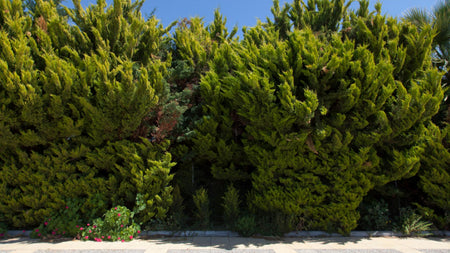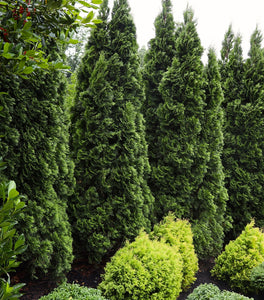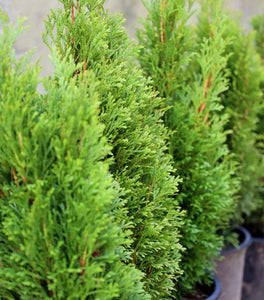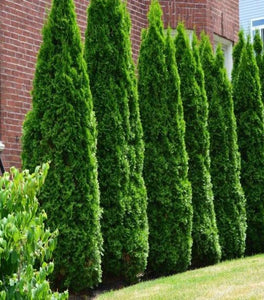
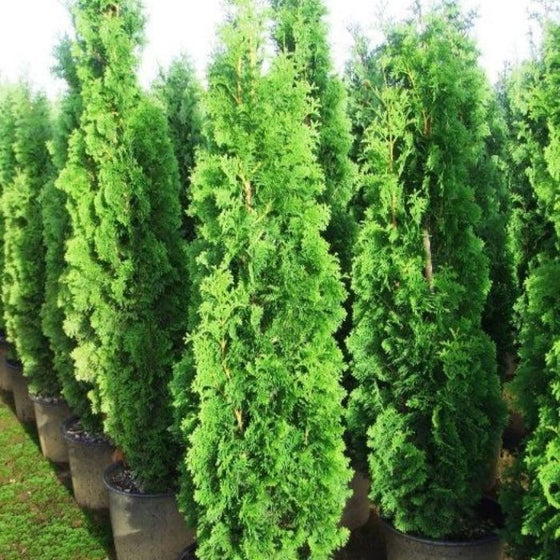
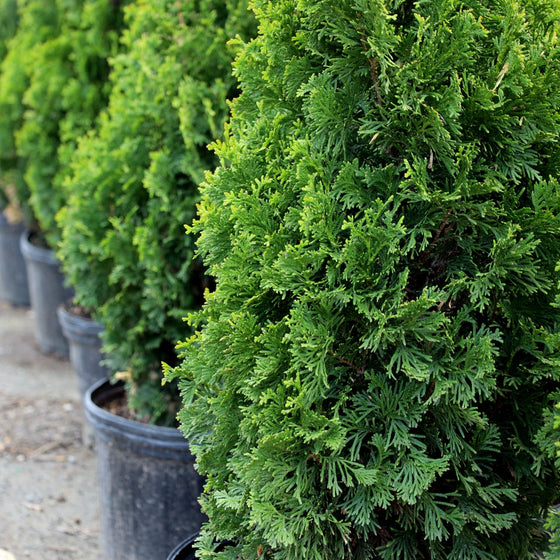
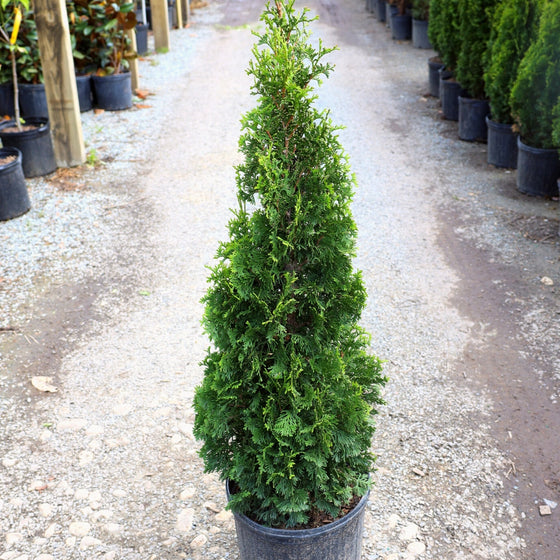
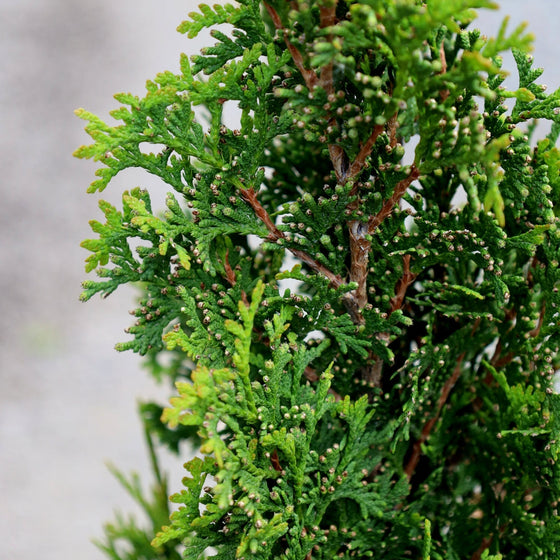


Images Depict Mature Plants
DeGroot's Spire Arborvitae
Thuja occidentalis 'Degroot's Spire'
DeGroot's Spire Arborvitae is one of my favorite solutions for homeowners who need privacy but do not have room for a wide evergreen hedge. The narrow upright habit makes it incredibly useful between buildings, along side yards, and anywhere a planting needs height without taking over the space. I also like that it brings evergreen structure with a little extra texture, so it feels more interesting than a standard screen plant while still doing the practical work you need it to do.

15% OFF WITH CODE PLANTING15
Save 15% Off Your Entire Order! Limited time.
📦 Free shipping on orders over $99.
Delay shipping by leaving us a message at Checkout.
Share:

Narrow Evergreen Privacy for Tight Landscape Spaces
Tall, narrow form that fits where wider evergreens cannot
DeGroot's Spire Arborvitae is one of the most useful evergreen choices for homeowners who want height and privacy without giving up too much width. Its narrow pyramidal to columnar habit makes it ideal for side yards, property edges, foundation corners, and planting strips between structures where broader evergreens would quickly become crowded. This is the kind of plant that solves a real design problem while still looking refined and intentional in the landscape.
That vertical habit also makes it valuable as an architectural accent. It can frame an entry, anchor the corner of a bed, or create rhythm when planted in matched pairs or repeated intervals. In places where space is limited but the planting still needs to feel substantial, DeGroot's Spire brings a strong evergreen presence without overwhelming walkways, windows, patios, or neighboring shrubs.
Textured evergreen foliage with year-round garden structure
The foliage on DeGroot's Spire Arborvitae is another major reason gardeners choose it. Instead of looking flat or overly rigid, it has a slightly twisted, textured quality that gives the plant more personality and visual depth. The rich green foliage stays attractive through the growing season and often takes on a bronzy or purplish cast in winter, adding another layer of seasonal interest without losing its evergreen value.
Because it holds its foliage year-round, this arborvitae keeps working in every season. It provides privacy in summer, structure in winter, and a dependable evergreen backdrop for perennials, flowering shrubs, and deciduous trees year-round. Homeowners who want a narrow evergreen that feels a little more distinctive than standard hedge material often find DeGroot's Spire especially appealing for that reason.
A smart privacy and screening plant for smaller properties
DeGroot's Spire Arborvitae is especially effective when privacy is needed, but the planting area is limited. It can be used as a narrow hedge, a soft screen between buildings, or a series of vertical accents along a property line. Because it stays relatively slim compared with many other arborvitae, it is often a better fit for tighter residential lots where every foot of bed space matters.
Its slower-to-moderate growth also makes it easier to manage long-term. Instead of outgrowing its spot quickly, it develops into a tall, tidy evergreen that can be left natural or lightly shaped for a more tailored effect. That makes it a practical option for homeowners who want privacy and evergreen presence without constant heavy pruning or the worry that a wider plant will eventually become too large for the site.
Dependable performance with thoughtful siting and simple care
DeGroot's Spire Arborvitae performs best in full sun to part shade with reasonably moist, well-drained soil. Like other arborvitae, it appreciates consistent moisture during establishment and tends to look its best when not exposed to prolonged drought. Given the right start, it becomes a durable, cold-hardy evergreen that asks for relatively little beyond good placement and occasional maintenance.
It can also tolerate light shaping if a more defined column is desired, though many gardeners prefer to let the plant keep its natural textured outline. For homeowners seeking a narrow evergreen screen that is reliable, elegant, and useful in tight spaces, DeGroot's Spire offers a strong balance of beauty, practicality, and long-term landscape value.

| Hardiness Zone | 3-7 |
|---|---|
| Mature Height | 10 to 20 Feet |
| Mature Width | 4 to 5 Feet |
| Sunlight | Full sun to part shade |
| Soil Conditions | Moist, well-drained soil; adaptable to average garden soils |
| Water Requirements | Regular water during establishment; prefers even moisture |
| Bloom Time / Color | Non-flowering; grown for evergreen foliage |
| Wildlife Value | Provides year-round cover and shelter for birds |
| Resistance (deer/disease/drought/etc.) | Cold hardy, low maintenance, somewhat deer resistant, may bronze in winter |
| Landscape Uses | Privacy screen, narrow hedge, entry accent, foundation corner, property line planting, vertical evergreen accent |
How to Care for DeGroot's Spire Arborvitae
Before you buy a Degroot's Spire Arbovitae Tree, make sure to read about the recommended care instructions to keep this plant healthy and thriving.

How should I plant DeGroot's Spire Arborvitae?
Plant DeGroot's Spire Arborvitae in full sun to part shade in well-drained soil, setting the top of the root ball level with the surrounding grade. Dig a hole two to three times wider than the root ball and no deeper than the root ball itself, then backfill with the native soil so the roots can establish naturally into the surrounding area. Water thoroughly after planting and add a mulch layer around the base to help conserve moisture and moderate soil temperature, keeping mulch away from direct contact with the stems. If you are planting for screening, leave enough room for each plant to develop its mature width so the row fills in cleanly without becoming overcrowded.

How often should I water DeGroot's Spire Arborvitae after planting?
Water DeGroot's Spire Arborvitae deeply and consistently during the first growing season so the root system can establish well. In most landscapes, that means watering once or twice a week, depending on rainfall, soil type, and temperature, with the goal of keeping the soil evenly moist but not soggy. After establishment, continue watering during prolonged dry spells, especially in hot weather. Arborvitae generally perform best when they do not dry out excessively, so deep watering and steady moisture are more helpful than frequent shallow irrigation.

When should I fertilize DeGroot's Spire Arborvitae?
Fertilize DeGroot's Spire Arborvitae lightly in early spring, just as the growing season begins, if needed. A balanced slow-release fertilizer for evergreens or a modest topdressing of compost is usually enough to support healthy color and steady growth. Heavy feeding is usually unnecessary, especially for a plant valued for its narrow habit and tidy evergreen texture. A restrained approach helps support strong structure without encouraging overly soft growth, which can make the plant look less refined.

When and how should I prune DeGroot's Spire Arborvitae?
Prune DeGroot's Spire Arborvitae lightly in late winter or early spring if shaping is needed. Remove any dead or damaged growth and trim stray side shoots to preserve the narrow form, especially while the plant is young and developing its long-term structure. This arborvitae can also be sheared lightly for a more tailored column, but it usually looks best with only minimal shaping. Selective pruning helps maintain the natural textured form while keeping the plant neat, upright, and useful as a narrow evergreen accent or screen.