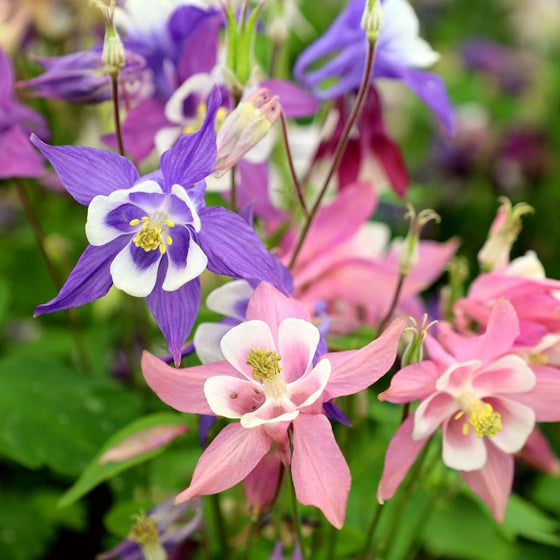
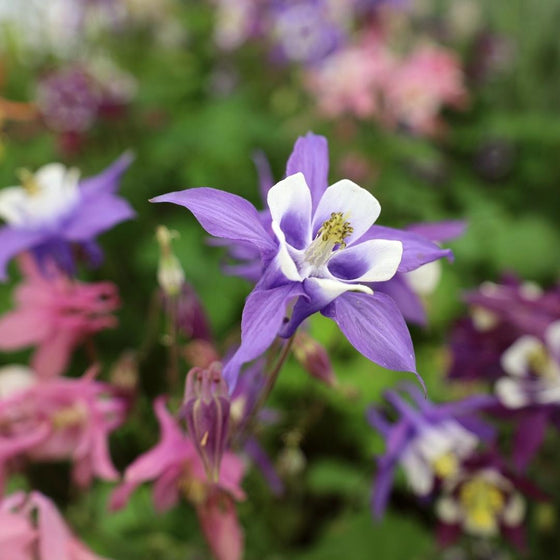
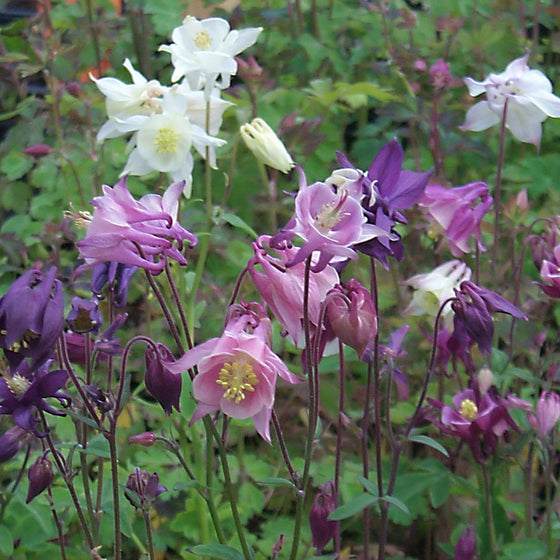


Images Depict Mature Plants
Biedermeier Columbine
Aquilegia vulgaris 'Biedermeier Mixed'
Biedermeier Columbine is a great choice when you want the charm of old-fashioned columbines in a smaller, tidier plant. The mixed flower colors give it a soft cottage-garden feel, and the early blooms are useful for hummingbirds and pollinators before many other perennials are in full swing. I especially like it near the front of part-shade borders or tucked among ferns and heuchera, where the flowers can pop in spring and the surrounding plants can carry the bed after columbine finishes blooming.

15% OFF FOR MOTHER'S DAY
Use Code MOMDAY15 At Checkout
📦 Free shipping on orders over $99.
Delay shipping by leaving us a message at Checkout.
Share:


Compact Spring Color for Cottage and Woodland Gardens
A dwarf columbine with charming mixed blooms.
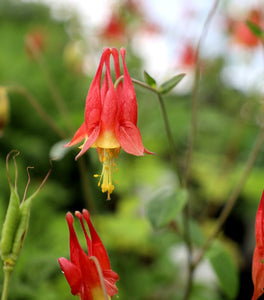
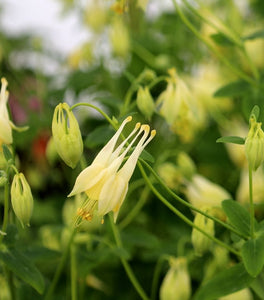
Biedermeier Columbine is a compact Aquilegia grown for its cheerful spring flowers in a soft mix of columbine colors. Blooms may appear in shades of pink, blue, purple, red, white, and bicolor combinations, each with the classic backward-pointing spurs that give columbines their graceful, old-fashioned look. Because this selection is commonly grown from seed, flower color can vary from plant to plant, creating a natural cottage-garden blend rather than a flat, uniform display.
Perfect for the front of borders and smaller garden spaces.
This dwarf columbine stays lower and more compact than many traditional columbines, making it especially useful near the front of perennial borders, along shaded paths, in rock gardens, and in mixed containers. The smaller habit lets the flowers sit at eye level in raised beds or patio planters while still giving the garden the airy charm columbines are known for. It is a smart choice when homeowners want spring color and pollinator value without a large, sprawling perennial.
A spring pollinator plant with hummingbird appeal.
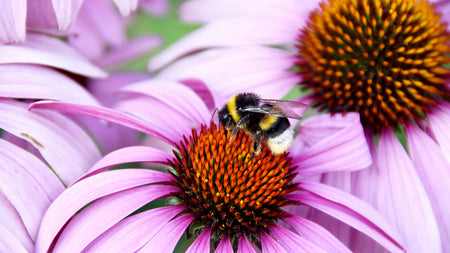
Biedermeier Columbine blooms early enough to give pollinators a valuable jump-start in the garden. The spurred flowers are attractive to hummingbirds, bees, butterflies, and other beneficial pollinators, adding movement and life during a season when many summer perennials are still waking up. Planting several together creates a stronger floral signal and makes the mixed flower colors even more noticeable in cottage gardens, woodland borders, and pollinator plantings.
Graceful foliage for part shade gardens.
The soft green to blue-green foliage has the delicate, divided texture that makes Aquilegia such a natural companion for ferns, heuchera, hostas, carex, and other shade-tolerant perennials. After flowering, the foliage may remain attractive for a time, especially in cool, evenly moist conditions, but it can look tired in summer heat. Planting Biedermeier Columbine among later-emerging or fuller perennials helps hide fading foliage while preserving its beautiful spring flower show.
A naturalizing perennial for relaxed garden designs.
Biedermeier Columbine can self-seed where it is happy, often creating soft drifts over time without usually overpowering neighboring plants. This makes it a good fit for informal borders, woodland edges, cottage gardens, and naturalized plantings where a little movement from year to year is welcome. If seedlings appear where they are not wanted, they can be edited out while young, or allowed to mature for a more spontaneous, romantic garden look.
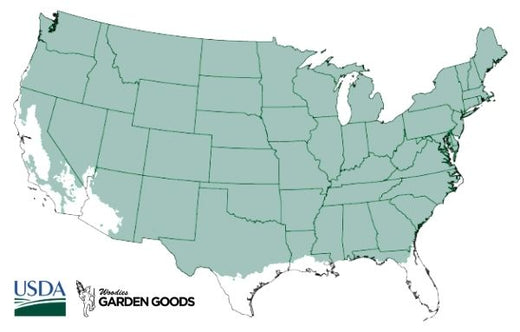
| Hardiness Zone: | 3-8 |
|---|---|
| Mature Height: | 1 to 1.5 Feet |
| Mature Width: | Up to 1.5 Feet |
| Sunlight: | Full sun to part shade; afternoon shade is helpful in warmer climates |
| Soil | Fertile, moist, well-drained soil; adapts to average garden soil with even moisture |
| Water | Water regularly after planting; prefers even moisture, especially in spring and early summer |
| Bloom Time / Color | Spring to early summer; mixed shades of pink, blue, purple, red, white, and bicolor flowers |
| Ornamental Features | Compact habit, spurred flowers, mixed pastel bloom colors, graceful foliage, early-season charm |
| Wildlife Value | Attracts hummingbirds, bees, butterflies, and other pollinators |
| Resistance | Deer resistant, rabbit resistant in many settings, cold tolerant, and generally low maintenance |
| Landscape Uses | Cottage gardens, woodland gardens, part shade borders, pollinator gardens, hummingbird gardens, rock gardens, containers, edging, mass plantings, and cut flower gardens |
How to Care for Biedermeier Columbine
Be sure to read our planting instructions to ensure a healthy and happy Biedermeier Columbine for years to come!
-v1777473772634.png?92x91)
How should I plant Biedermeier Columbine?
Plant Biedermeier Columbine in full sun to part shade with fertile, moist, well-drained soil. In cooler climates, it can handle more sun, while in warmer regions, morning sun with afternoon shade helps protect the foliage from heat stress. Dig a hole about twice as wide as the root ball and set the crown level with the surrounding soil. Backfill, water deeply, and space plants about 12 to 18 inches apart so the compact clumps have room to fill in naturally.
-v1777473792375.png?89x84)
How often should I water Biedermeier Columbine after planting?
Water Biedermeier Columbine regularly during the first growing season while the roots establish. Keep the soil evenly moist, especially during spring growth, flowering, and warm dry spells. Once established, columbine can tolerate some short dry periods, but it performs best with consistent moisture and good drainage. In containers or sunnier locations, check soil moisture more often and water when the top inch of soil begins to dry.
-v1777473805645.png?90x89)
When should I fertilize Biedermeier Columbine?
Fertilize Biedermeier Columbine lightly in spring if the soil is poor or growth appears weak. In most garden beds, compost or a gentle balanced fertilizer is enough to support healthy foliage and spring flowering. Avoid heavy fertilizer, which can push soft growth and reduce the plant’s natural compact habit. A light organic top-dressing is usually the best approach for keeping columbine healthy without making it overly lush.

When and how should I prune Biedermeier Columbine?
Prune Biedermeier Columbine after flowering if you want to tidy the plant or reduce self-seeding. Cut spent flower stems back after bloom, or leave some seedheads if you want the plant to naturalize gently in the garden. If foliage becomes tired, damaged, or unattractive in summer, cut it back to encourage a cleaner look. Planting columbine among fuller perennials can also help disguise summer foliage decline while allowing the spring flowers to shine.