

Images Depict Mature Plants
Rising Sun Redbud
Cercis canadensis 'JN2' Plant Patent #21451
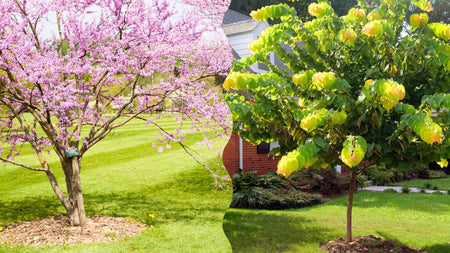
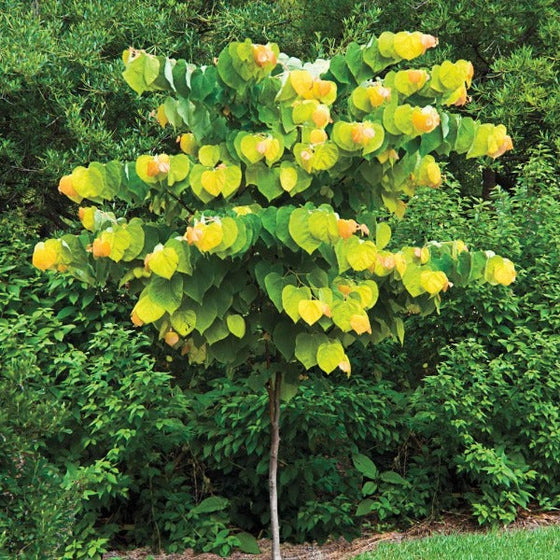
Rising Sun Redbud is one of those rare trees that looks like you hired a designer—rosy spring blooms, then a canopy that glows in apricot-to-gold tones and settles into fresh lime as the season rolls on. The compact 8–12 foot size makes it easy to place where it matters most—front yard, entry walk, patio edge—without overpowering the space. Give it sun, good drainage, and a solid first season of watering, and it rewards you with color and charm for years.

Use Coupon Code: NEWYEAR
Take an Extra 30% Off Everything on Our Site
📦 Free shipping on orders over $99.
Delay shipping by leaving us a message at Checkout.
Share:


Buy Rising Sun Redbud for Spring Blooms and Show-Stopping Foliage Color
A Front-Yard Focal-Point Tree You Can Buy with Confidence
Rising Sun Redbud (Cercis canadensis ‘JN2’) is a compact flowering tree that earns attention in two seasons at once: rosy-pink spring blooms arrive before the leaves, then the canopy follows with heart-shaped foliage that shifts through vivid apricot, gold, yellow, and bright green tones.
If you’re looking to buy a redbud tree online that feels “designer” without being fussy, Rising Sun delivers curb appeal fast—perfect for entry beds, lawn islands, and foundation plantings where one specimen can carry the whole look.
Compact Size, Big Color, Easy-to-Place Form
This is a small, upright deciduous flowering tree with a mature height of 8–12 feet and a mature width of around 8–9 feet, making it an ideal fit for modern lots and tighter landscapes.
Because the canopy stays manageable, you can place it where color matters most—near windows, walkways, patios, or a front-yard curve—without committing to a shade tree footprint. It also works beautifully under power lines and in layered borders where you want height without bulk.
Full Sun to Partial Sun for the Best Color
Plant Rising Sun in full sun to partial sun in well-drained soil. Strong light enhances foliage color and helps the tree bloom well, while partial shade can be helpful in the hottest climates.
Water consistently during establishment and then transition to deep watering during dry spells. This tree adapts well once roots are established, including tolerance for moist soils and the ability to handle drier sites after it settles in.
Specimen Tree, Shrub Border Anchor, and High-Impact Color Pairing
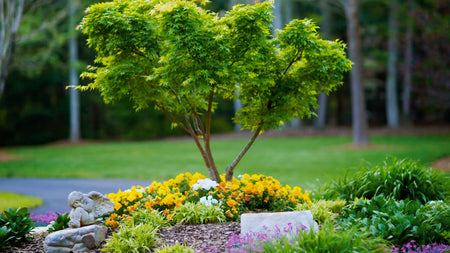
Use Rising Sun Redbud as a specimen (a single “wow” tree) or plant in small groups to create a high-end, curated feel.
Design-wise, it pairs best with plants that let the foliage glow—deep green evergreens, blue-toned conifers, and simple perennials. The effect is bright, clean, and intentional from spring through fall—exactly what most buyers want when investing in a statement tree.
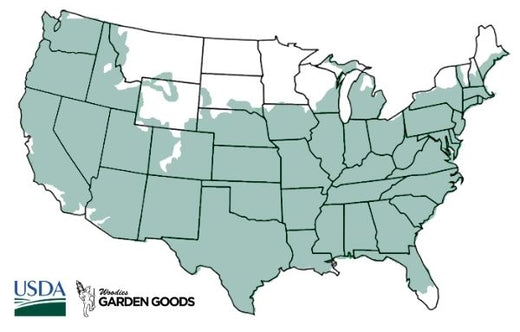
| Hardiness Zone: | 5-9 |
|---|---|
| Mature Height: | 8 to 12 Feet |
| Mature Width: | 8 to 9 Feet |
| Classification: | Broad leaved deciduous flowering tree |
| Sunlight: | Full sun to partial sun/shade |
| Foliage: | Deep apricot yellow |
| Bloom Time / Color | Early spring; rosy-pink blooms |
| Soil Condition: | Well-drained; moderately fertile preferred |
| Water Requirements: | Water well until established; consistent moisture best |
| Wildlife Value | Attracts birds, butterflies, and bees |
| Resistance | deer-resistant; disease-resistant |
| Landscape Uses | Specimen, shrub borders, beds/borders, patios/entries |
How to Care for Rising Sun Redbud
After you purchase your Rising Sun Redbud Tree, be sure to read the recommended care instructions to ensure your plant stays happy and healthy for years to come!

How should I plant Rising Sun Redbud?
Dig a hole twice as wide as the root ball but not deeper, then set the tree so the top of the root ball sits at or slightly above grade. Backfill with your existing soil improved with compost if your native soil is very compacted, then water deeply to remove air pockets. Finish with a 2–3-inch mulch ring to conserve moisture and reduce weeds, keeping the mulch pulled back from the trunk. Spring and fall planting are ideal, and consistent moisture during the first growing season is the fastest path to strong establishment.

How often should I water Rising Sun Redbud after planting?
Water deeply right after planting, then keep the root zone evenly moist (not soggy) for the first few weeks. Check moisture frequently during heat or wind; young trees dry faster than established ones. After the first season, shift toward deeper, less frequent watering, especially during prolonged dry spells. Consistent moisture supports better leaf color and overall vigor, while good drainage helps prevent stress-related decline.

When should I fertilize Rising Sun Redbud?
Feed lightly in spring after frost with a balanced, slow-release fertilizer if your soil is low in organic matter or growth is weak. Avoid heavy fertilization—steady, moderate nutrition is more effective than pushing rapid growth. A simple, high-trust approach is soil-building: top-dress with compost annually and maintain mulch. That supports root health and reduces the need for frequent fertilizing while keeping the tree stable and resilient over time.

When and how should I prune Rising Sun Redbud?
Prune in late spring after flowering to preserve bloom and keep the structure clean. Focus on removing dead, damaged, or crossing branches, and improve branch spacing for airflow and strength. Keep pruning minimal—this tree looks best with a natural framework. If major structural pruning is needed on a mature tree, a certified arborist is the safest route for long-term health and branch integrity.