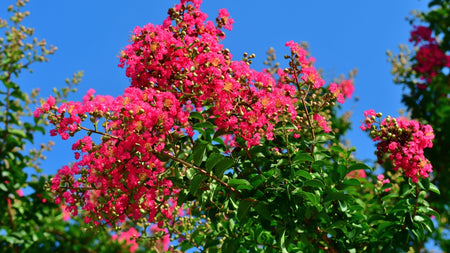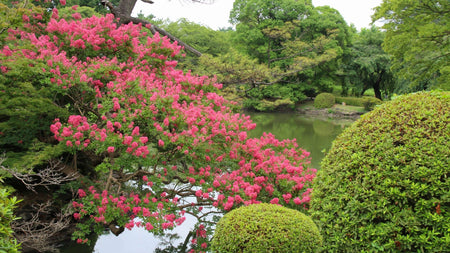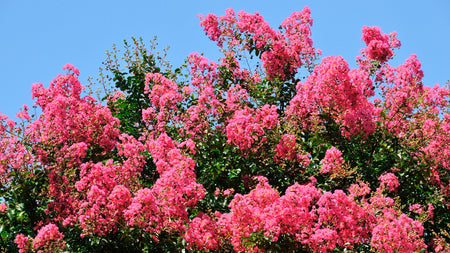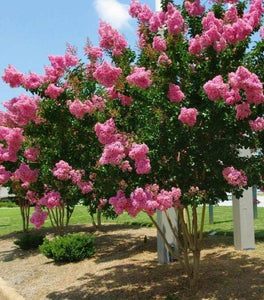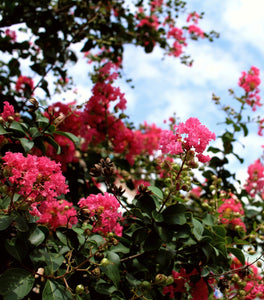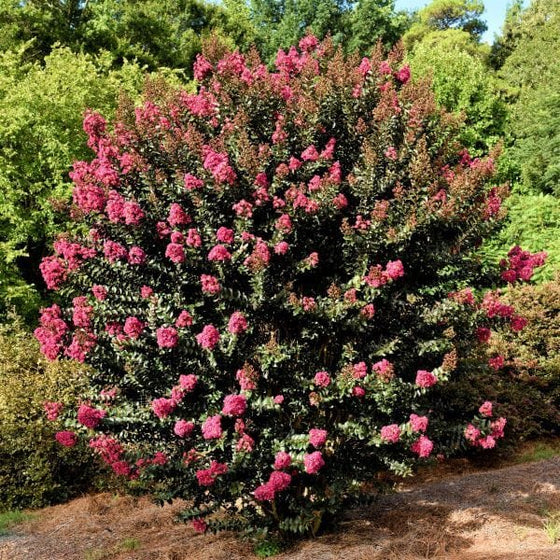
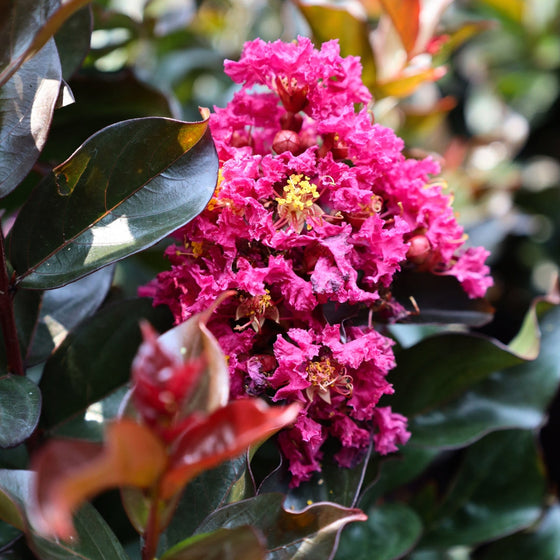
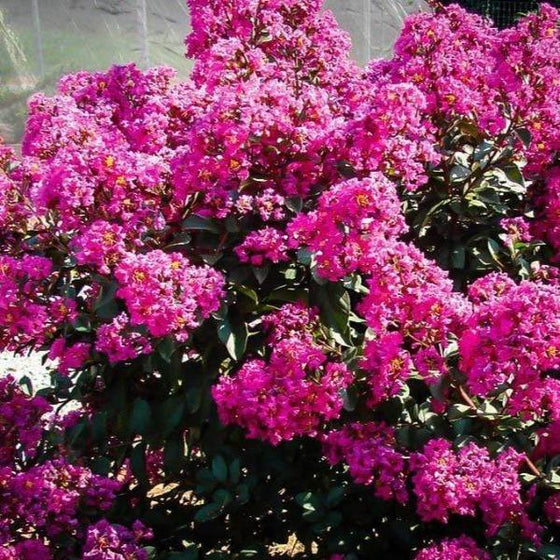
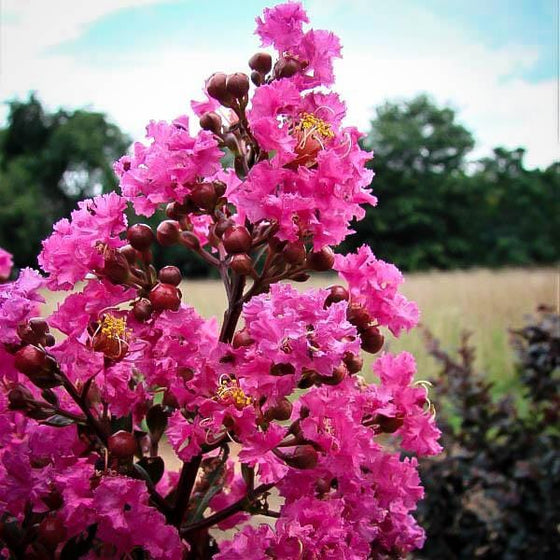


Images Depict Mature Plants
Plum Magic Crape Myrtle
Lagerstroemia 'Plum Magic' PP23518
If you love crape myrtles but don’t love the idea of one taking over the whole bed, Plum Magic is the sweet spot—compact, reliable, and loaded with fuchsia-pink blooms when summer really turns on. I’m also a big fan of that plum new growth because it makes the plant look interesting even before the first flowers open, and the built-in disease resistance helps it stay clean in humid weather. Give it full sun, keep the watering steady the first year, and you’ll have a small-space showpiece that looks professionally planned.

15% OFF SITEWIDE SALE
Use Code 'PRIMETIME15' At Checkout
📦 Free shipping on orders over $99.
Delay shipping by leaving us a message at Checkout.
Share:



Plum Magic Crape Myrtle for Compact Summer Color and Easy Curb Appeal
Fuchsia-Pink Summer Blooms That Keep Your Landscape Bright
Plum Magic Crape Myrtle brings that classic crape myrtle look—big, crinkled flower clusters—without the oversized footprint that can overwhelm smaller yards. From mid-summer into early fall, it lights up with fuchsia-pink blooms that read from the street and make a bed look intentionally designed. It’s the kind of flowering tree-shrub that turns “nice landscaping” into “wow, what is that?” because the bloom show lasts when many spring bloomers are long finished.
For the strongest bloom performance, think sun first. Full sun drives heavier flowering, richer color, and tighter growth. If you’ve been wanting a summer-flowering focal point that doesn’t feel high-maintenance, Plum Magic is a smart pick: it’s built to deliver dependable bloom power through heat, and it doesn’t require constant fussing to look polished all season.
Plum New Growth And Fall Color That Adds A Second Season Of Interest
The “Magic” in Plum Magic isn’t just the flowers—it’s the foliage show. New growth emerges with a deep plum-purple tone, then settles into a rich green that makes the bright blooms pop. Later in the season, many landscapes see the foliage shift again toward deep red fall color, giving you another moment of drama as summer fades. That color progression is exactly what makes this variety feel premium: it’s not only a flower plant—it’s a color plant.
This layered interest is especially valuable in foundation beds and front-yard borders where you want the planting to look good even between bloom peaks. Use it as a repeated accent in sunny beds, or place it where the changing foliage will contrast with evergreens and stonework. It’s an easy way to build a “designed” look with one plant doing multiple jobs.
Compact, Rounded Habit That Fits Small Yards Without Constant Pruning
Plum Magic is known for staying compact compared to many crape myrtles, typically maturing around 6–10 feet tall and 6–8 feet wide with a naturally rounded form. That size makes it ideal for today’s tighter landscapes: small front beds, townhome plantings, side-yard borders, and sunny corners that need structure and bloom without blocking windows or swallowing a walkway. It’s also a great choice under power lines or near patios where you want summer color at eye level.
Because the shape is naturally balanced, you don’t have to “fight” it to keep it looking good. The goal is simple: give it room to be itself, then do light shaping when needed. When homeowners choose a crape myrtle that matches the space, they get the best version of the plant—more blooms, better branching, and a clean silhouette that looks intentional year after year.
Built-In Disease Resistance And Heat Tolerance For Easier Success
Plum Magic was selected for strong resistance to common crape myrtle problems like powdery mildew and leaf spot, which is a big deal in humid summers. That resilience means cleaner foliage, less frustration, and a better-looking plant through the season—especially in high-visibility front beds. Combine that with good airflow and full sun, and you get the kind of reliable performance that makes crape myrtles feel “effortless.”
Once established, it also handles heat and short dry periods well, making it a practical option for busy homeowners. The first season is where you build long-term toughness: consistent deep watering, a mulch ring (kept off the trunk), and well-drained soil. After that, Plum Magic is the kind of flowering tree-shrub that earns its place by showing up every summer with color—without turning into a maintenance project.
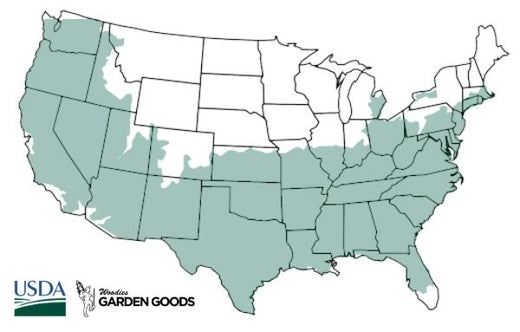
| Hardiness Zone: | 6-9 |
|---|---|
| Mature Height: | 6 to 10 feet |
| Mature Width: | 6 to 8 feet |
| Sunlight: | Full Sun |
| Bloom Time / Color: | Mid-summer to early fall (often July–September); fuchsia-pink |
| Foliage: | New growth emerges a rich dark plum purple, changing to an equally vibrant orange-red in the fall. |
| Soil Condition: | Well-drained; adaptable (avoid consistently wet soil) |
| Water Requirements: | Medium; drought tolerant once established |
| Wildlife Value: | Attracts bees and pollinators during bloom |
| Resistance: | Strong resistance to powdery mildew and leaf spot; heat tolerant; |
| Landscape Uses: | Specimen, foundation beds, sunny borders, small yards, along patios, informal hedge/screen |
How to Care for Plum Magic Crape Myrtle
Be sure to read our planting instructions to ensure a healthy and happy Plum Magic Crape Myrtle plant for years to come!
-v1745940383332.png?92x91)
How should I plant Plum Magic Crape Myrtle?
Plant Plum Magic Crape Myrtle in full sun with well-drained soil for the best blooms and clean foliage. Dig a hole 2–3 times wider than the root ball and no deeper than the root ball, then set the plant so the top of the root ball sits level with (or slightly above) the surrounding soil. Backfill with native soil, firm gently, and water deeply to settle roots. Finish with a 2–3 inch mulch ring to conserve moisture and reduce weeds, keeping mulch a few inches away from the trunk. If your soil is heavy or holds water, plant slightly high or choose a raised area so roots never sit in soggy soil. Good drainage and sun are the two biggest success factors for long-term performance.
-v1745940420969.png?89x84)
How often should I water Plum Magic Crape Myrtle after planting?
Water deeply right after planting, then continue with a deep soak about once per week during the first growing season. In hot weather or sandy soil, increase to twice per week. The goal is to wet the root zone thoroughly so roots grow outward and down, not to keep the surface constantly damp. After the first season, water during extended dry spells, especially in peak summer heat. Mature crape myrtles handle short dry periods well, but steady moisture improves flowering and reduces stress. Always water at the base rather than overhead to support healthier foliage.
-v1745940437289.png?90x89)
When should I fertilize Plum Magic Crape Myrtle?
Fertilize in early spring as new growth begins, using a slow-release, balanced fertilizer or a light top-dressing of compost. This supports strong branching and sets the stage for heavier bloom later in summer. Water in after fertilizing so nutrients move into the root zone. Avoid heavy late-season fertilizing, which can push tender growth that doesn’t harden off well. If your plant is leafy but not blooming, reduce fertilizer and increase sun exposure—too much nitrogen and too little sun are common reasons crape myrtles underperform.

When and how should I prune Plum Magic Crape Myrtle?
Prune in late winter or early spring before growth starts. Remove dead wood, thin crossing branches, and lightly shape to maintain a clean, rounded form. Focus on preserving natural structure—good pruning looks like you did almost nothing, but the plant blooms better and looks more balanced. Avoid topping (“crape murder”), which creates weak sprouts and ruins the plant’s natural habit. If you need to reduce size, do selective thinning cuts to a side branch instead of chopping the whole top. A light, thoughtful prune once a year keeps Plum Magic compact, flowering, and attractive.