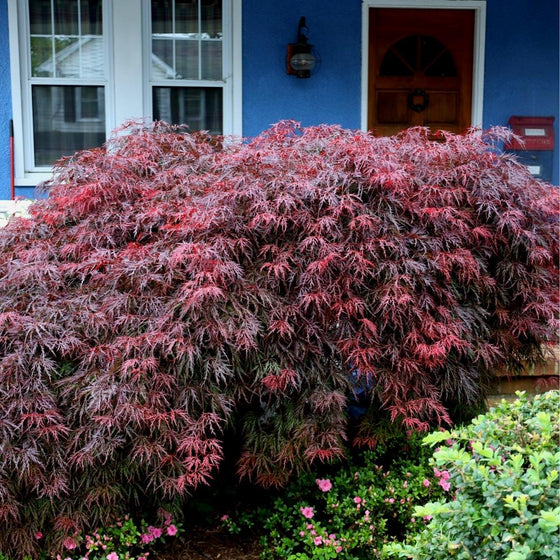
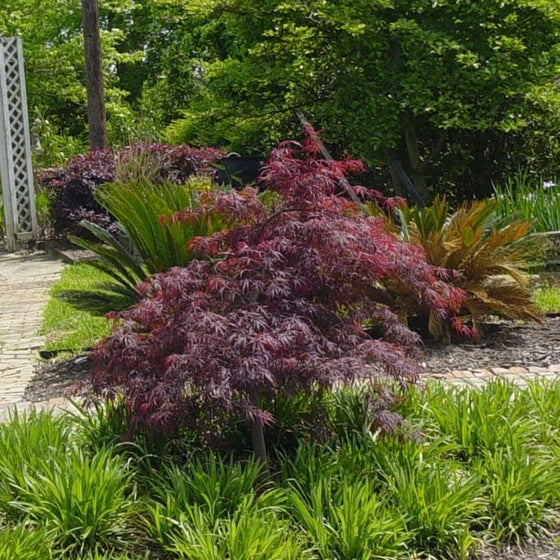
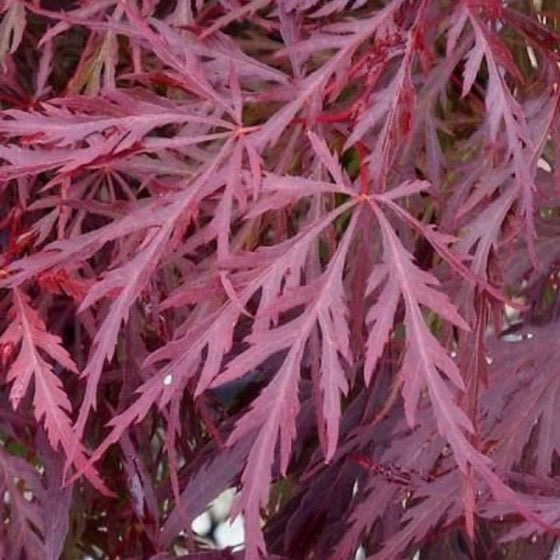


Images Depict Mature Plants
Red Dragon Japanese Maple
Acer palmatum var. dissectum 'Red Dragon'
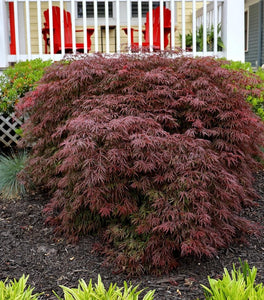
Red Dragon Japanese Maple is one of those trees that makes a spot feel special the minute it goes in. I like it because the weeping laceleaf habit gives you elegance without needing much space, and its rich red foliage carries the planting from spring right into fall. It is especially good near patios, entries, and smaller focal-point beds where homeowners want something refined, colorful, and memorable without committing to a much larger tree.

15% OFF SITEWIDE, USE CODE 'FALLPLANT15'
📦 Free shipping on orders over $99.
Delay shipping by leaving us a message at Checkout.
Share:



Cascading Red Color for Elegant Small-Space Focal Points
A graceful weeping form that instantly softens the landscape
Red Dragon Japanese Maple features a refined, cascading habit that gives garden spaces a more layered, elegant look. Its finely cut laceleaf foliage and naturally mounding, weeping shape make it a beautiful choice for entry gardens, island beds, courtyard plantings, and foundation accents where a broad upright tree would feel too heavy. The branching drapes rather than towers, which helps the plant feel calm, sculptural, and highly intentional in the landscape.
That soft habit is one of the reasons this tree works so well as a focal point. It adds movement and texture even when the garden is not in bloom, and it pairs beautifully with boulders, low evergreens, ferns, heuchera, and shade-tolerant perennials. In smaller spaces, that kind of shape matters because it creates presence without making the planting feel crowded. Red Dragon gives homeowners the ornamental beauty of a Japanese maple in a form that feels tailored to patios, front beds, and intimate garden rooms.
Deep red laceleaf foliage with a strong fall finale
The foliage is where Red Dragon earns its name. Leaves emerge a rich red-purple and hold strong color through the season, especially when the tree is planted in a spot that gets good light without excessive stress. The finely dissected foliage gives the tree a feathery texture that contrasts beautifully with broadleaf shrubs, evergreens, and stonework, helping it stand out as a specimen even when used in a mixed planting.
Fall brings an even brighter finish, with foliage shifting toward vivid red tones that refresh the planting just as summer color begins to fade. That long season of ornamental interest is a major reason this cultivar remains so popular. Instead of relying on a brief flower display, it contributes spring texture, summer color, and autumn brilliance in one plant. For gardeners who want a tree that performs visually for months rather than weeks, Red Dragon delivers that layered seasonal value.
A compact Japanese maple that fits patios, courtyards, and smaller beds
Red Dragon Japanese Maple is a slow-growing, compact ornamental tree, which makes it especially useful where space is limited. Published mature sizes vary somewhat by nursery source, but it is consistently described as a smaller dissectum Japanese maple, often reaching roughly 5 to 8 feet tall with a similar or slightly narrower spread. That size range makes it a strong option for front foundation beds, garden corners, containers, and patio-adjacent plantings where homeowners want specimen quality without an oversized canopy.
Its restrained size also makes the design easier. It can be tucked into a mixed border, given pride of place as a standalone focal point, or used in an Asian-inspired composition where form and texture matter as much as color. Because it stays smaller, gardeners have more freedom to layer companion plants around it without losing balance. That is a major advantage in today’s residential landscapes, where every square foot needs to work harder, and oversized trees often feel like a long-term problem rather than an asset.
Best performance comes from thoughtful siting and steady moisture
Red Dragon performs best in well-drained soil with consistent moisture and some protection from harsh afternoon exposure, especially in hotter climates. Japanese maple guidance commonly recommends balancing light and shade so foliage color stays strong without unnecessary stress or scorch. In cooler regions, more sun can be tolerated, while in warmer regions, filtered light or afternoon shade is preferred.
Once established, it is not a difficult tree to maintain, but it does reward thoughtful placement. Mulch helps regulate soil moisture and root temperature, and pruning is usually limited to light structural cleanup rather than aggressive shaping. For homeowners who are willing to give it the right start, Red Dragon offers a high-end ornamental look with a footprint that remains manageable and garden-friendly for years.
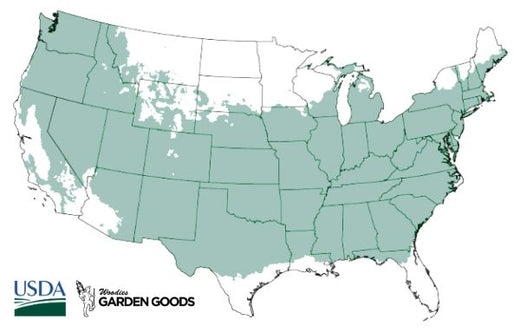
| Hardiness Zone: | 5-8 |
|---|---|
| Mature Height: | 5 to 8 feet |
| Mature Width: | 5 to 8 feet |
| Sunlight: | Full sun to part shade; filtered light helpful in hotter climates |
| Bloom Time / Color | Inconspicuous spring bloom; grown primarily for red-purple laceleaf foliage and red fall color |
| Soil Condition: | Moist, well-drained, slightly acidic, organically rich soil preferred |
| Water Requirements: | Keep soil consistently moist but not soggy during establishment; moderate moisture thereafter |
| Wildlife Value | Adds shelter and layered structure in mixed garden plantings |
| Resistance (deer/disease/drought/etc.) | Low maintenance once established; may scorch in overly hot, dry, exposed sites |
| Landscape Uses | Specimen tree, patio accent, courtyard planting, container feature, Japanese garden, focal point |
How to Care for Red Dragon Japanese Maple
Before you buy a Red Dragon Japanese Maple Plant, make sure to read about the care instructions that are recommended to keep this plant healthy and thriving.

How should I plant Red Dragon Japanese Maple?
Plant Red Dragon Japanese Maple in well-drained soil where the root flare will sit level with the surrounding grade. Dig a hole two to three times wider than the root ball and no deeper than the root ball itself, then backfill with the native soil so the roots can establish naturally into the surrounding area. Water thoroughly after planting and add a two- to three-inch mulch layer around the root zone to help hold moisture and moderate soil temperature, keeping mulch away from the trunk. Choose a site with enough room for the tree’s mature spread and some shelter from harsh drying exposure so the laceleaf foliage stays healthy and attractive.

How often should I water Red Dragon Japanese Maple after planting?
Water Red Dragon Japanese Maple deeply and consistently during the first growing season so the roots can establish well. The soil should stay evenly moist but not soggy, and in most landscapes that means deep watering once or twice a week, depending on rainfall, soil type, and heat. After establishment, continue watering during dry stretches, especially in summer. Japanese maples perform best when they avoid extremes, so steady moisture and good drainage are much better than allowing the root zone to swing between bone-dry and saturated.

When should I fertilize Red Dragon Japanese Maple?
Fertilize Red Dragon Japanese Maple lightly in early spring if needed, just as new growth begins. A balanced slow-release fertilizer or a modest topdressing of compost is usually enough to support healthy foliage and steady growth without pushing the tree too hard. Heavy feeding is usually unnecessary and can encourage overly soft growth. In reasonably good garden soil, Japanese maples often perform best with a restrained approach that supports root health and foliage quality rather than forcing rapid top growth.

When and how should I prune Red Dragon Japanese Maple?
Prune Red Dragon Japanese Maple during the dormant season, usually in late winter, to remove dead, damaged, or crossing branches and to preserve its natural cascading form. Use selective cuts rather than shearing so the tree keeps its graceful layered habit. Major shaping is rarely needed because the plant’s weeping structure is part of its appeal. Light corrective pruning can be done when necessary, but the best results usually come from respecting the natural framework and simply improving clarity, airflow, and branch balance over time.