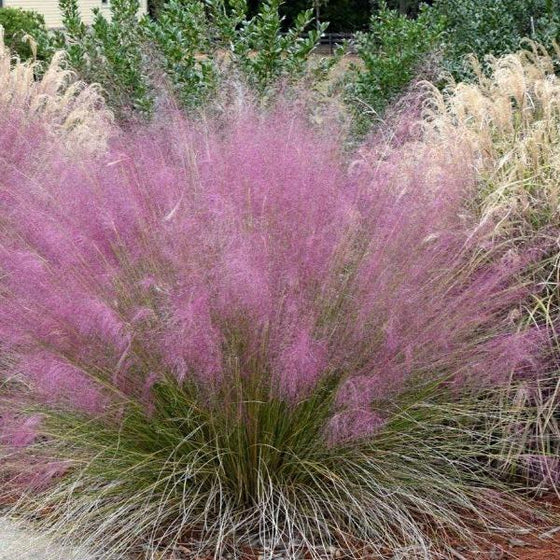
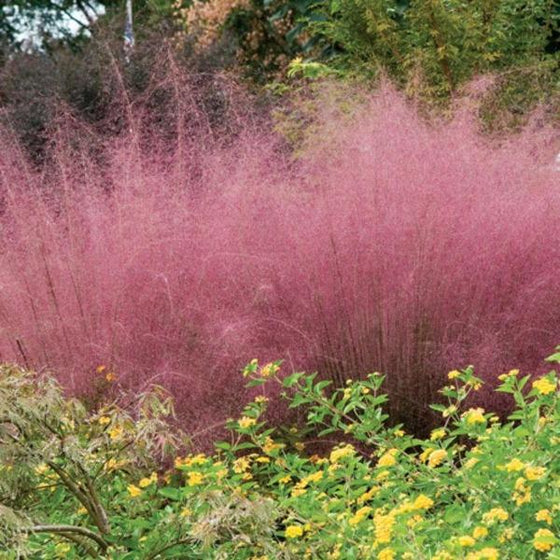
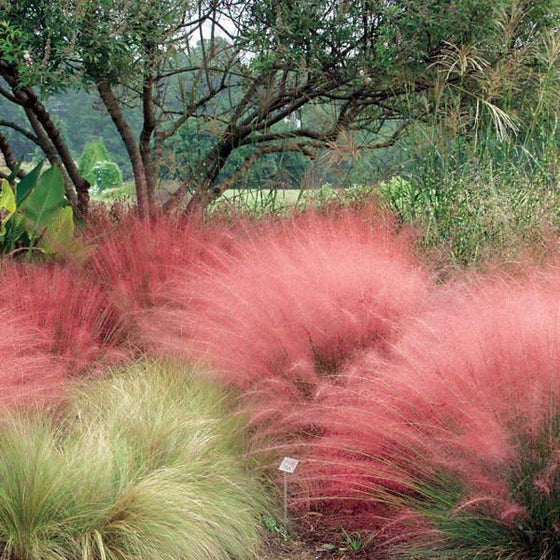


Images Depict Mature Plants
Pink Muhly Grass
Muhlenbergia capillaris
Pink Muhly Grass is one of those plants that can make people stop and ask what it is. I like it because the green foliage stays useful all season, but once those airy pink plumes show up in fall, the whole planting takes on a softer, more dramatic look. It is especially good in drifts, sunny borders, and entry plantings where homeowners want something tough, graceful, and memorable without choosing a high-maintenance plant.

20% Off Sitewide Sale!
Use Code 'ENDOFSEASON20' At Checkout
📦 Free shipping on orders over $99.
Delay shipping by leaving us a message at Checkout.
Share:Recommended Add-Ons


Airy Pink Fall Color for Sunny Borders and Mass Plantings
Clouds of pink fall bloom that transform the landscape
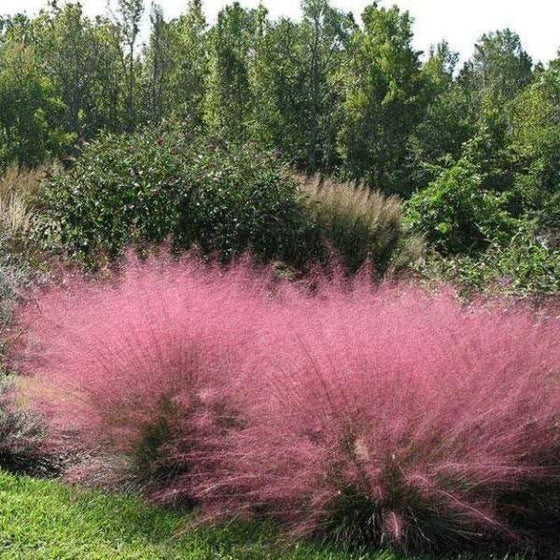
Pink Muhly Grass is best known for the spectacular, airy pink plumes that rise above the foliage in late summer and fall. When in bloom, the plant develops a soft haze of pink that looks almost cloudlike, especially when backlit by morning or evening sun. It is one of those grasses that can completely change the feeling of a planting at the end of the season, bringing color, movement, and a lighter, more romantic texture just as many summer flowers begin to fade.
That bloom display is the reason this grass has become such a favorite in both home gardens and larger landscape designs. A single clump is attractive, but the real magic often happens when Pink Muhly Grass is planted in drifts or broad groupings. In those settings, the pink plumes create a sweeping effect that feels both dramatic and natural, making the plant equally useful in modern landscapes, cottage-style borders, meadow-inspired designs, and native plantings.
Fine-textured green foliage with strong season-long structure
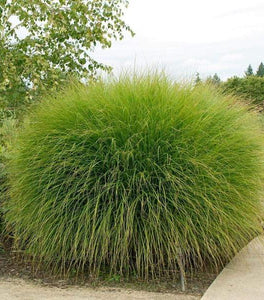
Even before it blooms, Pink Muhly Grass earns its place in the garden. The plant forms a neat fountain of narrow green foliage, adding movement and texture from spring through summer. That soft, arching form helps break up rigid lines in the landscape and pairs beautifully with perennials, shrubs, stone, and hardscape. It gives the planting a more layered, finished look long before the pink plumes appear.
Because the foliage stays tidy and clump-forming, it fits well into both looser naturalistic plantings and more formal bed designs. It can soften edges, frame a path, or provide a textural bridge between flowering perennials and evergreen shrubs. For homeowners who want an ornamental grass that contributes beyond bloom season, Pink Muhly Grass offers real structural value and a refined presence throughout much of the year.
A native ornamental grass for borders, slopes, and containers
Pink Muhly Grass is a North American native ornamental grass that works beautifully in sunny borders, foundation beds, native gardens, and mass plantings. It is especially effective along slopes, parking strips, large bed edges, and open sunny spaces where broad sweeps of texture and fall color can be appreciated. The clump-forming habit makes it easier to place than aggressively spreading grasses, while still giving enough volume to make a real impact.
It can also work well in large containers, where the fine green blades and dramatic late-season plumes add motion and seasonal interest near patios, porches, and entries. In mixed containers, it can act as a soft thriller, adding height without looking stiff. That flexibility makes Pink Muhly Grass a strong choice for gardeners who want one plant that can serve equally well in a naturalized bed, a polished front border, or a decorative pot.
Tough, low-maintenance performance in sun and well-drained soil
Pink Muhly Grass performs best in full sun and well-drained soil, where it develops the fullest habit and strongest plume display. Once established, it is notably drought-tolerant and easy to care for, which makes it a smart option for homeowners who want a high-impact ornamental grass without constant upkeep. It also handles heat, humidity, and leaner soils well, making it especially useful in tough sunny sites where fussier perennials may struggle.
It needs very little ongoing maintenance beyond an annual cutback before new growth begins. In the right site, it settles into a dependable routine of spring foliage, summer texture, and showy fall bloom. For gardeners seeking a native ornamental grass that combines beauty, toughness, and a memorable late-season display, Pink Muhly Grass is among the strongest choices available.
| Botanical Name | Muhlenbergia capillaris |
|---|---|
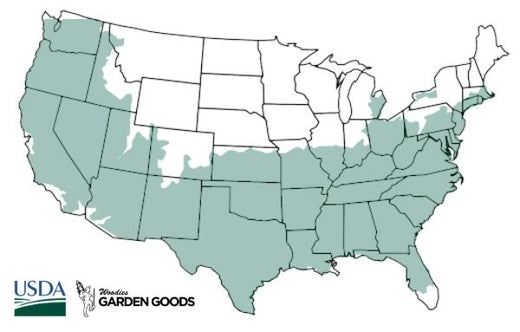
| Hardiness Zone: | 6-9 |
| Mature Height: | 2 to 3.5 Feet |
| Mature Width: | 2 to 3 Feet |
| Sunlight: | Full Sun |
| Water Requirements: | Regular water during establishment; drought tolerant once established |
| Soil | Well-drained soil; adaptable to sandy, rocky, and average soils |
| Bloom Time / Color: | Late summer to fall / airy pink to pinkish-red plumes |
| Wildlife Value | Provides cover, supports pollinator-friendly plantings, and offers bird-friendly habitat texture |
| Resistance (deer/disease/drought/etc.) | Deer resistant, drought tolerant, heat tolerant, low maintenance |
| Landscape Uses | Mass planting, borders, slopes, native gardens, containers, meadow plantings, fall interest |
How to Care for Pink Muhly Grass
Before you buy a Pink Muhly Grass, make sure to read about the care instructions to keep this plant healthy and thriving.

How should I plant Pink Muhly Grass?
Plant Pink Muhly Grass in full sun in a site with well-drained soil and enough room for the clump to mature naturally. Dig a hole two to three times wider than the root ball and no deeper than the root ball itself, then set the plant so the crown sits level with the surrounding soil before backfilling with the native soil. Water thoroughly after planting and add a light mulch layer around the base to help conserve moisture while the roots establish, keeping mulch away from direct contact with the crown. If you are planting several together for a drift or border, arrange them in staggered groups so the planting looks fuller and more natural as the clumps mature.

How often should I water Pink Muhly Grass after planting?
Water Pink Muhly Grass regularly during the first growing season to help the roots establish well. In most gardens, that means watering deeply about once or twice a week, depending on rainfall, drainage, and heat, with the goal of keeping the soil evenly moist but not soggy. After establishment, this grass becomes much more drought-tolerant and usually needs supplemental water only during extended dry periods. Deep watering is more helpful than frequent shallow irrigation because it encourages stronger roots and supports better long-term performance in sunny exposed sites.

When should I fertilize Pink Muhly Grass?
Fertilize Pink Muhly Grass lightly in early spring if needed, just as new growth begins. A modest application of balanced slow-release fertilizer or compost is usually enough to support healthy foliage and steady growth. In many soils, heavy feeding is unnecessary. Too much fertilizer can encourage excess leafy growth at the expense of the airy plume display, so a restrained approach usually produces the best balance of foliage, flowering, and habit.

When and how should I prune Pink Muhly Grass?
Cut Pink Muhly Grass back in late winter or very early spring before fresh new growth begins. Trim the old foliage down to several inches above the ground so the plant can push up clean new growth and maintain a tidy appearance. Leaving the foliage and plumes standing through fall and winter improves seasonal interest and helps the plant continue to contribute texture when many perennials have disappeared. Waiting to cut it back until late winter preserves that beauty while still preparing the clump for a fresh growing season.