

Images Depict Mature Plants
Goldmound Spirea
Spirea japonica 'Gold Mound'
Goldmound spirea is another one of my favorite “make it look designed” shrubs—because the golden foliage does the heavy lifting from spring to fall, and then the pink blooms show up like a cheerful bonus when summer is getting started. Give it full sun for the best color, well-drained soil, and a simple prune in late winter or early spring, and it stays compact, bright, and easy in borders, edging, and low hedges.

15% OFF SITEWIDE SALE
Use Code 'PRIMETIME15' At Checkout
📦 Free shipping on orders over $99.
Delay shipping by leaving us a message at Checkout.
Share:Recommended Add-Ons



Goldmound Spirea For Golden Foliage Color, Pink Blooms, And A Compact, Low-Maintenance Mounded Shrub
Golden Foliage That Brightens Sunny Beds From Spring Through Fall
Goldmound spirea is the shrub you plant when you want instant “lights on” color in a landscape. New growth emerges a vivid golden-yellow, creating a bright contrast against green lawns, evergreens, and darker-leaved shrubs. That gold tone carries through the season (often shifting slightly greener in summer), and it’s exactly why Goldmound is so useful: it makes borders look more intentional, foundation beds look more finished, and mixed plantings feel more designed without relying on flowers alone.
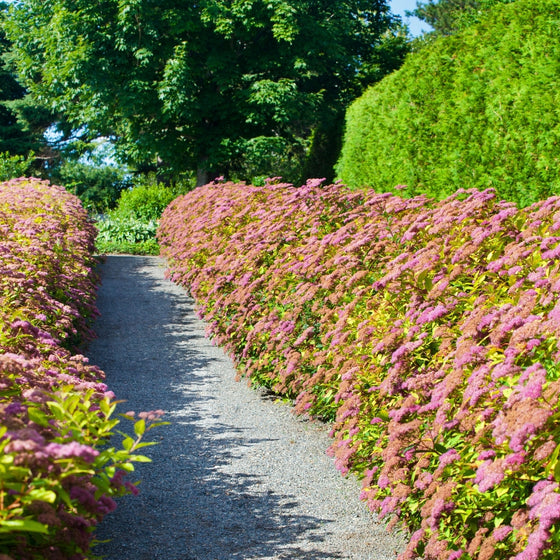
Full sun is the secret to the best foliage color. The more sun it gets, the stronger and cleaner the gold tends to be. Use it to frame an entry bed, line a walkway, or repeat it in drifts for that “professional landscape” look. Then enjoy the bonus fall color, as foliage can pick up warm tones before dropping for winter—because yes, this is a deciduous shrub, and that seasonal change is part of its charm.
A Compact Mounded Habit That Looks Neat Without Constant Work
Goldmound spirea naturally grows into a dense, rounded mound that stays tidy and proportional in smaller spaces. It’s the right size for front-yard beds, tight borders, and low hedges where you want structure without a shrub that eats the whole planting. That compact habit also makes it easy to layer: plant it behind edging plants, in front of taller shrubs, or as a mid-layer “filler” that keeps beds from looking empty when perennials are between bloom cycles.
Because it branches densely, it’s especially effective in mass plantings—think three, five, or seven plants repeated for rhythm and cohesion. It also shines as a low hedge where you want a soft boundary rather than a tall screen. When spacing is planned correctly (with room for mature width and airflow), Goldmound holds its shape with minimal fuss and maintains the clean, mounded look homeowners love.
Pink Flower Clusters That Add Pollinator-Friendly Summer Color
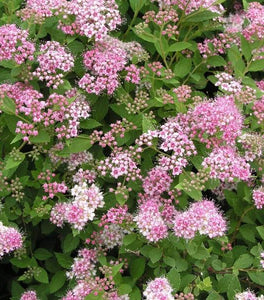
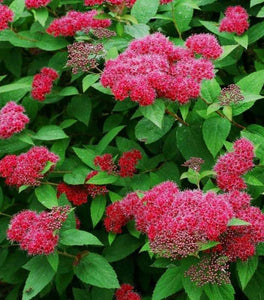
In late spring through summer, Goldmound spirea tops its golden foliage with clusters of small pink flowers. The blooms aren’t just pretty—they add a soft, cheerful layer of seasonal color that plays beautifully with the gold leaves. The contrast is what makes it pop: bright foliage below, pink bloom clusters above. It’s a classic combination that reads well from the street and looks great in closer “garden moments” near patios and paths.
Those flowers also bring movement to the garden. On warm days, you’ll often notice pollinators working the blooms, which makes Goldmound a simple way to add life to sunny beds without needing a complicated planting plan. Pair it with salvias, catmint, coneflowers, and ornamental grasses for an easy full-sun mix that looks good for months and feels intentionally pollinator-friendly.
Low-Maintenance Care With Simple Watering And Easy Pruning
Goldmound spirea is adaptable and forgiving, which is why it’s a go-to shrub for busy gardeners. Give it well-drained soil and full sun, water it well until established, and it will settle into a reliable routine. Once roots are established, it handles normal summer weather well and only needs supplemental watering during extended dry spells. Mulch helps retain moisture and keeps the root zone more consistent during hot weather.
Pruning is straightforward and forgiving, too. A light shaping after bloom can keep the mound crisp, and a harder cutback in late winter or early spring (before new growth starts) can refresh older plants and encourage dense, colorful new growth. The result is a shrub that stays compact, stays bright, and stays useful—year after year—without the high-maintenance demands of fussier landscape plants.
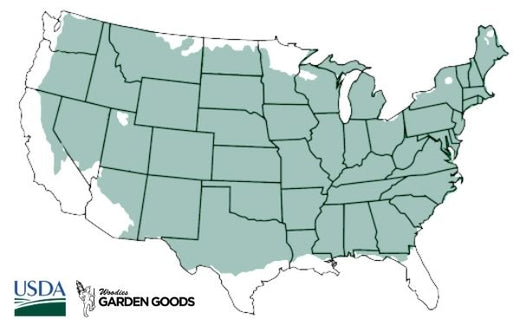
| Hardiness Zone: | 4-8 |
|---|---|
| Mature Height: | 2 to 3 feet |
| Mature Width: | 3 to 4 feet |
| Sunlight: | Full Sun |
| Bloom Time / Color: | Late spring to summer; pink flowers |
| Soil Condition: | Any well drained soil |
| Water Requirements: | Water well until established |
| Wildlife Value: | Attracts pollinators (bees, butterflies) |
| Resistance (deer/disease/drought/etc.): | Deer resistant (not deer-proof); drought tolerant once established |
| Landscape Uses: | Borders, edging, mass plantings, foundation beds, low hedge, containers |
How to Care for Goldmound Spirea
Be sure to read our planting instructions to ensure a healthy and happy Goldmound Spirea plant for years to come!
-v1771351286652.png?92x91)
How should I plant Goldmound Spirea?
Choose a full-sun location with well-drained soil for the best golden foliage color and strong blooming. Dig a hole about twice as wide as the root ball and no deeper, then set the shrub so the top of the root ball is level with the surrounding soil. Backfill, firm gently, and water deeply to settle soil around the roots. Finish by applying a 2–3 inch mulch layer over the root zone to reduce evaporation and keep moisture consistent, keeping mulch a few inches away from the stems. If your soil is heavy, improve drainage with organic matter and avoid low spots where water collects after rain.
-v1771351312144.png?89x84)
How often should I water Goldmound Spirea after planting?
Water thoroughly right after planting, then water deeply 1–2 times per week for the first growing season, adjusting for rainfall and heat. The goal is consistent moisture while roots expand beyond the original root ball—deep watering is better than frequent shallow sprinkling. After the first year, Goldmound spirea is typically more drought-tolerant and only needs supplemental watering during extended dry spells. Check the soil a few inches down; if it feels dry, give a slow soak at the base to rehydrate the root zone.
-v1771351323591.png?90x89)
When should I fertilize Goldmound Spirea?
Fertilize in early spring as new growth begins, using a balanced slow-release shrub fertilizer or a light top-dressing of compost. This supports fresh foliage color and healthy branching without pushing weak, overly soft growth. If your plant is growing well and blooming reliably, keep feeding modest—spirea generally doesn’t need heavy fertilization. Avoid late-season fertilizing, which can encourage tender growth at the wrong time and reduce overall resilience.

When and how should I prune Goldmound Spirea?
Prune in late winter or early spring before new growth starts to refresh the shrub and encourage dense, colorful growth. You can remove a portion of older stems near the base or do a controlled cutback to maintain a compact mound and improve overall fullness. After flowering, a light trim can tidy the plant and sometimes encourage fresh new growth that keeps the foliage looking bright. Keep cuts clean and selective, and focus on maintaining the rounded shape and good airflow through the center of the shrub.