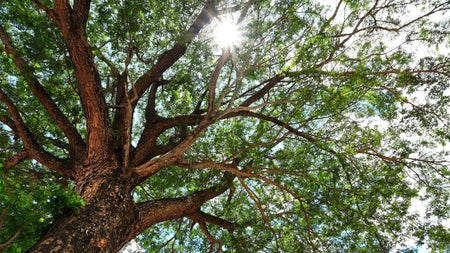
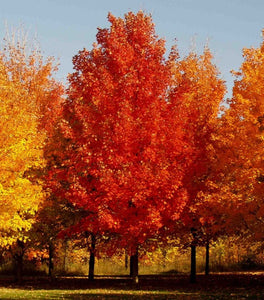
Images Depict Mature Plants
Sugar Maple
Acer saccharum
If you’ve got the space, Sugar Maple is one of those “plant it once, enjoy it for decades” trees—dense, cooling shade in summer and a fall show that’s as classic as it gets. Give it room to spread, keep the soil moderately moist while it establishes, and you’ll end up with a big, symmetrical canopy that adds real property value and true four-season presence.

Use Coupon Code: NEWYEAR
Take an Extra 30% Off Everything on Our Site
📦 Free shipping on orders over $99.
Delay shipping by leaving us a message at Checkout.
Share:


Acer saccharum (Sugar Maple)
The iconic American shade tree.
Sugar Maple (Acer saccharum) is a classic, long-lived deciduous shade tree prized for its majestic form, dense canopy, and unforgettable fall color. In autumn, the green canopy transforms into brilliant yellow, orange, and fiery red, delivering that “postcard fall” look that makes neighborhoods stop and stare.
Big canopy, symmetrical crown, lasting value.
This is a large-landscape tree, commonly reaching 60–80 feet tall with a broad spread of 40–50 feet as it matures. It develops a strong, upright framework and a full crown that becomes an exceptional source of shade over lawns, driveways, and open spaces.
Moist, well-drained soils and room to grow.
Sugar Maple performs best in moderately moist, well-drained soils with good organic matter, and it generally dislikes extremes—prolonged wet feet or chronically dry, compacted ground can limit performance. Plant in full sun to partial shade; full sun typically supports the strongest growth and best fall color.
Shade, allées, native habitat, and generational beauty.
Use Sugar Maple as a specimen tree, a property-defining shade anchor, or planted in rows for a stately allée effect. As a widespread native of eastern North America, it supports wildlife (both in terms of food and habitat value) while providing a four-season structure to large residential landscapes and park-like settings.
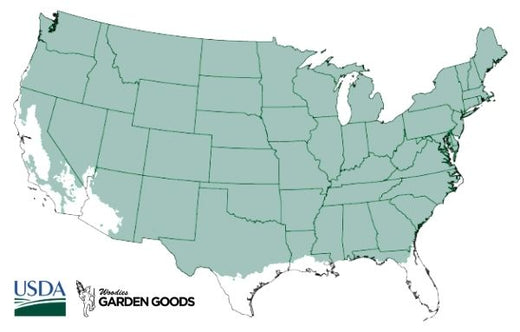
| Hardiness Zone: | 3-8 |
|---|---|
| Mature Height: | 60 to 80 feet |
| Mature Width: | 40 to 50 feet |
| Classification: | Deciduous tree, shade tree |
| Sunlight: | Full sun to partial shade |
| Habit: | Dense Canopy |
| Foliage: | Dark green, brilliant orange to reddish fall color |
| Resistance: | Not fully deer resistant when young (protect saplings) |
| Soil Condition | Moist, well-drained; best on well-drained loams |
| Water Requirements: | Water well until established; moderate drought tolerance once mature |
| Landscape Uses: | Specimen, large shade tree, park lawns, long drives/allées |
How to Care for Sugar Maple
Be sure to read our planting instructions to ensure a healthy and happy Sugar Maple tree for years to come!

How should I plant Acer saccharum (Sugar Maple)?
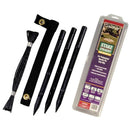
Choose a site with full sun to partial shade and enough open space for a mature canopy (this is not a “tight-yard” tree). Dig a hole 2–3× wider than the root ball and only as deep as the root ball so the root flare ends up level with (or slightly above) the surrounding grade. This planting depth matters—sugar maples tend to struggle if planted too deep or in compacted, poorly draining soils. Set the tree, backfill with native soil, water slowly to settle, then mulch 2–3 inches wide around the root zone (keep mulch off the trunk). If your site is windy or the tree has a top-heavy canopy, stake only as needed and remove staking after establishment. Aim to plant in spring or fall when temperatures are mild and the tree can focus on root growth.

How often should I water Sugar Maple after planting?
For the first 2–4 weeks, water 2–3 times per week (or whenever rainfall doesn’t soak the root zone). Use slow, deep watering so moisture penetrates beyond the surface—this encourages roots to grow outward and downward. Consistent moisture is especially important for sugar maple during establishment. After the first month, transition to 1 deep watering per week during dry periods through the first growing season. Once established, sugar maple is moderately drought-tolerant, but it performs best with occasional deep watering in extended drought—especially in hotter parts of its range or in lighter soils.

When should I fertilize Sugar Maple?
Fertilize in early spring if growth is weak or a soil test indicates a need. A slow-release, balanced fertilizer applied over the root zone (not against the trunk) supports steady, durable growth rather than forcing soft, fast growth. For many established landscape trees, fertilizing is optional unless the site is nutrient-poor. For a soil-first approach, top-dress with compost and maintain a broad mulch ring to build organic matter—sugar maple often responds well to improved soil structure and moisture consistency. If you’re working with compacted or restricted urban soils, focus on soil improvement and irrigation habits first, since those conditions are a common limiter for sugar maple performance.

When and how should I prune Sugar Maple?
Prune primarily for structure: remove dead, damaged, or crossing branches and maintain a strong framework. Many maple care guides recommend late summer pruning to reduce sap “bleeding,” while corrective pruning for hazards can still be done when needed—just avoid heavy cuts during peak sap flow. Use clean, sharp tools and make proper branch-collar cuts (no flush cuts). Keep pruning moderate—sugar maples can be sensitive to over-pruning—especially if the tree is already stressed by soil compaction, drought, or heat. For young trees, a little early training goes a long way toward a strong, safe canopy later.