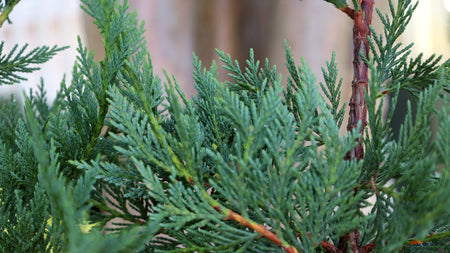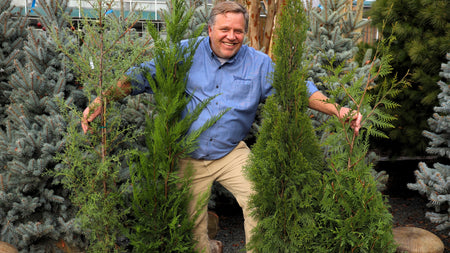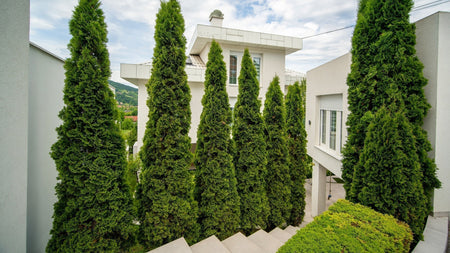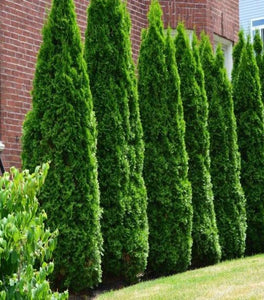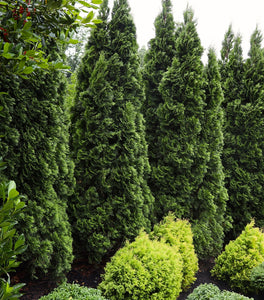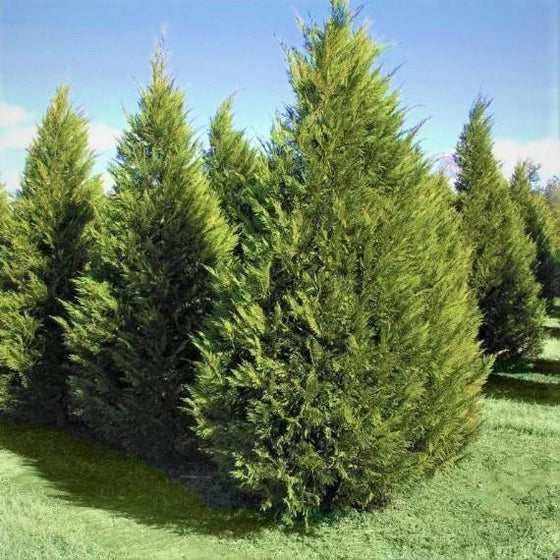


Images Depict Mature Plants
Leyland Cypress
Cupressus x leylandii
Leyland Cypress is the “privacy by next season” tree when you need a real evergreen screen, and you need it fast—soft green texture, serious growth, and that satisfying feeling of a yard that finally feels tucked in. The secret is spacing and discipline: give each tree breathing room, water it well in year one, and start light pruning early so your screen stays dense, healthy, and easy to live with.

15% OFF SITEWIDE SALE
Use Code 'PRIMETIME15' At Checkout
📦 Free shipping on orders over $99.
Delay shipping by leaving us a message at Checkout.
Share:



Fast-Growing Evergreen Privacy Tree For Dense Screens And Windbreaks
Fast Privacy That Fills In Like A Green Wall
Leyland Cypress is a go-to choice when you need privacy quickly. It’s an exceptionally fast-growing evergreen that can add major height in just a few seasons, turning an open backyard into a more secluded outdoor space. The foliage is soft-textured, dense, and green year-round, exactly what homeowners want when they’re shopping for an evergreen screen that looks full, not sparse.
It’s also an easy “project tree” for property lines and back fences. Plant a row, keep the base watered and mulched while it establishes, and you’ll see that screen take shape fast. For best results, think long-term from the start: give it room, keep the line straight, and plan a pruning routine that maintains height and width before it becomes a towering maintenance challenge.
A Natural Windbreak And Sound Buffer For Open Properties
Beyond privacy, Leyland Cypress is excellent for practical protection. In open landscapes, it serves as a living windbreak, making patios, gardens, and play areas more comfortable. When planted in a dense row, it also helps soften road noise and reduces the feeling of exposure in winter when deciduous trees are bare.
Because it stays evergreen, it provides year-round structure and shelter—useful for birds and beneficial backyard wildlife that rely on dense cover. Leyland Cypress works beautifully as a property-line screen, a background evergreen for flowering borders, or a green “frame” that makes the rest of the landscape feel more intentional and finished.
Full-Sun Performance With Adaptable Soil Tolerance
Leyland Cypress performs best in full sun, where it grows denser and maintains a healthier, more uniform shape. It adapts to many common landscape soils as long as drainage is decent—roots dislike chronically wet, soggy ground. If your site is heavy clay, the key is to improve drainage and avoid low spots where water collects.
Once established, it can handle short dry periods better than many screening evergreens, but consistent moisture during the first year is essential for strong rooting. A wide mulch ring helps keep roots cooler, reduces turf competition, and improves soil conditions over time. If you’re planting a long hedge, this simple step makes the entire screen more uniform.
Healthier Screens Start With Spacing, Airflow, And Pruning Discipline
The biggest mistake with Leyland Cypress is planting too close together. Tight spacing creates poor airflow, which increases stress and makes disease issues more likely over time. Proper spacing keeps the interior of the hedge drier, the foliage healthier, and the screen easier to maintain at a manageable height.
Pruning is the other success lever. Start shaping early, light trims once or twice per year help keep the hedge dense and prevent it from becoming a tall, thin wall. Focus on keeping the top slightly narrower than the base so sunlight reaches the lower branches, helping the screen stay full from the ground to the top. With proper spacing and early pruning, Leyland Cypress can remain attractive and functional for many years.
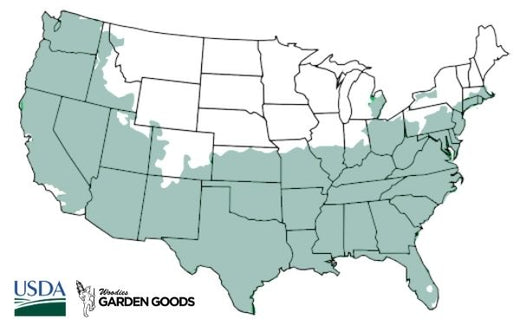
| Hardiness Zone: | 6-10 |
|---|---|
| Mature Height: | 60 to 70 Feet |
| Mature Width: | 15 to 25 Feet |
| Sunlight: | Full sun (best density) |
| Soil Condition: | Adaptable; prefers well-drained soil |
| Water | Moderate; water regularly to establish, then deep water during extended drought |
| Bloom Time / Color | Spring; inconspicuous cones (wind-pollinated) |
| Wildlife Value | Dense evergreen cover for birds; shelter and nesting habitat |
| Resistance (deer/disease/drought/etc.) | Drought tolerant once established; deer browsing is uncommon but young plants may be rubbed |
| Landscape Uses | Privacy screens, windbreaks, sound buffering, property-line hedges, evergreen backdrops |
How to Care for Leyland Cypress
Once you buy a Leyland Cypress tree, make sure to read about the recommended care instructions to keep this plant healthy and thriving.

How should I plant Leyland Cypress?
Plant Leyland Cypress in full sun with a plan for the final screen. Dig a hole 2–3× wider than the root ball and only as deep as the root ball so the root flare sits at grade. Backfill with native soil, water deeply, and create a wide mulch ring to reduce turf competition and keep moisture consistent. If you’re planting a hedge, set your line first and measure spacing carefully before you dig. Good spacing is not optional for long-term health—airflow is one of the biggest factors that helps Leyland Cypress stay vigorous as it fills in. After planting, keep the area weed-free and avoid burying the trunk with mulch.

How often should I water Leyland Cypress after planting?
Water deeply right after planting, then keep the root zone evenly moist during the first growing season. In most landscapes, that means deep watering 1–2 times per week when rainfall is light, and more often during heat, wind, or on sandy soils. Slow soakings are better than quick sprinkling because they push roots deeper. After establishment, Leyland Cypress is more drought-tolerant, but it still performs best with deep watering during extended dry periods—especially in midsummer. Consistent moisture reduces stress, and lower stress typically means fewer health issues and a more uniform, better-looking hedge.
-v1758918073347.png?90x89)
When should I fertilize Leyland Cypress?
Fertilize in early spring as new growth begins using a slow-release evergreen/tree fertilizer, applied over the root zone (not against the trunk). Keep the feeding moderate—over-fertilizing can promote soft growth that’s more prone to stress and harder to keep in shape as a hedge. If your soil is reasonably fertile, one spring feeding is often enough. For hedges planted in turf or lean soils, a second light feeding in late spring can help, but avoid heavy summer fertilizing so the plant can harden off before winter and stay sturdier through heat.

When and how should I prune Leyland Cypress?
Prune Leyland Cypress in late winter or early spring for structure, then do a light trim in mid to late summer if you’re maintaining a hedge. Start pruning early in the plant’s life—small, regular trims keep it dense and prevent it from becoming an oversized wall that’s hard to manage. Keep the hedge slightly narrower at the top than at the base so sunlight reaches the lower branches, helping prevent bare legs. Avoid cutting back into old, leafless wood. Instead, trim the green growth to shape, and maintain a target height so you’re not forced into severe cuts later.