

Best Trees for Zone 10: Evergreen, Flowering & Tropical
 By Richard "Woodie" Buller, GGD co-founder with 35+ years in horticulture
Published On: Aug 31, 2026
Share:
| In this Article | |||
|---|---|---|---|
One of the things I like most about gardening in USDA Grow Zone 10 is the tremendous variety of trees you can grow.
Gardeners farther north often begin by asking one question: will it survive the winter?
In Zone 10, that's only part of the equation. Mild winters open the door to trees that simply aren't realistic landscape choices across much of the country. But Zone 10 also presents its own challenges. Long periods of summer heat, intense afternoon sun, drought in some regions, humidity in others, and soil that behaves nothing like the soil most gardening advice assumes.

So instead of simply asking whether a tree is hardy in Zone 10, I like to ask a better question:
What do I need this tree to do?
Do you need shade? Privacy? Summer flowers? Evergreen structure? Tropical character? Wildlife value? Or maybe you'd like a tree that produces something you can bring into the kitchen.
As I discussed in our Grow Zone 10 planting guide, successful warm-climate gardening isn't about finding plants that merely survive your hardiness zone. It's about choosing plants that thrive in your particular combination of heat, sunlight, moisture, soil, and available space.
That's where choosing the right Zone 10 trees becomes really interesting. You can browse the whole Zone 10 tree collection while you read, and if you're not certain which zone you're in, our grow zone lookup will tell you from your zip code. If you are new to zones altogether, start with everything you need to know about planting zones.
What Zone 10 Tells You — and What It Doesn't
Here's the part most "best trees for Zone 10" lists leave out.
Hardiness Is a Floor, Not a Forecast
A USDA hardiness zone describes one thing: the average annual minimum winter temperature. Zone 10 means your coldest night typically lands somewhere between 30 and 40 degrees Fahrenheit. That's genuinely useful information, and you can check yours against the current USDA Plant Hardiness Zone Map or our own zone map page.
But it tells you nothing about summer heat, humidity, rainfall, wind, or soil.
In most of the country, winter cold is the thing that kills trees, so the hardiness number does most of the work. In Zone 10, winter cold is almost never the limiting factor. Something else is.
Soil pH Is the Constraint Nobody Mentions
This is the big one, and it explains more Zone 10 failures than anything else.
Much of South Florida sits on oolitic limestone and marl. According to UF/IFAS research on calcareous soils in Miami-Dade County, those soils commonly run a pH of 7.4 to 8.4 — strongly alkaline.
That matters because a great many classic Southern landscape trees want acid soil. UF/IFAS notes that Southern Magnolia prefers acid soil, and that where it struggles outside its range, alkalinity is usually the reason rather than cold. American Holly wants a pH below 6.5. Plant either one into limestone and the tree will survive the winter beautifully and then spend years turning yellow between the leaf veins, because it cannot take up iron and manganese from soil that alkaline.
The tree isn't failing because of its zone. It's failing because of its soil.
If you garden on the sandy, more acid soils of central Florida, coastal Texas, or much of coastal Southern California, none of this applies to you and the classic palette works fine. If you garden on South Florida limestone, it changes what you should plant.
Chill Hours Decide Whether a Tree Fruits
The second thing a hardiness zone won't tell you is whether a fruiting tree will actually fruit.
Many fruit trees need a certain number of winter hours below about 45 degrees to set a crop. UF/IFAS reports that figs need roughly 100 chilling hours, and that every part of Florida delivers that except the far south. Olives need far more.
So in Zone 10 you can end up with a perfectly healthy, handsome tree that never produces. That's not a defect. It just means you should plant it for its foliage and its form, and treat any fruit as a bonus.
Knowing which trees fall into that category before you plant is most of the battle.
Two Zone 10 Palettes: The Upper Edge and the True Tropics
Zone 10 covers a lot of ground, and it isn't one gardening climate.
The cooler, drier upper edge — Zone 10a, and the 9b areas right below it, on sandy or neutral soil — will grow most of the classic Southern landscape palette. Southern Magnolias, Hollies, Crape Myrtles, and Cypress all belong here, and they're the backbone of a landscape that reads as substantial rather than resort-like.
True 10b, especially on South Florida limestone, is a different climate. Here the tropicals come into their own: palms, Fiddle Leaf Fig, Key Lime, and the broad-leaved evergreens that shrug off alkaline soil and a wet season.
Most good Zone 10 landscapes I've seen borrow from both.
The rest of this article is organized that way. The upper-edge trees come first, then the true tropicals. Where a tree has a real limitation, I'll say so.
Southern Magnolia: Evergreen Structure for the Upper Edge
There are certain trees that simply look like they belong in a warm-climate landscape, and Southern Magnolia (Magnolia grandiflora) is one of them.
Few trees combine so many ornamental features in one package. The large, glossy evergreen leaves provide substantial year-round structure, while enormous creamy-white flowers bring fragrance and unmistakable Southern character to the landscape.
Southern Magnolias can also perform several jobs at once. A larger specimen can anchor an entire front yard, eventually provide considerable shade, or become part of an evergreen privacy planting. More compact cultivars offer the same foliage and flowers on properties with limited space.
Where it works, and where it doesn't. Southern Magnolia is at its best in Zone 10a and the 9b areas just below it, on acid to neutral soil. On the alkaline limestone of Miami-Dade and Broward, or in the Lower Rio Grande Valley, expect chlorosis and a tree that never quite looks right. This is the one place where I'd tell a Zone 10 gardener to check the soil before the zone.
Give a Southern Magnolia the right location and enough room to mature, and it may eventually become more than another tree in the yard.
It can become the tree that defines the property.
D.D. Blanchard Southern Magnolia
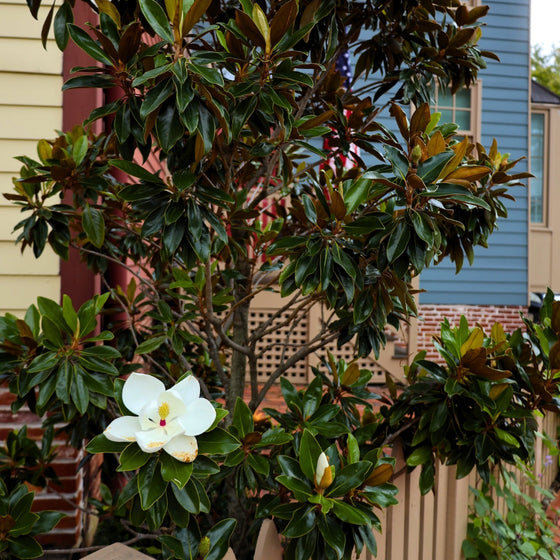
D.D. Blanchard Magnolia is the one I reach for when the goal is a full-sized specimen. The dark green leaves have a rich orange-bronze underside that shows every time the wind moves through the canopy, and the form is naturally symmetrical enough that it looks intentional even when it's young. Plan for a large tree and give it the room it deserves.
Little Gem Magnolia

Little Gem Magnolia solves the problem most homeowners actually have, which is that they love Southern Magnolias and don't have room for one. It stays far more compact, flowers heavily and young, and works as a narrow evergreen screen, a corner anchor, or an espalier against a wall. Same character, a fraction of the footprint.
Choosing the Right Southern Magnolia for Your Space
The real key is choosing the right cultivar for the space you have available. Different selections vary considerably in mature height and width, so don't judge the eventual size of the tree by the container sitting in front of you today.
Beyond the two above, we carry Bracken's Brown Beauty, which has the densest foliage and the best cold tolerance of the group, Claudia Wannamaker, a faster-growing, more open selection, and Teddy Bear, which stays tight and upright with unusually thick, felted leaf undersides. The full Magnolia tree collection has the rest.
One more worth knowing about: Sweetbay Magnolia (Magnolia virginiana) is the Magnolia that handles Zone 10 best of any we carry, and unlike its larger cousin it is genuinely happy in wet ground. In the South it holds its leaves through the winter. If you have a low, damp corner where a Southern Magnolia would sulk, that's the tree.
Use Southern Magnolias for Year-Round Structure
One reason I particularly like Southern Magnolias in warm-climate landscapes is that they're not simply flowering trees.
They're broadleaf evergreens.
When the flowering season ends, that large, glossy foliage continues contributing to the landscape throughout the year.
That makes Southern Magnolia a wonderful backdrop for flowering shrubs, ornamental grasses, perennials, and smaller trees. I especially like the contrast between those large Magnolia leaves and the finer foliage of other plants. Pair one with the fine texture in our ornamental grass collection and you'll see what I mean immediately.
You don't need flowers everywhere for a landscape to be interesting.
Foliage, texture, form, and contrast can do much of the work.
Crape Myrtle: Made for Zone 10 Summers
If Southern Magnolia represents evergreen structure, Crape Myrtle represents summer color.
Few flowering trees seem more comfortable in the heat.
While Redbuds, flowering cherries, and many other ornamental trees make their biggest statement during spring, Crape Myrtles wait until summer. Just when the landscape could use another major burst of color, they begin putting on their show.
That's tremendously valuable in Zone 10.
Crape Myrtles appreciate abundant sunshine, and the wide selection of cultivars allows you to choose different mature sizes and flower colors to fit the landscape. Use them as front-yard specimens, along driveways, near patios, or as flowering anchors within larger landscape beds.
One honest note: Crape Myrtles are happiest in the drier, brighter parts of Zone 10. In a humid site where the foliage stays wet, powdery mildew becomes a nuisance. Give them open air and full sun and the problem largely disappears.
And please — give them room to develop naturally.
One of the biggest mistakes people make with Crape Myrtles is choosing a tree that's too large for the location and then attempting to control its size through severe annual pruning. Choose the appropriate cultivar from the beginning, and you'll have a healthier, better-looking tree that requires far less work.
Double Feature Crape Myrtle

For landscapes with limited space, Double Feature Crape Myrtle delivers tremendous flowering performance without the space required by a massive shade tree. This is the type of Crape Myrtle I'd consider near an entrance, patio, courtyard, or larger perennial garden. Rather than simply planting it alone in the lawn, incorporate it into the landscape — imagine those summer flowers rising above ornamental grasses and other heat-loving perennials. Now the Crape Myrtle isn't simply a flowering tree. It's anchoring an entire summer garden.
If you want a second one with a different personality, Double Dynamite® Crape Myrtle brings the same repeat-blooming habit in a hotter red, and the full Crape Myrtle tree collection covers every size and color we grow.
Cypress Trees: Fast Evergreen Privacy
If privacy is one of your main goals, Cypress is where I'd start in a Zone 10 landscape.
Leyland Cypress
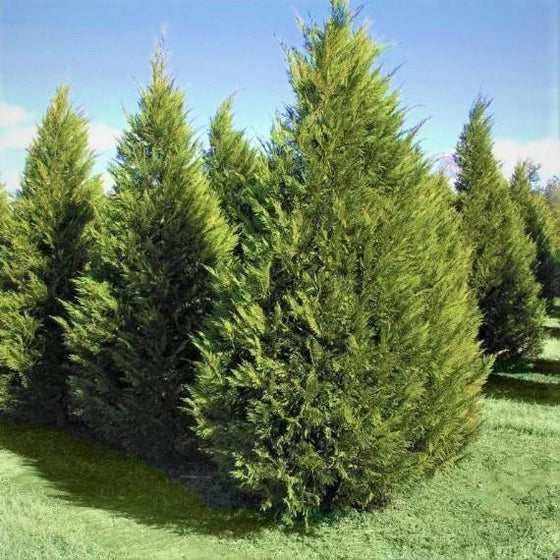
Leyland Cypress is best known for its fast growth, dense evergreen foliage, and ability to create substantial screening. That makes it particularly useful along property lines, behind pools and patios, around outdoor living spaces, or anywhere you need to soften an unwanted view. We carry it from one-foot starter sizes up to six-foot trees, and in multi-packs when you're planting a whole run at once.
I especially like using Leyland Cypress in a mixed evergreen privacy screen. Combine its fine-textured foliage with broadleaf evergreens such as Southern Magnolias and Hollies, and the result can look much more natural than a straight wall of identical trees.
Murray Cypress and Italian Cypress
Murray Cypress is the one I suggest when a Leyland feels like too much tree. It's a little denser, a little tougher in wind, and generally more forgiving on wet ground.
Italian Cypress (Cupressus sempervirens) does something completely different. Those narrow, almost architectural columns give a landscape vertical punctuation without taking up any horizontal space, and nothing else in the catalog reads quite so unmistakably Mediterranean. It is the most heat- and drought-adapted of the three and the best suited to the drier parts of Zone 10. It wants sharp drainage; it will not forgive a soggy site.
Browse all three, plus the arborvitae and junipers, in the privacy tree collection and the broader evergreen tree collection.
Be Honest About Cypress Disease Pressure
I'd rather tell you this up front than have you find out in year four.
Leyland and Murray Cypress are both susceptible to Seiridium and Botryosphaeria canker, and to Phytophthora root rot in ground that stays wet. Heat, humidity, crowding, and a long wet season all raise the pressure, and Zone 10 supplies every one of them.
The practical response is spacing and drainage. Although closer spacing creates privacy more quickly, avoid crowding the trees just to achieve an instant screen. Proper spacing improves airflow, which is genuinely the best defense you have, and it allows each tree to develop a stronger root system and a more natural form.
It also argues for a mixed screen rather than a monoculture. If you plant twenty identical Leylands and canker moves in, you can lose the whole run. Mix in Hollies, Magnolias, and Italian Cypress and one problem takes out one plant instead of the entire property line.
Holly Trees: Structure, Privacy, and Wildlife Value
I think Holly Trees deserve much more attention in warm-climate landscape design.
Depending on the species and cultivar, hollies can become specimen trees, evergreen privacy screens, vertical accents, background plants, or wildlife trees. Their dense evergreen foliage provides structure throughout the year, while berry-producing selections add another season of color and serve as an important food source for birds.
Nellie Stevens Holly
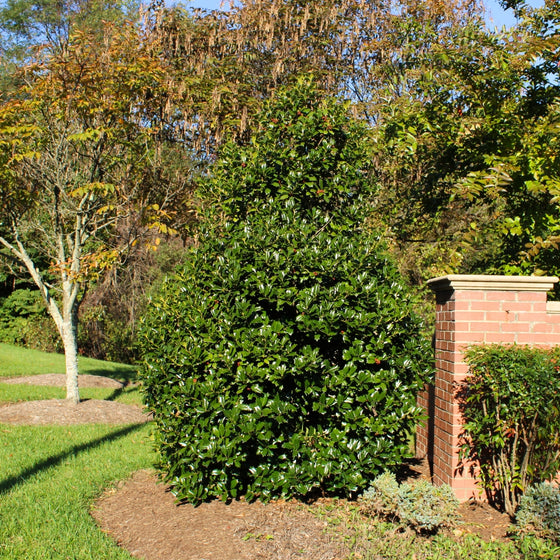
Nellie Stevens Holly is the workhorse of the group and the one I recommend most often. It grows quickly for a holly, holds a naturally pyramidal shape with almost no pruning, sets heavy red fruit without needing a male pollinator nearby, and takes shearing well if you want something more formal. As a screen it does everything a Leyland does, more slowly, with far fewer disease problems and a much better-looking winter.
The Rest of the Holly Palette
We carry a broad selection, and they do genuinely different jobs. American Holly (Ilex opaca) is the native, the best wildlife tree of the group, and the most tolerant of shade. Foster Holly is narrower and finer-textured, good where you want height without width. Oakland® Holly has an oakleaf-shaped leaf and a tidy pyramidal habit. Christmas Jewel® Holly is compact and fruits heavily. Dragon Lady Holly is the narrowest of all, nearly columnar, and useful in tight spots. For lower work, the holly shrub collection covers everything from Dwarf Burford to Sky Pencil. The full Holly tree collection is here.
Where Hollies Stop — and What to Plant Instead
Now the honest part.
Hollies are an upper-edge Zone 10 plant, not a true-tropics plant. The selections we carry are rated to roughly Zone 9, and the two things that stop them are heat and soil. Japanese hollies in particular — Sky Pencil, Helleri, Soft Touch and their relatives — struggle in the humid Deep South well before you reach Zone 10 at all. And American Holly wants soil below about 6.5 pH, which South Florida limestone simply is not.
So if you garden in 10a on sandy or neutral soil, plant hollies freely. If you garden on Miami-Dade limestone, this is a section to read and skip. Reach for the broadleaf evergreens in the Zone 10 shrub collection instead, and let palms and Magnolias carry the evergreen framework.
Use Evergreens to Create Better Privacy Screens
Privacy planting becomes much more interesting when you stop thinking of it as a fence.
A privacy screen doesn't have to be a perfectly straight row of identical trees. In fact, some of my favorite privacy screens aren't.

Try combining evergreen trees with different forms and textures.
A Southern Magnolia might become the tallest anchor. Hollies can create dense evergreen screening at another level. Palms or flowering trees can introduce different shapes, while large shrubs and ornamental grasses soften the foreground.
Instead of creating a green wall, you're creating a layered landscape that also provides privacy.
That's a much more interesting way to solve the problem — and, as I mentioned above, a much more resilient one.
Arbequina Olive: Mediterranean Character for Zone 10
If I were designing a Zone 10 landscape, the Arbequina Olive Tree would be high on my list.
There's something about an Olive Tree that immediately changes the personality of a garden.
The narrow gray-green foliage provides a completely different texture from Southern Magnolias, Hollies, Crape Myrtles, and palms. It looks beautiful alongside stone, gravel, ornamental grasses, Rosemary, Salvias, patios, and contemporary architecture.
Arbequina Olive Tree
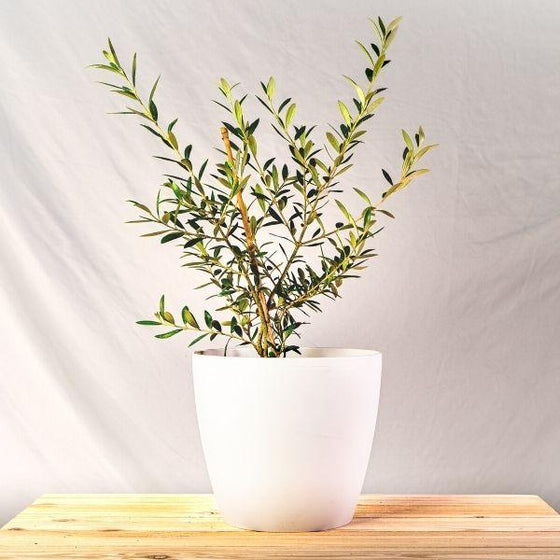
The Arbequina Olive is the most adaptable olive for landscape use, and it takes container culture better than almost any other tree we sell. The important requirements are straightforward. Give it sunshine. Give it drainage. And don't plant an Olive Tree in soil that remains constantly wet — that is the one thing it will not tolerate.
Will an Olive Tree Fruit in Zone 10?
Probably not, and you should know that before you plant one.
Olives need a genuine cool period to set flowers — on the order of two months in the 40s, and by most accounts several hundred chilling hours. South Florida delivers a fraction of that. The tree itself will be perfectly happy; the crop will not arrive.
That doesn't make it a bad choice. It makes it an ornamental rather than an orchard tree. The silver foliage, the gnarled trunk it develops with age, and the Mediterranean atmosphere are the reasons to plant it, and they're reason enough. If you're in the cooler, drier upper edge of Zone 10 you may see some fruit. Treat it as a bonus.
Create a Mediterranean Garden Around an Olive Tree
Zone 10 offers gardeners the opportunity to explore landscape styles that are difficult to reproduce farther north.
A Mediterranean-inspired garden is one of my favorites.

Start with an Arbequina Olive as the focal point. Surround it with drought-tolerant shrubs, ornamental grasses, Rosemary, Salvia, and other plants that appreciate sunshine and well-drained soil — the Zone 10 perennial collection is a good place to look. Then introduce stone or gravel elements to reinforce the design, and add a pair of narrow Italian Cypress if you want the vertical accent that completes the picture.
Suddenly, you've created something that looks completely different from a traditional American foundation planting.
More importantly, you're working with the climate instead of constantly fighting it.
Palms: The True Tropical Palette
When most people imagine a Zone 10 garden, they sooner or later picture a palm.
This is where Zone 10 genuinely does something no other part of the mainland can. Palms are also the group least bothered by alkaline soil, which makes them the natural backbone in exactly the places where Magnolias and Hollies struggle.
But palms vary tremendously in mature size and in what they're good for. Before you choose one, decide whether you want an architectural specimen, a screen, or a container plant.
Majesty Palm
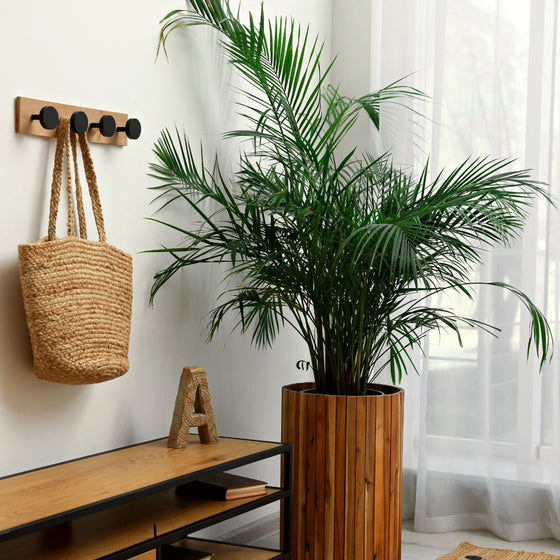
Majesty Palm gives you a full, lush, feather-frond palm at a size that still fits a residential landscape. It's a riverbank species by origin, which tells you what it wants: consistent moisture and soil that isn't parched. On high-pH ground it will need feeding to stay deep green, so a good palm fertilizer is worth the trouble. Give it that and it's one of the most generous-looking palms you can plant.
Pygmy Date Palm: Tropical Character Without Overwhelming the Landscape
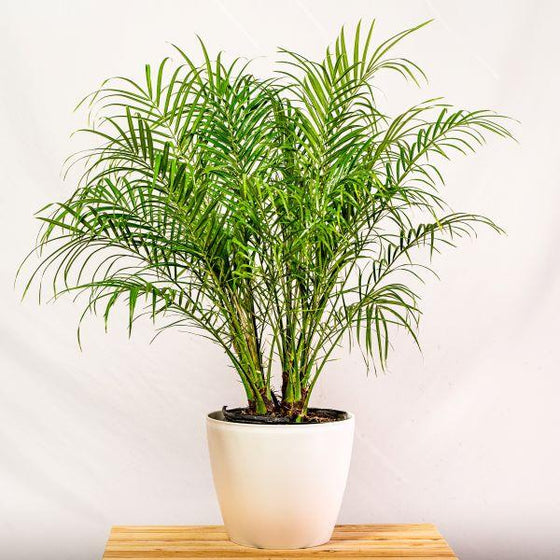
Pygmy Date Palm is the one I like best for residential landscapes. Its relatively compact scale lets you introduce that unmistakable tropical character without planting something that eventually overwhelms the property. It works especially well around patios, courtyards, pools, and entrances.
I don't really think of these as traditional shade trees.
I think of them as architectural plants. They're there to provide shape, texture, height, and atmosphere. One note before you order: we cannot ship Pygmy Date Palm into Texas — see the shipping section below.
Clumping Palms for Screening and Texture
Two palms serve a completely different purpose, and both do it by clumping rather than growing a single trunk.
Areca Palm is the screening palm. Several planted together create a lush living screen around a pool, patio, outdoor shower, seating area, or property boundary. That's an important lesson when selecting trees for any landscape: don't simply ask whether you like the plant. Ask what problem it can solve. A beautiful plant that also creates privacy is working twice as hard for its place.
Lady Palm gives you another option where a finer-textured, clumping palm makes more sense than a single-trunk specimen. Its foliage creates a lush appearance and is especially effective around sheltered patios, courtyards, entrances, and shaded outdoor living areas — it takes low light better than almost any palm we carry.
Both are on the Texas restricted list, and both move in and out of stock quickly. Check the palm collection for current availability.
Sago, Ponytail, and Cat Palm
Three more worth knowing, none of them restricted anywhere we ship.
Sago Palm isn't botanically a palm at all — it's a cycad, and one of the oldest plant lineages on earth. It reads as a stiff, symmetrical, almost sculptural rosette, and it's superb in a container or as a focal point in gravel. Watch it for cycad scale, which is a real problem in South Florida and much easier to stop early than late.
Ponytail Palm is a succulent wearing a palm costume, with a swollen bottle-shaped base and a fountain of thin strappy leaves. It stores its own water, so the one way to kill it is poor drainage. Plant it high, in sharp soil, and forget about it.
Cat Palm is the shade specialist — a dense, fine-textured clumper for that north-facing side yard or the space under a canopy where nothing else looks lush.
Key Lime: One Fruit Tree Earns Its Place
I wouldn't create a list of the best trees for Zone 10 without including at least one citrus tree, and Key Lime earns that position.
What I like about citrus is that it blurs the line between ornamental and edible landscaping. A Key Lime Tree provides glossy evergreen foliage, wonderfully fragrant flowers, and edible fruit. That's a lot of landscape value from one relatively small tree.
It's also one of the few fruit trees on this list that will genuinely produce in Zone 10. Unlike figs and olives, citrus doesn't need a winter chill to fruit — South Florida is essentially its home climate.
Key Lime Tree
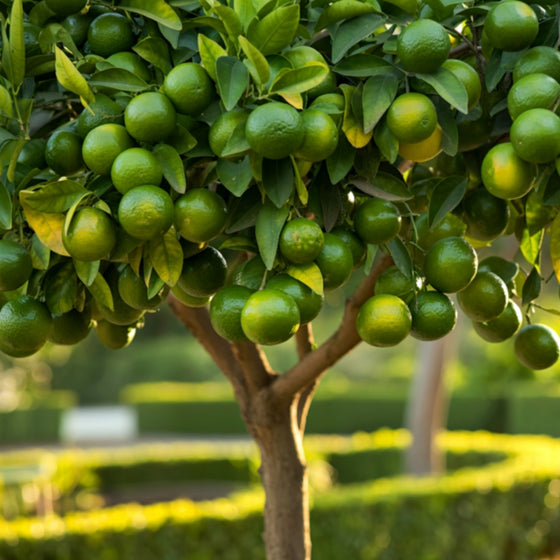
Place a Key Lime Tree somewhere you'll actually enjoy it — near a sunny patio, outdoor kitchen, courtyard, or edible garden. There's no reason to hide a beautiful fruit tree behind the shed simply because it produces something you can eat. Make it part of the landscape. If you'd rather have lemons, Meyer Lemon does the same job with a sweeter fruit and the same fragrance.
Fruit Trees Don't Have to Live in an Orchard
This is a design philosophy I think more gardeners should embrace.
You don't necessarily need an orchard to grow fruit.
A fruit tree can be a landscape tree. Citrus is especially good at this because its evergreen foliage and fragrant flowers already provide considerable ornamental value before you even consider the fruit.
In Zone 10, edible landscaping can become part of the overall design rather than something separated from it.
A Key Lime Tree near the patio. An Olive Tree anchoring a sunny Mediterranean-style bed. A Chicago Hardy Fig in a large container where you can control the water. Herbs incorporated among flowering perennials.
Suddenly, the landscape isn't simply something you look at.
It's something you use.
Fiddle Leaf Fig: From Houseplant to Landscape Tree
Most gardeners know the Fiddle Leaf Fig as a houseplant.
But Zone 10 gives gardeners opportunities that simply don't exist in colder climates. In appropriately warm and protected environments, tropical plants that spend their lives beside windows farther north can become dramatic outdoor specimens.
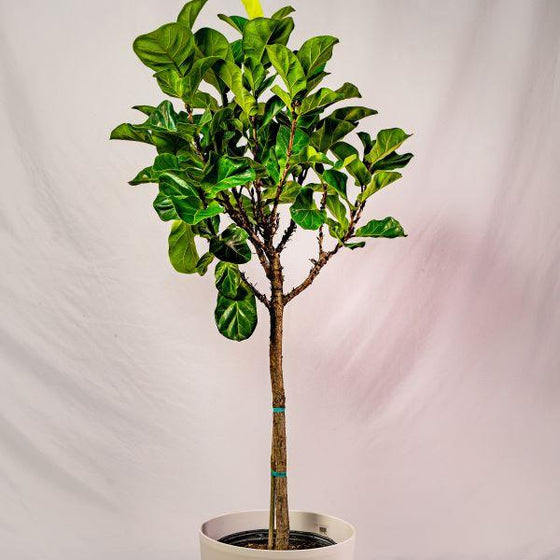
The enormous leaves of a Fiddle Leaf Fig create a completely different texture from traditional landscape trees and pair beautifully with palms and other tropical foliage.
Two things to know before you plant one in the ground. It is genuinely a 10b tree rather than a 10a tree — in the cooler upper edge of Zone 10 it belongs in a container you can move. And outdoors it does not stay the size of the plant in your living room. It becomes a large tree with a substantial trunk, and its branch crotches are tight enough that big specimens can break apart in high wind. Site it away from the house and away from anything you'd hate to have a limb land on.
This is one plant where I'd pay especially close attention to your individual microclimate. Remember that Zone 10 describes winter temperature. It doesn't tell you everything about sunlight, wind, rainfall, humidity, or summer heat. Your individual property still matters. The rest of the tropical plant collection is worth a look while you're thinking about it.
What We Can and Cannot Ship to Texas
A practical note, because Zone 10 is one of the places where this actually comes up.
Texas has agricultural restrictions on several plants that would otherwise be obvious Zone 10 recommendations. We cannot ship citrus, Pygmy Date Palm, Areca Palm, Lady Palm, Fishtail Palm, or Coconut Palm into Texas. That means the Key Lime, Meyer Lemon, Pygmy Date, Areca and Lady Palm above are unavailable to Texas gardeners, and there's nothing we can do about it — the restrictions are the state's, not ours.
Florida gardeners are unaffected. Everything in this article ships to Florida.
If you're in Texas and want the tropical look, the palms that can ship are Sago, Ponytail, Majesty and Cat Palm, and Italian Cypress handles the hot, dry Rio Grande Valley better than almost anything else we grow.
Restrictions change, and other states have their own lists. Before you order, it's worth a look at our state-by-state plant restrictions and how we ship plants.
Don't Make Every Tree Tropical
Just because you live in Zone 10 doesn't mean every plant needs to look like it came from a tropical island.
In fact, I think the most interesting warm-climate landscapes often combine several different influences.
A Southern Magnolia can establish permanent evergreen structure. Holly Trees can provide privacy and wildlife value. Crape Myrtles bring summer flowers. An Arbequina Olive introduces Mediterranean texture. Palms create tropical character around the pool. And a Key Lime Tree near the patio provides flowers, fragrance, and fruit.
Those trees aren't competing with one another.
They're performing different jobs.
That's good landscape design.
Choose Trees According to the Job
Before buying any tree, decide what you actually need it to accomplish.
- Year-round evergreen structure and large fragrant flowers — Southern Magnolia, or Little Gem where space is tight.
- Evergreen privacy, berries and wildlife value — Nellie Stevens Holly.
- Fast privacy along a property line — Leyland Cypress or Murray Cypress.
- Summer flowers and excellent heat tolerance — Crape Myrtle.
- A Mediterranean or water-conscious landscape — Arbequina Olive with Italian Cypress.
- Tropical architecture in a smaller space — Pygmy Date Palm.
- Lush tropical screening — Areca Palm.
- A bold sculptural specimen — Sago Palm or Ponytail Palm.
- Edible fruit with evergreen ornamental value — Key Lime Tree.
- A wet, low corner where nothing else is happy — Sweetbay Magnolia.
Once you begin selecting trees according to their purpose, designing the rest of the landscape becomes much easier.
Create Layers With Trees
One of the concepts I discussed in our Grow Zone 10 planting guide is using plants to create microclimates.
Trees are where that process begins.
A Southern Magnolia can eventually create shade for an entire planting bed. A group of Hollies can protect an outdoor space from wind while providing privacy. Palms can create filtered light. Smaller flowering trees can occupy the space between large canopy trees and shrubs.
Suddenly, you're no longer planting individual trees.
You're building layers.
And those layers begin changing the environment of the property itself — which, in a climate this hot, is worth more than any single plant on this list.
How to Plant a Tree in Zone 10
One of the biggest advantages Zone 10 gardeners have is an extended planting season.
Use it. Here's the sequence I follow.

- Plant during the cool season. Whenever possible, establish trees in fall, winter, or early spring rather than waiting until the most intense summer heat arrives. Cooler air temperatures reduce stress while the soil often remains warm enough for continued root development, so by the time summer arrives the tree may already have months of root growth behind it.
- Dig the hole wider than the root ball, but no deeper. Roots spread outward far more than they go down. A wide, shallow hole with loosened sides gives them somewhere easy to go, and digging deeper than the root ball only invites the tree to settle.
- Set the top of the root ball level with or slightly above the surrounding soil. Planting too deep is the single most common way a new tree is lost, and in a climate with a heavy wet season it is fatal faster. Slightly high is always safer than slightly low.
- Water thoroughly to settle the soil around the roots. Backfill with the native soil you removed, then water slowly and deeply to collapse the air pockets. Do not tamp the soil down with your foot; let the water do that work.
- Mulch the root zone, not the trunk. Spread a 2 to 3 inch layer of organic mulch out over the root zone, and pull it back several inches from the trunk so the bark stays dry.
Mulch Becomes Especially Important in Zone 10
A 2 to 3 inch layer of organic mulch can make a tremendous difference around newly planted trees.
Mulch helps moderate soil temperature, reduce evaporation, suppress weeds, and protect the developing root system. In a climate where the soil surface can get brutally hot, that's not a finishing touch. It's part of the planting.
But don't pile it against the trunk.
I want mulch spread over the root zone, not stacked around the base of the tree like a volcano.
Remember what we're trying to protect: the roots.
Water the Roots, Not the Calendar
Newly planted Zone 10 trees require consistent moisture as they become established, but that doesn't mean watering just because the calendar says it's Tuesday.
Check the soil.
A tree growing in sandy soil may need water much sooner than the same tree growing in heavier soil. Rainfall matters. Wind matters. Temperature matters. The tree itself matters.
Water thoroughly enough to moisten the root ball and the surrounding soil, then monitor how quickly the soil begins to dry. As the tree becomes established, encourage roots to move outward and downward rather than keeping the immediate planting hole constantly saturated.
Deep roots create more resilient trees.
Pay Attention to Reflected Heat
One of the most overlooked parts of Zone 10 gardening is reflected heat.
Concrete patios, pool decks, stone, light-colored walls, driveways, and south- or west-facing architecture can make a planting location considerably hotter than the surrounding landscape.
A heat-loving Crape Myrtle, Italian Cypress or Olive Tree may be perfectly comfortable there.
Another tree may struggle.
Before planting, spend some time watching the property. Where is the hottest afternoon sun? Where does the house create shade? Where does rainwater collect? Where does the wind consistently blow?
The more you understand your property, the easier it becomes to choose trees.
A Well-Designed Zone 10 Tree Palette
You don't need every tree on this list.
In fact, I'd rather see a homeowner choose five or six types thoughtfully than plant fifteen unrelated trees simply because they can.
A well-planned Zone 10 landscape might use a Southern Magnolia for evergreen structure and a major specimen, Holly Trees for privacy and wildlife, Crape Myrtle for summer flowers, an Arbequina Olive for Mediterranean texture, a Pygmy Date Palm around the patio or pool, Areca Palm where additional screening is needed, and a Key Lime Tree near an outdoor kitchen.
Repeat some of those plants elsewhere on the property and the landscape begins to develop rhythm.
That's how a collection of plants becomes a design.
Shop the Zone 10 Tree Collection
Zone 10 Tree Questions, Answered
What is the best evergreen tree for Zone 10?
It depends on which job you need done. For a large specimen with year-round structure and fragrant flowers, Southern Magnolia is hard to beat on acid or neutral soil. For fast privacy along a property line, Leyland Cypress and Murray Cypress grow quickest, though Nellie Stevens Holly gets you there more slowly with far fewer disease problems. For vertical accent in a hot, dry site, Italian Cypress is the best choice we carry.
Will a Southern Magnolia grow in South Florida?
It will survive the winter easily, but soil is the real question. Much of Miami-Dade and Broward sits on limestone with a pH of 7.4 to 8.4, and Southern Magnolia prefers acid soil. On alkaline ground it develops chronic iron and manganese chlorosis and never looks its best. On the sandier, more acid soils of the upper edge of Zone 10 it performs well. If you garden on limestone, Sweetbay Magnolia or a palm is the better choice.
Do olive trees produce olives in Zone 10?
Usually not. Olives need a genuine cool period to set flowers, on the order of two months in the 40s, and South Florida delivers only a fraction of the chilling hours required. The tree will grow perfectly well as an ornamental for its silver foliage and its Mediterranean character, but you should plant it expecting no crop and treat any fruit as a bonus.
What is the fastest-growing privacy tree for Zone 10?
Leyland Cypress. It grows quickly, holds dense evergreen foliage to the ground, and screens a property line faster than anything else we carry. The tradeoff is disease pressure: Leyland is susceptible to Seiridium and Botryosphaeria canker and to root rot in wet ground, and Zone 10 heat and humidity raise that risk. Space the trees generously for airflow and mix in Hollies and Magnolias rather than planting a long row of identical trees.
When is the best time to plant a tree in Zone 10?
Fall, winter, or early spring. Cooler air temperatures reduce stress on the tree while the soil stays warm enough for roots to keep growing, so the tree has months of root development behind it before summer heat arrives. Planting in the middle of a Zone 10 summer is the hardest possible start you can give a new tree.
Can you ship palm trees and citrus to Texas?
Not all of them. Texas restricts citrus, Pygmy Date Palm, Areca Palm, Lady Palm, Fishtail Palm and Coconut Palm, so those cannot be shipped into the state. Sago Palm, Ponytail Palm, Majesty Palm and Cat Palm can. Florida has no such restrictions, so every tree in this article ships to Florida. Restrictions do change, so check our state-by-state list before ordering.
Woodie's Take
If I were designing a Zone 10 landscape from the ground up, I wouldn't begin by searching for the most tropical trees I could find.
I'd start by deciding what I wanted the landscape to do. And then, before I bought anything, I'd find out what my soil was.
That second part is the one most people skip, and it's the one that decides whether half this list works for you. On sandy, acid ground in the upper edge of Zone 10, plant the Southern garden — Magnolias, Hollies, Crape Myrtles, Cypress. On South Florida limestone, let the palms and the tropicals carry the structure and don't fight it.
For me, I'd find a place for a Southern Magnolia where it had enough room to become a real specimen. There's something about those enormous white flowers against glossy evergreen foliage that gives a landscape a sense of permanence.
I'd use Holly Trees where I needed evergreen structure or privacy, especially if I wanted something more natural-looking than a solid row of identical trees.
Then I'd bring in Crape Myrtles for summer flowers.
I'd plant an Arbequina Olive somewhere sunny and well-drained where I could appreciate that beautiful gray-green foliage, and I'd plant it for the foliage, not for the olives.
Around a pool or patio, I'd introduce palms — Pygmy Date, Areca, Majesty or Lady Palm — where their architecture can really be appreciated.
And yes, I'd probably find room for one Key Lime Tree somewhere close to the outdoor living area. There's something pretty special about walking outside, smelling citrus blossoms, and eventually picking fruit from a tree that's also making the landscape more beautiful.
That's the opportunity Zone 10 gives you.
You don't have to choose between a Southern garden, a tropical garden, a Mediterranean garden, or an edible landscape. You can borrow the best ideas from all of them.
The trick is restraint.
Choose trees because they have a purpose. Give each one enough room to become what nature intended it to be. Repeat forms and textures so the landscape feels connected, and use your trees to create shade, privacy, flowers, wildlife habitat, structure, and outdoor spaces that become more enjoyable every year.
That's when you're no longer just planting trees. You're designing a landscape.