

Best Perennials to Plant in Fall for Next Year
 By Richard "Woodie" Buller, GGD co-founder with 35+ years in horticulture
Published On: Aug 31, 2026
Share:
| In this Article | |||
|---|---|---|---|
There is something about spring that makes all of us want to plant. The weather warms up. Garden centers fill with flowers. We walk outside after a long winter and immediately start thinking about what we can add to the landscape.
But some of the best spring and summer gardens actually begin months earlier. They begin in the fall.
Fall is one of my favorite times to plant hardy perennials because we're giving the plants something incredibly valuable: time to grow roots before they have to grow flowers.
The air is cooler. The soil is still warm. Rainfall often becomes more dependable, and newly planted perennials aren't immediately facing the combination of intense summer heat and transplant stress. They can settle in.
Then winter arrives, the plants rest, and when spring returns, they're already in the ground and ready to grow.
If you want a perennial garden that's fuller, stronger, and more colorful next year, fall is a great time to start building it.
Why Fall Is Such a Good Time to Plant Perennials

When we plant a perennial in spring, we're asking it to do several things at once. Grow roots. Produce foliage. Develop flowers. And prepare for summer.
Fall planting changes the equation.
As temperatures begin cooling, many hardy perennials naturally shift their energy away from flowers and toward roots. The soil also stays warmer than the air for quite a while, which means root development can continue even after top growth begins slowing down. That's exactly what you want. If you want the underlying science, we covered it in why dormancy makes fall and winter planting work.
Do not worry about how impressive the plant looks in October. I'm thinking about what those roots will allow the plant to do next April, May, and June.
Perennials for Sunny Gardens
If you have a sunny bed to fill, this is where the fall-planting payoff is biggest. Every plant below is a hardy perennial that spends the cool months building roots and comes back stronger for it. Browse the full range in our sun perennials collection.
Echinacea: Plant Coneflowers Now for Summer Pollinators
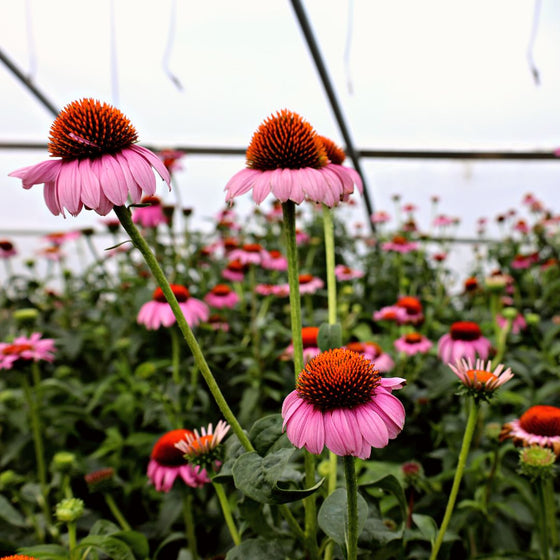
If you're building a sunny perennial garden, Echinacea, or Coneflower, belongs near the top of the list. Coneflowers are among my favorite perennials because they bring together so many things gardeners want: long-lasting summer flowers, pollinator value, heat tolerance, and excellent landscape versatility. Magnus is the one I keep coming back to — the petals hold horizontally instead of drooping, which makes a planting read as flowers rather than as a mass of stems.
Plant Echinacea in the fall, and you're giving the root system a chance to establish before next summer's heat arrives. If you want more color range, Cheyenne Spirit opens in a mix of reds, oranges and golds from the same planting, and Sombrero Sangrita stays compact enough for the front of a border. The whole range is in our Coneflower collection.
I like Coneflowers planted in groups rather than individually. Three plants are better than one. Five or seven can become a real landscape feature. Use them in sunny borders, pollinator gardens, cottage gardens, and mixed perennial beds where their upright flowers can rise above lower-growing plants. There's more on designing with them in our guide to Echinacea in the landscape, and the basics are covered in how to care for Coneflowers.
And when flowering ends, consider leaving at least some of the seedheads standing. The birds will appreciate them.
Rudbeckia: Golden Summer Color Starts With Fall Planting

Few plants make a sunny garden feel happier than Rudbeckia, commonly called Black-Eyed Susan. Those golden flowers seem perfectly suited to summer, but fall is an excellent time to establish hardy perennial Rudbeckias. Goldsturm is the standard for good reason — it flowers heavily, holds its shape, and spreads into a drift without taking over.
If you want a shorter, tidier version for a small bed, Little Goldstar stays around knee height. American Gold Rush is the one I reach for in humid gardens, because it holds up to the leaf spot that can disfigure other Black-Eyed Susans in a wet summer. See the rest in our Rudbeckia collection, and read more in our look at Rudbeckia as a late-summer favorite.
Rudbeckia works beautifully with Echinacea because the two plants have similar landscape uses while providing different flower colors. Add ornamental grasses, and suddenly you've got the beginnings of a prairie-inspired planting. Add Salvia or Nepeta, and the same plants start to feel more like a cottage garden.
That's one of the things I like about dependable perennials. They can fit into completely different landscape styles depending on what you plant around them.
Salvia: Get a Head Start on Spring and Summer Flowers
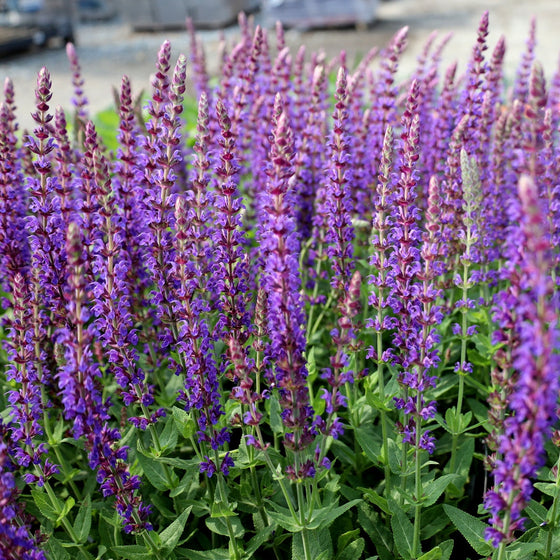
Perennial Salvia is another plant I'd happily put into the ground during fall. Its upright flower spikes provide a completely different form from rounded plants such as Echinacea and Rudbeckia, and the flowers are tremendously attractive to bees and other pollinators. East Friesland is a compact, heavy-flowering selection that reblooms well if you shear it after the first flush.
May Night is the deeper, more saturated purple of the group, and Snow Hill gives you the same vertical form in white, which is useful when a border is getting too busy. Our full Salvia collection has the rest.
Salvia works particularly well near the front and middle of sunny borders. Plant several together. When they flower, those repeated vertical spikes create rhythm through the garden.
And that's an important design lesson. Don't simply think about flower color. Think about flower shape. Spikes, daisies, umbels, plumes, and rounded flowers all create different visual effects.
Nepeta: One of the Easiest Ways to Soften a Landscape
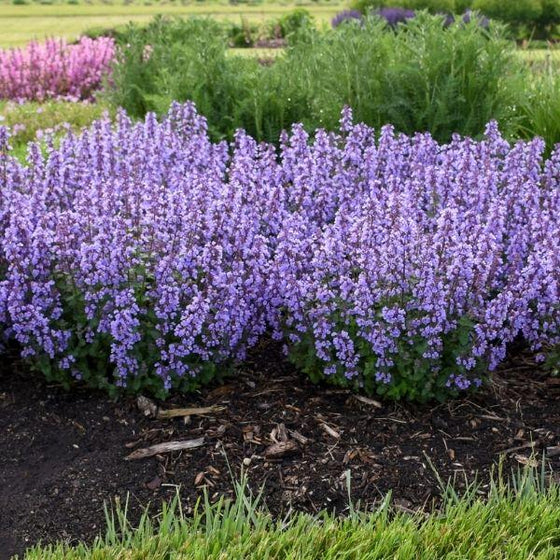
Nepeta, or Catmint, is one of those perennials that makes almost everything planted beside it look better. The soft gray-green foliage and masses of blue-purple flowers create a relaxed edge that works beautifully along walkways, around Roses, in cottage gardens, and toward the front of sunny perennial borders. Browse what's available in our Catmint collection.
Nepeta also gives you a wonderful contrast against plants with darker foliage or stronger upright forms. If you're planting Roses this fall, consider planting Catmint nearby at the same time. By next year, instead of having individual Roses surrounded by mulch, you'll begin developing a layered planting. That's a much more finished look.
If Catmint isn't available in the size you want, Russian Sage fills a similar role — the same hazy blue-purple effect on a taller, more upright plant. Little Spire is the one to use where full-size Russian Sage would flop into a walkway.
Dianthus: Fall Planting for Spring Color and Fragrance
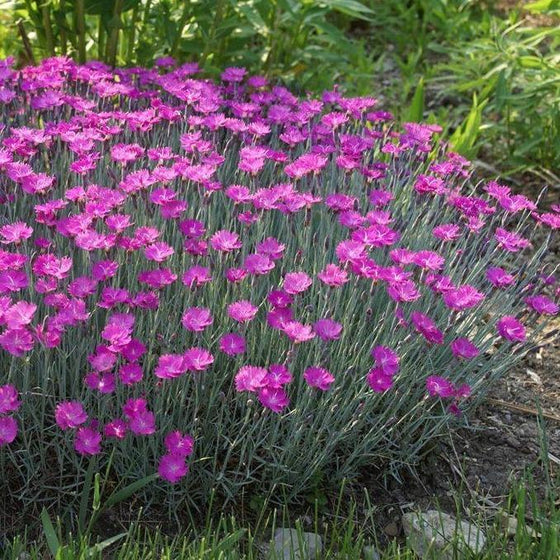
If you're thinking specifically about flowers next spring, Dianthus deserves a place on the list. Many perennial Dianthus varieties provide wonderful spring flowers along with low, blue-green or gray-green foliage that remains attractive well beyond the flowering season.
And then there's the fragrance. Plant Dianthus near a walkway, patio, entrance, or front edge of a perennial bed where you'll actually notice those clove-like flowers when you pass. Firewitch is the most reliable of the group in my experience, with magenta flowers over silvery-blue foliage, and Kahori gives you a softer pink. Both are in our Dianthus collection, and there's more detail in our guide to growing Dianthus.
I especially like using Dianthus as a lower layer beneath taller spring and summer perennials. That way, the garden starts with color close to the ground before taller plants take over later in the season.
Daylilies: Dependable Perennials for Almost Any Garden
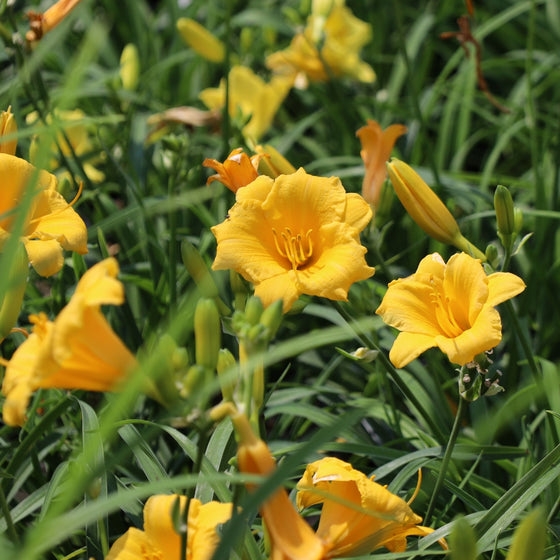
There are flashier perennials. There are newer perennials. But there aren't many that have proven themselves in American landscapes as consistently as Daylilies. They're adaptable, dependable, and available in an enormous range of flower colors.
Fall planting gives Daylilies time to begin establishing their root systems before the following growing season. Happy Returns and Stella D'Oro are the two rebloomers I'd start with if you want the longest possible flowering window; Pardon Me brings a deep red into the same compact form. See them all in our Daylily collection.
Use them in groups along foundations, on slopes, beside walkways, in mixed borders, or anywhere you need reliable summer flowers.
I particularly like combining Daylilies with ornamental grasses. The similar foliage shapes help connect the plants visually, while the flowers provide the seasonal excitement.
Sedum: Fall Planting for Tough, Dependable Color
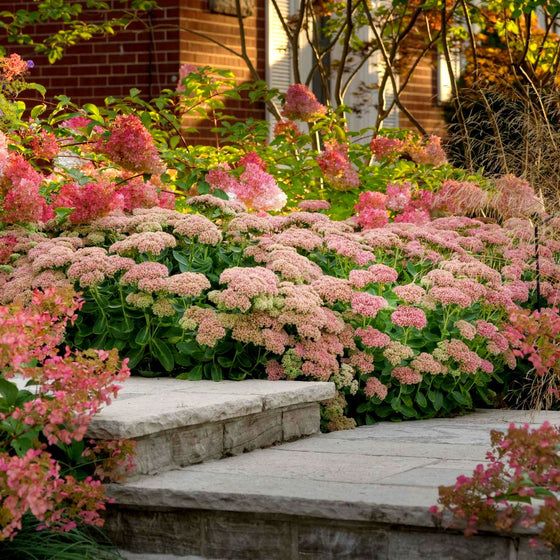
If you have a hot, sunny, well-drained area, Sedum should be on your list. Sedums are among the easiest perennials to grow once established, and many varieties provide outstanding late-season flowers that are valuable to pollinators. Autumn Joy is the classic — the flower heads open dusty pink, deepen to rust, and then stand through winter as a structural element.
Autumn Fire is a stronger-stemmed version of the same idea that's less likely to split open in the middle, and Angelina is a low, chartreuse groundcover form for the front edge. The rest are in our Sedum collection, and our guide to planting Sedums covers the details.
Their succulent foliage also provides a completely different texture from traditional leafy perennials. That's useful in design. Put Sedum near ornamental grasses, Coneflowers, or Salvias, and suddenly the foliage contrast makes all of the plants more interesting.
Just remember that drainage matters. Sedum doesn't want to spend winter sitting in saturated soil.
Asters: Plant the Fall Garden for Next Fall Too

Fall planting isn't only about creating flowers for spring and summer. You should also be thinking about next fall. That's where perennial Asters become important.
Asters bloom late in the growing season, when many other perennials have already finished. They're also extremely valuable to late-season pollinators. October Skies is a compact aromatic Aster that mounds neatly instead of sprawling, which is the failure mode that puts people off Asters in the first place.
Raydon's Favorite is its taller sibling with the same clean habit, and Purple Dome gives you a deeper violet in a low mound. Our Aster collection has the full range, including native selections you'll also find in our native perennials collection.
A garden filled entirely with spring and early-summer flowers can feel surprisingly empty by September. Asters solve that problem. Plant them now, let them establish, and they'll help finish next year's perennial season with a strong burst of color.
One honest caveat: Asters are among the perennials that establish most easily when planted in spring, because they are actively flowering in fall rather than winding down. Fall planting works well as long as you get them in early enough to root before the ground cools, and water them properly on the way in. If you're planting in late November in a cold zone, an Aster is the one plant on this list I'd hold until spring.
Perennials for Shade and Woodland Gardens
Don't forget about shade. If you've got areas beneath mature trees or along the shaded side of your home, fall is an excellent time to begin building a woodland-style perennial garden. Our shade perennials collection is where to start, and if you're not sure what kind of shade you actually have, not all shade is the same walks through the difference between dappled light, deep shade and morning sun.
Hellebores: Plant Now for Flowers When You Need Them Most
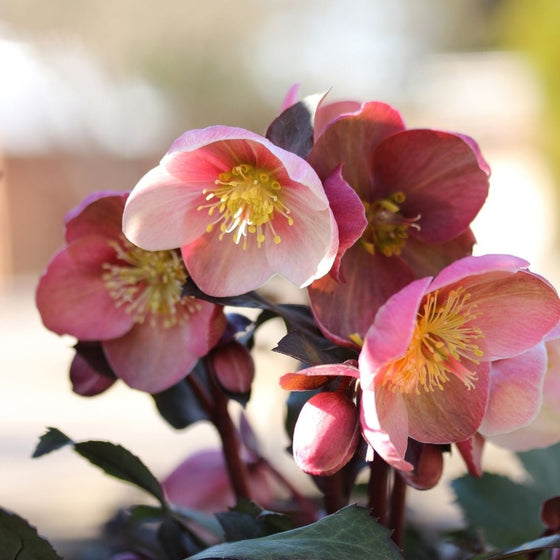
If you're looking for a perennial that can make you appreciate the garden during the coldest part of the year, Hellebores deserve serious consideration.
Hellebores are among the earliest-flowering perennials in the landscape. Depending on the variety and climate, their flowers can appear during winter or very early spring when relatively little else is happening. That timing makes them incredibly valuable.
Plant Hellebores in fall in a partially shaded or woodland-style garden and allow them to establish before their flowering season arrives. Cinnamon Snow opens creamy white and ages to rose, and Ivory Prince holds its flowers facing outward rather than nodding down, which matters when the plant is at your feet. The full range is in our Hellebore collection, and how to plant and grow Hellebores covers their care.
I especially like them beneath deciduous trees, along shaded walkways, around woodland edges, and among evergreen shrubs. Combine them with Ferns, Heuchera, and other shade-loving plants, and you can create a garden that's interesting long before the sunny perennial border wakes up.
Ferns: Fall Is a Great Time to Build the Shade Garden

Ferns bring texture rather than flowers. And sometimes that's exactly what the garden needs.
Combine several different fern forms with Hellebores, Heuchera, and other shade-tolerant perennials. Japanese Painted Fern brings silver and burgundy into a planting that would otherwise be all green, Christmas Fern holds its fronds through winter, and Cinnamon Fern gives you height at the back of a shaded bed. Our Fern collection has the rest, and there's more on this style of planting in the best perennials for woodland gardens.
Then use shrubs such as Azaleas, Rhododendrons, Mountain Laurel, or Camellias where appropriate to establish the middle layer.
Suddenly, that difficult, shaded corner isn't a problem. It's one of the most interesting parts of the property.
Ornamental Grasses: Plant Movement, Not Just Flowers
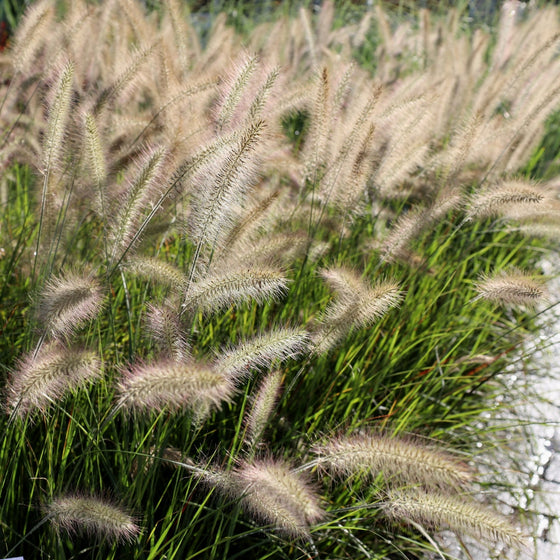
Some of the best perennials don't flower in the traditional sense at all. Ornamental grasses bring movement, texture, height, and winter interest into the garden.
They also provide an important visual break from flowering plants. A border containing nothing but flowering perennials can become visually busy. Add ornamental grasses, and suddenly the design has breathing room.
Grasses such as Switchgrass, Feather Reed Grass, Muhly Grass, and other hardy selections can become structural plants around which the rest of the perennial garden is built. Shenandoah Switchgrass turns wine-red as the season closes; Karl Foerster Feather Reed Grass is the narrow, strictly upright one that works where you have no room to spare; and Pink Muhly Grass produces the pink haze that stops people in October. For a fine-textured mound near the front of a bed, Hameln Fountain Grass is hard to beat. Our ornamental grasses collection has forty varieties to choose from.
Fall can be a good time to plant hardy grasses when they're installed with enough time to establish before the ground freezes. If you'd rather start with grasses in containers before committing them to a bed, we covered that in perennials for fall planters, and their cold-season value is in ornamental grasses for the winter landscape.
Peonies, Iris and Bleeding Heart: The Classic Fall-Planted Perennials
There's one more group worth naming, because for generations these were the plants that defined fall planting.
Peonies are traditionally planted in fall, and the reason is specific: they're planted from fleshy roots that need to settle in and chill before they'll flower properly, and their planting depth is unforgiving. Set the eyes more than about two inches below the soil surface and you can get a healthy plant that never blooms.
Bearded and Siberian Iris are divided and replanted in late summer and early fall for the same reason — the rhizomes establish in warm soil and flower the following season. Caesar's Brother is the Siberian Iris I'd recommend to almost anyone, and Dwarf Crested Iris is a native woodland species for the shade garden. Our Iris collection and our spring-blooming perennials collection are the places to look.
Bleeding Heart is the third of the group, and Wild Bleeding Heart is the one I'd choose over the old-fashioned kind, because it keeps flowering into summer instead of going dormant in June.
These are wonderful plants. Just be aware that they're the fall-planting classics precisely because they're the ones that must go in during fall. Everything else on this list benefits from fall planting. These three more or less require it.
Don't Plant One of Everything

This is probably one of the most important pieces of advice I can give when you're shopping for fall perennials.
Don't build a collection. Build a garden.
If you love Echinacea, plant three or five together. If you're using Salvia, repeat it in several places. Let Nepeta create broad sweeps along the front of the border. Repeat ornamental grasses throughout the planting.
A garden filled with one of each may contain many interesting plants, but it often lacks cohesion. Repetition creates rhythm. And rhythm makes a garden feel designed.
This is also the cheapest way to get a fuller garden faster. Buying smaller sizes lets you afford the quantity that repetition requires — we made that case in why quart-size perennials might be the smartest plants you'll ever buy. If you'd like help deciding what goes next to what, our five plant pairings for the early spring landscape and perfect perennial pairings for fall both work through specific combinations.
Think About Next Year's Entire Bloom Season
When choosing perennials this fall, don't ask only: "What will bloom next spring?"
Ask: "What will my garden look like from March through November?"
- Hellebores can begin the season.
- Dianthus, Iris and Salvia can bring spring color.
- Echinacea, Rudbeckia, Daylilies, and Nepeta can carry the garden through summer.
- Sedum and Asters can take over later.
- Ornamental grasses provide texture through much of the year and can remain attractive into winter.
Now you've created a sequence. That's much more valuable than having every plant bloom at the same time. Our longest-blooming perennials collection is a useful shortcut if you want plants that cover more than one of those windows on their own.
Planting and Aftercare: Getting Fall Perennials Through Their First Winter
Fall planting is not complicated, but the aftercare is where people lose plants. Here's what actually matters between now and spring.
How Late Can You Plant Perennials in Fall?
This depends on where you live.
In colder climates, I prefer to plant perennials several weeks before the ground freezes whenever possible. That gives the roots time to begin settling into the surrounding soil. Six weeks is a reasonable target. Gardeners in warmer climates naturally have a much longer fall planting window — check your zone on the USDA Plant Hardiness Zone Map if you're not sure where you fall.
The important thing is not the date printed on the calendar. It's the conditions.
If the soil is workable and temperatures remain appropriate for establishment, planting may still be possible. But the later you plant in cold climates, the more important proper mulching and winter protection become.
Water Fall-Planted Perennials
Cool weather doesn't eliminate the need for water. This is probably one of the most overlooked parts of fall planting.
New roots still need moisture. After planting, water thoroughly to settle the soil around the root ball. Continue monitoring soil moisture through fall, particularly if rainfall is limited.
You don't want soil that's constantly saturated. But you also don't want a newly planted perennial entering winter completely dry. Evergreen and semi-evergreen perennials — Hellebores and Heuchera especially — can be particularly vulnerable to winter moisture loss, because they keep transpiring on mild winter days while the soil is frozen.
Mulch, But Don't Bury the Crown

A light layer of mulch helps moderate soil temperatures, conserve moisture, and protect roots as winter approaches.
For most perennials, I use 1 to 2 inches of mulch around the planting area. That's less than you'd use on a tree or shrub, and the difference matters. University of Maryland Extension's guidance on perennial selection, planting and care puts it at about an inch applied after frost arrives, and warns that mulch piled on the crown encourages rot, or pushes the plant to root into the mulch instead of the soil.
So keep the crown exposed. Don't bury the center of the plant beneath several inches of mulch.
We're trying to protect the root system. We're not trying to smother the plant.
Don't Push Tender Growth With Heavy Fertilizer
Fall planting is about roots. That's where I want the plant investing its energy.
I don't want to encourage a big flush of soft, tender top growth just before winter. Avoid unnecessary heavy applications of quick-release nitrogen fertilizer late in the season.
Plant properly. Water properly. Mulch properly. Let the roots do their work. Save the feeding for spring, once new growth appears.
Leave Some Perennials Standing Through Winter
Fall doesn't automatically mean everything needs to be cut to the ground. In fact, leaving certain perennial stems and seedheads standing can provide tremendous benefits.
Coneflower and Rudbeckia seedheads can feed birds. Standing stems can provide habitat for beneficial insects. Ornamental grasses provide movement and winter structure. And dried perennial silhouettes can make a winter landscape far more interesting — there's a longer list in perennials that add winter interest to the landscape.
You can always clean things up later in winter or early spring before new growth begins.
Sometimes, doing less is actually better gardening.
A Simple Fall-Planted Perennial Garden
If I were planting a new sunny perennial garden this fall, I might start with a few larger groups rather than dozens of individual plants.
I'd use ornamental grasses to create structure and movement. I'd repeat Echinacea and Rudbeckia through the middle for summer color and pollinators. I'd use Salvia and Nepeta to bring blue and purple flowers into the mix. I'd plant Dianthus toward the front for earlier flowers. Then I'd add Sedum and Asters so the garden doesn't run out of color at the end of summer.
In shade, I'd create a completely different palette with Hellebores, Ferns, and Heuchera.
That's enough. You don't need fifty varieties. You need the right plants repeated in the right places.
Woodie's Take
When I plant perennials in the fall, I'm not really planting for October. I'm planting for next year.
I'm thinking about that first Hellebore flower pushing through when winter begins loosening its grip. I'm thinking about Salvia blooming in spring, Coneflowers and Black-Eyed Susans filling the garden with butterflies in summer, and Asters finishing the season as everything else starts to slow down.
And underneath all of it, I'm thinking about roots.
That's what makes fall planting so valuable. While we're inside, thinking the garden has gone to sleep, those plants have already begun settling into their new home. Then spring arrives, and they don't have to start from zero. They're ready.
So if you've been thinking about adding a perennial garden, expanding a pollinator bed, filling an empty border, or finally doing something with that shaded corner of the yard, don't automatically wait until spring.
Plant some of next year's garden this fall. Give the plants good soil, water them thoroughly, mulch them properly, and give them enough time to establish. Then be patient.
Because one of the best things about fall gardening is knowing that the real payoff is still ahead of you.
Fall Perennial Planting Questions, Answered
When should I plant perennials in the fall?
Aim to plant roughly six weeks before your ground typically freezes, so the roots have time to grow into the surrounding soil. In most of the country that means September through October, and gardeners in warm climates have considerably longer. Soil temperature matters more than the calendar date — if the soil is workable and still holding warmth, you can plant.
Will fall-planted perennials bloom next spring?
Spring-flowering perennials such as Hellebores, Dianthus and Iris generally do flower the following spring, because their flower buds are set before winter. Summer and fall bloomers such as Echinacea, Rudbeckia and Asters will flower in their normal season next year. Expect a somewhat lighter first-year display than an established plant gives you, and a noticeably stronger one in year two.
How late is too late to plant perennials in fall?
Too late is when the soil is frozen or waterlogged and you can no longer dig a proper hole. Short of that, a perennial planted late will usually survive if it is watered in well and mulched, though it will have less root growth to draw on come spring. In cold climates, the later you plant, the more mulching and winter protection matter.
Do I need to water perennials after planting them in fall?
Yes. Cool weather reduces how often you need to water, but it does not remove the need. Water thoroughly at planting to settle the soil around the root ball, then keep monitoring soil moisture until the ground freezes. A perennial that enters winter bone dry is far more likely to fail than one that went in slightly late.
Should I fertilize perennials planted in fall?
Skip the heavy fertilizer. Quick-release nitrogen late in the season pushes soft top growth right before winter, which is the opposite of what you want. Fall planting is about root development. Feed in spring once new growth appears.
Should I cut perennials back before winter?
Not all of them. Coneflower and Rudbeckia seedheads feed birds, hollow stems shelter beneficial insects, and ornamental grasses and Sedum hold their structure through the cold months. Cut back anything diseased or collapsed, and leave the rest until late winter or early spring, before new growth begins.
Is it better to plant perennials in spring or fall?
Both work, and they suit different plants. Fall planting lets a perennial build roots in warm soil without also having to support flowers, which is why it produces such strong plants the following year, and it particularly suits spring bloomers such as Hellebores, Dianthus and Iris. University of Maryland Extension notes the reverse also holds: late-summer and autumn bloomers such as Asters often establish best when planted in spring. Spring is also the safer choice for anything marginally hardy in your zone.