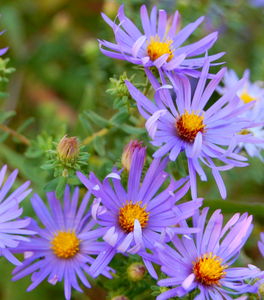
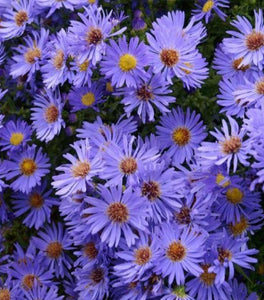
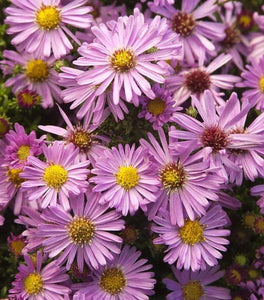
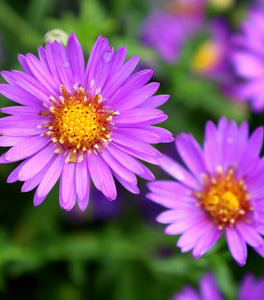
Images Depict Mature Plants
Purple Dome Aster
Symphyotrichum novae-angliae 'Purple Dome'
Purple Dome Aster is the aster I’d reach for when you want strong fall color but do not want a tall plant leaning over the border. It stays compact, blooms heavily, and brings that rich purple color gardeners look for late in the season. Give it full sun, decent moisture, and room to breathe, and it becomes a reliable front-of-border pollinator plant year after year.

15% OFF SITEWIDE, USE CODE 'FALLPLANT15'
📦 Free shipping on orders over $99.
Delay shipping by leaving us a message at Checkout.
Share:Recommended Add-Ons



Compact Purple Fall Color for Sunny Native Gardens
Purple Dome Aster Delivers Bold Purple Color in Fall
Purple Dome Aster is a compact New England Aster grown for its rich purple, daisy-like flowers that cover the plant from late summer into fall. Each bloom features vivid purple petals surrounding a golden yellow center, creating a strong seasonal display just as many summer perennials begin to fade.
Also searched as Aster Purple Dome, this native perennial is especially valuable for homeowners who want fall color with a tidy, garden-friendly shape. Instead of growing tall and loose like many New England asters, Purple Dome Aster stays low, dense, and rounded, making it easier to use in designed landscapes.
A Compact New England Aster That Usually Needs No Staking
Purple Dome Aster is prized for its naturally short, mounding habit. Mature plants are commonly listed around 18 to 24 inches tall, with a spread of about 2 to 3 feet, depending on site conditions and spacing.
That compact form makes it a smart choice for the front of perennial borders, walkway edges, cottage gardens, pollinator beds, and small-space native plantings. It gives gardeners the bold purple flower power of a New England Aster without the height, flopping, or support needs often associated with taller varieties.
Excellent for Pollinator Gardens, Butterfly Gardens, and Mass Plantings
Purple Dome Aster is one of the best perennials for extending pollinator value into the fall season. Its late bloom time provides nectar and pollen when bees, butterflies, and beneficial insects are actively searching for reliable late-season flowers.
Plant it in groups for the strongest display. A single plant is colorful, but a mass planting creates a rounded carpet of purple blooms that looks especially good with goldenrod, sedum, black-eyed Susan, coneflower, little bluestem, switchgrass, catmint, and other sunny garden companions.
Full Sun, Good Airflow, and Average Moisture Keep Plants Looking Their Best
Purple Dome Aster performs best in full sun with average to moist, well-drained soil. It tolerates clay and can handle short dry periods once established, but it flowers and fills out best when it is not stressed by extreme drought or poor drainage.
Good air circulation is important with asters. Avoid crowding plants too tightly, and do not plant them in stagnant, overly wet locations. While Purple Dome Aster is more compact than the straight species, asters can still develop foliar issues such as powdery mildew when conditions are too humid, shaded, crowded, or poorly drained.
Deer Resistant, Native, and Useful for Late-Season Structure
Purple Dome Aster is generally considered deer-resistant and is a practical choice for sunny landscapes where deer browsing is a concern. Its rough foliage and sturdy stems make it less appealing than many softer-leaved perennials, while its blooms offer excellent late-season ornamental value.
This plant dies back in winter and returns from the crown each spring. Leave stems standing after bloom for wildlife value and winter texture, or cut back after frost for a cleaner garden appearance. For a fuller plant, pinch or lightly trim growth in late spring to early summer before flower buds form.
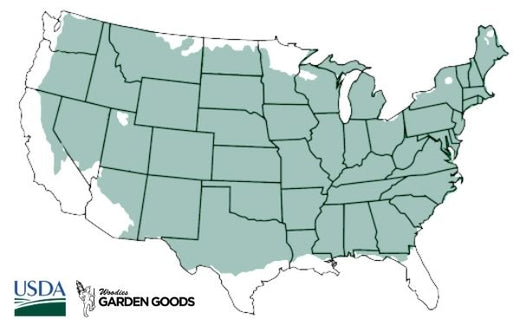
| Hardiness Zone: | 4-8 |
|---|---|
| Mature Height: | 18 to 24 Inches |
| Mature Width: | 2 to 3 Feet |
| Sunlight: | Full sun preferred; tolerates light part shade |
| Soil | Average to moist, well-drained soil; tolerates clay |
| Water | Average moisture preferred; water regularly during establishment; handles short dry periods once established |
| Bloom Time / Color | Late summer to fall; royal purple to violet-purple flowers with yellow centers |
| Ornamental Features | Compact mounded habit, dense purple fall bloom, yellow flower centers, no-staking form |
| Wildlife Value | Attracts bees, butterflies, beneficial insects, songbirds, and other wildlife |
| Resistance | Generally considered deer resistant; moderate drought tolerance once established; clay tolerant |
| Landscape Uses | Front borders, pollinator gardens, butterfly gardens, native gardens, mass plantings, walkway edges, rain garden edges, fall color beds |
How to Care for Purple Dome Aster
Be sure to read our planting instructions to ensure a healthy and happy Purple Dome Aster plant for years to come!
-v1746120244616.png?92x91)
How should I plant Purple Dome Aster?
Plant Purple Dome Aster in full sun with average to moist, well-drained soil. Dig a hole about twice as wide as the root ball and just as deep as the container. Set the crown level with the surrounding soil, backfill with native soil, and water thoroughly to settle the roots. Space plants about 18 to 24 inches apart for most borders, or slightly closer for a faster mass planting effect. Keep mulch light around the crown, and avoid burying stems. Good spacing is important because airflow helps reduce foliar disease issues common to asters.
-v1746120278111.png?89x84)
How often should I water Purple Dome Aster after planting?
Water Purple Dome Aster deeply after planting, then keep the soil evenly moist while the plant establishes. During the first growing season, water when the top few inches of soil become dry, especially during hot, windy, or dry weather. Once established, Purple Dome Aster can handle short dry periods, but it is not a true dry-soil perennial in the same way as some prairie plants. It performs best with average moisture and well-drained soil, especially as flower buds form in late summer.
-v1746120296444.png?90x89)
When should I fertilize Purple Dome Aster?
Fertilize Purple Dome Aster lightly in early spring if needed. A thin layer of compost or a modest application of slow-release balanced fertilizer is usually enough to support healthy stems and strong fall bloom. Avoid heavy nitrogen feeding. Too much fertilizer can encourage soft growth and reduce the compact, rounded habit that makes Purple Dome Aster valuable. In average garden soil, this native perennial often performs well with very little added fertilizer.

When and how should I prune Purple Dome Aster?
Purple Dome Aster may be pinched or lightly trimmed in late spring to early summer to encourage branching and an even denser mound. Stop pinching by early to mid-summer so the plant has time to set flower buds for its late-season bloom. After flowering, you can cut the plant back after a hard frost or leave stems standing through winter for wildlife value and garden texture. In late winter or early spring, cut old stems back close to the ground before new growth emerges.