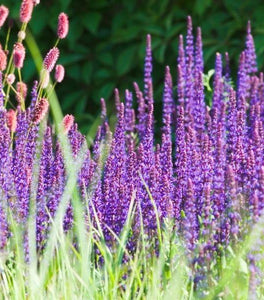
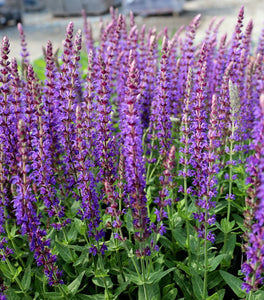
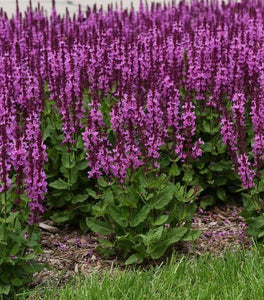
Images Depict Mature Plants
Snow Hill Salvia
Salvia × sylvestris ‘Schneehügel’
Snow Hill Salvia is a great plant when you want the easy performance of meadow sage but need a softer, cleaner flower color. The white spikes brighten borders, mix with everything, and help pollinators without making the planting feel too busy. Give it sun, good drainage, and a trim after the first bloom, and it will reward you with a tidy plant and a fresh summer look.

Save Up to 25% On Your Order! Limited Time Only!
Discount Applied Automatically At Checkout
📦 Free shipping on orders over $99.
Delay shipping by leaving us a message at Checkout.
Share:


Compact White Salvia for Sunny Borders, Pollinator Gardens, and Clean Summer Color
Snow Hill Salvia Brightens the Garden with Crisp White Flower Spikes
Snow Hill Salvia is a compact perennial salvia grown for its clean white flower spikes, tidy habit, and easy performance in sunny gardens. Also known as Snow Hill Meadow Sage, Snow Hill Wood Sage, or Salvia ‘Schneehügel’, this white-flowering salvia brings a fresh, bright look to borders, cottage gardens, pollinator plantings, and patio containers.
The upright white blooms rise above aromatic gray-green foliage, creating a soft vertical accent without overwhelming nearby plants. Use Snow Hill where you want the structure and pollinator value of perennial salvia, but with a lighter flower color than traditional blue, purple, or pink varieties.
A White Meadow Sage That Pairs with Almost Anything
The biggest design advantage of Snow Hill Salvia is its color. White flower spikes make nearby colors look stronger, soften hot color combinations, and give sunny mixed beds a cleaner look. It pairs beautifully with purple Salvia, Catmint, Lavender, Coreopsis, Yarrow, Echinacea, Rudbeckia, Sedum, ornamental grasses, and roses.
Snow Hill is also useful in moon gardens and front entry beds because white flowers remain visible in lower evening light. Repeating it through a border creates rhythm, while planting it in small groups gives you a stronger white-flower display from late spring into summer.
Compact Growth for Edging, Containers, and Front-of-Border Planting
Snow Hill Salvia stays smaller and neater than many taller perennial salvias. Mature plants commonly reach about 15 to 20 inches tall and 12 to 18 inches wide, making them easy to place near the front or middle of a sunny border.
Its compact habit also works well in containers. Use Snow Hill as a bright filler plant in patio pots, porch planters, and mixed container designs where white flowers can tie together bolder colors. In the ground, space plants about 12 to 18 inches apart for a full, colorful planting.
Full Sun, Well-Drained Soil, and Low-Maintenance Care
Plant Snow Hill Salvia in full sun for the strongest stems, heaviest flowering, and most compact growth. It can tolerate light part sun, but too much shade may reduce bloom and make the plant looser.
Well-drained soil is important. Snow Hill performs best in average to dry, well-drained garden soil and is drought-tolerant once established. Avoid heavy, wet soil, especially in winter. A light spring feeding or compost topdressing is usually enough; too much fertilizer can encourage soft growth.
Deer Resistant, Pollinator Friendly, and Easy to Rebloom
Snow Hill Salvia is generally considered deer-resistant, making it a practical choice for sunny gardens where browsing can be a concern. Bees, butterflies, hummingbirds, and other beneficial pollinators are attracted to the flower spikes during bloom.
For the best repeat flower show, cut back spent flower stems after the first heavy bloom. This keeps the plant looking clean and can encourage another flush of white flowers later in summer. In late winter or early spring, remove old stems before new growth begins.
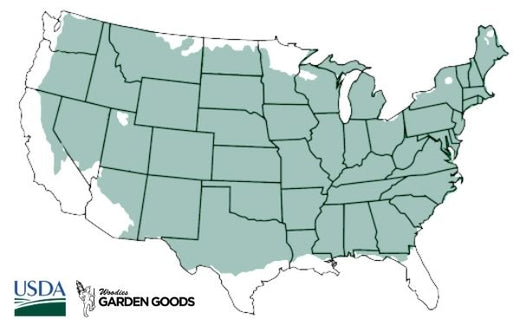
| Hardiness Zone: | 4-8 |
|---|---|
| Mature Height: | 15 to 20 Inches |
| Mature Width: | 12 to 18 Inches |
| Sunlight: | Full sun preferred; tolerates light part sun |
| Soil | Average, dry to medium, well-drained soil |
| Water Requirements: | Water regularly during establishment; drought tolerant once established |
| Bloom Time / Color | Late spring to summer; white flower spikes, with rebloom possible after deadheading |
| Ornamental Features | White flower spikes, compact habit, aromatic foliage, rebloom potential, bright contrast color |
| Wildlife Value | Attracts bees, butterflies, hummingbirds, and other beneficial pollinators |
| Resistance | Generally considered deer resistant; drought tolerant once established |
| Landscape Uses | Sunny borders, cottage gardens, pollinator gardens, containers, edging, mass plantings, white gardens, mixed perennial beds |
How to Care for Snow Hill Salvia
Before you buy a Snow Hill Salvia, read the recommended care instructions to keep this plant healthy and thriving.
-v1782844182844.png?92x91)
How should I plant Snow Hill Salvia?
Plant Snow Hill Salvia in full sun with average, well-drained soil. Dig a hole about twice as wide as the root ball and just as deep as the container. Set the crown level with the surrounding soil, backfill with loosened native soil, and water thoroughly after planting. Space plants about 12 to 18 inches apart depending on how full you want the planting to look. Use closer spacing for edging or mass plantings and wider spacing when mixing Snow Hill with other perennials. Avoid low, soggy areas where water sits around the crown.
-v1782844183492.png?89x84)
How often should I water Snow Hill Salvia after planting?
Water Snow Hill Salvia deeply after planting, then keep the soil evenly moist while the roots establish. During the first growing season, water when the top few inches of soil become dry, especially during hot, windy weather. Once established, Snow Hill Salvia is drought tolerant and usually needs less water than many flowering perennials. It blooms best with moderate moisture, but the soil should dry slightly between waterings. Avoid constantly wet soil, especially in winter.
-v1782844184239.png?90x89)
When should I fertilize Snow Hill Salvia?
Fertilize Snow Hill Salvia lightly in early spring if needed. A thin layer of compost or a modest application of slow-release balanced fertilizer is usually enough to support healthy growth and flowering. Avoid heavy fertilizing. Too much nitrogen can encourage soft, leafy growth and reduce the tidy compact habit. In average garden soil, good drainage and full sun are more important than frequent feeding.

When and how should I prune / cut back Snow Hill Salvia?
Cut back spent flower spikes after the first heavy bloom to keep Snow Hill Salvia tidy and encourage another flush of flowers. You can remove individual stems or lightly shear the plant back by about one-third if the foliage looks tired. In late winter or early spring, cut back old stems before new growth begins. Regular deadheading through the bloom season helps maintain a cleaner look and supports longer flowering.