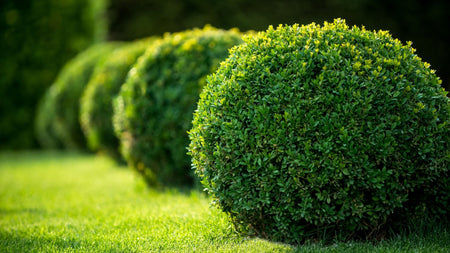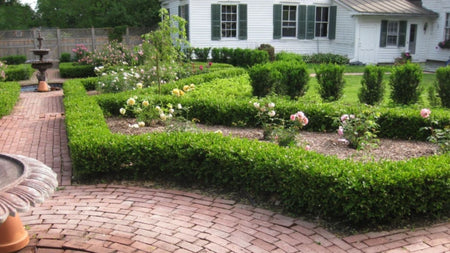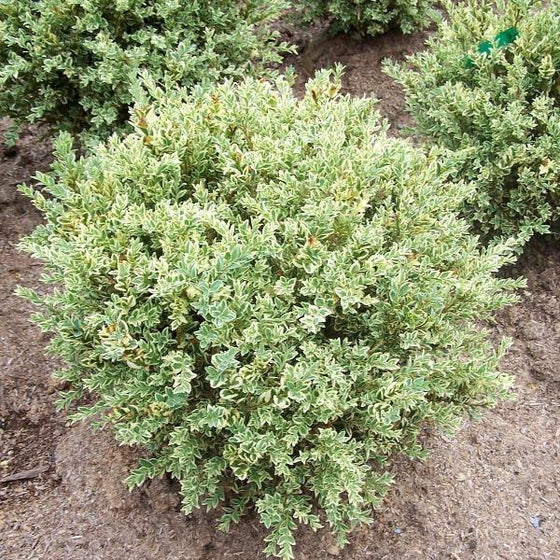

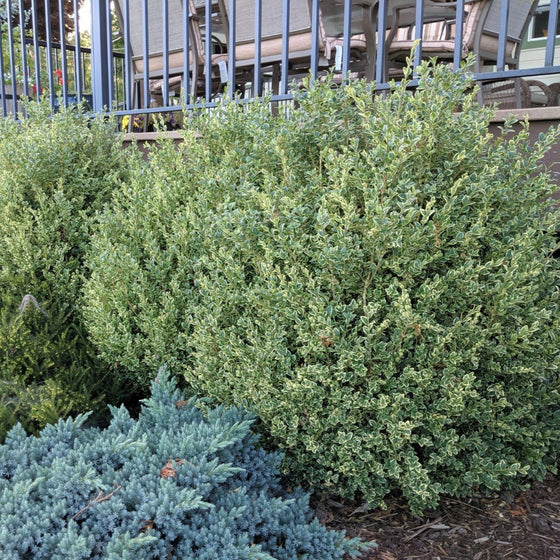
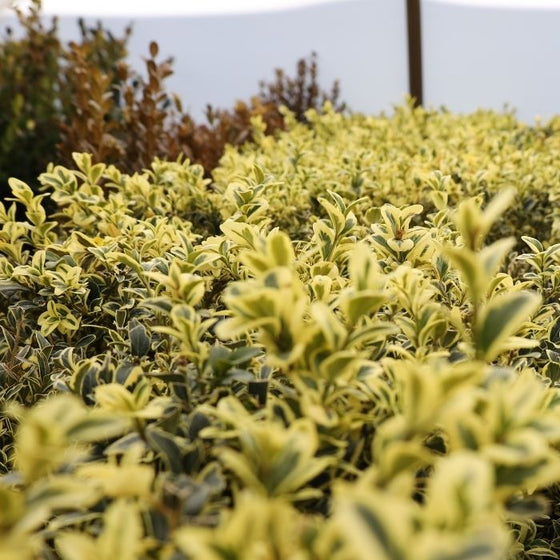


Images Depict Mature Plants
Variegated Boxwood
Buxus sempervirens 'Aureovariegata'
If you want classic boxwood structure but you also want it to show up visually, Variegated English Boxwood is one of my go-to picks—the creamy-gold leaf edges brighten hedges and foundation beds even in the middle of winter. Give it drainage, water it faithfully the first season, and keep your pruning light and well-timed, and you’ll have a dense evergreen that looks polished for years.

15% OFF SITEWIDE SALE
Use Code 'PRIMETIME15' At Checkout
📦 Free shipping on orders over $99.
Delay shipping by leaving us a message at Checkout.
Share:Recommended Add-Ons


Variegated English Boxwood Shrub For Golden-Edged Evergreen Hedges, Borders, And Polished Curb Appeal
Golden-Edged Evergreen Color That Stays Bright All Year
Variegated English Boxwood gives you the classic, tidy boxwood look—plus a built-in highlight. Each leaf is edged in creamy yellow to soft gold, creating a clean contrast against the rich green center. That subtle variegation reads as “designed” from the street and adds brightness in winter when most gardens feel flat. If you love evergreen structure but want something more distinctive than solid green, this is an easy upgrade that still feels timeless.
It shines in foundation beds, entry gardens, and mixed borders where you want year-round interest without relying on blooms. Pair it with dark mulch, brick, stone, or deep-green evergreens, and the foliage pops even more. Used as repeating accents, it creates a refined rhythm that elevates the whole landscape.
A Full, Rounded Habit That Builds Beautiful Hedges And Accents
This boxwood forms a naturally rounded habit with dense branching that looks finished even before pruning. At maturity, it typically reaches about 5 to 6 feet tall and 5 to 6 feet wide, making it substantial enough for hedge lines, screening, and bold foundation structure. It responds well to shaping, so you can keep it as a tight, formal hedge or maintain it as individual mounds for a softer, classic look.
Because it’s a slow to moderate grower, it holds its form nicely and doesn’t demand constant trimming. A little shaping at the right time encourages even denser growth and keeps the outline crisp. Give it the spacing it needs, and you’ll get a thick, seamless look instead of crowded plants that struggle to fill cleanly.
Deer Resistance And Everyday Durability For Real-World Gardens
Variegated English Boxwood is generally considered deer resistant, which is a big deal when you’re investing in a hedge or foundation planting. While no shrub is completely deer-proof, boxwoods are rarely a first-choice browse, and this variety offers the same peace of mind—especially in front-yard beds where you want dependable structure that stays intact.
It’s also adaptable across a range of garden conditions in Zones 5–8, thriving in full sun to partial shade with well-drained soil. In hotter exposures, a bit of afternoon shade can help foliage look its best. With steady moisture during establishment and simple long-term care, it’s a durable evergreen that keeps your landscape looking intentional season after season.
Simple Care That Protects Foliage, Color, And Long-Term Health
The best boxwoods come from a simple formula: good drainage, deep watering during establishment, and pruning at the right time. Variegated English Boxwood prefers well-drained soil—avoid low spots that stay wet—and a 2–3 inch mulch ring helps stabilize moisture and temperature. Water at the base, not overhead, so leaves stay drier and the plant stays happier over time.
For shaping, a light prune in late winter/early spring or after the spring flush keeps the outline clean and encourages dense branching. If you want a crisp hedge, a second light summer touch-up is fine, but avoid heavy late-season pruning. Keep airflow in mind, and you’ll maintain that bright golden edging and full evergreen look with minimal fuss.
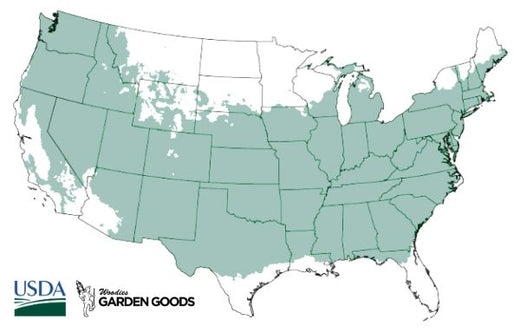
| Hardiness Zone: | 5-8 |
|---|---|
| Mature Height: | 5 to 6 Feet |
| Mature Width: | 5 to 6 Feet |
| Sunlight: | Full sun to partial shade |
| Soil Condition: | Any well-drained soil |
| Water Requirements: | Water well until established |
| Bloom Time / Color: | Spring; small yellow-green (not showy) |
| Wildlife Value: | Spring flowers may support early pollinators |
| Resistance (deer/disease/drought/etc.): | Deer resistant; best health with good airflow and dry foliage |
| Landscape Uses: | Hedges, borders, foundation plantings, topiary, accent shrubs |
How to Care for Variegated Boxwood
Be sure to read our planting instructions to ensure a healthy and happy Variegated English Boxwood plant for years to come!

How should I plant Variegated English Boxwood?
Choose a site with well-drained soil and full sun to partial shade. Dig a hole twice as wide as the root ball and just as deep, then set the plant so the top of the root ball sits level with (or slightly above) the surrounding soil. Backfill with native soil, firm gently, and water deeply to settle roots and remove air pockets. Add a 2–3-inch mulch ring around the root zone, keeping the mulch a few inches away from the stems. If you’re planting a hedge, stake your line first and keep spacing consistent so plants fill evenly and maintain better airflow as they mature.

How often should I water Variegated English Boxwood after planting?
Water thoroughly right after planting, then water deeply once per week during the first growing season, making sure moisture reaches the root zone. In hot or dry stretches, increase to twice per week so the root ball doesn’t dry out. Water at the base of the shrub and avoid wetting the foliage. Once established, this boxwood is more tolerant of short dry spells, but it looks best with occasional deep watering during extended drought. Check soil a few inches down—if it feels dry, it’s time to water—and keep mulch refreshed to reduce moisture swings.

When should I fertilize Variegated English Boxwood?
Fertilize in early spring as new growth begins, using a balanced, slow-release fertilizer for shrubs or evergreens. Apply it around the root zone (not against the stems) and water it in well so nutrients move into the soil where roots can access them. If plants are in lean soil or growth is noticeably slow, a light mid-summer feeding can help, but avoid heavy late-season fertilizing. Pushing tender growth too late can increase winter stress and reduce overall performance.

When and how should I prune Variegated English Boxwood?
Prune lightly in late winter or early spring before strong new growth begins, removing any dead, damaged, or crossing branches first. Then shape the outside with modest trims to maintain the rounded form or hedge line, avoiding cuts deeper than about one-third of the plant at a time. For formal hedges, a second light pruning in summer can maintain crisp lines, but avoid heavy pruning in late fall. Good airflow matters for boxwoods, so occasional thinning of interior branches helps light and air reach the center and supports healthier long-term growth.