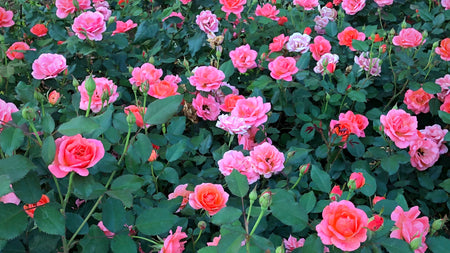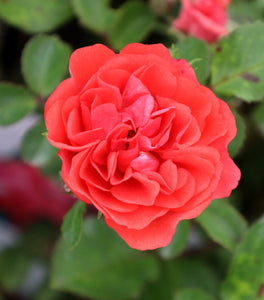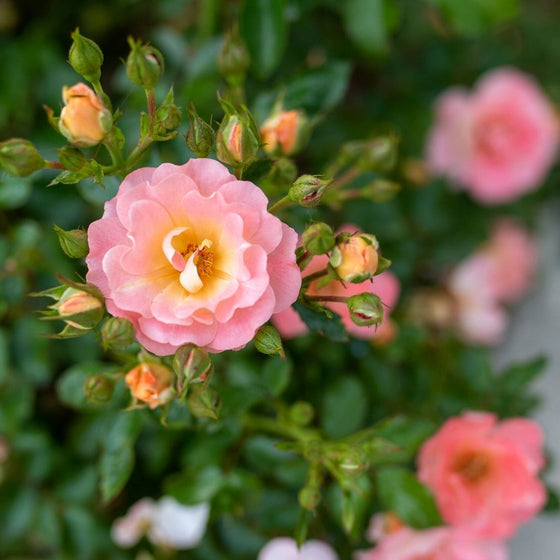
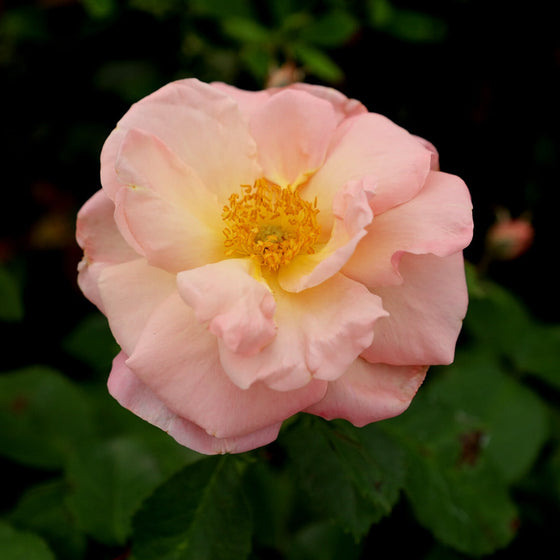

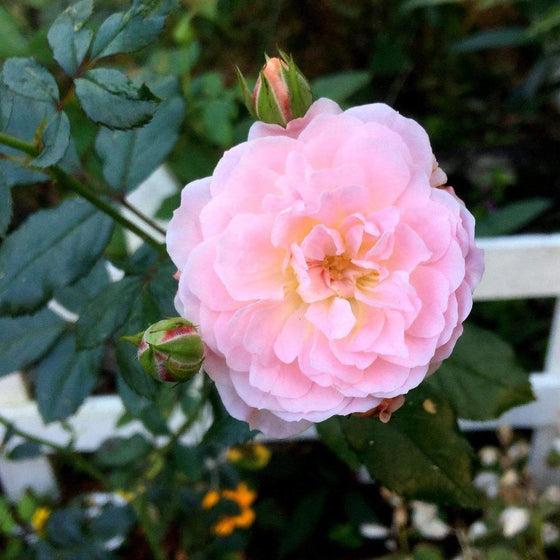


Images Depict Mature Plants
Peach Drift Rose
Rosa 'Meiggili' PP18542
Peach Drift® is my go-to when someone wants roses that feel friendly and bright, but they want the plant to behave like a clean, low border—not a big, thorny project. That soft peach color warms everything around it; it blooms for months, and the care routine stays wonderfully simple: full sun, occasional watering, and one good prune before spring growth takes off.

Save Up to 25% On Your Order! Limited Time Only!
Discount Applied Automatically At Checkout
📦 Free shipping on orders over $99.
Delay shipping by leaving us a message at Checkout.
Share:



Peach Drift® Rose for Soft Peach Color, Easy Borders, and Blooming Groundcover
Soft Peach Blooms That Make Beds Feel Warm And Welcoming
Peach Drift® Rose brings a gentle peach glow that reads “sunny” without feeling loud. The blooms arrive in clusters, so the plant looks covered in color instead of dotted with flowers. That clustered bloom habit is exactly what makes Drift® roses so landscape-friendly: you get a consistent ribbon of flowers along the front of a bed, around a patio, or edging a walkway where you want curb appeal to last.
The peach tone is easy to design with. It brightens dark evergreens, pairs beautifully with lavender and blue perennials, and looks especially polished with ornamental grasses. If you want roses that feel cheerful and romantic but still fit a clean, modern border, Peach Drift® gives you that “finished landscape” look with a color that plays nicely with almost everything around it.
A True Low-Growing Groundcover Rose For Borders And Mass Plantings
Peach Drift® is made to stay compact and spreading, forming a neat, mounding groundcover rose rather than a tall shrub. It typically matures around 1.5–2 feet tall and about 2–3 feet wide, which makes it ideal for the front edge of beds where you want flowers without blocking sightlines. In small yards, that size is a huge advantage—plenty of bloom, minimal takeover.
It’s also a standout in mass plantings. Repeat Peach Drift® in groups, and you get that signature “drift” effect: a low carpet of bloom that looks intentional, professional, and easy to maintain. Use it to outline a foundation bed, soften hard edges near driveways, or fill sunny gaps between shrubs and perennials with long-season color that stays tidy.
Low-Maintenance Rose Color With Strong, Clean-Looking Foliage
This is the kind of rose that fits real life. Peach Drift® is known for strong disease resistance and reliable performance when you give it the basics: full sun, well-drained soil, and watering at the base rather than overhead. Those simple choices help foliage stay cleaner and healthier-looking, and they support more consistent blooming throughout the season.
Another big win: deadheading is not required to keep the flowers coming. If you enjoy tidying, you can snip spent clusters now and then for a crisp look, but Peach Drift® will still rebloom without constant attention. Add a 2–3 inch mulch layer (kept a few inches away from the stems) to stabilize moisture and reduce weeds, and you’ll have a groundcover rose that keeps borders looking “done” for months.
Simple Pruning That Keeps It Dense, Rounded, And Bloom-Packed
Peach Drift® doesn’t need complicated rose techniques. Prune in late winter or early spring to refresh the plant, encourage vigorous new growth, and maintain that neat, mounded habit that looks best in borders. Start by removing dead or damaged stems, then lightly shape the plant to keep it balanced and airy. Fresh growth is where you’ll see your best flowering.
After pruning, a spring feeding and steady moisture during establishment set the stage for heavy bloom cycles. During hot stretches, occasional deep watering helps keep flowering steady instead of staling. Because Peach Drift® stays low, maintenance stays easy—no ladders, no wrestling tall canes, just a quick yearly “haircut” that keeps your planting dense, healthy, and flower-filled.
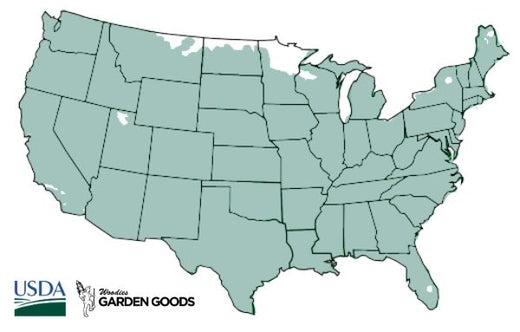
| Hardiness Zone: | 4-11 |
|---|---|
| Mature Height: | 1.5 to 2 Feet |
| Mature Width: | 2 to 3 Feet |
| Sunlight: | Full sun for best blooms |
| Bloom Time / Color | Mid-spring to frost; soft peach blooms |
| Soil Condition: | Any well drained soil |
| Water Requirements: | Water well until established; then water during dry spells |
| Wildlife Value | Attracts bees and other pollinators |
| Resistance | Strong disease resistance; heat tolerant; moderate drought tolerance once established; not reliably deer resistant |
| Landscape Uses | Borders, mass planting, groundcover, hillsides/slopes, walkway edging, foundation beds, containers |
How to Care for Peach Drift® Rose
Be sure to read our planting instructions to ensure a healthy and happy Peach Drift® Rose plant for years to come!
-v1770487441643.png?92x91)
How should I plant Peach Drift® Rose?
Plant Peach Drift® Rose in full sun in well-drained soil. Dig a hole about twice as wide as the root ball and set the plant so the top of the root ball sits level with the surrounding soil. Backfill with native soil, water deeply to settle, and form a shallow watering ring to guide water into the root zone. Finish with 2–3 inches of mulch to conserve moisture and reduce weeds, keeping mulch a few inches away from the base of the plant. If your soil drains slowly, plant slightly high or improve drainage before planting. A sunny, well-drained start is the quickest path to faster fill-in and heavier bloom cycles.
-v1770487467309.png?89x84)
How often should I water Peach Drift® Rose after planting?
Water deeply right after planting, then keep the root zone evenly moist (not soggy) for the first several weeks. A good baseline is one deep soak per week, increasing to two soaks per week during hot weather, sandy soil, or windy sites where soil dries faster. After it’s established, water during extended dry spells to keep blooms and foliage looking their best. Water at the base rather than overhead so leaves dry quickly. Deep, less-frequent watering encourages stronger roots and better resilience in full sun and on slopes.
-v1770487488459.png?90x89)
When should I fertilize Peach Drift® Rose?
Fertilize in early spring as new growth begins using a rose fertilizer or balanced slow-release fertilizer. Apply it over the root zone (not against the stems) and water afterward so nutrients move into the soil where feeder roots can absorb them. If you want stronger repeat bloom, a second light feeding after the first big flush can help support the next wave. Avoid heavy late-season fertilizing, which can push tender growth when the plant should be slowing down. Consistent, moderate feeding supports healthier foliage and more reliable flowering.

When and how should I prune Peach Drift® Rose?
Prune Peach Drift® Rose in late winter or early spring before active growth begins. Remove any dead or damaged stems first, then lightly shape the plant back into a neat, rounded mound to encourage fresh bloom-producing growth. During the season, light trimming is optional if you want extra crisp edges, but the main “must-do” is that yearly early-season prune. Deadheading isn’t required, though occasional cleanup can keep the planting looking extra polished. A simple prune rhythm is usually all it takes to keep this groundcover rose dense and flower-filled.