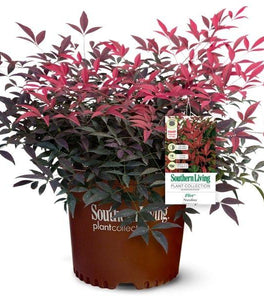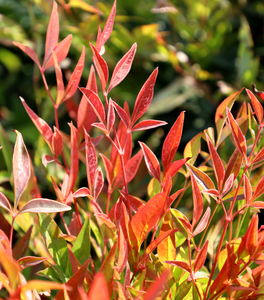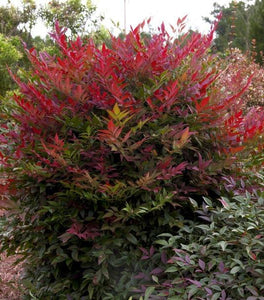
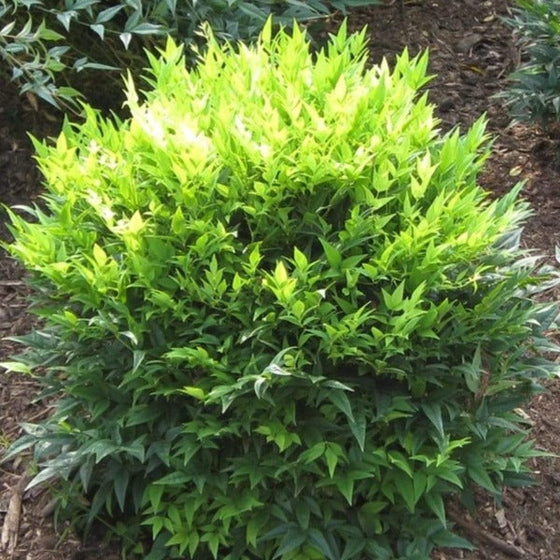


Images Depict Mature Plants
Lemon Lime Nandina
Nandina domestica 'Lemon-Lime' PP24749
I love Lemon Lime Nandina because it does exactly what most landscapes need more of: it brings clean, chartreuse color to shade and mixed beds without relying on flowers, and it stays compact enough to use everywhere, foundation lines, borders, and even containers. Give it decent drainage, keep it watered while it roots in, and you’ll get a bright evergreen shrub that looks tidy all year and typically stays berry-free.

15% OFF WITH CODE PLANTING15
Save 15% Off Your Entire Order! Limited time.
📦 Free shipping on orders over $99.
Delay shipping by leaving us a message at Checkout.
Share:

Lemon Lime Nandina For Bright Chartreuse Color In Shade Gardens And Borders
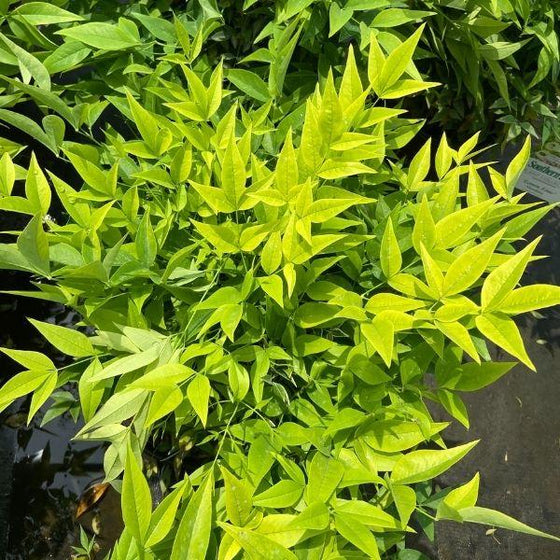
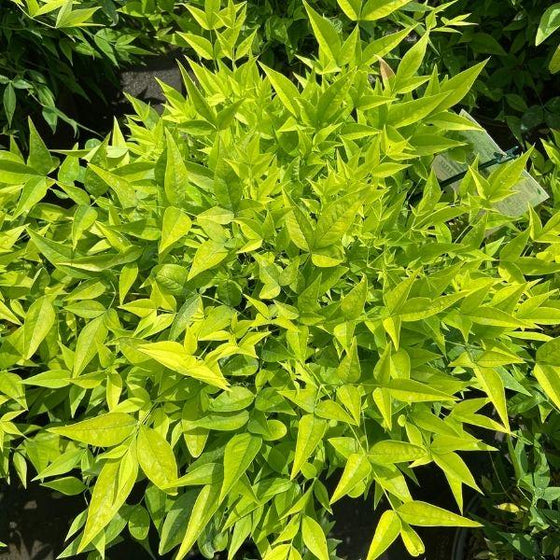
Chartreuse foliage that brightens shade like a built-in spotlight
Lemon Lime Nandina is the easiest way to “turn the lights on” in a landscape bed. New growth pushes a vivid yellow-green, then holds a clean chartreuse tone along the outer foliage, creating a bright halo effect that makes darker plants look richer and more intentional. It delivers color without flowers, so you get a consistent design tool that works in every season and every style, from modern borders and foundation beds to woodland edges and clean-lined entry plantings.
This is especially valuable in shade gardens where color can be hard to come by. Tuck it under open-canopy trees, along the north side of the house, or into mixed beds where green-on-green starts to feel flat. Lemon Lime adds contrast and “lift” without demanding constant attention, and it looks polished even when the rest of the garden is between bloom cycles.
A compact evergreen that stays neat in foundation beds and small spaces
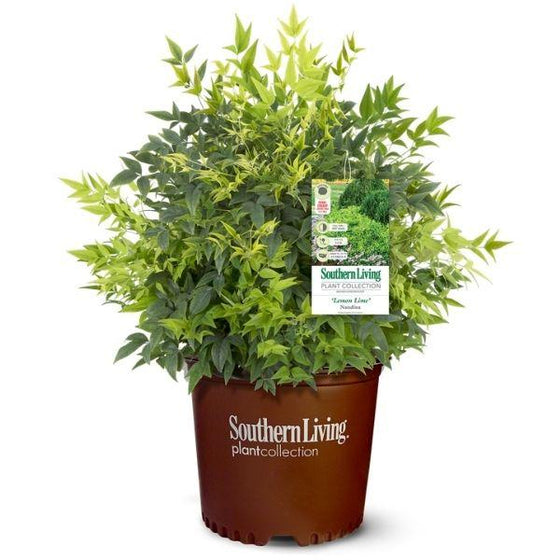
Lemon Lime forms a dense, rounded shrub that typically matures around 3–4 feet tall and wide, large enough to anchor a bed, but not so big that it swallows the front of the house. The foliage is fine-textured and layered, which reads upscale and tidy even when planted in simple groupings. Use it as a repeating shrub for rhythm, plant it as a single accent near an entry, or line it up for a low hedge that looks crisp without looking stiff.
Because it’s naturally dense, it fills in beautifully with minimal pruning. It’s a great fit for small yards, townhouse landscapes, and tight foundation lines where you want evergreen structure but can’t spare the space for bulky shrubs. If you like the look of nandina but want a cleaner, more compact habit, Lemon Lime hits the sweet spot.
A cleaner choice: typically sterile, berry-free, and low-mess
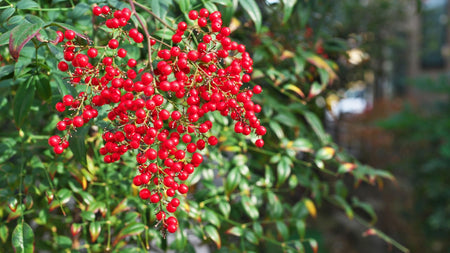
Many shoppers love nandina foliage but worry about berries, seedlings, and wildlife concerns. Lemon Lime Nandina is typically sterile and berry-free, so you get the ornamental texture and color without heavy fruiting or the cleanup that comes with seeding varieties. That makes it an especially smart pick for front-yard landscapes, pet-friendly spaces, and modern designs where “tidy and controlled” is the goal.
It’s also a tough performer. Lemon Lime handles heat and humidity well, and it’s generally deer-resistant. Once established, it tolerates short dry spells better than many bright-foliage shrubs. Put simply: it looks refined, but it behaves like a workhorse, which is exactly what you want from a foundation evergreen.
Easy care and simple shaping that keeps it dense and bright
Lemon Lime Nandina looks best with two basics: good drainage and steady moisture while it establishes. Full sun to part shade works, but chartreuse color is often most consistent in part sun to light shade, especially in hot-summer areas where harsh afternoon sun can stress foliage. Mulch helps stabilize moisture and keeps the root zone cooler, which supports denser growth and better color.
Pruning is optional and usually light. A quick late-winter cleanup and occasional tip-trimming are enough to refine the outline or keep a hedge line crisp. Avoid hard shearing into tight boxes; nandina looks best when it keeps its natural layered texture. With correct spacing and minimal shaping, Lemon Lime becomes a reliable, repeatable shrub for bright evergreen structure.
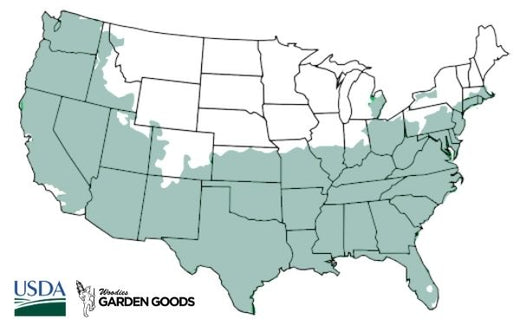
| Hardiness Zone: | 6-10 |
|---|---|
| Mature Height: | 3 to 4 feet |
| Mature Width: | 3 to 4 feet |
| Sunlight: | Full sun to part shade (best color often in part sun/light shade) |
| Bloom Time / Color | Typically non-flowering/sterile; grown for foliage color |
| Soil | Adaptable; best in well-drained soil |
| Water Requirements: | Moderate; drought tolerant once established |
| Wildlife Value | Dense cover for birds; typically low fruiting/seed set |
| Resistance (deer/disease/drought/etc.) | Generally deer resistant; heat/humidity tolerant; low disease pressure |
| Landscape Uses | Foundation plantings, low hedges, borders, mass plantings, shade brightener, containers |
How to Care for Lemon Lime Nandina
Before you purchase a Lemon Lime Nandina Shrub, be sure to read the recommended care instructions to ensure your Nandina stays happy and healthy for years to come!

How should I plant Lemon Lime Nandina?
Plant Lemon Lime Nandina in full sun to part shade in well-draining soil. Dig a hole 2–3 times wider than the root ball, set the shrub so the top of the root ball is level with (or slightly above) the surrounding soil, then backfill and water deeply to settle roots. Finish with a 2–3-inch mulch ring around the root zone, keeping the mulch a few inches away from the stems. For a hedge or border line, lay out your spacing before you dig so the row looks straight and intentional. If you’re planting in a hot-summer area, morning sun with afternoon shade often keeps foliage freshest while still delivering bright chartreuse color.

How often should I water Lemon Lime Nandina after planting?
Water thoroughly right after planting, then keep the root zone evenly moist during the first growing season. A deep soak once per week is a solid baseline, increasing to 1–2 times per week during hot, dry stretches or in sandy soils. Water at the base so moisture reaches roots efficiently. Once established, Lemon Lime Nandina becomes more drought tolerant, but it looks best when it doesn’t swing between extreme dry and sudden soaking. Deep, occasional watering during prolonged drought helps maintain denser foliage and stronger color.

When should I fertilize Lemon Lime Nandina?
Fertilize in early spring as new growth begins, using a balanced slow-release shrub fertilizer. If your soil is reasonably fertile, a compost top-dress can be enough to support steady growth and bright foliage without pushing the plant too hard. Avoid heavy late-season fertilizing, which can encourage tender growth at the wrong time in cooler zones. A light spring feeding plus mulch and consistent moisture during establishment is usually all Lemon Lime needs.

When and how should I prune Lemon Lime Nandina?
Prune Lemon Lime Nandina in late winter to early spring for shaping and cleanup. Use selective pruning, light tip cuts to refine the outline and encourage branching, rather than hard shearing that flattens the plant’s natural texture. If a plant gets a little dense, thinning a stem or two at the base can refresh airflow and keep the shrub looking crisp. For a low hedge, keep the base slightly wider than the top so light reaches lower foliage, and the row stays full.