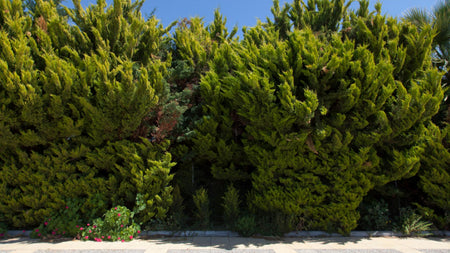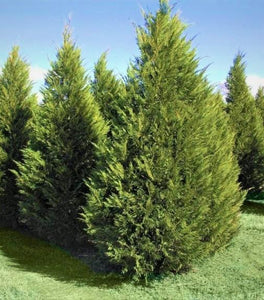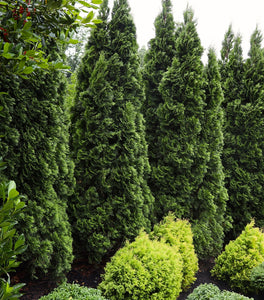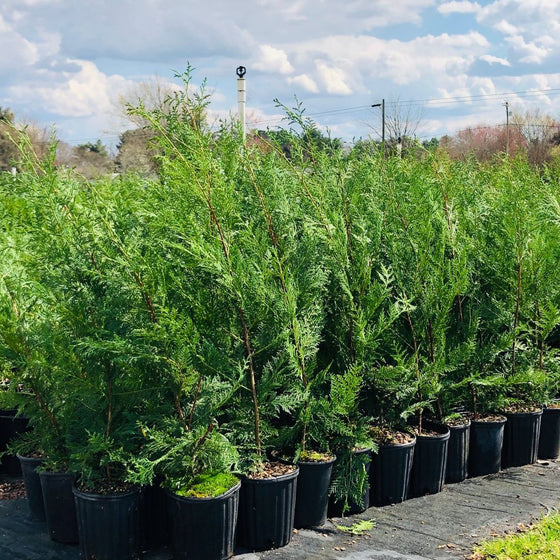


Images Depict Mature Plants
Murray Cypress
Cupressus x leylandii ‘Murray’
Murray Cypress is a really smart choice when privacy is the main goal, and you want results sooner rather than later. I like it because it grows fast, stays evergreen, and gives homeowners a dependable way to create a real screen without overcomplicating the project. If the job is blocking views, softening a property line, or building a green backdrop, this tree does that work very well.

15% OFF WITH CODE PLANTING15
Save 15% Off Your Entire Order! Limited time.
📦 Free shipping on orders over $99.
Delay shipping by leaving us a message at Checkout.
Share:



Fast Evergreen Privacy and Year-Round Screening
A Fast-Growing Evergreen Built for Privacy
Murray Cypress is a strong choice for homeowners who want privacy as quickly as possible. It is prized for its fast growth, dense evergreen branching, and ability to create a tall living screen in a relatively short amount of time. When a backyard needs separation from neighbors, a property line needs definition, or an open area needs a green backdrop, Murray Cypress is one of the most practical ways to get there.
That fast growth is one of the biggest reasons people choose it over slower evergreens. Instead of waiting years for a screen to start feeling effective, homeowners can use Murray Cypress to establish real height and coverage much sooner. For privacy projects where speed matters, this tree is a very strong fit.
Dense Green Foliage for a Full, Clean Screen
Murray Cypress features rich green foliage and a naturally dense habit, giving it a full, finished appearance. Unlike loose or airy evergreens that knit together more slowly visually, Murray Cypress tends to form a more solid wall of green when planted in a row. That makes it especially useful for privacy hedges, windbreaks, and large-scale screening projects.
Its evergreen foliage also means the privacy value does not disappear in winter. Even when deciduous trees lose their leaves, Murray Cypress continues to provide coverage, color, and structure. For homeowners who want year-round screening instead of seasonal screening, that is a major advantage.
A Strong Choice for Property Lines, Windbreaks, and Backyard Privacy
One of the most common uses for Murray Cypress is privacy planting, but it also works very well as a windbreak or boundary tree. It can soften fences, screen neighboring homes, create a backdrop for a patio or pool area, or help define the edge of a property with a more natural look than hardscape alone.
Because it grows upright and fills in well, it is especially useful where homeowners want a tall screen without an overly broad footprint. It has enough substance to make a visual impact, but it still works well in long rows and organized landscape layouts. For larger homesites and suburban backyards alike, it is an adaptable evergreen solution.
A Better Fit for Screening Than for Tight Foundation Spaces
Murray Cypress is best thought of as a privacy and screening plant rather than a small accent evergreen. It shines when given room to grow into its natural form and is most effective in rows, groupings, and larger landscape zones. It is not the right choice for tight foundation beds or tiny courtyard spaces, but it is an excellent fit for open side yards, rear property lines, and perimeter plantings.
That clear use case is important. Homeowners looking for a compact ornamental evergreen should choose something smaller, but those seeking real privacy value will find Murray Cypress far more useful. This tree is built to solve a specific landscape problem, and it does that job very well.
Easy-Care Evergreen Performance With the Right Start
Murray Cypress performs best in full sun and well-drained soil. Once established, it is a very practical, low-maintenance evergreen for screening and privacy use. It benefits from regular watering during establishment and from proper spacing at planting time so each tree has room to root, grow, and fill in evenly.
For homeowners who want a fast-growing evergreen privacy tree with dense year-round screening, strong landscape presence, and relatively simple upkeep, Murray Cypress is one of the most dependable choices available.
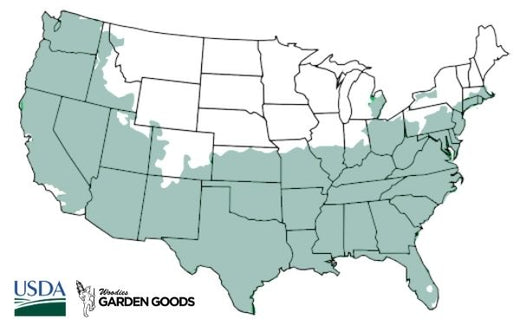
| Hardiness Zone: | 6-10 |
|---|---|
| Mature Height: | 30 to 40 Feet |
| Mature Width: | 10 to 15 Feet |
| Sunlight: | Full sun |
| Soil Condition: | Well-drained soil |
| Water | Regular moisture during establishment; average moisture once established |
| Bloom Time / Color | Conifer; grown for foliage rather than flowers |
| Ornamental Features | Dense rich green evergreen foliage, upright screening habit, strong year-round privacy value |
| Wildlife Value | Primarily shelter and screening value |
| Resistance (deer/disease/drought/etc.) | Fast growing, low maintenance once established, useful as a windbreak and privacy tree |
| Landscape Uses | Privacy screen, hedge, windbreak, property line planting, evergreen backdrop |
How to Care for Murray Cypress
Once you buy a Murray Cypress, make sure to read about the care instructions that are recommended to keep this plant healthy and thriving.

How should I plant Murray Cypress?
Plant Murray Cypress in full sun in well-drained soil where it has room to develop into a screening tree. Dig a hole two to three times as wide as the root ball but no deeper than the root ball itself, and set the tree so the root flare sits at or slightly above grade. If planting a privacy row, space the trees far enough apart to allow healthy rooting while still letting them grow together into a screen over time. This tree works especially well along property lines, fence lines, and backyard edges where fast height and year-round coverage are the goal. It is best used where its natural upright form can develop without being crowded by structures or oversized neighboring trees.

How often should I water Murray Cypress after planting?
Water deeply right after planting and keep the soil evenly moist during the establishment period. Deep watering is more effective than frequent shallow watering because it encourages stronger root development and helps the tree settle in more successfully during its first growing season. Once established, Murray Cypress is more tolerant of normal outdoor conditions, but it still benefits from supplemental watering during long dry stretches, especially in hot weather. The key is good drainage and avoiding constantly soggy soil.

When should I fertilize Murray Cypress?
Murray Cypress usually does not need heavy feeding. A light application of a balanced slow-release fertilizer in early spring is usually enough if the tree appears to need support. Good soil, proper watering, and correct spacing are often more important than frequent fertilization. Too much fertilizer can push overly soft growth and reduce the dense, steady habit that makes this tree such a good privacy plant. A moderate approach is generally best for a tree grown mainly for screening and evergreen structure.

When and how should I prune Murray Cypress?
Murray Cypress usually needs only light shaping or corrective pruning. Remove dead, damaged, or awkward branches and preserve the tree’s natural dense form rather than cutting it back too harshly. If pruning is needed for shaping or hedge control, do it lightly before the plant gets too overgrown. The goal is to maintain a full, healthy screen, not to force the tree into an unnatural shape with aggressive cuts.