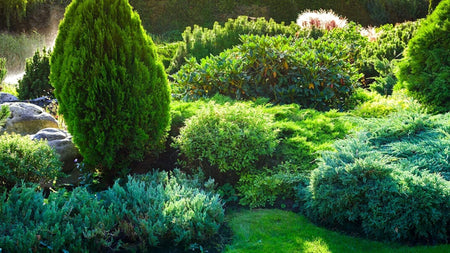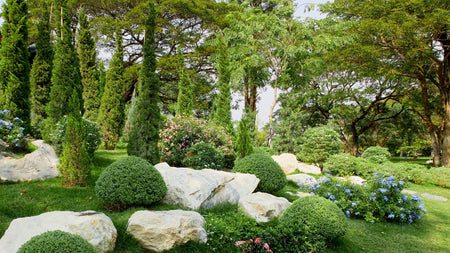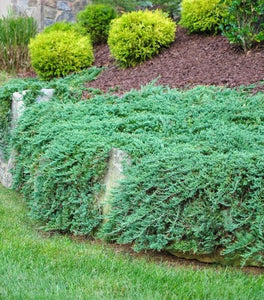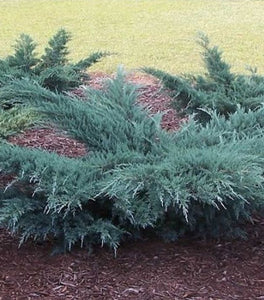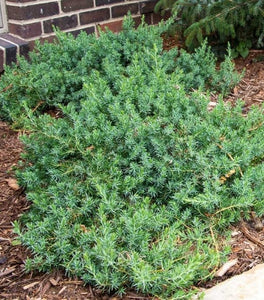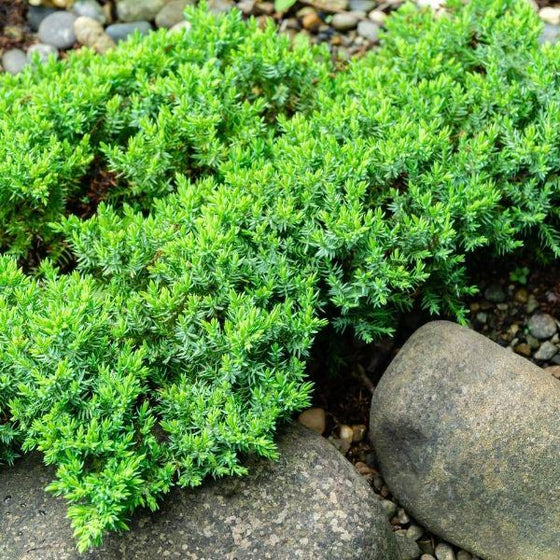
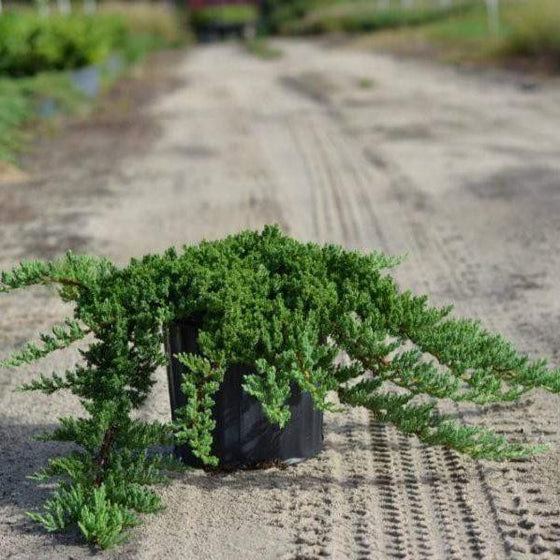
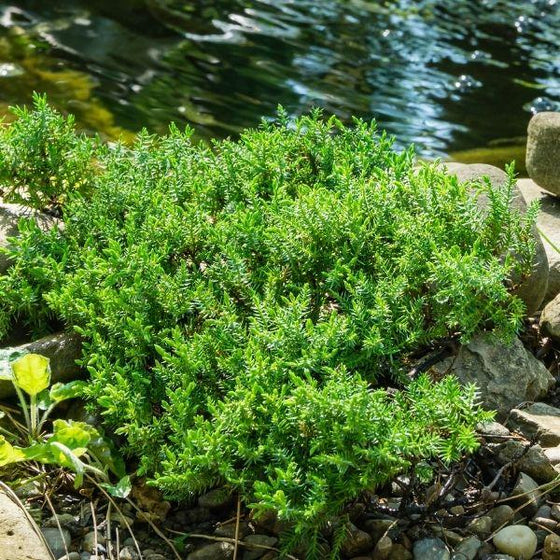


Images Depict Mature Plants
Green Mound Juniper
Juniper procumbens 'Green Mound'
Green Mound Juniper is one of those plants that quietly does a lot of work in the landscape. I like it because it gives homeowners real evergreen coverage in sunny spots where weeds, bare soil, or erosion can become a headache, and it does it with a clean blue-green look that stays attractive all year. It is especially useful on slopes, at the front of borders, and anywhere you want a durable evergreen ground cover that feels intentional instead of just filling space.

15% OFF WITH CODE PLANTING15
Save 15% Off Your Entire Order! Limited time.
📦 Free shipping on orders over $99.
Delay shipping by leaving us a message at Checkout.
Share:

Evergreen Groundcover Texture for Sunny Slopes and Borders
Low-growing evergreen coverage for difficult sunny spaces
Green Mound Juniper is one of the most useful evergreen groundcover shrubs for sunny landscapes where homeowners need dependable coverage without constant upkeep. Its dense, spreading habit forms a broad mat of blue-green foliage that helps cover bare soil, soften hard edges, and reduce the open spaces where weeds tend to move in. That makes it especially valuable on sunny slopes, at the front of borders, along retaining walls, and in rock gardens where a lower evergreen layer can pull the whole planting together.
Because it spreads outward far more than it grows tall, Green Mound Juniper adds structure without blocking views or competing with taller shrubs and perennials. It can spill gently over stone, soften the edge of a path, or create a unified evergreen carpet in larger mass plantings. For homeowners who want year-round coverage in places where turf struggles or higher-maintenance plants feel impractical, this is a durable and attractive solution.
Blue-green foliage with year-round color and texture
The foliage on Green Mound Juniper is a major part of its appeal. During the growing season, it carries a cool blue-green tone that adds fine texture and evergreen contrast to the landscape. That color pairs especially well with stone, gravel, dark mulch, broader-leaved shrubs, and flowering perennials, making it a strong companion plant even when it is not the main focal point. The dense branching gives it a neat, finished look while still feeling natural in the garden.
In colder weather, the foliage can take on a slightly purplish cast, adding a subtle seasonal shift without losing its evergreen structure. That year-round presence is one of the reasons gardeners rely on it so heavily in four-season landscapes. It is not flashy, but it consistently keeps a bed looking planted, layered, and complete even when deciduous plants are bare.
A strong fit for slopes, rock gardens, and mass plantings
Green Mound Juniper is especially effective anywhere the landscape needs horizontal movement and reliable evergreen coverage. It performs beautifully on slopes and banks, where its spreading habit visually stabilizes the planting and makes erosion-prone spaces look more intentional. It also works well in rock gardens, Japanese-inspired designs, and sunny border fronts, where its dense growth helps soften hard lines and connect taller plants.
It is also a smart choice for mass planting because it creates a cohesive evergreen layer instead of reading as a set of disconnected shrubs. In larger drifts, it forms a broad, unified mat of texture that reduces maintenance and increases visual impact. Homeowners can also use it in larger containers or bonsai-inspired settings where its branching habit becomes more sculptural and ornamental.
Durable performance with simple long-term care
Green Mound Juniper performs best in full sun and well-drained soil, where it develops dense growth and the strongest color. Once established, it tolerates drought, heat, lean soil, and challenging slope conditions very well, which makes it especially useful in places where more delicate groundcovers would fail. It is a plant that solves problems while still looking deliberate and attractive in the landscape.
It also needs very little pruning when used as a natural groundcover. Most gardeners simply let it spread and shape itself, with only occasional cleanup or edge control as needed. That low-maintenance character is one of its biggest strengths. For homeowners who want evergreen coverage, erosion control, and long-term landscape value without a lot of ongoing work, Green Mound Juniper is a very dependable choice.
| Botanical Name | Juniperus procumbens ‘Green Mound’ |
|---|---|
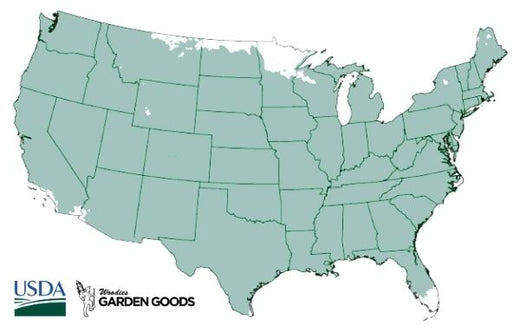
| Hardiness Zone: | 4-9 |
| Mature Height: | 1 to 2 Feet |
| Mature Width: | 4 to 6 feet |
| Sunlight: | Full Sun |
| Soil Condition: | Well-drained soil; adaptable to sandy, rocky, and average soils |
| Water Requirements: | Regular water during establishment; low water once established |
| Provides low evergreen cover and shelter | Non-flowering; grown for blue-green evergreen foliage |
| Wildlife Value | Provides low evergreen cover and shelter |
| Resistance | Deer resistant, drought tolerant, heat tolerant, erosion tolerant, salt tolerant |
| Landscape Uses | Ground cover, slopes, erosion control, rock gardens, border fronts, containers, bonsai |
How to Care for Green Mound Juniper
Be sure to read our planting instructions to ensure a healthy and happy Green Mound Juniper plant for years to come!

How should I plant Green Mound Juniper?
Plant Green Mound Juniper in full sun in a site with well-drained soil and enough room for it to spread naturally. Dig a hole two to three times wider than the root ball and no deeper than the root ball itself, then set the plant so the top of the root ball sits level with the surrounding soil before backfilling with the native soil. Water thoroughly after planting and mulch lightly around the base to help conserve moisture while the plant establishes, keeping mulch away from direct contact with the stems. If you are planting several together for groundcover use, stagger them in a loose pattern rather than a single straight line so the bed fills in more naturally over time.

How often should I water Green Mound Juniper after planting?
Water Green Mound Juniper deeply and regularly during the first growing season so it can establish a strong root system. In most landscapes, that means watering once or twice a week depending on rainfall, soil type, and heat, with the goal of keeping the soil evenly moist but never soggy. After establishment, Green Mound Juniper becomes much more drought tolerant and usually needs supplemental water only during extended dry periods. Deep watering is better than frequent shallow irrigation because it encourages stronger roots and helps the plant stay resilient in hot, sunny sites.

When should I fertilize Green Mound Juniper?
Fertilize Green Mound Juniper lightly in early spring before new growth begins if the planting needs support. A balanced slow-release fertilizer for evergreens or a modest topdressing of compost is usually enough to encourage healthy color and steady growth. Heavy feeding is usually unnecessary for this plant, especially when it is being used as a rugged groundcover. Too much fertilizer can push looser, less tidy growth, so a restrained approach usually gives the best long-term form and performance.

When and how should I prune Green Mound Juniper?
Prune Green Mound Juniper only lightly and only when needed, usually in late winter or early spring. Remove dead or damaged growth and trim stray stems if you want to control the spread or maintain a tidier edge along a path or planting bed. This plant usually looks best when its natural spreading habit is preserved rather than heavily shaped. Minimal pruning helps maintain the dense matting form, which is one of the reasons it works so well in slopes, rock gardens, and sunny groundcover plantings.