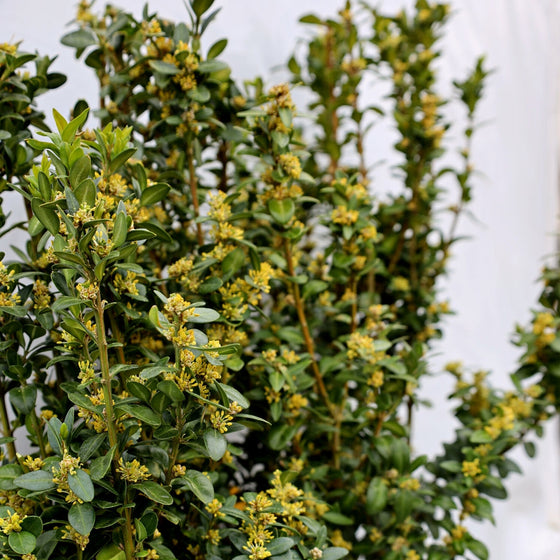

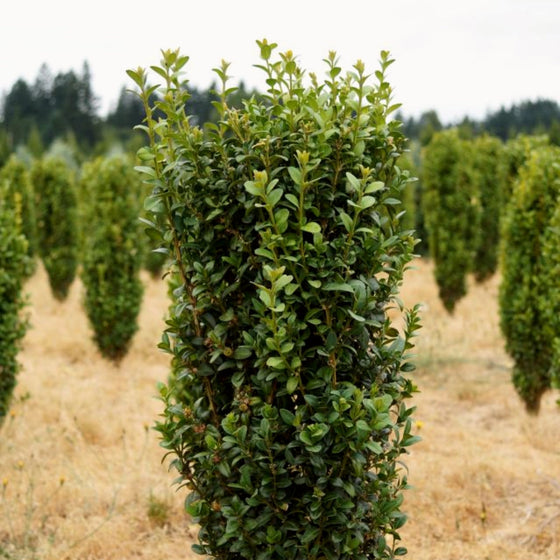


Images Depict Mature Plants
Dee Runk Boxwood
Buxus sempervirens 'Dee Runk'
Dee Runk Boxwood is one of my favorite “make it look expensive” shrubs because it offers classic boxwood elegance in a tall, narrow shape that actually fits modern landscapes. Plant it along a fence line, tuck it into a tight foundation bed, or use a pair to frame your entry—then water it well the first season and give it a light annual trim, and it will stay dense, vertical, and polished for years.

20% Off Sitewide Sale!
Use Code 'ENDOFSEASON20' At Checkout
📦 Free shipping on orders over $99.
Delay shipping by leaving us a message at Checkout.
Share:

Dee Runk Boxwood For Tall, Narrow Evergreen Hedges, Privacy Screens, And Formal Accents
A Naturally Upright Evergreen For Tight Beds And Clean Lines
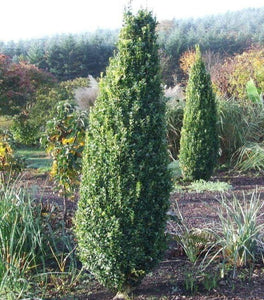
Dee Runk Boxwood is the boxwood you plant when you want height without the bulky width. Its naturally columnar habit creates a crisp, vertical look that feels formal and intentional—perfect for narrow side yards, tight foundation strips, and slender planting beds along walkways or fences. The foliage is dense and deep green, so it reads as a refined evergreen “pillar” all year, even when everything else in the garden is dormant.
Design-wise, it’s a problem-solver and a style upgrade in one. Use it to frame an entry, flank a garage door, punctuate a corner bed, or repeat it down a path for symmetry and rhythm. If your goal is polished structure in a small footprint, Dee Runk delivers that classic boxwood elegance with a space-saving silhouette.
A Space-Saving Privacy Hedge That Still Feels Lush
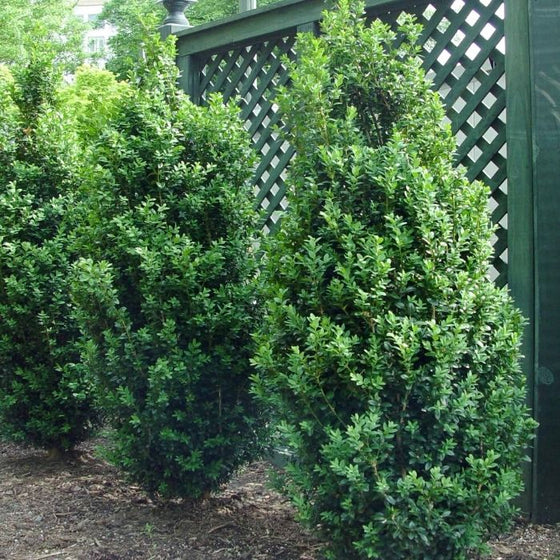
If you need an evergreen screen but you don’t have room for a wide hedge, Dee Runk is a smart choice. Mature plants typically reach about 8–10 feet tall while staying only about 2–3 feet wide, which makes it ideal for “living fence” lines and privacy hedges where patios, driveways, and property lines are close. You get real vertical coverage without sacrificing usable space.
It also fills in at a dependable pace once established, building density rather than racing into constant trimming. In a hedge, those upright forms knit together into a clean wall of green that stays narrow and tidy. Whether you’re screening a view, defining a boundary, or creating a formal green backdrop for flowering shrubs, Dee Runk gives you privacy with a tailored, high-end look.
Deer Resistance And Four-Season Structure You Can Count On
Dee Runk Boxwood is generally considered deer-resistant, which is a big deal when you’re investing in a hedge or entry planting. While nothing is completely deer-proof, boxwood foliage is typically less appealing to deer than that of many other evergreens. That makes Dee Runk a practical choice for front-yard structure, foundation beds, and long runs of hedge where consistent appearance matters.
Because it’s evergreen, it also gives your landscape strong “bones” in every season—winter included. Even when perennials disappear and flowering shrubs are leafless, Dee Runk keeps the garden looking composed and designed. If you want a plant that supports a polished landscape year-round, this upright boxwood is an easy win.
Low-Maintenance Care That Keeps The Shape Narrow And Dense
One of the best features of Dee Runk is that it doesn’t require constant pruning to look good. The columnar form is natural, so most gardeners only need a light trim to maintain crisp lines and encourage thicker branching. The biggest success factors are simple: plant in well-drained soil, water deeply during the first season, and mulch to reduce moisture swings and protect roots.
For long-term performance, keep the routine straightforward. Water at the base (not overhead) to keep foliage drier, and avoid heavy late-season pruning that can push tender growth at the wrong time. With minimal shaping and consistent establishment care, Dee Runk stays lush, vertical, and elegant—exactly what you want from a narrow evergreen hedge.
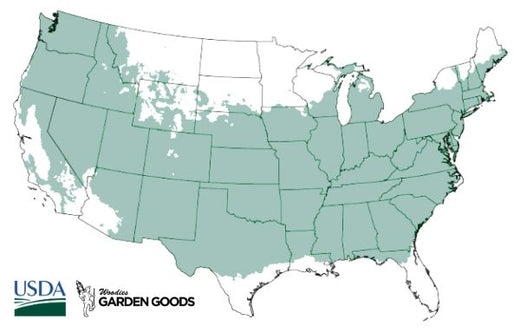
| Hardiness Zone: | 5-8 |
|---|---|
| Mature Height: | 8 to 10 Feet |
| Mature Width: | 2 to 3 Feet |
| Sunlight: | Full sun to partial shade |
| Soil Condition: | Any well-drained soil |
| Water Requirements: | Water well until established; moderate once established |
| Bloom Time / Color: | Spring; small yellow-green (not showy) |
| Wildlife Value: | Minor; spring flowers may support early pollinators |
| Resistance (deer/disease/drought/etc.): | Deer resistant; best health with good airflow and dry foliage |
| Landscape Uses: | Narrow hedges, privacy screens, living fences, entry framing, foundation accents, formal gardens, topiary |
How to Care for Dee Runk Boxwood
Be sure to read our planting instructions to ensure a healthy and happy Dee Runk Boxwood plant for years to come!

How should I plant Dee Runk Boxwood?
Plant Dee Runk Boxwood in full sun to partial shade in well-drained soil. Dig a hole about twice as wide as the root ball and just as deep, then set the shrub so the top of the root ball is level with (or slightly above) the surrounding soil. Backfill with native soil, firm gently to remove air pockets, and water deeply to settle everything in. Finish with a 2–3 inch mulch ring over the root zone, keeping mulch a few inches away from the stems. If you’re planting a hedge, lay out your spacing and a straight line before you dig so the row stays uniform and fills in evenly.

How often should I water Dee Runk Boxwood after planting?
Water thoroughly right after planting, then water deeply about once per week during the first growing season so moisture reaches the full root zone. In hot or dry stretches, increase to twice per week to prevent the root ball from drying out. Deep watering encourages roots to grow outward and supports faster, more even establishment. After the first year, water is provided during extended dry periods rather than on a fixed schedule. Check soil a few inches down—if it’s dry, it’s time to water—and keep mulch refreshed to reduce stress from moisture swings.

When should I fertilize Dee Runk Boxwood?
Fertilize in early spring as new growth begins, using a balanced, slow-release fertilizer for evergreen shrubs. Apply it around the drip line (not right against the stems) and water it in well so nutrients move into the root zone. One spring feeding is typically enough to support steady, dense growth. You can also top-dress with compost once a year to support soil health and moisture retention. Avoid heavy late-season fertilizing, which can encourage tender growth too late and increase winter stress.
-v1646343254325.png?89x89)
When and how should I prune Dee Runk Boxwood?
Prune lightly in late spring or early summer after the first flush of growth to maintain the narrow profile and encourage denser branching. Start by removing any dead or damaged twigs, then make modest shaping cuts along the sides to keep the columnar form crisp. Small trims are better than one hard cut. If you need a second touch-up, do it in mid-summer and keep it light. Avoid heavy pruning into old wood and avoid late-fall pruning so new growth has time to harden off before winter.