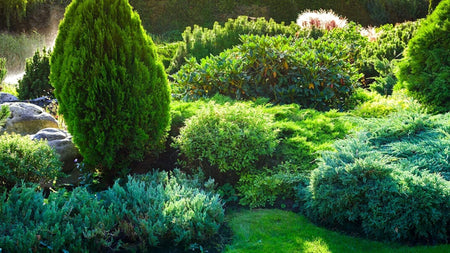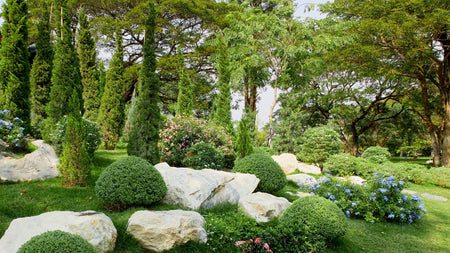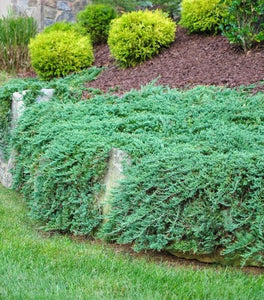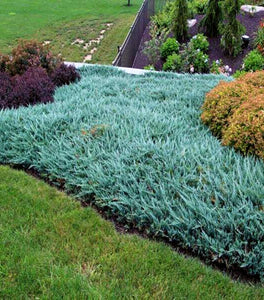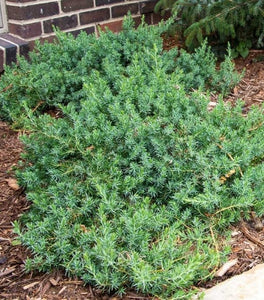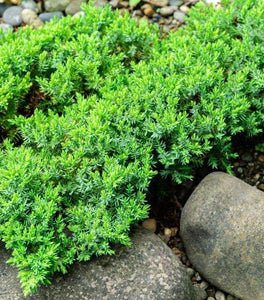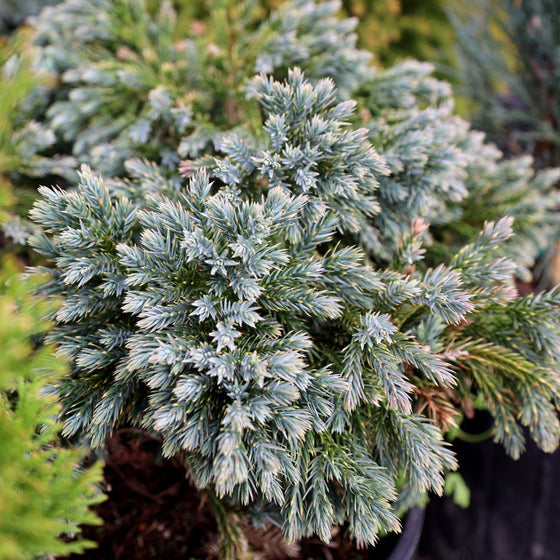
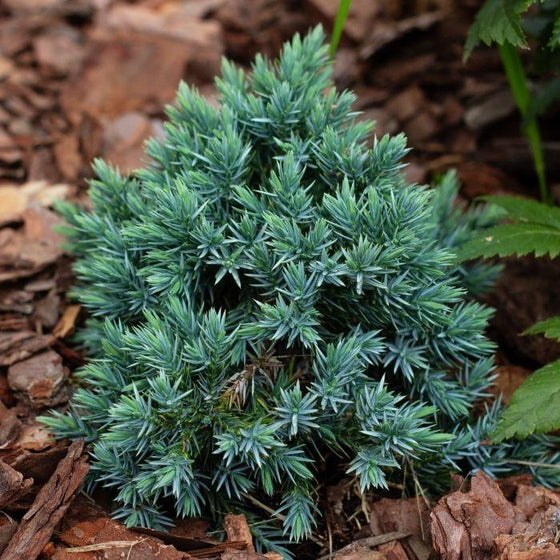
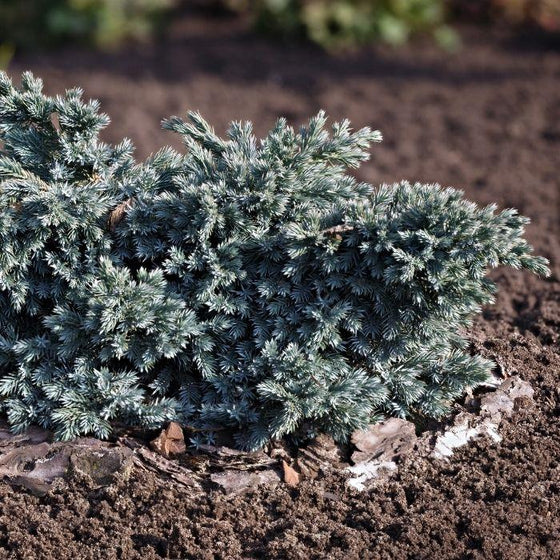


Images Depict Mature Plants
Blue Star Juniper
Juniperus squamata 'Blue Star'
Blue Star Juniper is one of those compact evergreens that gives you a lot for the space it takes up. The color is excellent, the habit stays clean, and it fits beautifully into sunny beds where homeowners want year-round interest without constant upkeep.

20% OFF FOR EARTH DAY
Use Code EARTH20 At Checkout🌎
📦 Free shipping on orders over $99.
Delay shipping by leaving us a message at Checkout.
Share:

Silver-Blue Evergreen Color in a Compact, Mounded Shrub
A compact evergreen that adds color all year
Blue Star Juniper is an excellent choice for homeowners who want a small evergreen shrub with much more personality than a standard green planting. Its naturally mounded habit gives it a tidy, sculptural look, while the blue-toned foliage keeps the landscape feeling bright and interesting through every season. This is the kind of plant that works hard visually without taking up much room.
Silver-blue foliage is the feature that makes it stand out
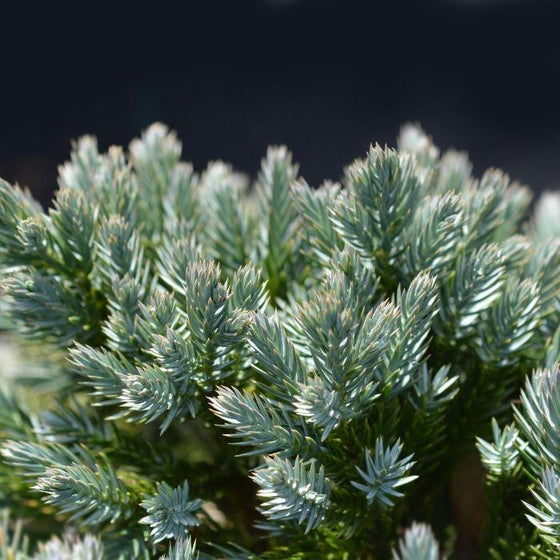
One of the biggest reasons Blue Star Juniper is so popular is its foliage color. The needles are densely packed and carry a cool silver-blue tone that creates striking contrast against darker shrubs, stone, mulch, and broadleaf evergreens. In colder weather, the foliage may deepen slightly in tone, giving the plant even more seasonal character.
Its slow-growing mound makes it easy to use
Blue Star Juniper grows in a compact, rounded-to-hemispherical mound, which makes it especially useful in places where homeowners want evergreen structure without a tall or sprawling plant. It stays low enough for front-of-bed use, but it has enough presence to act as a focal accent in smaller landscape spaces.
Excellent for rock gardens, borders, and containers
This juniper is especially effective in rock gardens, foundation plantings, border fronts, gravel gardens, and containers where strong evergreen texture matters. It also works beautifully in groupings where repeating the blue foliage helps create a calm, cohesive design. In sunny landscapes that need a compact evergreen accent, it is one of the most dependable choices.
Tough, drought tolerant, and easy to maintain
Blue Star Juniper performs best in full sun and well-drained soil. Once established, it is notably drought tolerant and generally low maintenance, asking for very little beyond occasional cleanup or light shaping. Deer resistance is commonly cited for this plant, but as with any landscape shrub, it is best described as relative rather than absolute in high-pressure areas.

| Hardiness Zone: | 4-8 |
|---|---|
| Mature Height: | 2 to 3 Feet |
| Mature Width: | 3 to 4 feet |
| Sunlight: | Full Sun |
| Soil | Well-drained soil; adaptable to sandy, lean, and slightly alkaline soils |
| Water | Moderate during establishment; drought tolerant once established |
| Bloom Time / Color | Conifer; grown for foliage, not flowers |
| Foliage | Dense silver-blue to blue-gray foliage |
| Ornamental Features | Compact mounded habit, strong foliage color, year-round texture |
| Wildlife Value | Evergreen cover value; bluish berry-like cones may occur |
| Resistance (deer/disease/drought/etc.) | Relatively deer resistant, drought tolerant, low maintenance |
| Landscape Uses | Borders, rock gardens, foundation beds, containers, accent plantings, small-space evergreen structure |
How to Care for Blue Star Juniper
Be sure to read our planting instructions to ensure a healthy and happy Blue Star Juniper plant for years to come!

How should I plant Blue Star Juniper?
Plant Blue Star Juniper in full sun and well-drained soil. Dig a hole about twice as wide as the root ball and no deeper than the root ball itself, then place the plant so the top of the root ball sits level with or slightly above the surrounding soil. Backfill with native soil, water deeply, and mulch lightly around the base while keeping mulch off the stems. If the site tends to stay wet, improve drainage or consider a raised planting area, because junipers perform much better in dry, airy soils than in heavy, soggy ground.

How often should I water Blue Star Juniper after planting?
Water Blue Star Juniper deeply right after planting, then keep the soil evenly moist during the first growing season while the roots establish. In most sunny landscapes, that means watering about once per week, with extra attention during extended heat or drought. Once established, Blue Star Juniper becomes quite drought tolerant and usually needs far less supplemental irrigation. Overwatering is much more likely to cause problems than slightly dry soil, so good drainage and moderation are the keys to long-term success.

When should I fertilize Blue Star Juniper?
Blue Star Juniper usually needs very little fertilizer. If needed, a light feeding in early spring with a balanced slow-release fertilizer for evergreens is enough to support healthy new growth and foliage color. Avoid heavy fertilizing, since this plant naturally performs well in leaner soils and does not need aggressive feeding to stay attractive. In most cases, full sun and sharp drainage matter more than fertilizer.

When and how should I prune Blue Star Juniper?
Prune Blue Star Juniper only lightly and only when needed, usually in late winter or early spring. Remove any dead or damaged growth first, then make small shaping cuts if the plant needs tidying. Avoid cutting deeply into old interior wood, since junipers do not reliably push new growth from bare older stems. In most cases, Blue Star Juniper looks best when its natural mounded habit is preserved and pruning is kept conservative.