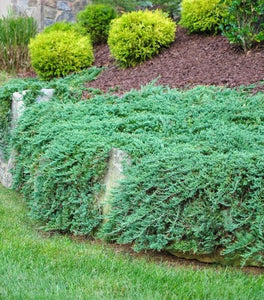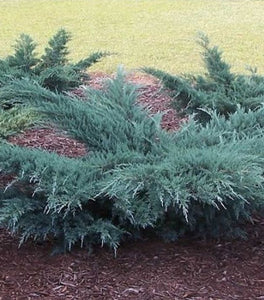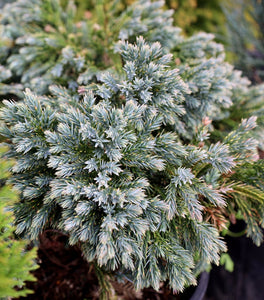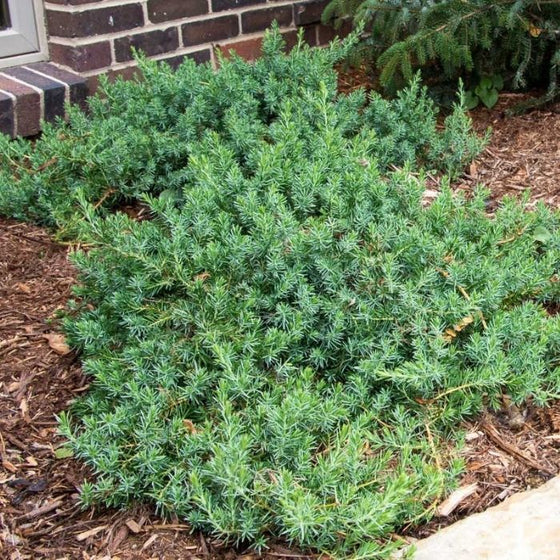
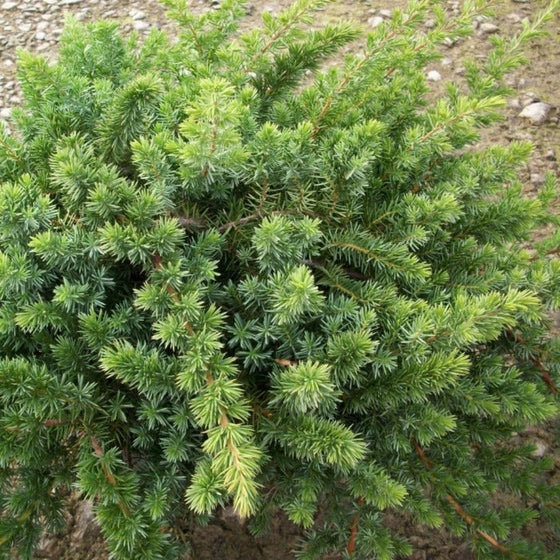
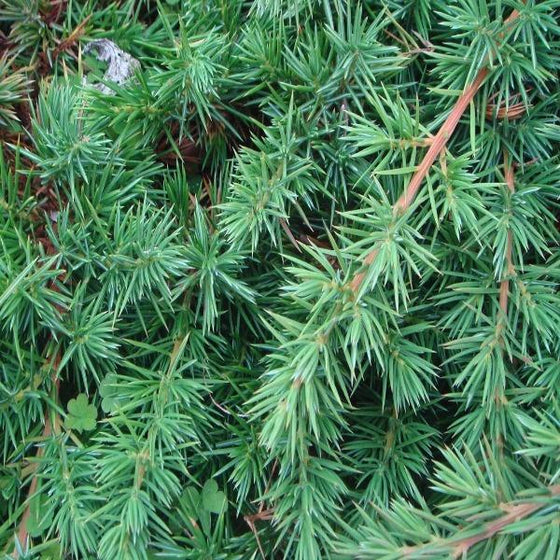


Images Depict Mature Plants
Blue Pacific Juniper
Juniperus conferta 'Blue Pacific'
Blue Pacific Juniper is one of those plants that earns its keep in the landscape year after year. I like it because it gives homeowners a true evergreen groundcover that can handle sun, drought, salt, slopes, and sandy soil without becoming fussy. The blue-green foliage looks great against stone and mulch, and when you need a plant that can cover ground, hold a bank, and still look sharp doing it, this one is a really dependable choice.

15% OFF WITH CODE PLANTING15
Save 15% Off Your Entire Order! Limited time.
📦 Free shipping on orders over $99.
Delay shipping by leaving us a message at Checkout.
Share:

Blue-Green Evergreen Coverage for Slopes, Shores, and Sunny Borders
Low spreading evergreen coverage for tough sunny spaces
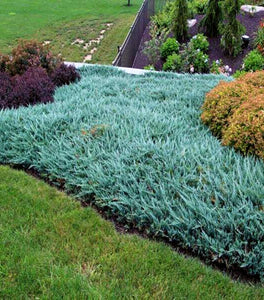
Blue Pacific Juniper is one of the best evergreen groundcover shrubs for sunny landscapes where homeowners need dependable coverage with minimal upkeep. Its low, trailing habit allows it to spread into a dense mat of blue-green foliage that helps cover bare ground, soften hard edges, and reduce open areas where weeds can become a problem. That makes it especially valuable on banks, slopes, along retaining walls, and at the front of sunny beds where a durable evergreen layer can tie the entire planting together.
Because it grows outward far more than upward, Blue Pacific Juniper provides structure without blocking views or crowding taller shrubs and perennials behind it. It can spill gently over stone, soften the edge of a drive, or create a broad carpet-like look in larger mass plantings. For homeowners who want an evergreen solution in places where turf struggles or higher-maintenance plants feel impractical, this is a very strong, hardworking choice.
Blue-green foliage that keeps color through the seasons
The foliage on Blue Pacific Juniper is one of its biggest selling points. The needles are rich blue-green and dense along the branches, giving the plant a cool-toned, coastal look that stands out beautifully against stone, gravel, dark mulch, and flowering perennials. That color keeps the landscape looking planted and intentional, even when very little else is happening in the bed.
Because the foliage remains evergreen, the plant continues to provide texture and structure in every season. In winter, the blue-green tones hold up better than many groundcovers, helping keep slopes, border fronts, and rock gardens looking finished rather than empty. Homeowners who want year-round coverage with more visual interest than a plain green groundcover often find Blue Pacific Juniper especially useful.
A strong fit for slopes, coastal gardens, and erosion control
Blue Pacific Juniper is especially well-suited to sites where durability matters just as much as beauty. It performs very well on slopes and banks, where its spreading habit helps cover soil and gives erosion-prone areas a more stable, finished appearance. It is also an excellent plant for coastal gardens because it tolerates salt spray, wind, sandy soil, and hot sun better than many softer evergreen shrubs.
That toughness makes it a practical choice for larger spaces where a broad, low evergreen mass is needed. It works beautifully in rock gardens, along parking islands, around taller shrubs, and in wide sunny borders where a clump-forming grass or small shrub might leave too much exposed soil. When homeowners want one plant that can handle difficult conditions and still look attractive, Blue Pacific Juniper is easy to recommend.
Low-maintenance performance with the right amount of room
Blue Pacific Juniper performs best in full sun and well-drained soil, where it develops dense branching and strong foliage color. Once established, it becomes notably drought-tolerant and asks for very little ongoing care. That low-maintenance performance is part of what makes it so valuable in home landscapes, especially in hot, exposed areas where more delicate groundcovers would need regular attention.
The one thing to plan for is the spread. This plant is at its best when it has room to move naturally across the ground rather than being forced into a tight mixed bed with slower, delicate companions. With proper spacing and a site that welcomes its trailing habit, Blue Pacific Juniper becomes a dependable evergreen groundcover that handles tough conditions while still bringing real beauty and structure to the landscape.
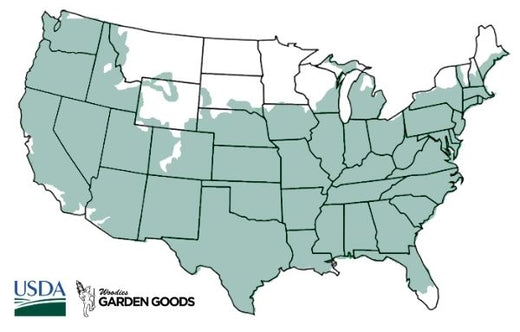
| Hardiness Zone: | 5-9 |
|---|---|
| Mature Height: | 8 to 12 Inches |
| Mature Width: | 6 to 7 Feet |
| Sunlight: | Full sun |
| Bloom Time / Color | Non-flowering; grown for blue-green evergreen foliage |
| Soil Condition: | Well-drained soil; adaptable to sandy, rocky, and average soils |
| Water Require: | Regular water during establishment; low water once established |
| Wildlife Value | Provides low evergreen cover and shelter |
| Resistance (deer/disease/drought/etc.) | Deer resistant, drought tolerant, salt tolerant, wind tolerant, heat tolerant |
| Landscape Uses | Ground cover, slopes, erosion control, coastal gardens, rock gardens, borders, mass plantings |
How to Care for Blue Pacific Juniper
Be sure to read our Blue Pacific Juniper care and planting guide to keep this evergreen groundcover happy and healthy

How should I plant Blue Pacific Juniper?
Plant Blue Pacific Juniper in full sun in a site with well-drained soil and enough room for it to spread naturally. Dig a hole two to three times wider than the root ball and no deeper than the root ball itself, then set the plant so the top of the root ball sits level with the surrounding soil before backfilling with the native soil. Water thoroughly after planting and mulch lightly around the base to help conserve moisture while the plant establishes, keeping mulch away from direct contact with the stems. If you are planting multiple shrubs for groundcover use, space them thoughtfully so they can knit together over time without being forced into a crowded, uneven pattern.

How often should I water Blue Pacific Juniper after planting?
Water Blue Pacific Juniper deeply and regularly during the first growing season to help it establish a strong root system. In most landscapes, that means watering once or twice a week, depending on rainfall, drainage, and heat, with the goal of keeping the soil evenly moist but never soggy. After establishment, Blue Pacific Juniper becomes much more drought-tolerant and usually needs supplemental water only during extended dry periods. Deep watering is far more helpful than frequent shallow irrigation because it encourages stronger roots and supports better performance in hot, exposed, and sandy sites.

When should I fertilize Blue Pacific Juniper?
Fertilize Blue Pacific Juniper lightly in early spring if needed, just before the main flush of growth begins. A balanced slow-release fertilizer for evergreens or a modest topdressing of compost is usually enough to support healthy color and steady growth. Heavy feeding is usually unnecessary for this plant, especially when used as a rugged groundcover. Too much fertilizer can encourage softer growth and reduce the dense, compact appearance that makes the plant so useful in slopes, borders, and mass plantings.

When and how should I prune Blue Pacific Juniper?
Prune Blue Pacific Juniper only lightly and only when needed, usually in late winter or early spring. Remove any dead or damaged growth and trim stray stems if you want to control the spread or keep edges cleaner along a path, wall, or planting bed. This juniper usually looks best when its natural trailing habit is preserved rather than heavily shaped. Minimal pruning helps maintain the dense, flowing mat of evergreen foliage that gives the plant its best landscape value.