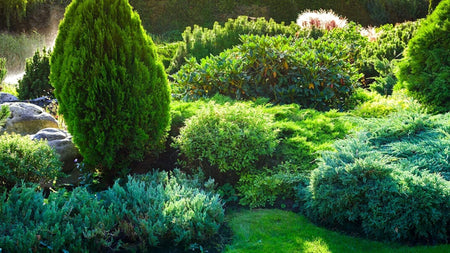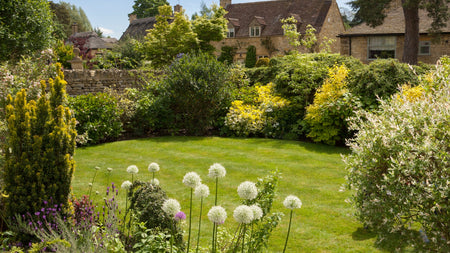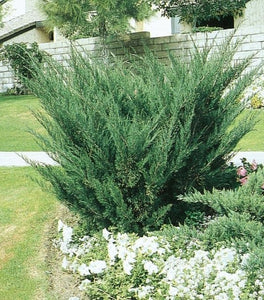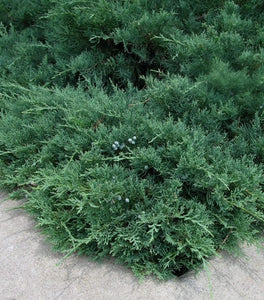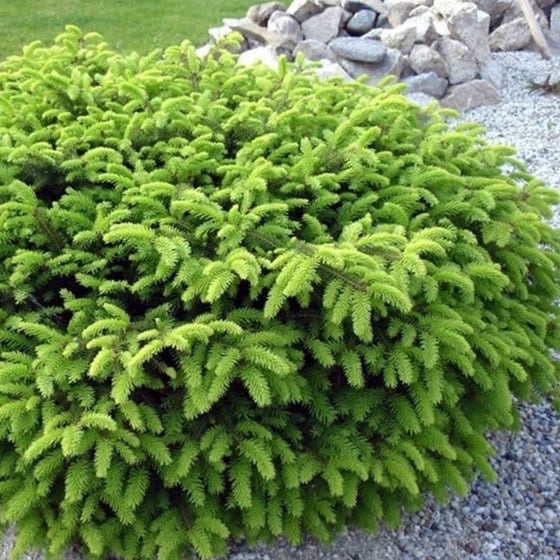


Images Depict Mature Plants
Birds Nest Spruce
Picea abies 'Nidiformis'
Birds Nest Spruce is one of those evergreens that gives a landscape quiet structure without ever feeling boring. The low, dense habit is dependable, but the nest-like center is what gives it just enough character to make the planting feel more thoughtful and complete.

15% OFF FOR MOTHER'S DAY
Use Code MOMDAY15 At Checkout
📦 Free shipping on orders over $99.
Delay shipping by leaving us a message at Checkout.
Share:


A compact evergreen with a distinctive nest-like form and year-round texture
A compact spruce with a shape that stands out.
Birds Nest Spruce is a compact, slow-growing evergreen shrub prized for its distinctive mounded form. The branch tips curve upward while the center stays slightly recessed, creating the nest-like look that gives this plant its common name. That natural shape makes it more visually interesting than a standard rounded evergreen and gives the landscape a more finished, intentional look.
Dense green needles keep it useful all year.
This shrub earns its place through every season with dense green needles and a full, tidy habit. Even when flowering perennials and deciduous shrubs are dormant, Birds Nest Spruce continues to provide structure, texture, and evergreen color. It is especially valuable in winter when strong plant form becomes more important in the landscape.
A strong fit for borders, foundations, and smaller evergreen groupings.
Birds Nest Spruce works especially well in mixed borders, front-of-foundation beds, rock gardens, and mass plantings where a low evergreen layer is needed. It is also a good fit for containers and smaller spaces where a larger spruce would feel too heavy. Because it stays relatively low and broad, it can be used to anchor a bed without blocking windows or overwhelming nearby plants.
Slow growth makes it easier to manage in the long term.
One of the best qualities of Birds Nest Spruce is its manageable pace of growth. It develops slowly into a dense, attractive mound, which means it usually needs very little corrective pruning. That makes it a practical choice for homeowners who want a reliable evergreen with minimal seasonal upkeep.
Best performance comes from sun and good drainage.
Birds Nest Spruce performs best in partial sun to full sun and in well-drained soil. Once established, it is durable and widely used as a low-maintenance evergreen accent. Light pruning in late spring can help maintain its shape if needed, but in most landscapes, the natural form is one of the plant’s strongest assets.
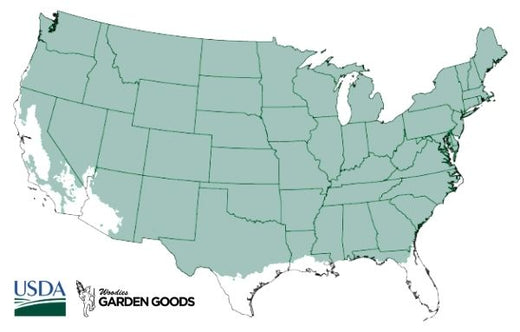
| Hardiness Zone: | 3-8 |
|---|---|
| Mature Height: | 3 to 5 feet |
| Mature width: | 4 to 6 feet |
| Sunlight: | Partial to Full Sun |
| Soil | Any well-drained soil |
| Water | Water well until established |
| Foliage | Dense evergreen needles |
| Ornamental Features | Nest-like form, dense mounding habit, year-round evergreen texture |
| Wildlife Value | Evergreen cover for birds and small wildlife |
| Resistance (deer/disease/drought/etc.) | Deer resistant and drought tolerant once established |
| Landscape Uses | Mixed borders, foundation plantings, containers, rock gardens, mass plantings, low evergreen color |
How to Care for Birds Nest Spruce
Be sure to read our planting instructions to ensure a healthy and happy Birds Nest Spruce for years to come!
-v1777311073053.png?92x91)
How should I plant Birds Nest Spruce?
Plant Birds Nest Spruce in partial sun to full sun in well-drained soil. Dig a hole about twice as wide as the root ball and no deeper than the root ball itself, then set the shrub level with the surrounding soil and backfill carefully. Water deeply after planting and apply mulch around the root zone to help conserve moisture and reduce weed competition, but keep mulch a few inches away from the stems. Good drainage is especially important, since this compact spruce performs best when it is not sitting in soggy soil.
-v1777311101877.png?89x84)
How often should I water Birds Nest Spruce after planting?
Water Birds Nest Spruce deeply right after planting, then keep the soil evenly moist through the first growing season while it establishes. During the first few weeks, regular checking is important so the root ball does not dry out. Once established, Birds Nest Spruce is much easier to manage and usually needs only occasional supplemental watering during extended dry periods. Deep watering is better than frequent shallow watering and helps maintain a healthier root system.
-v1777311117796.png?90x89)
When should I fertilize Birds Nest Spruce?
Fertilize Birds Nest Spruce in spring and again in early summer if needed. A balanced evergreen fertilizer or an acid-supporting fertilizer for shrubs and trees can both work well depending on your soil. Avoid overfeeding, especially late in the season. In most landscapes, this shrub performs best with moderate fertility rather than repeated heavy fertilizer applications.

When and how should I prune Birds Nest Spruce?
Prune Birds Nest Spruce lightly in late spring to maintain shape and size if needed. In most cases, only small corrections are necessary because the shrub naturally keeps a dense, mounded form. Use sharp hand pruners rather than heavy shearing whenever possible. Light shaping helps preserve the distinctive nest-like look without forcing the plant into a harsher outline.