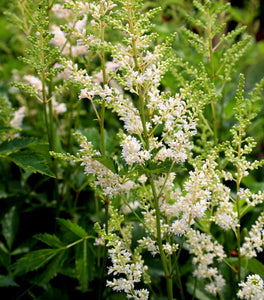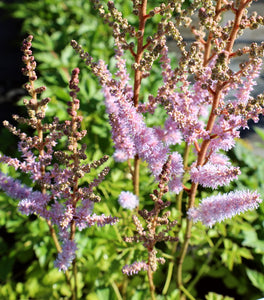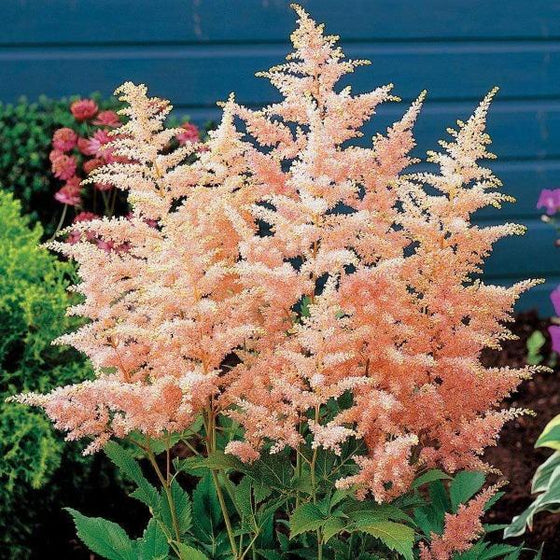


Images Depict Mature Plants
Astilbe Peach Blossom
Astilbe 'Peach Blossom'
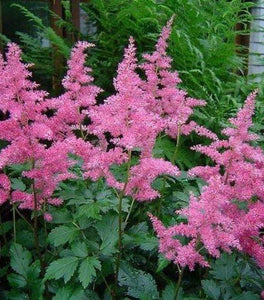
Astilbe Peach Blossom is a beautiful choice when you want a softer, warmer flower color for a shaded garden. The peach-pink plumes bring a romantic look without being too bright, and the glossy foliage gives the bed a clean, textured base before and after bloom. I especially like it planted in groups with hostas, ferns, heuchera, and white Astilbes, where the soft flower color can blend the whole shade planting together.

15% OFF FOR MOTHER'S DAY
Use Code MOMDAY15 At Checkout
📦 Free shipping on orders over $99.
Delay shipping by leaving us a message at Checkout.
Share:

Peach-Pink Plumes for Moist Shade Gardens
Soft peach-pink plumes for elegant shade color.
Astilbe Peach Blossom produces feathery plumes in soft peach-pink to rose-pink tones, bringing a warm, graceful glow to part-shade and shade gardens. The airy flowers rise above clean, green foliage, creating a romantic look that feels refined without being overly formal. Use it to brighten woodland borders, shaded foundation beds, north-facing gardens, and mixed shade plantings where homeowners want flower color that is softer than red but warmer than white.
Glossy foliage with classic Astilbe texture.
This Japanese Astilbe forms a tidy clump of glossy, deeply cut green foliage that adds texture before and after the flowers appear. The fern-like leaves contrast beautifully with broad hostas, rounded heuchera foliage, upright ferns, hellebores, brunnera, and Japanese forest grass. Even when the plant is not in bloom, the foliage helps beds feel lush, layered, and intentional rather than flat or unfinished.
A beautiful fit for moist woodland gardens.
Astilbe Peach Blossom performs best in part shade to full shade with moist, humusy, organically rich, well-drained soil. It appreciates compost, leaf mold, and mulch that help hold moisture and keep the root zone cool during warm weather. This is not a dry-shade perennial, so place it where the soil stays evenly moist or where watering is easy during dry spells, especially if it is planted in containers or spots that receive morning sun.
Deer-resistant flowers with pollinator appeal.
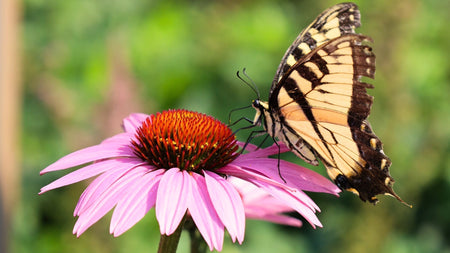
Peach Blossom Astilbe is considered deer-resistant and rabbit-resistant, making it a practical flowering perennial for shaded landscapes where browsing can be a concern. The soft plumes also attract pollinators, including butterflies and hummingbirds in some garden settings, adding movement and life to woodland-style plantings that are often designed mostly around foliage. This combination of shade tolerance, warm pastel flower color, and browsing resistance makes it useful for foundation beds, shaded walkways, and outdoor living areas.
Beautiful in groups, containers, and cut flower arrangements.
Plant Astilbe Peach Blossom in groups for the strongest color impact, or repeat it through a shade border to create rhythm and softness. The plumes are lovely in fresh-cut arrangements and can also be left standing after bloom for a subtle dried texture if you prefer a more natural look. In containers, Peach Blossom works well as a shaded porch or patio accent, as long as the pot has drainage and the soil is kept consistently moist through warm weather.
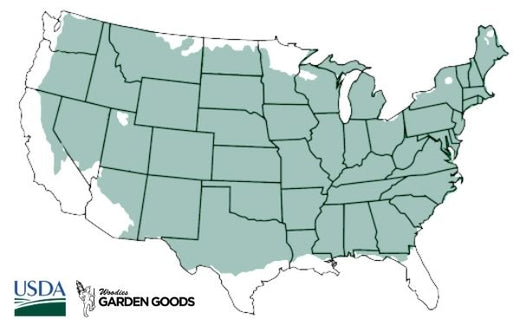
| Hardiness Zone: | 4-8 |
|---|---|
| Mature Height: | 18 to 24 inches |
| Mature Width: | 15 to 24 inches |
| Sunlight: | Part shade to full shade; tolerates some morning sun with consistent moisture |
| Soil | Moist, humusy, organically rich, well-drained soil |
| Water | Water regularly after planting; prefers consistent moisture and does not tolerate long dry periods |
| Bloom Time / Color | Late spring to early summer or early summer; soft peach-pink, salmon-pink, or rose-pink plumes |
| Ornamental Features | Peach-pink plumes, glossy foliage, upright clump-forming habit, cut flower value, dried plume texture |
| Wildlife Value | Attracts pollinators, including butterflies, bees, and hummingbirds in many garden settings |
| Resistance | Deer resistant, rabbit resistant, shade tolerant, and generally low maintenance when kept moist |
| Landscape Uses | Shade borders, woodland gardens, foundation beds, mass plantings, containers, cut flower gardens, moist borders, pond-edge plantings, shaded walkways, and under-tree plantings |
How to Care for Astilbe Peach Blossom
Be sure to read our planting instructions to ensure a healthy and happy Astilbe Peach Blossom for years to come!
-v1777559336454.png?92x91)
How should I plant Astilbe Peach Blossom?
Plant Astilbe Peach Blossom in part shade to full shade with moist, humusy, well-drained soil. Work compost, leaf mold, or organic matter into the planting area if your soil is sandy, compacted, or low in moisture retention. Dig a hole about twice as wide as the root ball and set the crown level with the surrounding soil. Backfill, water deeply, and space plants about 15 to 24 inches apart to allow the clumps room to mature and create a full shade-garden display.
-v1777559357729.png?89x84)
How often should I water Astilbe Peach Blossom after planting?
Water Astilbe Peach Blossom regularly during the first growing season while the roots establish. Keep the soil consistently moist, especially during warm weather, dry spells, or when planting in containers. Once established, Astilbe still performs best with steady moisture and should not be allowed to dry out for long periods. If the soil becomes too dry, the foliage may develop brown, crispy edges and the plant may lose its lush shade-garden appearance.
-v1777559372707.png?90x89)
When should I fertilize Astilbe Peach Blossom?
Fertilize Astilbe Peach Blossom in spring with compost or a balanced, slow-release fertilizer. This helps support strong roots, healthy foliage, and full peach-pink flower plumes during the bloom season. Avoid overfertilizing, especially if the plant is growing in dry soil. Moisture and organic matter are more important than heavy feeding, and a yearly compost mulch can help feed the soil while conserving moisture.

When and how should I prune Astilbe Peach Blossom?
Prune Astilbe Peach Blossom after flowering if you prefer a cleaner look, or leave the spent plumes standing for added texture. The dried flower stems can remain attractive for a time and add structure to shaded borders. Cut the entire plant back in late fall after frost or in early spring before new growth begins. Remove winter-damaged foliage and refresh the area with compost or mulch to help prepare the plant for the next growing season.