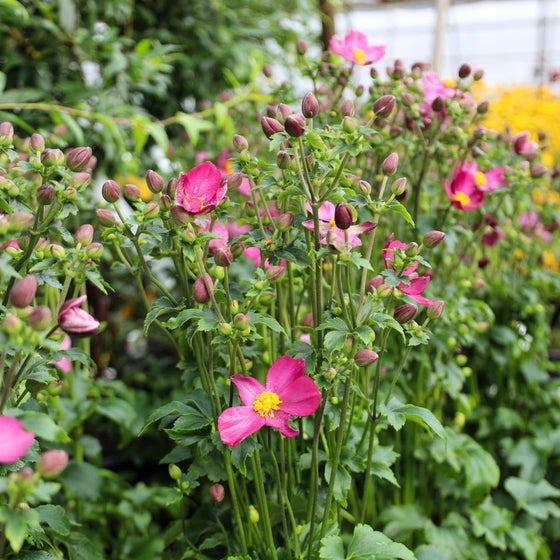
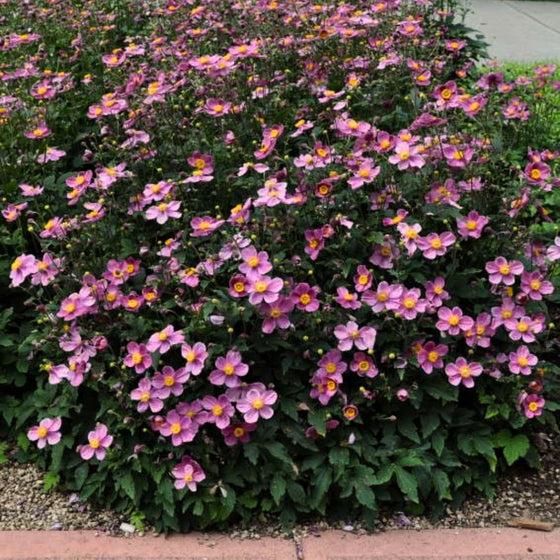


Images Depict Mature Plants
Anemone Pretty Lady Diana
Anemone × hybrida 'Pretty Lady Diana'
Pretty Lady Diana Anemone is exactly the kind of perennial I like for homeowners who want their shade garden to keep giving after summer starts to fade. The rose-pink flowers are graceful, the compact habit makes it much easier to use than older Japanese anemones, and it brings a real sense of freshness to the border in late summer and fall. For woodland edges, part-shade beds, and even containers where you want elegant late-season bloom without a giant footprint, this is a really smart and beautiful plant.

15% OFF SITEWIDE SALE, USE CODE 'FALLPREP15'
📦 Free shipping on orders over $99.
Delay shipping by leaving us a message at Checkout.
Share:


Compact Rose-Pink Anemone Blooms for Late Summer and Fall Shade Gardens
A Compact Japanese Anemone with Elegant Late-Season Color
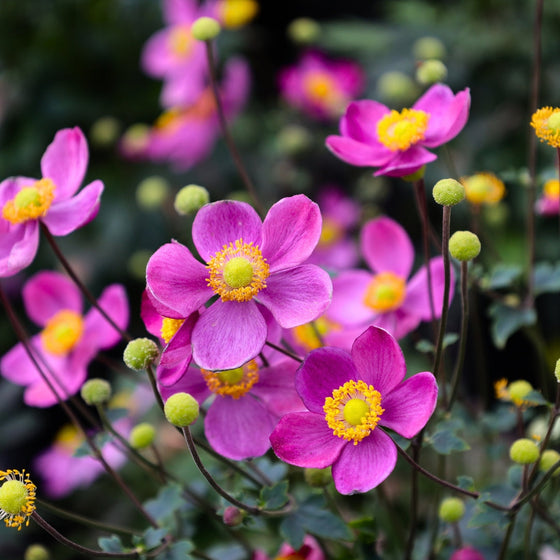
Pretty Lady Diana Anemone is a beautiful choice for homeowners who want the graceful look of Japanese anemones without the extra height and spread of older varieties. This compact perennial produces rose-pink flowers on wiry but sturdy stems above a neat mound of deep green foliage, giving the garden a soft, refined look just when many other perennials are beginning to fade. It brings that classic late-season anemone charm into a size that feels much easier to place in today’s residential landscapes.
The smaller habit is one of its biggest strengths. Rather than growing into a tall, loose clump that demands more room, Pretty Lady Diana stays compact enough for the front or middle of a part-shade border, a woodland edge, or even a decorative container. That makes it especially valuable for homeowners who want a fall-blooming perennial but do not have space for a larger Japanese anemone.
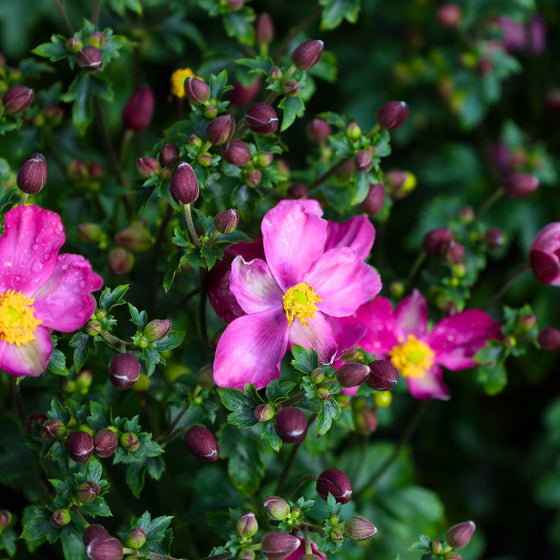
Its flower color also adds to its appeal. The blooms are a soft rose-pink with bright yellow stamens in the center, giving them a cheerful yet elegant look. They stand out beautifully against the darker foliage and bring a fresh lift to gardens that need a second seasonal wind as summer gives way to fall.
For homeowners looking for a compact pink perennial that adds sophistication and seasonal bloom to the shade garden, Pretty Lady Diana Anemone is a very smart choice. It offers delicate-looking flowers with a much more practical garden habit.
Late-Season Bloom Keeps the Garden Looking Fresh
One of the biggest reasons gardeners turn to Japanese anemones is their timing, and Pretty Lady Diana is no exception. This plant blooms from late summer into fall, often from August into October, which makes it especially valuable in landscapes where spring and early summer flowers have already come and gone. It helps the garden stay colorful and alive when many beds are starting to lose momentum.
The flower display has a lighter, more graceful feel than many late-season perennials. The blooms seem to float above the foliage on wiry stems, giving the planting motion and softness rather than heaviness. That airy habit makes Pretty Lady Diana especially effective in shade borders and woodland gardens where a more delicate late-season touch looks right at home.
Because the flowers are carried above the foliage, they also read clearly from a distance while still rewarding a closer look. This makes the plant especially useful near paths, patios, and entry gardens where homeowners can appreciate both the bloom color and the elegant flower form. It brings visual freshness without looking too bold or too stiff.
For gardeners who want a perennial that brightens the shade later in the season, Pretty Lady Diana Anemone is a very rewarding choice. It extends the bloom calendar and helps the garden feel more complete through fall.
A Strong Fit for Borders, Woodland Gardens, and Containers
Pretty Lady Diana Anemone works best in garden settings where a compact, late-season bloomer can quietly elevate the whole design. It is especially effective in part-shade borders, woodland gardens, cottage-style beds, and underplantings where the flowers can rise through neighboring foliage and add a lighter seasonal layer. Because it stays smaller than many older Japanese anemones, it is also easier to fit into tighter residential spaces.
Its mature size makes it especially practical. Pretty Lady Diana generally reaches about 12 to 18 inches tall and roughly 18 to 24 inches wide, which makes it a much better fit for smaller borders and containers than many taller fall-blooming anemones. It can act as a focal perennial in a pot, a soft seasonal accent along a path, or a neat flowering layer beneath taller shrubs and part-shade perennials.
This plant also pairs beautifully with hostas, astilbes, ferns, heucheras, and other shade favorites. Its rose-pink bloom color contrasts nicely with darker foliage and softer green textures, helping mixed plantings feel more dynamic and more intentional. In grouped plantings, it creates a gentle ribbon of bloom that can pull the eye through a shade border.
For homeowners who want a fall perennial that is elegant, practical, and easy to integrate into a shade design, Pretty Lady Diana Anemone is a very flexible option. It brings both beauty and smart scale to the garden.
Easy-Care Growth with Better Performance in Moist, Protected Sites
Pretty Lady Diana Anemone performs best in organically rich, evenly moist, well-drained soil in full sun to part shade, though part shade is often the better choice in many home landscapes. In cooler regions, it can take more sun if moisture is consistent, but in warmer conditions, it appreciates some protection from hot afternoon sun. Even moisture is especially important, because this plant does not like to dry out for long periods.
Wind protection also matters more than many homeowners expect. The stems are graceful, and while the compact habit makes them easier to manage than taller anemones, a site protected from strong drying wind helps the plant look and perform its best. A sheltered border, woodland edge, or container in a protected patio setting is often an excellent fit.
Maintenance is simple. The plant is low-maintenance overall, but spent stems can be cut back after bloom or left until late winter for cleanup. Because it can slowly naturalize by rhizomes in good conditions, homeowners may eventually divide it if they want to refresh the clump or expand the planting.
For gardeners who want a compact fall-blooming perennial with elegant flowers and an easy care routine, Pretty Lady Diana Anemone is a rewarding choice. Give it moisture, decent soil, and a protected setting, and it will bring graceful late-season color with very little fuss.
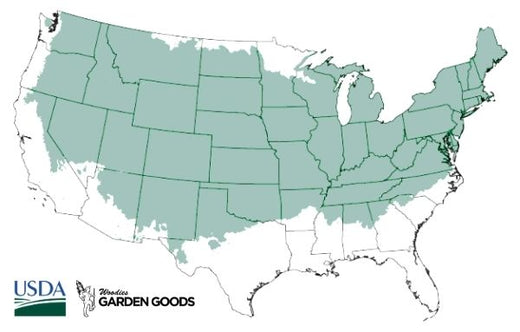
| Hardiness Zone: | 4-7 |
|---|---|
| Mature Height: | 12 to 18 Inches |
| Mature Width: | 1.5 to 2 feet |
| Sunlight: | Full sun to part shade |
| Bloom Time / Color | Late summer into fall; rose-pink flowers with yellow stamens |
| Soil Condition: | Organically rich, evenly moist, well-drained soil |
| Water Requirements: | Medium; keep evenly moist, especially during establishment and dry weather |
| Wildlife Value | Attracts pollinators such as bees and butterflies |
| Resistance (deer/disease/drought/etc.) | Deer resistant, low-maintenance, compact habit, best with consistent moisture |
| Landscape Uses | Shade border, woodland garden, cottage garden, container planting, mass planting, underplanting |
How to Care for Anemone Pretty Lady Diana
Once you buy an Anemone Pretty Lady Diana, make sure to read about the care instructions that are recommended to keep this plant healthy and thriving.
-v1774052704359.png?92x91)
How should I plant Pretty Lady Diana Anemone?
Plant Pretty Lady Diana Anemone in full sun to part shade in rich, evenly moist, well-drained soil. Dig a hole about twice as wide as the root ball and no deeper than the root ball itself, then set the plant so the crown sits level with the surrounding soil. Backfill with native soil, water thoroughly, and mulch lightly around the base to help hold moisture and moderate soil temperature. Choose a location with some protection from strong wind, especially if you want the flowers to hold cleanly and elegantly through the late-season bloom period.
-v1774052725116.png?89x84)
How often should I water Pretty Lady Diana Anemone after planting?
Water Pretty Lady Diana Anemone deeply right after planting, then keep the soil evenly moist during the establishment period. In the first growing season, that usually means watering during dry spells so the roots can settle in and support strong late-season flowering. Once established, continue watering during hot or dry weather so the soil does not dry out completely. This plant performs best with consistent moisture, and a steady water supply helps support healthier foliage and a better bloom display.
-v1774052745117.png?90x89)
When should I fertilize Pretty Lady Diana Anemone?
Pretty Lady Diana Anemone usually needs only moderate feeding if it is growing in healthy, humus-rich soil. A light topdressing of compost in spring or a small amount of balanced slow-release fertilizer is usually enough to support healthy growth and flowering. Avoid heavy feeding, because overly rich growth is not necessary for this compact perennial to perform well. In most gardens, moisture, good soil structure, and organic matter are more important than frequent fertilizer applications.

When and how should I prune Pretty Lady Diana Anemone?
Pretty Lady Diana Anemone does not need heavy pruning. You can remove spent flower stems after bloom if you want a tidier appearance, or leave them until late winter for seasonal cleanup. At the end of the season or in late winter, cut back the old stems to make room for fresh spring growth. The goal is simple cleanup and plant refreshment rather than major reshaping, since the plant naturally keeps a compact habit.