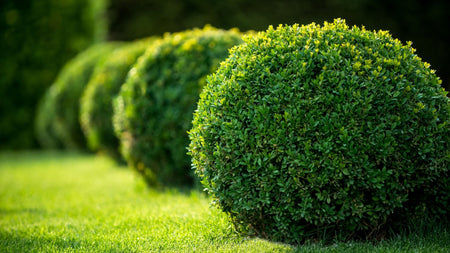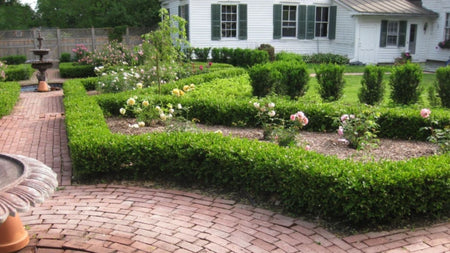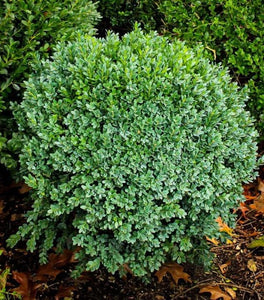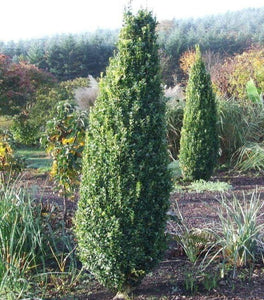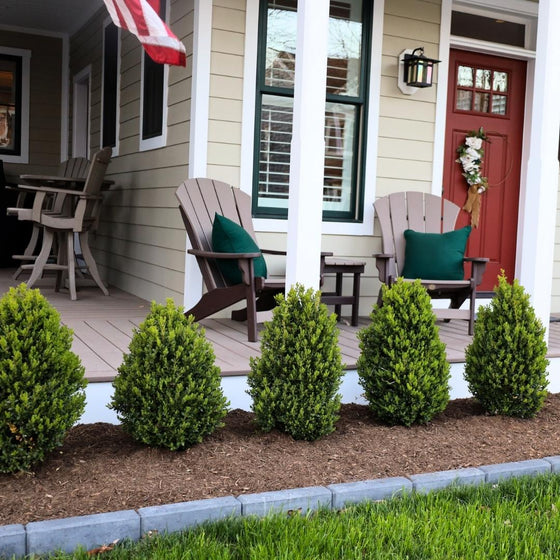
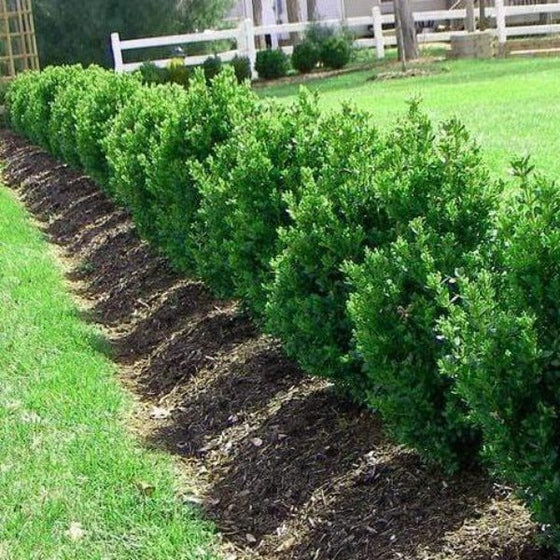

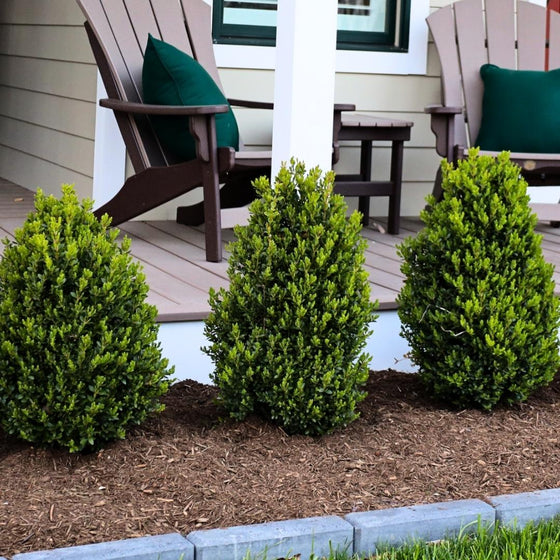
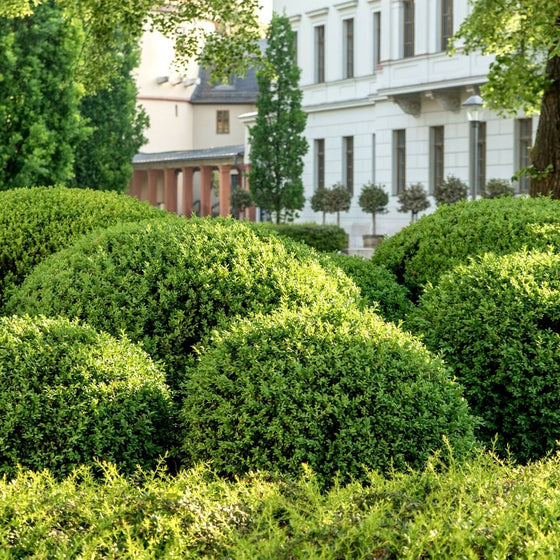


Images Depict Mature Plants
Green Mountain Boxwood
Buxus sempervirens 'Green Mountain'
Green Mountain Boxwood is one of those “quiet heroes” that makes everything else in your landscape look better—dense evergreen structure, a naturally upright shape, and the kind of tidy presence that turns a bed into a design. Plant it with good spacing, give it steady water the first year, and then just keep up with light trims and a spring feed, and it’ll reward you with that classic, clean boxwood look for years.

15% OFF SITEWIDE, USE CODE 'FALLPLANT15'
📦 Free shipping on orders over $99.
Delay shipping by leaving us a message at Checkout.
Share:


Green Mountain Boxwood Shrub For Dense Evergreen Hedges, Deer Resistance, And Four-Season Structure
A Classic Upright Boxwood That Looks Clean All Year
Green Mountain Boxwood is the “always looks put-together” evergreen that makes landscapes feel finished. It grows into a naturally upright, slightly pyramidal form with tight branching and rich green foliage that holds its color through the seasons. That shape is ideal when you want structure without fuss—whether you’re framing an entry, outlining a walkway, or building a crisp hedge line that stays tidy even when flowers fade elsewhere.
This variety is especially useful for shoppers who want that classic boxwood look but prefer a more upright habit than rounder types. You can let it keep a soft pyramid for a traditional, tailored vibe, or you can lightly shear it into cones, columns, or a straight hedge. Either way, it reads “intentional” in both formal landscapes and more relaxed foundation plantings.
A Hedge Workhorse For Privacy, Borders, And Foundation Beds
If your goal is a dependable evergreen hedge, Green Mountain Boxwood is a strong pick. Its dense branching helps it fill in nicely, creating a fuller screen than looser evergreens at a similar size. Use it as a low-to-mid hedge along paths, in front of taller shrubs, or as a clean green backdrop that makes seasonal color pop. It also shines in foundation beds because it stays neat and doesn’t demand constant correction.
Design-wise, it plays well with everything: hydrangeas, roses, ornamental grasses, perennials, and even modern hardscape. Plant a repeating row to create rhythm and order, or use single specimens as “evergreen punctuation marks” at corners and transitions. When you want a predictable structure that still feels alive and lush, this boxwood delivers.
Deer Resistance And Cold-Hardy Reliability For Real Gardens
Green Mountain Boxwood is widely valued for deer resistance and dependable performance in colder climates, making it a practical choice for long-term landscape structure. While no plant is completely deer-proof, boxwoods are typically less appealing to browsing, especially once established. That’s a big deal for customers trying to protect foundational plantings without turning the yard into a constant battle.
It’s also a shrub that supports four-season confidence. The foliage stays evergreen, the branching stays dense, and the form remains attractive even in winter when most of the garden is quiet. With reasonable watering during the first year and basic soil drainage, it becomes one of those “plant it once and enjoy it for years” shrubs.
Low-Maintenance Care With Simple Pruning And Smart Feeding
Boxwoods reward simple routines. Give Green Mountain well-drained soil, mulch the root zone, and water consistently while it establishes, and you’ll have a healthier, greener shrub with fewer stress issues. Full sun to part shade works well, with part shade often helpful in hotter areas or sites with harsh afternoon sun. Good airflow and avoiding constantly wet roots go a long way toward keeping foliage looking clean.
Pruning is flexible: you can lightly shear for a formal look or selectively prune for a softer, natural shape. The key is timing and restraint—small, regular trims beat one heavy cut. With the right spacing, a once-or-twice-a-year trim, and a spring feeding routine, it usually takes only that to keep Green Mountain dense, green, and beautifully shaped.
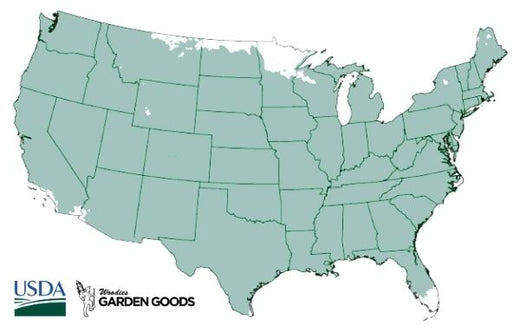
| Hardiness Zone: | 4-9 |
|---|---|
| Mature Height: | 4-5 feet; less if trimmed |
| Mature Width: | 2 to 3 Feet |
| Sunlight: | Full sun to part shade |
| Bloom Time / Color: | Spring; small yellow-green flowers (not showy) |
| Soil Condition: | Well-drained soil; adaptable |
| Water Requirements: | Moderate; drought tolerant once established |
| Wildlife Value: | Flowers can attract early pollinators |
| Resistance (deer/disease/drought/etc.): | Deer resistant; good drought tolerance once established |
| Landscape Uses: | Hedges, foundation planting, borders, topiary shapes, containers, formal gardens |
How to Care for Green Mountain Boxwood
Before you purchase your Green Mountain Boxwood, be sure to read the recommended care instructions to ensure your plant remains happy and healthy for years to come.

How should I plant Green Mountain Boxwood?
Choose a site with full sun to part shade and soil that drains well after rain. Dig a hole 2–3 times wider than the root ball and about as deep as the root ball, then set the shrub so the top of the root ball sits level with (or slightly above) the surrounding soil. Backfill with native soil, firm gently, and water deeply to settle the soil around the roots. Finish with a 2–3 inch mulch ring over the root zone, keeping mulch a few inches away from the stems to prevent moisture buildup at the base. For hedges, lay out spacing before you dig so each plant has room to mature—good spacing improves airflow, reduces stress, and makes your hedge easier to maintain long-term.

How often should I water Green Mountain Boxwood after planting?
During the first growing season, water regularly—about once or twice per week—to help the roots establish. Ensure soil remains evenly moist but never waterlogged. Once established, Green Mountain is relatively drought-tolerant, needing only occasional deep watering during dry periods. In hotter climates, providing consistent moisture helps maintain vibrant foliage.

When should I fertilize Green Mountain Boxwood?
Fertilize in early spring as new growth begins using a balanced, slow-release shrub fertilizer. Apply around the root zone (not right against the stems) and water it in well. If foliage looks pale or growth is weak, a second light feeding in late spring can help, but avoid heavy fertilizing that forces soft growth. A simple, reliable routine is spring fertilizer plus an annual mulch refresh, which supports steady nutrition and soil health. Avoid late-season fertilizing, since pushing tender new growth too late can increase winter stress and reduce overall cold-season performance.

When and how should I prune Green Mountain Boxwood?
Prune Green Mountain Boxwood in late spring after the first flush of growth for a clean, dense shape. You can lightly shear for a formal hedge or selectively prune to maintain a natural pyramidal form. Keep cuts modest and consistent—small trims encourage branching and density without exposing large interior areas. If you do a second trim, aim for mid-summer so the plant has time to harden off before cold weather. For hedges, keep the top slightly narrower than the bottom so sunlight reaches lower foliage, helping the hedge stay full and green from top to ground.