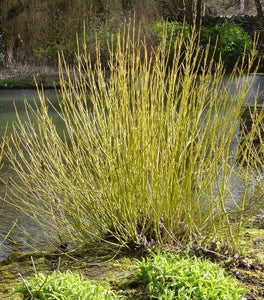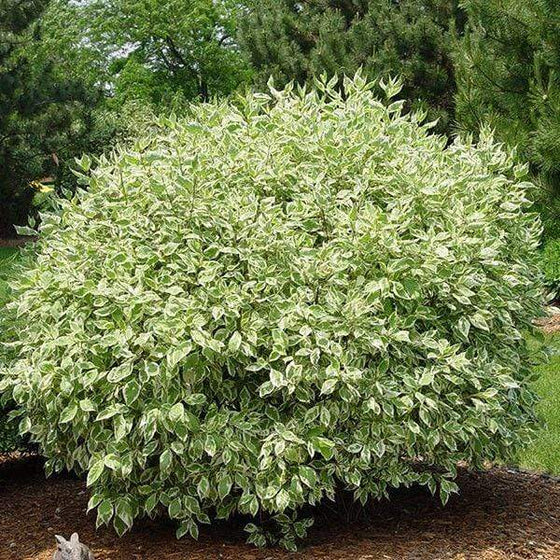
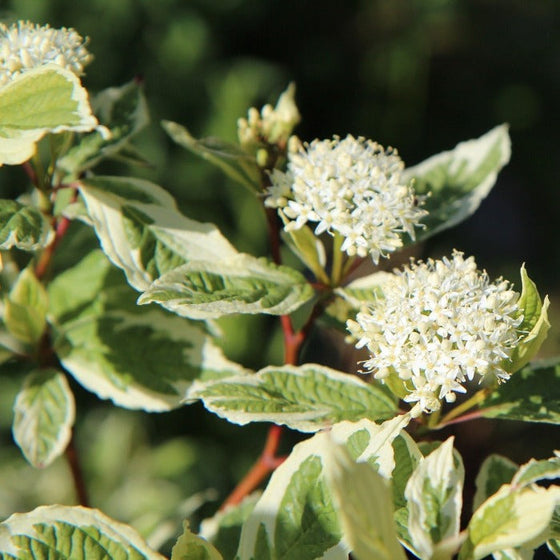
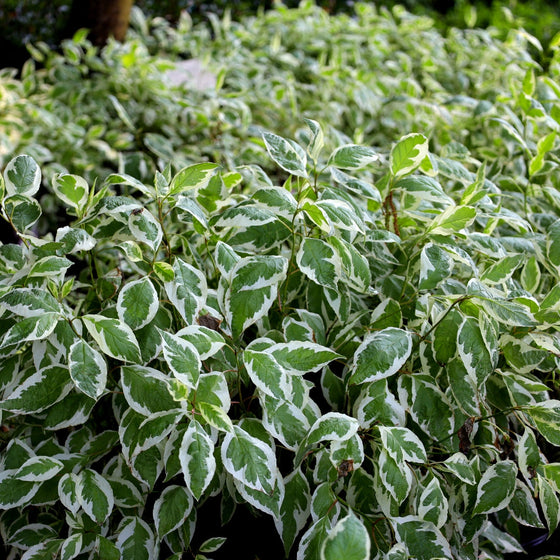
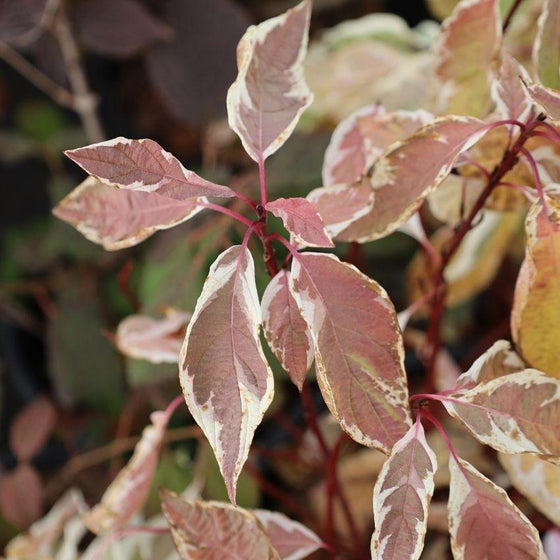
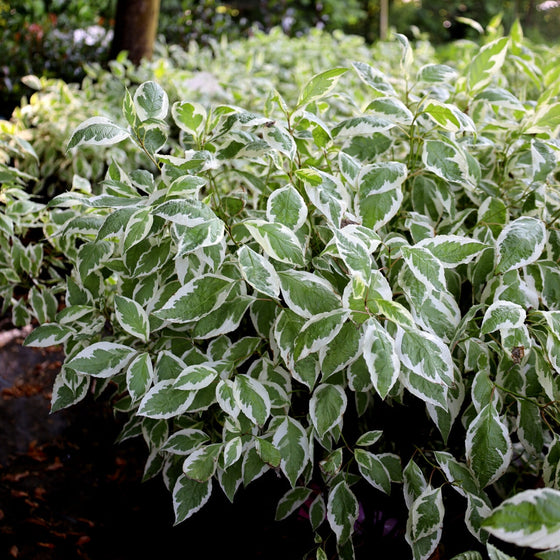


Images Depict Mature Plants
Ivory Halo Dogwood
Cornus alba 'Bailhalo'
Ivory Halo is one of those shrubs that makes a border look finished in every season, cream-edged leaves all summer, a warm fall shift, and then those red winter stems that glow when everything else goes quiet. I like planting it where you’ll see it from the kitchen window in winter, and I like keeping it bright with one simple habit: remove a third of the oldest stems each late winter so the youngest red stems stay front and center.

15% OFF SITEWIDE SALE, USE CODE 'FALLPREP15'
📦 Free shipping on orders over $99.
Delay shipping by leaving us a message at Checkout.
Share:



Variegated Ivory Halo Dogwood For Four-Season Color And Winter Stems
Cream-edged foliage that brightens beds all season
Ivory Halo Dogwood earns its space the moment leaves unfurl. Each leaf is edged in creamy white, creating a crisp, high-contrast look that brightens borders the way a string of garden lights brightens a porch. In summer, that variegation acts like natural “highlighting,” making mixed shrub beds look more layered and intentional, especially when planted near dark evergreens, deep green perennials, or brick and stone.
The habit is compact and rounded compared to many larger dogwoods, which makes it easier to place in real landscapes. It’s substantial enough to anchor a border, but not so large that it dominates small yards. Use it as a repeating shrub for rhythm, or as a single focal plant that keeps a bed looking polished long after peak bloom season has passed.
Bright red winter stems for true cold-season interest
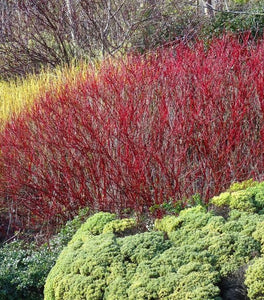
When leaves drop, Ivory Halo flips the switch from summer foliage to winter architecture. The bare stems develop a strong red color that shows best in bright light and looks especially dramatic against snow, mulch, and evergreen backdrops. It’s one of the easiest ways to add genuine winter interest—color that doesn’t rely on flowers and structure that reads from the street.
For the strongest winter display, plant it where you’ll actually see it in the cold months: near an entry, along a driveway, or in front of a dark hedge. A small group creates a bold “winter color block,” while a single plant can punctuate a foundation bed as a seasonal accent. It’s a four-season shrub that pays you back when the garden needs it most.
Rain-garden friendly toughness with an easy-care attitude
Ivory Halo is adaptable and especially valuable where soil stays consistently moist. It tolerates “wet feet” better than many shrubs, making it a smart choice for rain-garden edges, low spots that don’t stay swampy, and beds that get regular irrigation. Full sun encourages denser growth and typically stronger stem color, while part shade still performs well, especially in warmer climates where afternoon shade can reduce stress.
Once established, it becomes more forgiving of short dry spells, but it looks best with steady moisture during heat. A mulch ring helps stabilize soil moisture and temperature, reduces weeds, and supports stronger growth. If you’ve got a tricky site that’s hard on fussier shrubs, Ivory Halo often feels like the reliable solution that still looks refined.
Simple pruning keeps color vivid and the shape fresh
The brightest red stems come from younger growth, so pruning isn’t optional “maintenance”, it’s the secret to peak winter color. The easiest approach is renewal pruning: each late winter, remove about one-third of the oldest stems at ground level. That keeps the shrub full while continually refreshing the youngest, reddest stems for next winter’s display.
If the plant ever outgrows its spot, you can rejuvenate it more aggressively in late winter to push a flush of fresh stems (you may sacrifice some flowers/berries that year, but you’ll maximize stem color). Combine that routine with smart spacing, and Ivory Halo stays vigorous, manageable, and showy, with clean, variegated foliage in summer, red-purple fall tones, and bright red stems in winter.
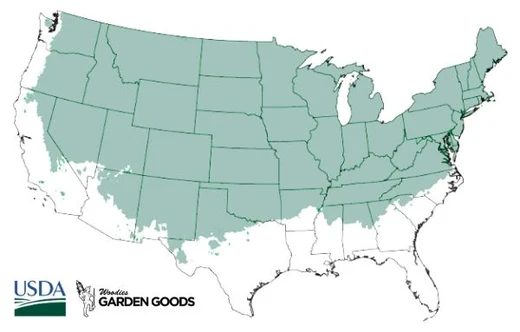
| Hardiness Zone: | 3-7 |
|---|---|
| Mature Height: | 5 to 6 Feet |
| Mature Width: | 5 to 6 Feet |
| Sunlight: | Full sun to part shade |
| Bloom Time / Color: | Mid to late spring into early summer; fragrant white flowers |
| Soil Condition: | Any well-drained soil; tolerates “wet feet” |
| Water Requirements: | Moderate; water well until established |
| Wildlife Value: | Flowers support pollinators; berries and cover can support birds |
| Resistance (deer/disease/drought/etc.): | Cold hardy; tolerates moist sites; drought tolerance improves once established; deer browsing can occur |
| Landscape Uses: | Winter stem color, mixed borders, mass plantings, rain gardens, foundation beds, cut stems, four-season color |
How to Care for Ivory Halo Dogwood
Be sure to read our planting instructions to ensure a healthy and happy Ivory Halo Dogwood for years to come!
-v1773079595075.png?92x91)
How should I plant Ivory Halo Dogwood?
Plant Ivory Halo Dogwood in full sun to part shade in a spot with room for its mature width and a view of the winter stems. Dig a hole 2–3 times wider than the root ball, set the shrub so the top of the root ball is level with the surrounding soil, then backfill and water deeply to settle. Add a 2–3-inch mulch ring around the root zone, keeping the mulch a few inches away from the stems. If you’re planting multiples, lay them out first so spacing is consistent and the finished line or mass looks intentional. Ivory Halo tolerates moist conditions well, so it’s a strong fit near downspouts (with drainage), rain-garden edges, and beds that stay evenly moist.
-v1773079623767.png?89x84)
How often should I water Ivory Halo Dogwood after planting?
Water deeply right after planting, then keep the root zone evenly moist through the first growing season. A deep soak about once per week is a good baseline, increasing to 1–2 times per week during hot, dry stretches or in sandy soils. Water at the base of the plant rather than overhead to keep foliage cleaner. After establishment, Ivory Halo is more tolerant of short dry spells, but it looks best with consistent moisture during summer heat. Mulch helps reduce moisture swings, supporting stronger growth and a fuller shrub that shows better winter stems.
-v1773079637743.png?90x89)
When should I fertilize Ivory Halo Dogwood?
Fertilize in early spring as new growth begins using a balanced slow-release shrub fertilizer, or top-dress with compost. Moderate fertility supports steady growth and healthy foliage without creating weak, overly lush stems. Avoid heavy late-season fertilizing, which can encourage tender growth at the wrong time. If the shrub is growing well and leaf color looks strong, compost plus good watering habits is often all it needs.

When and how should I prune Ivory Halo Dogwood?
Prune in late winter while the shrub is dormant to keep winter stem color at its best. Remove about one-third of the oldest, thickest stems all the way to the ground each year to encourage vigorous new shoots with brighter red color. If the shrub becomes overgrown or you want maximum stem intensity, rejuvenate it more aggressively in late winter to push a flush of fresh stems. This can reduce flowers and berries that season, but it produces the strongest young growth for next winter’s display.