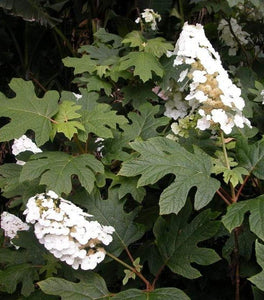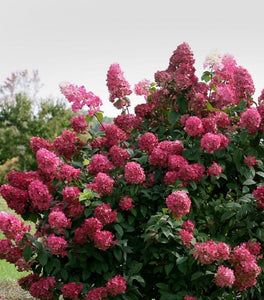
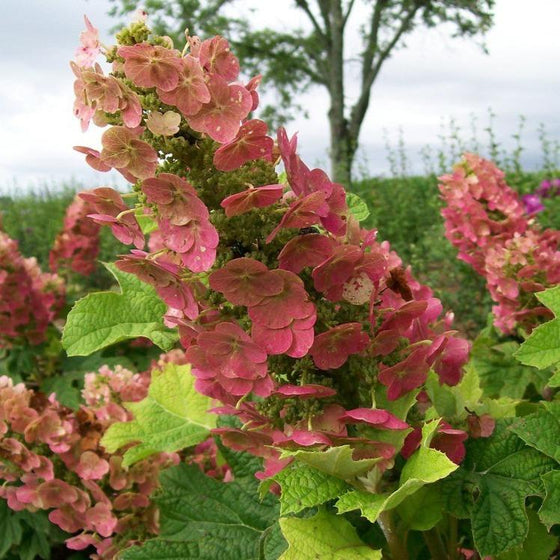


Images Depict Mature Plants
Ruby Slippers Oakleaf Hydrangea
Hydrangea quercifolia 'Ruby Slippers'
Ruby Slippers is one of those shrubs that makes a garden feel “finished” without you having to overthink it. I love that it stays compact, gives you those crisp white panicles, and then slowly turns up the color until you get that ruby glow later on. Add in the oakleaf foliage and that rich fall color, and it earns its spot in the bed for more than just a few summer weeks. Give it morning sun, keep it evenly moist while it settles in, and remember: prune right after flowering if you prune at all.

20% Off Sitewide Sale!
Use Code 'ENDOFSEASON20' At Checkout
📦 Free shipping on orders over $99.
Delay shipping by leaving us a message at Checkout.
Share:


Ruby Slippers Oakleaf Hydrangea for Compact Size, White-to-Ruby Blooms, and Showstopping Fall Color
A Compact Oakleaf Hydrangea That Fits Where You Actually Need It
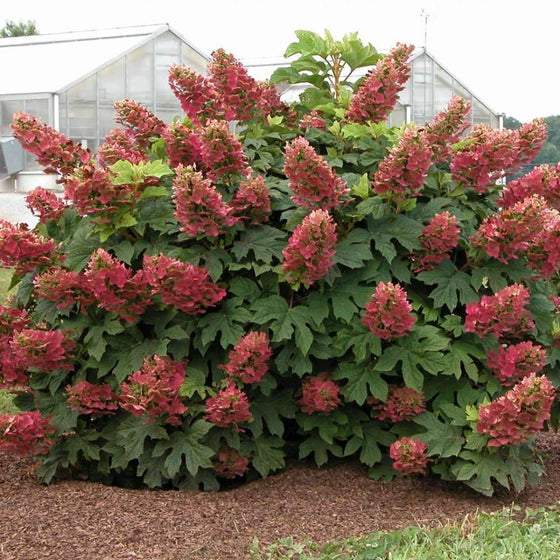
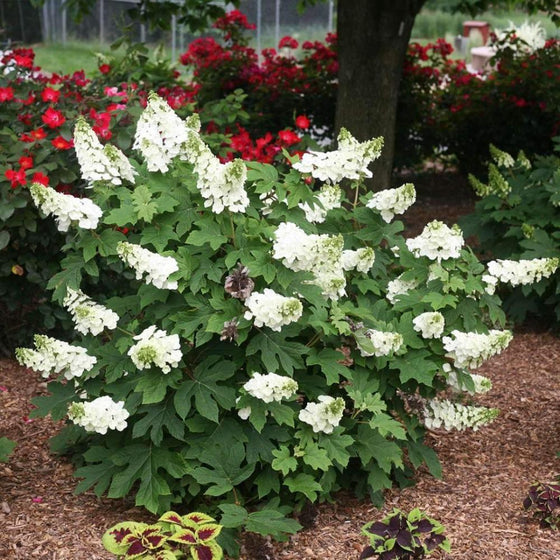
Ruby Slippers is the oakleaf hydrangea for gardeners who want the classic native look in a truly manageable size. This compact cultivar forms a dense, rounded shrub that typically reaches about 3 to 4 feet tall and 4 to 5 feet wide, so it brings real presence without overwhelming the bed. You still get the bold, oak-shaped foliage that gives oakleaf hydrangeas their signature texture, plus sturdy branching that stays full from the ground up. Even before the flowers open, it reads as a polished, intentional shrub rather than a “space filler.”
That balanced size makes design easier in almost any landscape. Use Ruby Slippers in foundation plantings where you want a flowering shrub that will not block windows, or layer it behind low evergreens and in front of taller screening plants. It shines in woodland edges and part-shade borders because it looks refined even when it is not in bloom. Pair it with hosta, ferns, heuchera, and spring bulbs for a layered look, or let it stand alone as a compact specimen that anchors the whole planting.
White Summer Panicles That Mature Through Pink Into Ruby Red
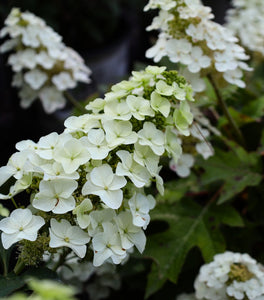
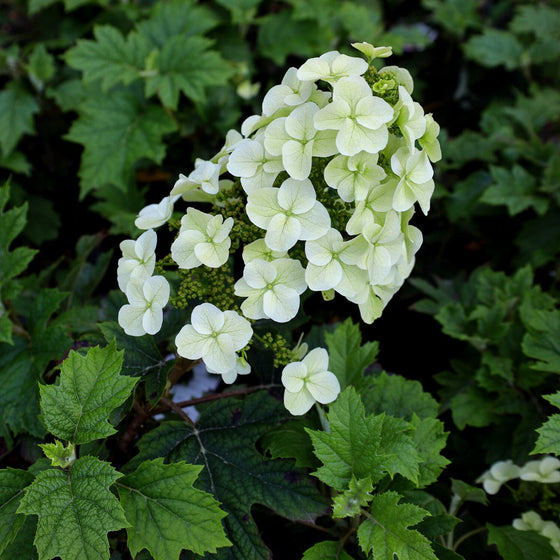
Ruby Slippers is famous for its cone-shaped flower clusters that start bright white and then deepen through blush pink into richer rose and ruby tones as the season progresses. Bloom time is typically early to midsummer, and the color shift gives you a longer “show” than many shrubs that peak and fade quickly. The panicles feel classic and romantic, and they look just as good in a cottage-style border as they do in a clean, modern foundation planting. If you love hydrangea blooms but want something a little more natural and textural, oakleaf flowers have the perfect woodland-garden charm.
These blooms also pull double duty for decorating. Cut them fresh for arrangements, or let them mature for dried stems that hold color and structure. For the biggest, prettiest panicles, focus on steady moisture while the plant is getting established and avoid deep shade, which can reduce bloom and soften the overall habit. With the right light and moisture rhythm, Ruby Slippers gives you that satisfying “white-to-ruby” transformation, keeping the shrub looking alive and evolving through summer.
Legendary Oakleaf Foliage With Big Fall Color And Winter Structure
Oakleaf hydrangeas are not just about flowers, and Ruby Slippers proves it. Those deeply lobed leaves create bold texture all season, then shift into rich fall color that often includes burgundy, mahogany, and red tones as nights cool. That autumn performance is one of the main reasons gardeners choose oakleaf hydrangeas over other types: it turns a flowering shrub into a true four-season feature. Plant it where you can see it from a window and you will appreciate how the shrub stays “in the story” long after bloom season ends.
Even in winter, Ruby Slippers contributes structure. The branching framework looks attractive once leaves drop, and spent blooms can add subtle, natural interest until you tidy them up. For the best fall color, give it at least half a day of sun (morning sun is ideal) and avoid overly wet sites that can stress roots. Combine it with evergreens for contrast, or with ornamental grasses for a long season of texture that makes the whole planting feel designed from spring through frost.
Low-Stress Success When You Get Sun, Soil, And Pruning Timing Right
Ruby Slippers is refreshingly straightforward when matched to the right conditions. It prefers well-drained soil with consistent moisture, especially during the first growing season, and it benefits from a yearly mulch layer to stabilize moisture and protect roots. Once established, it handles short dry spells better than many hydrangeas, but it will always look fuller and bloom better when it is not repeatedly stressed by drought. Morning sun with afternoon shade is a great “default” placement in many regions, especially where summers run hot.
The one care detail that matters most is the timing of pruning. Oakleaf hydrangeas bloom on old wood, so heavy pruning in late winter or spring can remove flower buds. If you need to prune, do it right after flowering, focusing on light shaping and removing damaged or crossing stems. The good news is that Ruby Slippers naturally stays compact, so it typically needs minimal pruning. Get the placement right, keep moisture steady while it establishes, and you will have a dependable shrub that looks high-end without acting high-maintenance.

| Hardiness Zone: | 5-9 |
|---|---|
| Mature Width: | 4 to 5 Feet |
| Mature Height: | 3 to 4 Feet |
| Sunlight: | Full sun to part shade (morning sun + afternoon shade ideal in hot areas) |
| Bloom Time / Color: | Early to midsummer; white panicles aging pink to ruby red |
| Soil Condition: | Well-drained, fertile soil; slightly acidic preferred |
| Water Requirement: | Medium; consistent moisture while establishing |
| Wildlife Value: | Seasonal garden activity; can support pollinator presence during bloom |
| Resistance: | Moderately deer resistant (not deer-proof); good heat tolerance; moderate drought tolerance once established |
| Landscape Uses: | Foundation beds, woodland edges, mixed borders, compact hedge, specimen shrub, cut/dried flowers, fall color focal point |
How to Care for Ruby Slippers Oakleaf Hydrangea
Be sure to read our planting instructions to ensure a healthy and happy Ruby Slippers Hydrangea plant for years to come!

How should I plant Ruby Slippers Oakleaf Hydrangea?
Plant Ruby Slippers in well-drained soil in part shade or a spot with morning sun and afternoon shade. Dig a hole about twice as wide as the root ball and set the shrub so the top of the root ball is level with the surrounding soil. Backfill with native soil (blend in compost if your soil is very sandy or heavy), then water deeply to settle the soil and remove air pockets. Finish with 2–3 inches of mulch over the root zone, keeping mulch a few inches away from the stems. Mulch helps retain moisture, moderates soil temperature, and supports better establishment. Avoid planting in low spots that stay soggy, because oakleaf hydrangeas prefer moisture that drains well rather than constantly wet roots.

How often should I water Ruby Slippers Oakleaf Hydrangea after planting?
Water deeply right after planting, then keep the soil evenly moist for the first several weeks. A good baseline is one to two deep waterings per week, adjusting for rainfall, heat, wind, and how quickly your soil drains. Consistent moisture during establishment helps the root system expand, which leads to stronger growth and better flowering. After the first season, water during prolonged dry spells, especially if the plant receives more sun. Ruby Slippers can handle short dry periods once established, but it performs best when it is not repeatedly drought-stressed. Water at the base of the plant to keep foliage drier and encourage deeper rooting.

When should I fertilize Ruby Slippers Oakleaf Hydrangea?
Fertilize in spring as new growth begins using a balanced, slow-release shrub fertilizer or a compost top-dress for gentler nutrition. Apply over the root zone (not against the stems) and water afterward so nutrients move into the soil. Avoid heavy feeding, which can push leafy growth without improving bloom quality. If your soil is lean, a light second feeding in early summer can support healthy growth, but skip late-season fertilizing so the shrub can slow down and prepare for fall. Mulch, moderate feeding, and consistent moisture while establishing are usually the easiest recipe for a strong plant with better blooms and fall color.

When and how should I prune Ruby Slippers Oakleaf Hydrangea?
Prune Ruby Slippers right after it finishes flowering, because oakleaf hydrangeas bloom on old wood. Start by removing dead, damaged, or crossing stems, then do only light shaping if needed. This timing gives the shrub time to set buds for next year without you accidentally removing them. Avoid hard pruning in late winter or spring, which can reduce or eliminate blooms for the season. The good news is that Ruby Slippers naturally stays compact and typically needs minimal pruning. If winter damage occurs, you can remove clearly dead wood in early spring, but save any serious shaping for just after flowering.