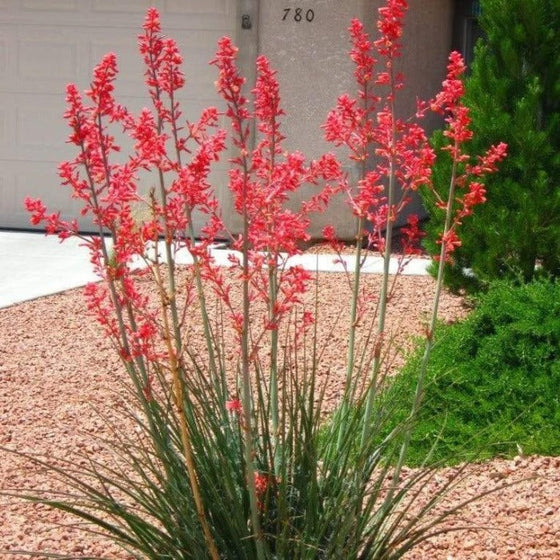
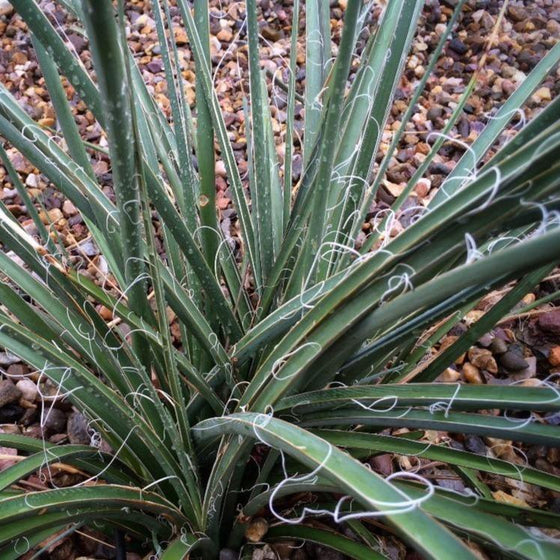
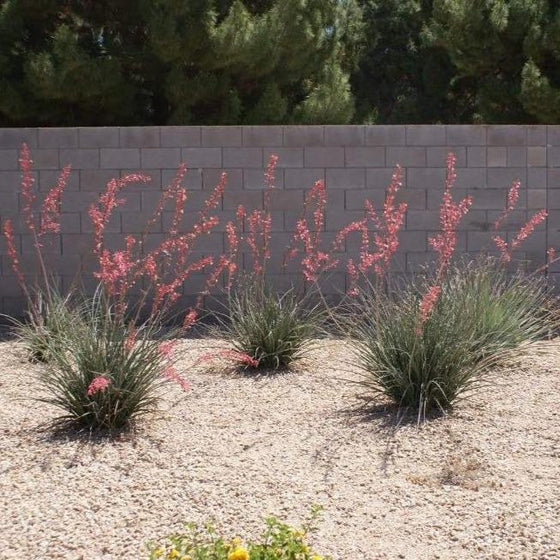
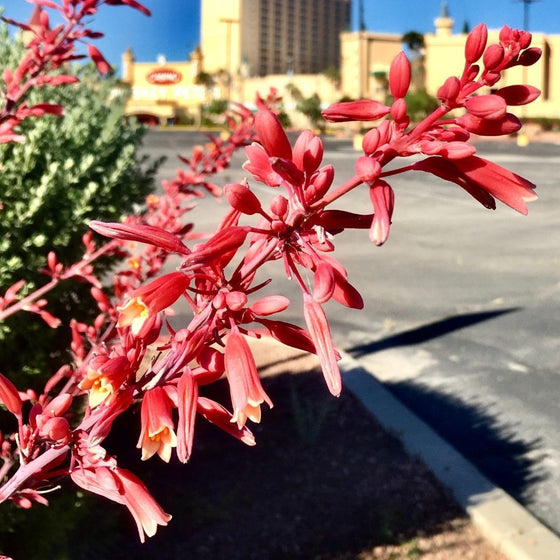


Images Depict Mature Plants
Red Yucca
Hesperaloe parviflora
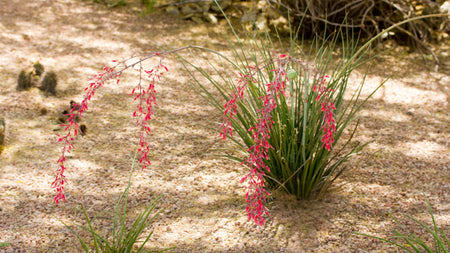
What makes Red Yucca such a strong landscape plant is the way it gives you drama without becoming demanding. The blue-green foliage has a clean, architectural look, and those tall coral-flower spikes bring hummingbirds right into the garden when the heat really sets in. For sunny dry spaces where a lot of plants give up, Red Yucca keeps showing up with color, texture, and toughness, which is why it is one I trust in xeriscapes, borders, and statement containers.

20% OFF NON-SALE ITEMS, USE CODE 'KICKSTART20'
📦 Free shipping on orders over $99.
Delay shipping by leaving us a message at Checkout.
Share:Recommended Add-Ons


Drought-Tolerant Color for Xeriscapes, Borders, and Sunny Containers
Architectural Foliage That Brings Structure All Year
Red Yucca is one of those plants that gives a landscape instant structure without feeling stiff or overdesigned. Its narrow, arching blue-green leaves form a clean, fountain-like mound that adds texture and movement even when the plant is not in bloom. Because the foliage stays attractive for such a long season and often remains present through winter in warmer regions, Red Yucca helps beds, gravel gardens, and xeriscape plantings look finished long after softer perennials have faded.
That strong foliage presence is a big part of its appeal for homeowners who want dependable form with very little maintenance. It works beautifully in rock gardens, modern plantings, dry borders, and poolside beds where clean lines matter. The plant has a succulent look without the heavy bulk of many desert plants, which makes it easy to pair with ornamental grasses, agaves, yuccas, and flowering perennials. For gardeners who want year-round texture with very little fuss, Red Yucca brings a lot of visual value before a single flower spike even appears.
Coral Flower Spikes That Draw Hummingbirds for Months
The bloom display is where Red Yucca really takes over the garden. From late spring into summer, and often longer in warm climates, tall wand-like stems rise above the foliage carrying tubular coral-red to pinkish-red flowers. Those blooms hover well above the leaf mound, which gives the plant a much taller visual presence than its foliage alone. This contrast between low-arching leaves and airy flower spikes is part of what makes the plant feel both bold and graceful.
Those flowers are not just ornamental. They are a magnet for hummingbirds and other pollinators, which gives the plant a real role in wildlife-friendly landscapes. Near patios, front entries, and garden paths, the bloom display adds motion and life in addition to color. Because the flowering stems can keep coming for an extended period, Red Yucca often provides a much longer season of interest than homeowners expect from a drought-tolerant perennial. For sunny gardens that need heat-ready color and pollinator activity, it is an especially rewarding choice.
A Tough Plant for Heat, Drought, and Lean Soils
Red Yucca is especially useful because it thrives where many other plants struggle. It performs best in full sun, tolerates intense heat, and tolerates poor and sandy soils, becoming highly drought-tolerant once established. That makes it a strong choice for xeriscapes, hell strips, gravel gardens, roadside-style plantings, and other exposed areas where irrigation is limited and the soil is not particularly rich.
That toughness offers homeowners significant practical value. Instead of relying on frequent watering or constant fertilizing, Red Yucca settles in and becomes a long-term structural plant with very simple needs. It is also commonly described as deer resistant, which adds another layer of usefulness in landscapes where browsing pressure can be a problem. For gardeners who want bold form and reliable bloom in dry sunny spaces, this plant offers the kind of resilience that makes long-term success far easier.
A Smart Choice for Xeriscapes, Slopes, and Containers
Red Yucca is more versatile than many gardeners expect. It works beautifully as a specimen in gravel beds, but it also performs well in repeating drifts, on sunny slopes, and even in large containers where its fountain-like habit and tall bloom stems can become a focal point. Because the foliage mound generally stays in the 2 to 3 foot range while bloom spikes can stretch to 5 or even 6 feet, it creates a layered planting height without taking up a massive footprint at ground level.
That makes it especially valuable in modern residential landscapes where plants need to do more than one job. Red Yucca can stabilize the look of a dry slope, add evergreen texture to a courtyard pot, or create a striking accent in a hot border without becoming visually heavy. For homeowners who want a plant that feels dramatic, durable, and easy to place in sun-drenched spaces, Red Yucca delivers strong landscape performance with a very distinctive personality.

| Hardiness Zone: | 5-10 |
|---|---|
| Mature Height: | 2 to 3 Feet |
| Mature Width: | 2 to 3 Feet |
| Sunlight: | Full sun |
| Bloom Time / Color: | Late spring through summer, often longer; coral-red to pinkish-red tubular flowers |
| Soil Condition: | Well-drained soil; sandy, rocky, or lean soils are ideal |
| Water Requirements: | Low once established; moderate during establishment |
| Wildlife Value: | Attracts hummingbirds and pollinators: |
| Resistance (deer/disease/drought/etc.): | Deer resistant, drought tolerant, heat tolerant |
How to Care for Red Yucca
Before you buy a Red Yucca Shrubs, make sure to read about the recommended care instructions to keep this plant healthy and thriving.

How should I plant Red Yucca?
Plant Red Yucca in full sun and sharply well-drained soil. Dig a hole about twice as wide as the root ball and no deeper than the plant was growing in its pot, then set the crown level with or slightly above the surrounding soil. Backfill with native soil rather than heavily amended soil, water thoroughly, and use gravel or a light mulch if desired while keeping the crown open and dry. Choose a site with excellent drainage and plenty of heat. Red Yucca is especially effective in rock gardens, dry borders, gravel beds, and slopes where water moves through quickly. If you are growing it in a container, use a pot with good drainage and a gritty, fast-draining mix so the roots do not stay wet for long.

How often should I water Red Yucca after planting?
Water Red Yucca deeply right after planting, then continue watering regularly during the establishment period so the roots can settle in well. The goal during the first season is to provide enough moisture to encourage rooting without keeping the soil constantly wet. Once established, Red Yucca needs much less irrigation and performs best when allowed to dry somewhat between waterings. In the ground, it is a true low-water plant after establishment. In containers, you will usually need to water a bit more often, but even there, it still prefers drying slightly between waterings rather than staying soggy.

When should I fertilize Red Yucca?
Fertilize Red Yucca lightly in spring if needed, but avoid heavy feeding. A modest application of a balanced slow-release fertilizer is usually plenty if the plant appears to need a boost in vigor or bloom production. In many landscapes, fertilizer is barely necessary because Red Yucca is adapted to lean soils and dry conditions. Too much feeding can encourage softer growth that works against the plant’s naturally tough habit. Good drainage, strong sun, and restraint with water usually matter more than regular fertilizing.

When and how should I prune Red Yucca?
Prune Red Yucca mainly for cleanup rather than shaping. Remove spent flower stalks back to the base after blooming, and trim away brown or damaged foliage in early spring to freshen the plant before new growth and bloom begin. The foliage mound usually does not require formal pruning, and the plant looks best when its natural fountain-like form is preserved. Most maintenance is simply seasonal tidying. If the plant has older, tattered leaves, clipping them out neatly is usually all that is needed to keep it looking sharp.