

Planting Drought-Tolerant Shrubs & Perennials in Fall
Published On: Aug 26, 2026
Share:
| In this Article | |||
|---|---|---|---|
When summer has been hot and rainfall has been scarce, the garden tells you which plants are earning their place.
Some plants wilt the moment the weather turns dry. Others need almost constant attention just to make it through July and August. Then there are those dependable shrubs and perennials that keep their shape, hold their foliage, continue blooming, and somehow look perfectly comfortable while everything around them is asking for water.
Those are the plants I pay attention to. And fall is the best time of year to get them in the ground.

Here in Maryland, periods of high heat, humidity, and inconsistent rainfall have become a familiar part of summer gardening. After watching how different plants perform during those conditions, I have become a firm believer in using more drought-tolerant plants throughout the landscape — and in planting them in autumn rather than waiting for spring.
Cooler fall air reduces transplant stress while the soil remains warm enough for root development. Plant drought-tolerant shrubs and perennials in fall, care for them properly while they establish, and they will be far better prepared to face next summer's heat.
That does not mean they can be planted and forgotten. Even the toughest drought-tolerant plant needs regular water while developing its root system. Drought tolerance is something a plant earns after establishment.
The goal is not to create a garden that never needs water. The goal is to build a more resilient landscape that requires less intervention as rain becomes less reliable.
Why Fall Is the Best Time to Plant Drought-Tolerant Plants
Most gardeners associate drought-tolerant plants with summer, but fall is the better time to plant them.
In spring, newly planted shrubs and perennials must develop roots while also producing foliage, stems, and flowers. Summer quickly follows, bringing heat and increased water demand before those root systems are fully established.
Fall gives plants a quieter beginning. As air temperatures cool, many plants slow their above-ground growth while the soil remains warm. Roots can continue developing without the plant simultaneously fighting extreme heat and rapid moisture loss.
Fall planting provides several important advantages:
- Cooler temperatures reduce transplant stress.
- Warm soil encourages root growth well into autumn.
- Lower evaporation helps the soil remain moist longer.
- Reduced weed growth means less competition for moisture.
- Established roots give plants a head start the following spring.
- Earlier establishment improves a plant's ability to tolerate summer heat.
For hardy perennials, try to plant several weeks before the ground normally freezes. Many shrubs can be planted later as long as the ground remains workable, but earlier is still better — especially with broadleaf evergreens.
For a broader look at what belongs in the ground this season, see our ultimate fall planting guide.
What Does Drought-Tolerant Really Mean?
"Drought-tolerant" does not mean "never needs water."
It means that once the plant develops a healthy root system, it can withstand periods of limited rainfall better than plants with greater moisture requirements.
Some drought-tolerant plants survive through deep root systems that reach moisture farther below the surface. Others have waxy, narrow, fuzzy, aromatic, silver, or succulent foliage that reduces water loss. Many are naturally adapted to rocky, sandy, open, or seasonally dry environments.
But none of those adaptations eliminates the establishment period.
A newly planted coneflower, juniper, sedum, lavender, or butterfly bush still has most of its roots confined to the original root ball. Until those roots expand into the surrounding soil, the plant cannot take full advantage of its natural drought resistance.
That leads to one of the most important rules in water-wise gardening: water drought-tolerant plants well now so they need less water later.
Best Drought-Tolerant Shrubs to Plant in Fall
Shrubs give a water-wise landscape structure. They define beds, anchor foundations, create privacy, soften corners, and provide foliage even when flowering perennials are resting.
The best drought-tolerant shrubs combine resilience with a clear landscape purpose. They should not simply survive dry weather; they should continue making the yard look intentional.
Kaleidoscope Abelia
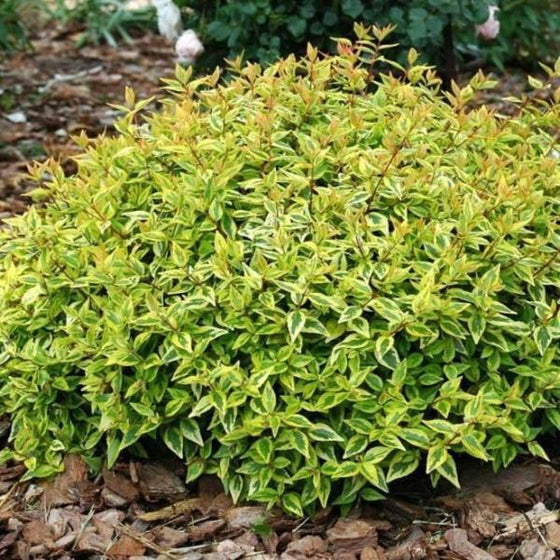
Kaleidoscope Abelia is one of the most useful shrubs for adding long-lasting color without creating a high-maintenance planting.
Its variegated foliage shifts through shades of green, gold, orange, and red as the seasons change. Small flowers appear over an extended period and attract bees, butterflies, and other pollinators.
Kaleidoscope Abelia works particularly well in foundation beds, mixed borders, low hedges, mass plantings, and sunny areas near patios or walkways. It performs best in full sun to partial shade and well-drained soil. If you want a smaller, more compact option for tight spaces, Rose Creek Abelia fills a similar role.
Once established, abelia can handle periods of dry weather better than many traditional flowering shrubs. A layer of mulch over the root zone will help conserve moisture, but keep it pulled away from the stems. Our abelia care guide covers pruning and seasonal maintenance in more detail.
Blue Point Juniper

For evergreen structure, Blue Point Juniper is a dependable choice.
Its dense, pyramidal form and blue-green foliage provide year-round color without requiring constant pruning. It can be used as an evergreen accent, an informal screen, a foundation anchor, or a repeated vertical element in a large bed.
Blue Point Juniper performs best in full sun and well-drained soil. Once established, it has strong drought tolerance and generally requires little supplemental water outside prolonged dry periods.
Drainage matters. Junipers tolerate dry soil much better than wet soil, so avoid low areas where water collects after storms.
Otto Luyken Cherry Laurel
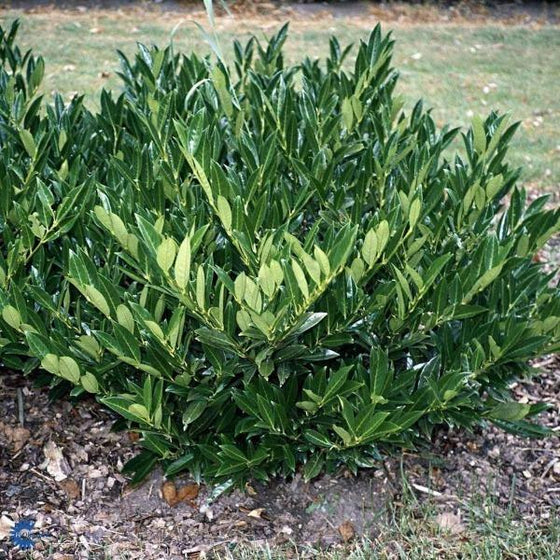
Otto Luyken Cherry Laurel (Prunus laurocerasus 'Otto Luyken') is one of the most reliable broadleaf evergreens for landscapes that get hot and dry in summer.
It grows roughly 3 to 4 feet tall and 5 to 6 feet wide, with glossy dark green leaves that hold their color through the season. Fragrant white flower spikes appear in spring, followed by small dark berries that birds are happy to find.
Otto Luyken is especially useful in the spots where gardeners usually struggle: low hedges, shady foundation beds under roof overhangs, mass plantings on slopes, and the front edge of a taller evergreen border. It tolerates more shade than most shrubs on this list, which makes it a good partner for junipers and nandinas in beds where light varies.
Plant it in well-drained soil and water consistently through the first season. Once established, it handles summer heat and dry stretches without the leaf scorch that troubles many broadleaf evergreens. Because it is evergreen, keep checking soil moisture during dry winter thaws.
Firepower Nandina

Firepower Nandina brings bold, season-changing foliage to compact landscapes. New growth emerges lime green before developing warmer red, orange, and burgundy tones as temperatures cool. Its strongest color often arrives in fall and winter, giving the landscape interest when many flowering plants have gone dormant.
Its compact, mounded growth habit makes Firepower Nandina useful for foundation plantings, borders, mass plantings, low hedges, and smaller spaces where a full-sized shrub would become overwhelming. Plant several together to create a colorful sweep, or use them individually to brighten the front of an evergreen shrub border.
Once established, Firepower Nandina handles heat and periodic drought well. It grows in full sun to partial shade, although brighter light generally produces the richest foliage color. Provide well-drained soil and regular water during its first growing season, then gradually reduce supplemental irrigation as the roots establish.
Firepower is commonly valued as a nonflowering, nonfruiting Nandina cultivar, so it typically does not produce the berries associated with seed spread and wildlife concerns.
Butterfly Bush

Butterfly Bush (Buddleja davidii) is difficult to ignore when it is covered with long, colorful flower clusters and butterflies.
Modern cultivars are available in a wide range of sizes, from compact selections such as Pugster Amethyst for smaller beds to larger shrubs like Black Knight Buddleia that create a dramatic summer focal point. They work beautifully in pollinator gardens, mixed borders, sunny foundations, and around outdoor living spaces.
Butterfly Bush prefers full sun and freely draining soil. Once established, it tolerates heat and dry spells well, although occasional deep watering helps support flowering during prolonged drought.
Choose sterile or low-seed cultivars where Butterfly Bush is considered invasive, and follow local planting recommendations. In colder areas, apply mulch over the root zone after the ground cools, but keep it away from the crown. Our butterfly bush care guide covers pruning timing, which matters more with this shrub than most.
Coral Magic Crape Myrtle
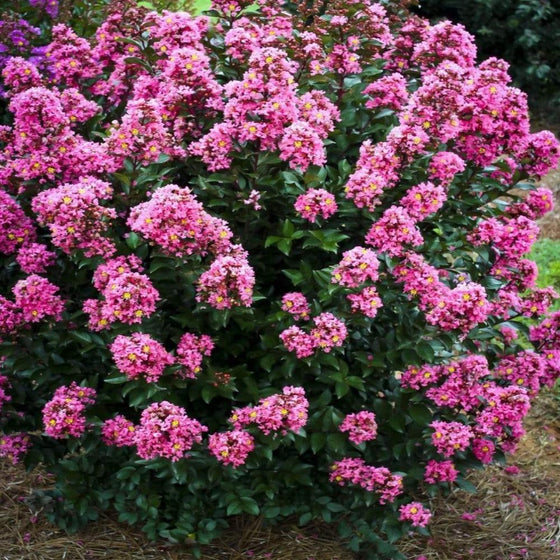
Coral Magic Crape Myrtle earns its place in a heat-tolerant landscape with abundant coral-pink flowers, glossy foliage, and warm fall color.
Its compact stature makes it useful as a large shrub or small ornamental tree in mixed borders, flowering screens, foundation beds, and sunny focal points. It handles heat exceptionally well and becomes increasingly drought-tolerant after its roots establish.
Crape Myrtle needs full sun for its best flowering and should be planted in well-drained soil with room for air to circulate through the canopy. See our crape myrtle growing guide for pruning and placement.
Italian Cypress
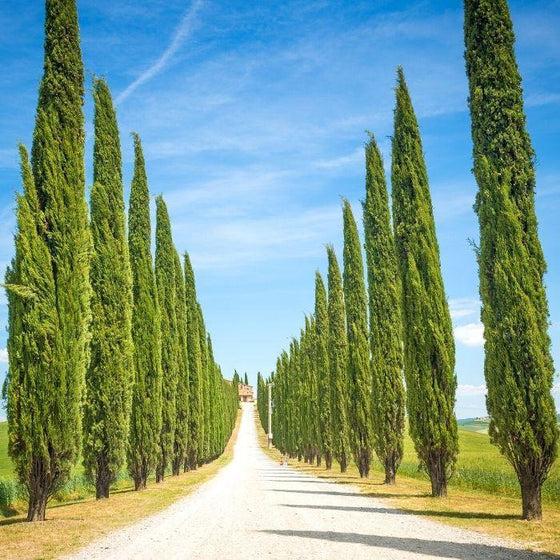
When a landscape needs height without width, Italian Cypress (Cupressus sempervirens) is hard to beat.
Its narrow, columnar form reaches well above eye level while occupying very little ground space, which makes it useful for framing entryways, marking corners, screening a narrow side yard, or adding formal vertical rhythm to a sunny bed. The gray-green foliage holds through winter.
Italian Cypress is genuinely built for dry conditions. It comes from a Mediterranean climate and, once established, resents wet feet far more than it resents drought. Give it full sun and sharply drained soil, and keep it out of low spots and irrigation zones set for lawns or thirsty perennials.
Gardeners in colder parts of the region should check hardiness carefully before planting. Where Italian Cypress is marginal, browse our full range of drought-tolerant trees for hardier upright evergreens that fill the same role.
Best Drought-Tolerant Perennials to Plant in Fall
Shrubs provide the bones of a drought-tolerant landscape, but perennials bring it to life.
A well-designed bed of drought-tolerant perennials can deliver flowers from spring through fall while supporting bees, butterflies, hummingbirds, and other beneficial wildlife. The key is to combine plants with similar needs rather than mix drought-tolerant plants with varieties that require consistently moist soil.
Black-Eyed Susan and Rudbeckia
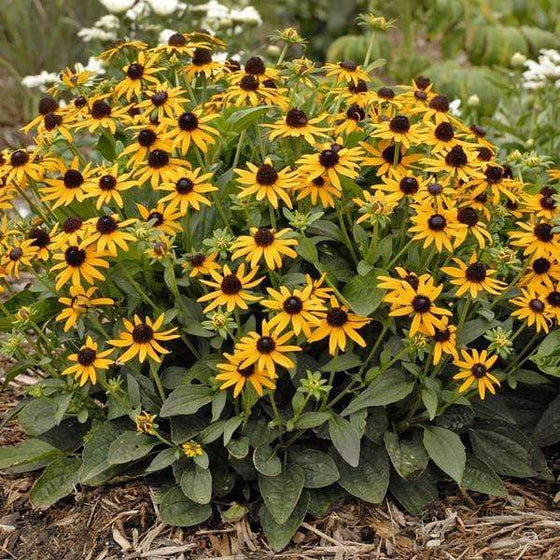
Rudbeckia is one of the most reliable flowering perennials for hot, sunny gardens.
Black-Eyed Susans produce golden-yellow flowers with dark centers from summer into fall. Their cheerful color works in native gardens, cottage gardens, pollinator beds, mass plantings, and along walkways.
Once established, Rudbeckia handles heat and temporary drought well. It generally performs best in full sun and average, well-drained soil.
Goldsturm Black-Eyed Susan and other compact Rudbeckia selections can be massed for a strong block of late-season color. Leave some seed heads standing after flowering to provide winter texture and food for birds. We wrote more about this perennial in our Rudbeckia feature.
Sedum
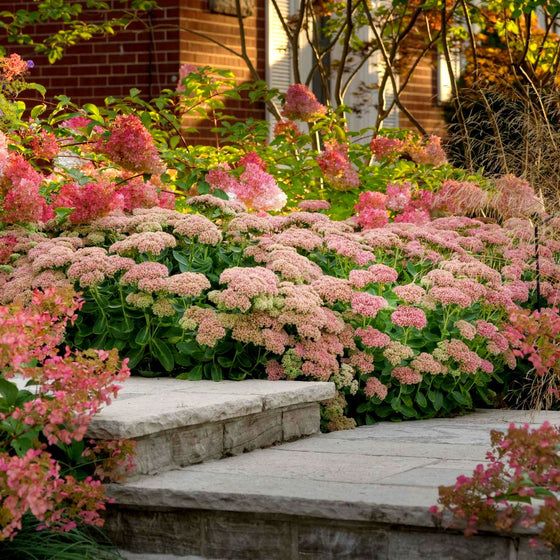
If you want a perennial that genuinely appreciates a lighter hand with the watering hose, Sedum belongs near the top of the list.
Also called stonecrop, Sedum stores moisture in its thick, succulent foliage. Low-growing varieties can cover sunny slopes, soften rock gardens, and spill over retaining walls. Upright Sedum varieties form sturdy clumps and produce broad flower clusters in late summer and fall.
Autumn Joy Sedum and Autumn Fire provide strong late-season structure, while groundcover selections such as Angelina, Dragon's Blood, and Fuldaglut create colorful mats close to the soil.
Sedum needs full sun and excellent drainage. Rich, wet soil can cause weak growth, flopping, crown decline, or root rot. This is one plant that usually suffers from too much attention rather than too little — our guide to planting sedum goes deeper on soil prep.
Coneflower
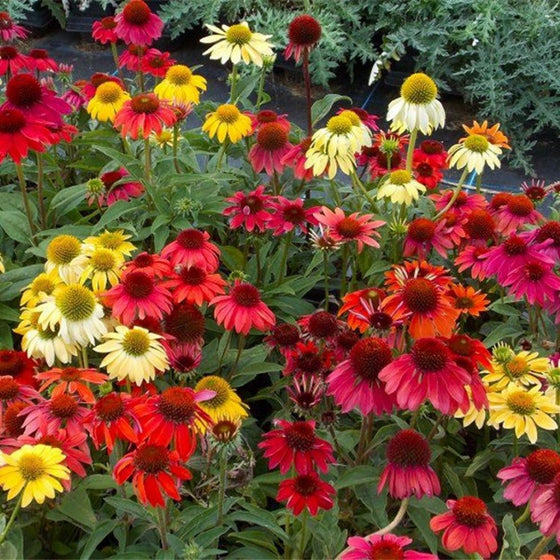
Coneflowers combine drought tolerance, long-lasting flowers, and outstanding value for pollinators.
Echinacea develops a substantial root system that helps established plants tolerate heat and dry periods. The flowers attract bees and butterflies, while seed heads left standing can provide food for birds later in the year.
Traditional purple coneflowers remain dependable choices, but modern selections offer white, yellow, orange, pink, red, and multicolored flowers. Cheyenne Spirit, PowWow Wild Berry, and the Sombrero series can all bring different color combinations into a water-wise garden.
Plant coneflowers in full sun and well-drained soil. Avoid placing them in low, wet beds, particularly during winter. Our coneflower care guide covers deadheading and division.
Salvia
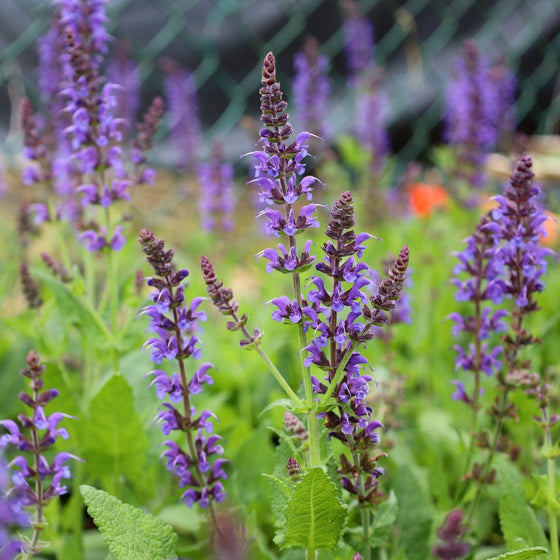
Perennial Salvia provides upright flower spikes, aromatic foliage, deer resistance, and excellent pollinator activity.
May Night Salvia, Blue Hill, East Friesland, and Snow Hill are useful for adding vertical rhythm to sunny borders. Their blue, purple, or white flowers contrast beautifully with the rounded blooms of coneflowers and the daisy-like flowers of Rudbeckia.
Salvia prefers full sun and well-drained soil. Once established, it can tolerate dry conditions while continuing to flower, especially when given an occasional deep watering during extended drought.
Cutting spent flower spikes back after the first bloom can encourage fresh growth and another round of flowers.
Agastache
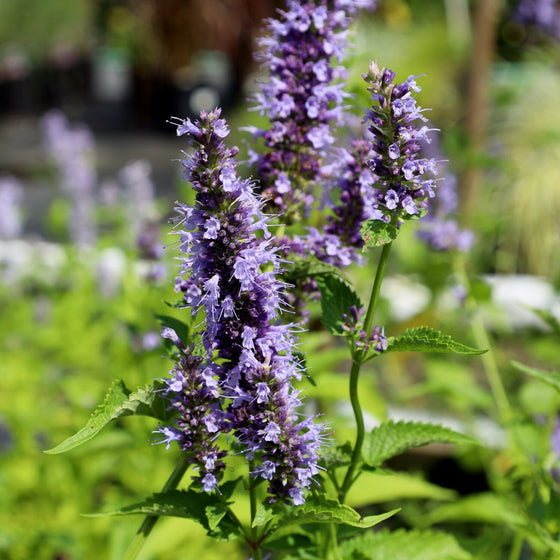
Agastache, commonly called hummingbird mint or anise hyssop, is built for sunny pollinator gardens.
Its upright flower spikes attract hummingbirds, bees, and butterflies, while its aromatic foliage tends to discourage deer. Blue Fortune, Blue Boa, Black Adder, and Purple Haze offer a range of sizes and colors for mixed borders, cottage gardens, and water-wise plantings.
Agastache performs best in full sun and well-drained soil. It handles summer heat and drought once established, but it does not like remaining wet — especially during winter.
When planting Agastache in the fall, drainage is just as important as cold hardiness. Keep mulch away from the crown and avoid low areas where winter moisture collects. See our Agastache care guide for overwintering tips.
Lavender
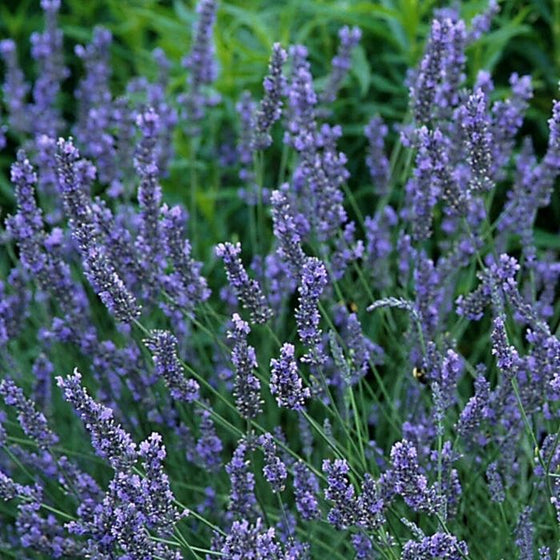
Lavender brings fragrance, silvery foliage, flowers, pollinator value, and Mediterranean character to hot, sunny landscapes.
It works well along walkways, beside patios, in herb gardens, within rock gardens, and as a low flowering hedge. Grosso and Provence Lavender are especially useful where you want strong fragrance and long flower stems. Phenomenal Lavender is the most forgiving choice in humid Mid-Atlantic summers.
Lavender requires full sun, good air circulation, and sharply drained soil. Heavy clay and wet winter conditions are much greater threats than summer drought — how to plant lavender walks through amending a difficult site.
Catmint
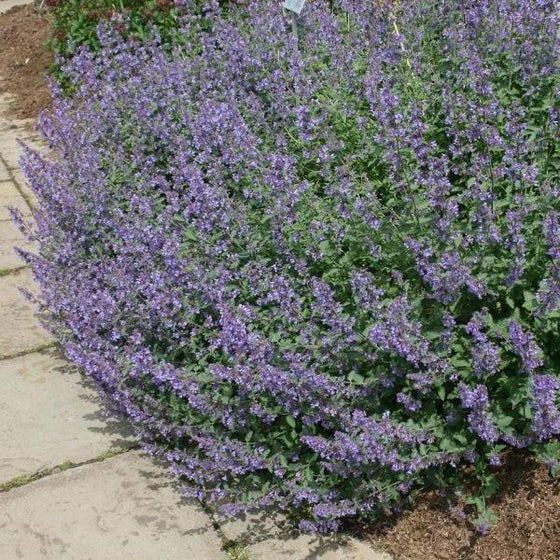
Catmint is one of those plants that can make a garden look generous without demanding much in return.
Varieties such as Walker's Low and Purrsian Blue form mounds of aromatic gray-green foliage covered with blue-purple flowers. Catmint works beautifully along walkways, in front of roses, around sunny foundations, and as a soft edging plant.
Once established, it tolerates heat, dry soil, and occasional neglect. Bees visit the flowers regularly, while deer typically avoid the aromatic foliage.
After the first major flush of flowers fades, shear the plant back to encourage fresh foliage and additional bloom.
Yarrow

Yarrow (Achillea millefolium) is a tough perennial for sunny, well-drained landscapes.
Its flat flower clusters provide a different shape from spiked Salvia, rounded Coneflower, and daisy-like Rudbeckia. That contrast makes Yarrow especially valuable in mixed perennial beds.
Terracotta Yarrow and Moonshine Yarrow bring warm and soft-yellow shades into late-summer and fall plantings. Established plants tolerate drought, attract pollinators, and perform well in lean soil. Browse the full Achillea collection or read our guide to growing Achillea.
Avoid overfertilizing Yarrow. Rich soil can produce weak, floppy stems and reduce the sturdy character that makes the plant so useful.
When Spring Planting Is the Safer Bet
Fall is the right choice for most of the plants on this list, but not for every plant in every yard. There are a few situations where waiting until spring is the smarter call — and knowing which is which is most of the skill.
- Plants near the cold edge of their hardiness zone. A shrub rated to Zone 7 planted in a Zone 7a yard has no margin for a hard winter on a young root system. Check your zone on the USDA Plant Hardiness Zone Map.
- Warm-climate shrubs in colder areas. Crape Myrtle is the common example. In the colder portion of its range, give it a full growing season to establish before its first winter.
- Lavender in heavy clay or poorly drained soil. Winter wet kills far more lavender than winter cold. If drainage is questionable, fix the site in fall and plant in spring.
- Anywhere water stands after a storm. Correct the drainage problem first. No planting season rescues a plant sitting in saturated soil.
Everything else — junipers, abelia, nandina, cherry laurel, butterfly bush, and the full perennial list above — goes in this fall.
How to Design a Drought-Tolerant Fall Garden
A good water-wise landscape should not look like a random assortment of tough plants. It should have structure, repetition, overlapping bloom seasons, and plants grouped according to their water needs.
Start with shrubs. Use Juniper for evergreen height, Abelia for a colorful mound, Cherry Laurel for a broadleaf evergreen base, Butterfly Bush for summer flowers, or compact Crape Myrtle for a larger flowering focal point.
Then build the perennial layer using several flower shapes:
- Salvia and Agastache provide upright spikes.
- Coneflower and Rudbeckia provide bold, rounded flowers.
- Yarrow adds flat flower clusters.
- Sedum creates substantial late-season flower heads.
- Catmint and Lavender soften the edges with mounded foliage.
Repeat plants rather than using one of everything. Three, five, or seven plants of the same variety usually create more impact than the same number of unrelated plants scattered around the bed.
Also consider foliage after the flowers fade. Blue-green Juniper, golden Abelia, silver Lavender, aromatic Catmint, and succulent Sedum can keep the planting interesting even when fewer flowers are open.
Group Plants by Water Needs

One of the simplest ways to reduce landscape watering is to group plants with similar moisture requirements.
This practice is sometimes called hydrozoning, but the idea is straightforward: don't plant a moisture-loving perennial between Lavender and Sedum and then try to keep all three happy with the same irrigation schedule.
Create a low-water section of the landscape where drought-tolerant shrubs and perennials can share well-drained soil and deep, infrequent watering. Keep plants that prefer consistent moisture in a separate area.
This reduces water waste and protects drought-tolerant plants from the root problems that often accompany excessive irrigation.
How to Plant Drought-Tolerant Shrubs and Perennials in Fall
Begin by choosing a location that matches each plant's sunlight, soil, mature size, and hardiness zone.
Most classic drought-tolerant plants perform best in full sun and well-drained soil. If water stands in the planting area after rain, correct the drainage problem before installing plants. A soil test through your local extension service will tell you what you are actually working with.
Dig each planting hole no deeper than the root ball and generally wider than the container. Set the plant at the same depth it grew previously, loosen circling roots as needed, backfill with the surrounding soil, and water thoroughly.
Do not create a rich, moisture-holding pocket around plants such as Lavender, Sedum, Salvia, or Agastache. Their roots need to move into the surrounding soil, and their crowns need drainage.
Finish with approximately 2 to 3 inches of mulch over the root zone, keeping it away from stems and perennial crowns.
How to Water New Drought-Tolerant Plants

This is where many water-wise gardens go wrong.
Gardeners see "drought-tolerant" on a plant label and immediately assume the plant should receive less water. But a newly installed plant does not yet have the extensive root system that will be responsible for its future drought tolerance.
Water thoroughly after planting and monitor the root zone regularly. The soil should remain appropriately moist during establishment, but not constantly saturated.
Deep watering is more useful than frequent surface sprinkling. A slow soak encourages roots to grow outward and downward, creating the system the plant will rely on during future dry periods.
Continue checking fall-planted shrubs and perennials until the ground freezes. Evergreen shrubs such as Cherry Laurel, Juniper, and Italian Cypress may also need water during dry winter thaws when the soil is workable.
As the plants establish, gradually increase the time between waterings. The goal is to develop deep, resilient roots — not plants dependent on daily irrigation.
Getting Fall-Planted Shrubs Through Their First Summer
A plant installed this October still counts as new next July. Its first summer is the one that decides whether it becomes the low-maintenance shrub you were promised. A few habits make the difference during a heat wave:
- Water early in the morning, at the base of the plant. Watering at the root zone rather than over the foliage keeps leaves dry and reduces the fungal problems that follow humid nights.
- Water deeply and less often. A long, slow soak two or three times a week beats a daily sprinkle. Shallow watering trains roots to stay near the surface, which is exactly the wrong habit going into August.
- Refresh the mulch layer before summer. Two to three inches over the root zone moderates soil temperature and slows evaporation when the heat arrives.
- Provide temporary afternoon shade for the most exposed new plantings. Shade cloth or a well-placed patio umbrella during the hottest hours of an extreme heat event can carry a first-year plant through a stretch it would otherwise struggle with.
- Watch the plant, not the calendar. Wilting in the late afternoon that recovers by morning is normal. Wilting that is still there at sunrise means the root zone is dry.
By the second summer, most of the plants on this list will need very little of this. That is the whole point of planting them in fall.
Mulch Helps, but Don't Bury the Plants
Mulch is one of the best tools for conserving soil moisture. It also moderates soil temperature and reduces weed competition.
Apply mulch across the root zone, but keep it away from shrub trunks, stems, and perennial crowns.
This is especially important with drought-tolerant perennials that dislike excess moisture. Mulch piled over Lavender, Sedum, Salvia, or Agastache crowns can hold water where the plant needs air and drainage.
Think of mulch as a blanket for the soil, not a burial mound for the plant.
Avoid Overfeeding a Water-Wise Garden
Many drought-tolerant plants naturally grow in lean or moderately fertile soil.
Heavy fertilization can produce lush, soft growth that requires more water, attracts pests, flops during rain, and performs poorly during drought. Overfed Lavender, Sedum, Yarrow, and similar plants often lose the compact, sturdy habit that makes them desirable.
A soil test is the best way to determine whether nutrients are actually needed.
In many established water-wise gardens, thoughtful use of compost and a light spring feeding are more effective than aggressive fertilization.
Woodie's Take: Fall Is When You Prepare for Next Summer
The middle of a drought is a good time to notice which plants are performing, but it is not the easiest time to plant them.
That's why fall matters.
Fall gives us a chance to remember where the garden struggled during summer and make better choices while planting conditions are more forgiving. You can replace a thirsty shrub, rebuild a sun-baked border, fill a difficult slope, or create an entirely new planting built around plants that know how to handle heat.
The important thing is to plant with the future in mind.
A drought-tolerant landscape does not need to look dry, sparse, or colorless. It can have evergreen structure, fragrant foliage, summer flowers, fall color, pollinator activity, and enough personality to make the neighbors stop and ask what you planted.
Give those plants the right location. Water them while they establish. Mulch the root zone without burying the crowns. Then let their natural resilience begin doing some of the work for you.
Next summer, when the rain clouds keep passing by your garden, you'll be glad you planted this fall.
Shop Drought-Tolerant Plants for Fall Planting
Every plant in this guide ships from our Maryland nursery, container-grown and ready to go in the ground now. Browse the drought-tolerant shrubs, drought-tolerant perennials, and drought-tolerant trees collections, or start with the full water-wise assortment below.
Shop the Drought-Tolerant Collection
Frequently Asked Questions
When is the best time to plant drought-tolerant shrubs and perennials?
Early to mid fall is ideal in most of the country. Cooler air reduces transplant stress while soil stays warm enough for active root growth. Aim to plant hardy perennials several weeks before the ground normally freezes; shrubs can go in later as long as the soil remains workable.
Do drought-tolerant plants still need watering?
Yes, especially during the first year. Drought tolerance is a trait a plant expresses only after it has grown roots out into the surrounding soil. Water new plantings deeply and regularly through establishment, then gradually stretch the interval between waterings.
How long does it take for a drought-tolerant plant to establish?
Perennials generally establish within one full growing season. Shrubs typically need one to two growing seasons, and larger evergreens can take longer. Plan on watering through at least the first full summer after planting.
What are the most drought-tolerant shrubs for full sun?
Juniper, Abelia, Nandina, Butterfly Bush, Crape Myrtle, and Italian Cypress all handle full sun and dry conditions well once established. All of them require well-drained soil — poor drainage is a bigger threat to these plants than drought.
Can I plant lavender in the fall?
In well-drained soil and a mild climate, yes. In heavy clay or in colder zones, lavender is safer planted in spring so it has a full season to establish before facing winter wet. Winter moisture around the crown kills more lavender than cold does.
What is hydrozoning?
Hydrozoning means grouping plants with similar water requirements together so a single irrigation schedule suits everything in that zone. It prevents the common mistake of overwatering drought-tolerant plants in order to keep a thirsty neighbor happy.