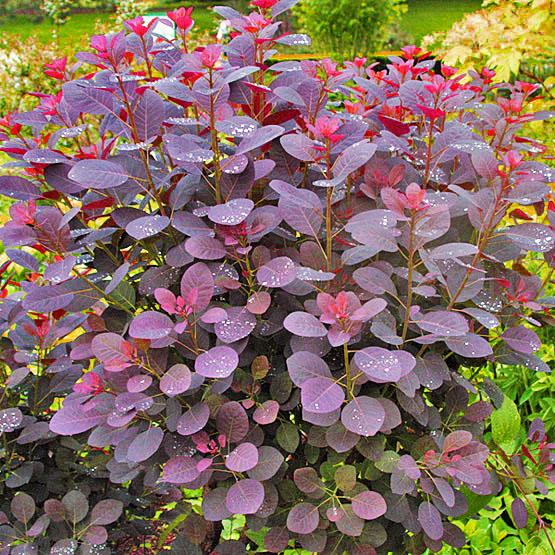
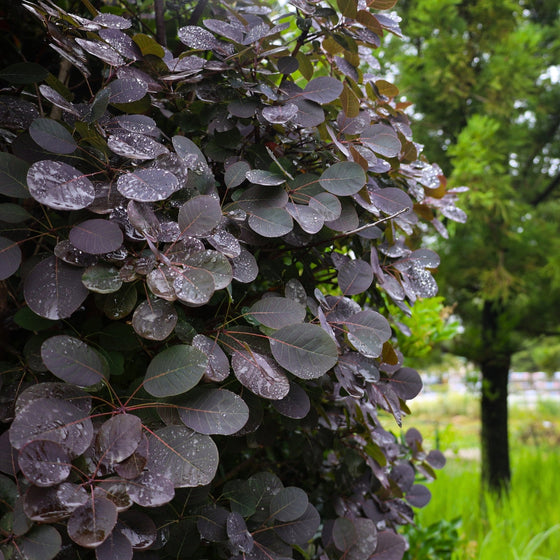

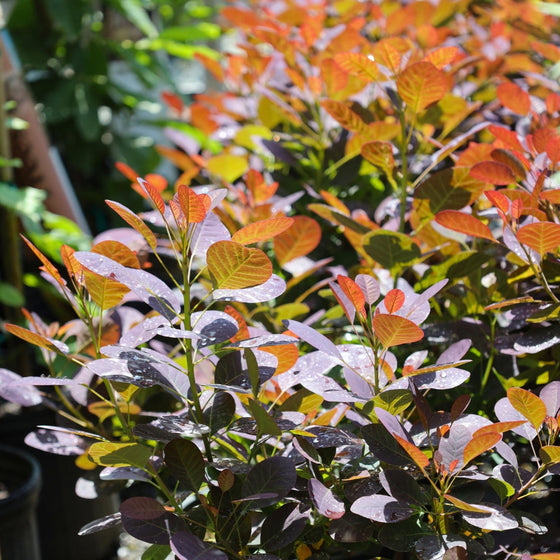
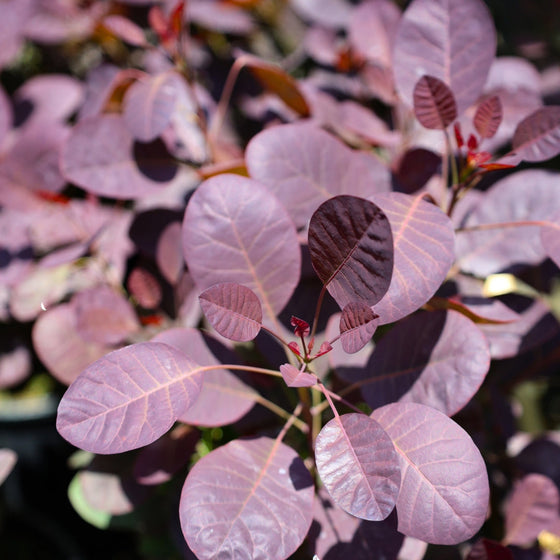


Images Depict Mature Plants
Royal Purple Smoke Tree
Cotinus coggygria 'Royal Purple'
Royal Purple Smoke Tree is one of those plants that gives you a lot of color without depending on constant flowers to do the work. The deep purple foliage is what grabs you first, but the smoky summer plumes and brilliant fall color are what make it feel like a real landscape standout. For a specimen shrub or small tree with bold contrast and a lot of personality, this one is hard to beat.

15% OFF WITH CODE PLANTING15
Save 15% Off Your Entire Order! Limited time.
📦 Free shipping on orders over $99.
Delay shipping by leaving us a message at Checkout.
Share:


Rich Purple Foliage and Smoky Summer Color in One Standout Plant
A Bold Landscape Accent with Season-Long Color
Royal Purple Smoke Tree is one of the most striking foliage plants you can add to the landscape. Its deep burgundy to purple leaves create immediate contrast against green shrubs, lawns, and flowering perennials, making it an easy choice for homeowners who want a plant that reads as dramatic from the start.
This is not a plant that blends quietly into the background. It brings strong visual weight and color through the entire growing season, which is why it works so well as a focal point in both traditional and more modern garden designs.
Purple Leaves That Hold Their Color Beautifully
One of the biggest reasons to plant the Royal Purple Smoke Tree is the foliage. The leaves emerge a rich maroon-purple and mature into deep reddish-purple tones that remain handsome through summer, giving the plant a saturated, velvety look in the landscape.
That persistent leaf color is one of its greatest strengths. Even when it is not in bloom, the plant continues to carry the design, making it highly valuable in sunny beds where strong foliage contrast matters just as much as flowers.
Smoky Summer Plumes Add Unique Texture
After flowering, Royal Purple Smoke Tree develops airy, pinkish-purple plumes that create the smoky effect this plant is known for. Those feathery clusters seem to hover around the branches, adding a soft, cloud-like texture that feels especially dramatic when backlit by the sun.
This gives the plant a second layer of ornamental interest beyond foliage alone. Instead of relying on bold blooms, it brings a more unusual, hazy summer display that feels elegant, distinctive, and memorable in the garden.
Brilliant Fall Color Extends the Show
As the season shifts, the foliage turns brilliant shades of scarlet red, orange-red, and wine tones, giving Royal Purple Smoke Tree another strong ornamental moment in autumn. That fall transition is one of the reasons this plant feels like such a good long-term investment in the landscape.
It is not simply a one-season plant. Between the dark spring and summer foliage, the smoke-like plumes, and the bright fall color, it delivers visual interest across multiple seasons in a way few shrubs can match.
A Great Fit for Specimen Use, Borders, and Sunny Accents
Royal Purple Smoke Tree works beautifully as a specimen shrub, a small accent tree, or a dramatic background plant in mixed borders. It is especially effective near entries, patios, and foundation beds where the foliage color can be appreciated up close and contrasted against lighter surrounding plants.
For homeowners who want a plant with bold color, unique texture, and strong four-season landscape value, Royal Purple Smoke Tree is an excellent choice. It offers the kind of visual drama that instantly elevates a planting without feeling difficult to use.
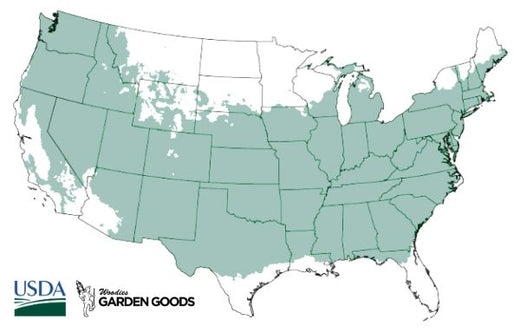
| Hardiness Zone: | 5-8 |
|---|---|
| Mature Height: | 10 to 15 feet |
| Mature Width: | 10 to 12 Feet |
| Sunlight: | Full Sun |
| Soil | Well-drained soil; adaptable to many soil types |
| Water | Moderate; water regularly during establishment |
| Bloom Time / Color | Late spring to summer; airy pinkish-purple smoke-like plumes |
| Ornamental Features | Deep purple foliage, smoky flower plumes, scarlet red fall color, rounded habit |
| Wildlife Value | Offers cover and seasonal habitat value |
| Resistance (deer/disease/drought/etc.) | Drought tolerant once established; generally easy care |
| Landscape Uses | Specimen shrub, small ornamental tree, mixed border accent, foundation planting, foliage contrast plant |
How to Care for Royal Purple Smoke Tree
Be sure to read our planting instructions to ensure a healthy and happy Royal Purple Smoke Tree for years to come!

How should I plant Royal Purple Smoke Tree?
Plant Royal Purple Smoke Tree in a full sun location with well-drained soil. Dig a hole about twice as wide as the root ball and no deeper than the root ball itself, then set the plant so the top of the root ball sits level with or slightly above the surrounding soil. This helps encourage healthy root establishment and reduces the risk of planting too deeply. Backfill with native soil, water thoroughly, and mulch around the base to help hold moisture and reduce weed competition. Keep mulch a few inches away from the stems or trunk. If you are using it as a specimen, give it enough room for its mature width so the smoky blooms and foliage color can be fully appreciated.

How often should I water Royal Purple Smoke Tree after planting?
Water Royal Purple Smoke Tree deeply right after planting, then continue watering regularly during the establishment period. In most landscapes, that means a deep soaking about once or twice per week, depending on rainfall, heat, and soil drainage. The goal is evenly moist soil while the plant develops a strong root system. Once established, Royal Purple Smoke Tree becomes much more drought-tolerant and usually needs supplemental water only during extended dry periods. Deep watering is better than frequent shallow watering because it encourages stronger roots and helps the plant perform more reliably over time.

When should I fertilize Royal Purple Smoke Tree?
Fertilize Royal Purple Smoke Tree only if needed, especially if growth appears weak or the soil is poor. If feeding is necessary, early spring is usually the best time to apply compost or a balanced slow-release fertilizer that supports steady growth without forcing overly soft new foliage. Avoid overfeeding, especially on already healthy plants. In many landscapes, full sun, good drainage, and proper watering during establishment are more important than aggressive fertilization. The goal is strong foliage color, steady growth, and good seasonal performance.

When and how should I prune Royal Purple Smoke Tree?
Royal Purple Smoke Tree can be pruned lightly to remove dead, damaged, or awkward branches and to maintain a strong framework. Late winter or very early spring is usually the best time for structural pruning before new growth begins. If a smaller, more vigorous foliage plant is desired, it can also be cut back more firmly in late winter, though heavier pruning may reduce or delay the smoky bloom effect. If blooms are an important part of the display, lighter pruning is usually the better approach.