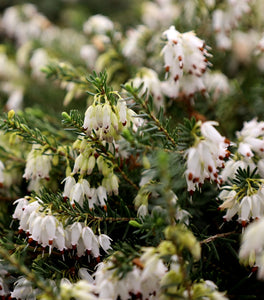
Images Depict Mature Plants
Mediterranean Pink Heather
Erica x darleyensis 'Mediterranean Pink'
Mediterranean Pink Heather is one of those plants that quietly solves a real garden problem by bringing color into the coldest part of the year. It stays neat, looks good even when not in bloom, and works especially well when you want a low evergreen that can soften edges and wake up the landscape early.
📦 Free shipping on orders over $99.
Delay shipping by leaving us a message at Checkout.
Share:

Soft pink winter blooms on a compact evergreen mound
A bright spot in the quiet season.
Mediterranean Pink Heather brings welcome color to the garden when many other plants are still dormant. Its soft pink flowers open in late winter and early spring, creating a gentle but noticeable display that feels especially cheerful against the colder season’s darker backdrop. For homeowners who want winter interest without relying only on berries or bark, this plant adds a different kind of beauty.
Evergreen texture keeps it useful all year.
Even when it is not in bloom, Mediterranean Pink Heather earns its space with dense, fine-textured evergreen foliage and a naturally mounded habit. The foliage creates a tidy, low-growing presence that works well at the front of beds, along paths, and in rock gardens where year-round structure matters.
A low, spreading habit makes it practical.
This plant is especially useful because it stays compact while gradually filling in around itself. Its mounding, spreading form helps soften hard edges, cover slopes, and create a cohesive look in mass plantings. It can function as a flowering ground cover in the right setting, especially when planted in groups and given time to knit together.
A strong fit for borders, slopes, rock gardens, and containers.
Mediterranean Pink Heather works beautifully in sunny borders, hillside plantings, rocky sites, and decorative containers. It pairs naturally with dwarf conifers, hellebores, bulbs, and other early-season plants. Because it stays relatively low, it is also useful along walkways and at the front of mixed beds where winter bloom can be appreciated up close.
Easy care starts with the right siting.
Mediterranean Pink Heather performs best in full sun to partial shade and in acidic, well-drained soil. Once established, it is fairly drought-tolerant and widely regarded as deer-resistant, though that should still be treated as a practical rather than an absolute claim. A light pruning after flowering helps keep it dense, fresh, and full of future bloom wood.
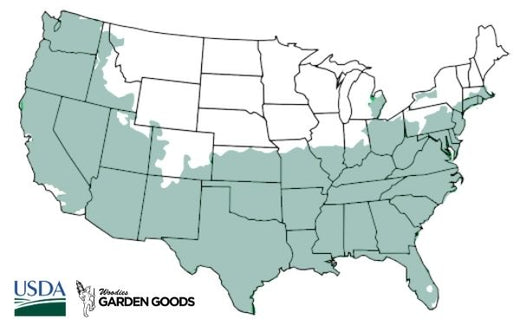
| Hardiness Zone: | 6-10 |
|---|---|
| Mature Height: | 12 to 18 Inches |
| Mature Width: | 2 to 2.5 feet |
| Sunlight | Full sun to partial shade |
| Soil | Acidic, well-drained soil |
| Water | Moderate during establishment; moderately drought tolerant once established |
| Bloom Time / Color | Late winter to early spring; pink flowers |
| Foliage: | Fine-textured green evergreen foliage |
| Ornamental Features | Pink winter blooms, evergreen texture, low mounding habit |
| Wildlife Value | Early nectar source for pollinators, especially bees |
| Resistance (deer/disease/drought/etc.) | Commonly regarded as deer resistant; moderately drought tolerant once established |
| Landscape Uses | Borders, slopes, rock gardens, ground cover, containers, front-of-bed plantings |
How to Care for Mediterranean Pink Heather
Be sure to read our planting instructions to ensure a healthy and happy Mediterranean Pink Heather plant for years to come!
-v1744376108688.png?92x91)
How should I plant Mediterranean Pink Heather?
Plant Mediterranean Pink Heather in full sun to partial shade in acidic, well-drained soil. Dig a hole about twice as wide as the root ball, set the plant level with the surrounding soil, then backfill and water deeply to settle the roots. After planting, apply a light mulch layer to help conserve moisture and reduce weed competition, but keep mulch away from the crown. If planting as ground cover, space Mediterranean Pink Heather so the plants have room to spread and gradually form a dense, cohesive mat.
-v1744376121445.png?89x84)
How often should I water Mediterranean Pink Heather after planting?
Water Mediterranean Pink Heather deeply right after planting, then keep the soil evenly moist during the first growing season while it establishes. During warm weather, check the soil regularly and water when the upper layer begins to dry. Once established, Mediterranean Pink Heather becomes more forgiving and can handle short dry periods better than many winter-blooming plants. During extended drought, deep watering helps keep the foliage fresh and supports better flowering the following season.
-v1744376142043.png?90x89)
When should I fertilize Mediterranean Pink Heather?
Fertilize Mediterranean Pink Heather lightly in early spring or just after flowering if needed. A fertilizer for acid-loving plants can be helpful, especially if your soil tends to run neutral or alkaline. Avoid overfeeding, because heathers generally perform better with modest fertility than with heavy fertilizer applications. In the right soil, Mediterranean Pink Heather often needs very little feeding to stay healthy and colorful.

When and how should I prune Mediterranean Pink Heather?
Prune Mediterranean Pink Heather lightly right after flowering each year. This helps maintain a dense, rounded shape and encourages fresh new shoots that will carry future blooms. Avoid cutting back into old, leafless wood whenever possible. Regular, light post-bloom trimming is usually the best approach for keeping Mediterranean Pink Heather compact, full, and attractive over time.