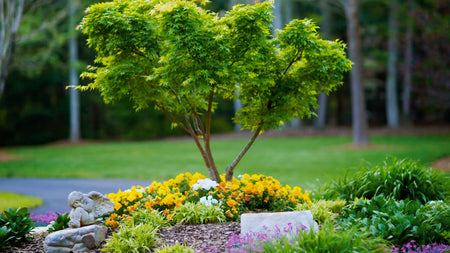
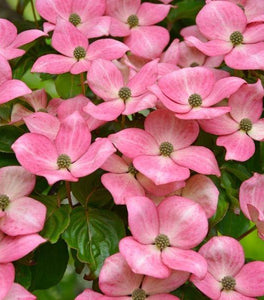
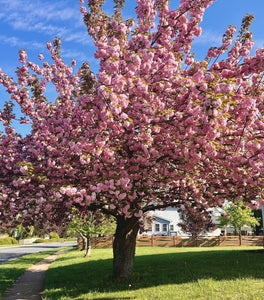
Images Depict Mature Plants
Japanese Stewartia Tree
Stewartia pseudocamellia
Japanese Stewartia Tree is one of those plants that just keeps giving you more to notice. The white summer flowers are beautiful, but the bark and fall color are what really make it special over the long haul. For homeowners who want a refined specimen tree with real four-season interest, this is one of the most elegant choices you can plant.

15% OFF WITH CODE PLANTING15
Save 15% Off Your Entire Order! Limited time.
📦 Free shipping on orders over $99.
Delay shipping by leaving us a message at Checkout.
Share:


A Four-Season Ornamental Tree with Refined Beauty
A Sophisticated Specimen Tree with Lasting Appeal
Japanese Stewartia Tree is one of the most elegant ornamental trees you can plant in the landscape. Its refined branching habit, smooth exfoliating bark, and layered seasonal interest give it a polished, almost collected look that feels especially at home in high-visibility planting areas.
This is not a tree chosen only for one brief bloom period. It is prized for its beauty in every season, making it an exceptional choice for homeowners seeking a specimen tree with long-term ornamental value.
Camellia-Like White Flowers in Early Summer
One of the most distinctive features of Japanese Stewartia is its bloom time. In early to midsummer, when many spring trees have long since faded, it produces white, camellia-like flowers with golden centers that seem to float lightly among the foliage.
That timing makes it especially valuable in the landscape. It extends the flowering season and gives homeowners a tree that feels fresh and interesting at a time when many woody plants offer much less floral display.
Exfoliating Bark That Shines in Winter
As Japanese Stewartia matures, the bark begins to exfoliate in thin patches, revealing a beautiful mix of gray, tan, cinnamon, and orange-brown tones beneath. This mottled trunk-and-branch pattern gives the tree one of its most admired ornamental qualities and makes it especially striking in winter.
That bark is a major reason this tree is so highly regarded by plant lovers and landscape designers. Even when the leaves are gone, the tree continues to provide visual interest and structure, which gives it a true four-season presence.
Handsome Green Foliage and Brilliant Fall Color
Throughout spring and summer, Japanese Stewartia features rich green foliage that creates a calm, elegant canopy. The leaves have a neat, refined texture that complements the branching and flowers without overwhelming the overall form of the tree.
In fall, the foliage turns shades of orange, yellow, red, and burgundy, giving the tree another strong seasonal moment. That fall display adds even more value to the planting and helps reinforce the idea that this is one of the best multi-season ornamental trees for residential landscapes.
A Beautiful Choice for Lawns, Entries, and Refined Gardens
Japanese Stewartia Tree works best as a specimen in a lawn, near an entry, or in a thoughtfully designed garden bed where its bark, flowers, and form can all be appreciated. It is especially useful in landscapes where homeowners want something graceful and distinctive rather than simply large or showy.
For gardeners who want an ornamental tree with white summer blooms, exceptional bark, and strong fall color, the Japanese Stewartia Tree is an outstanding choice. It offers elegance, seasonality, and depth that very few small-to-medium ornamental trees can match.
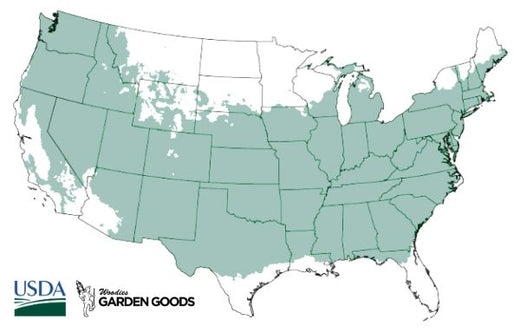
| Hardiness Zone: | 5-8 |
|---|---|
| Mature Height: | 20 to 40 Feet |
| Mature Width: | 15 to 25 Feet |
| Sunlight: | Full sun to partial shade |
| Soil | Moist, well-drained, acidic soil |
| Water | Moderate; water regularly during establishment |
| Bloom Time / Color | Early to midsummer; white flowers with golden centers |
| Ornamental Features | Camellia-like white blooms, mottled exfoliating bark, refined branching, orange-red to burgundy fall color |
| Wildlife Value | Provides seasonal habitat value and pollinator support during bloom |
| Resistance (deer/disease/drought/etc.) | Generally low-maintenance in suitable soil; prefers consistent moisture and good drainage |
| Landscape Uses | Specimen tree, ornamental lawn tree, entry accent, four-season focal point, refined garden planting |
How to Care for Japanese Stewartia Tree
Be sure to read our planting instructions to ensure a healthy and happy Japanese Stewartia Tree for years to come!
-v1775833747714.png?92x91)
How should I plant Japanese Stewartia Tree?
Plant Japanese Stewartia Tree in a location with full sun to partial shade and moist, well-drained acidic soil. Dig a hole about twice as wide as the root ball and no deeper than the root ball itself, then place the tree so the root flare sits at or slightly above the surrounding soil level. This helps the roots establish properly and reduces the chance of decline from planting too deeply. Backfill with native soil, water thoroughly, and mulch around the root zone to help conserve moisture and reduce weeds. Keep mulch a few inches away from the trunk. Because this tree is often used as a specimen, it is best planted where its bark, flowers, and branching structure can be appreciated through the seasons.
-v1775833769175.png?89x84)
How often should I water Japanese Stewartia Tree after planting?
Water Japanese Stewartia Tree deeply right after planting, then continue watering regularly during the establishment period. In most landscapes, that means a deep soaking once or twice per week depending on rainfall, temperature, and soil drainage. The goal is evenly moist soil while the tree develops a strong root system. Once established, Japanese Stewartia still performs best with consistent moisture rather than repeated drought stress. Deep watering is much better than frequent shallow watering because it encourages stronger roots and supports better long-term health and ornamental quality.
-v1775833785411.png?90x89)
When should I fertilize Japanese Stewartia Tree?
Fertilize Japanese Stewartia Tree only if needed, especially if growth appears weak or the soil is poor. If feeding is necessary, early spring is usually the best time to apply compost or a balanced fertilizer suited to acid-loving trees to support steady healthy growth. Avoid overfeeding, especially in already healthy soil. In many cases, proper siting, acidic well-drained soil, and consistent moisture matter more than aggressive fertilization. The goal is balanced growth, healthy foliage, and strong seasonal performance.

When and how should I prune Japanese Stewartia Tree?
Japanese Stewartia Tree usually needs only light pruning to remove dead, damaged, or awkwardly placed branches and to maintain a graceful framework. Late winter is generally the best time to prune, before spring growth begins and while the tree’s structure is easiest to see. Pruning should be light and selective rather than heavy. Because the natural branching habit is one of the tree’s biggest ornamental strengths, the goal is to preserve and refine the form rather than reshape it aggressively.