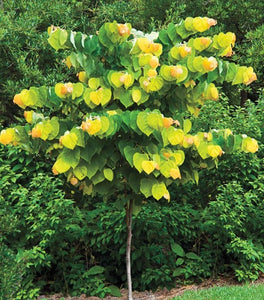
Images Depict Mature Plants
Hearts of Gold Redbud Tree
Cercis canadensis
Hearts of Gold is the redbud I love for people who want a tree that brightens the whole yard—pink spring flowers to kick off the season, then that golden canopy that glows like sunlight for months. Give it a spot with decent sun, keep the roots out of soggy soil, and water it consistently the first year, and you’ll get a small-yard showpiece that looks curated without being fussy.
This product is discontinued and new inventory will not be arriving.
Please contact Customer Service for special order requests.
Product Substitutes
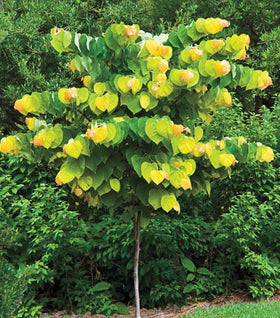

Hearts of Gold Redbud Tree For Golden Foliage, Spring Blooms, And Small-Yard Charm
Golden Heart-Shaped Leaves That Glow All Season
Hearts of Gold Redbud is the kind of tree that makes the whole landscape look brighter. After the spring bloom show, fresh heart-shaped leaves emerge in luminous gold tones that read like sunlight in the canopy. In many gardens, new growth starts with warm apricot notes, then quickly settles into a clear golden yellow before softening toward chartreuse as the season progresses. That color shift is part of the appeal—it looks dynamic and “alive,” not flat, and it pairs beautifully with deep greens, blue evergreens, and burgundy foliage plants.
Golden foliage also does a lot of design work in a small space. It can lift a shady corner, highlight an entry planting, and create contrast in mixed borders without flowers. Use Hearts of Gold as a focal point where you want the canopy to pop—near a patio, beside a walkway, or as a front-yard accent you’ll see every day. If you want a tree that looks intentional even when nothing is blooming, this is a standout.
Spring Flowers That Announce The Season Early
Before leaves fully emerge, Hearts of Gold delivers the classic redbud moment: clusters of rosy pink to lavender-pink blooms lining the branches in early spring. Because flowers appear along stems and older wood (not just at branch tips), the bloom show looks full and sculptural—like the tree is sprinkled with color. It’s one of the easiest ways to build early-season curb appeal, especially when the rest of the garden is still waking up.
That early timing matters for more than aesthetics. Spring-blooming trees help bring the landscape to life, adding movement and energy as pollinators actively search for early nectar sources. Plant Hearts of Gold where you’ll enjoy it in late winter and early spring—outside a favorite window, along your driveway approach, or near an entry that needs a welcoming “first bloom” statement. It’s a tree that makes spring feel official.
Right-Sized Canopy For Front Yards, Patios, And Layered Beds
Hearts of Gold is typically considered a small-to-medium ornamental tree, often maturing around 20–25 feet tall with a similar spread (sometimes a bit narrower depending on training and site). That scale is ideal for modern landscapes: big enough to feel like a real tree and provide light shade, but not so large as to overwhelm a smaller lot. It also layers beautifully in native-inspired designs as an understory tree beneath taller canopies, or as a standalone specimen in an open lawn.
Because the canopy is manageable, it’s easier to place correctly near patios, beds, and walkways. You can create a “garden ceiling” over perennials without plunging the space into heavy shade. And the golden foliage adds brightness under and around the tree, which is a rare combination—shade plus a canopy that visually lightens the scene. If you’re trying to make a yard feel designed, this tree gives you structure, color, and scale in one move.
Simple Care That Rewards Good Drainage And Smart Watering
Redbuds are generally easy-care when you give them two things: well-drained soil and consistent moisture while they establish. Hearts of Gold prefers soil that doesn’t stay wet after rain, especially in heavier clay. A simple win is planting slightly high, creating a broad mulch ring to moderate moisture swings, and watering deeply rather than frequently. Deep watering encourages roots to grow outward, improving resilience and reducing stress during summer heat.
Pruning is minimal. Most of the time, you’ll only remove dead, damaged, or rubbing branches and make small structure corrections while the tree is young. Avoid heavy pruning that fights the natural form; the goal is a clean framework that supports a balanced canopy. With the right start—sun, drainage, mulch, and steady first-year watering—Hearts of Gold becomes a long-term landscape asset that looks like you “did everything right,” even though the care is refreshingly simple.
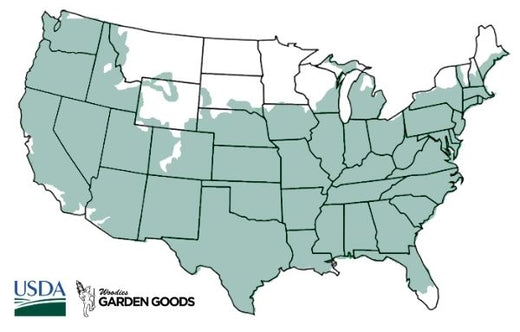
| Hardiness Zone: | 5-9 |
|---|---|
| Mature Height: | 20 to 25 feet |
| Mature Width: | 15 to 25 feet |
| Sunlight: | Full sun to part shade |
| Bloom Time / Color | Early spring; rosy pink to lavender-pink |
| Soil Condition: | Well-drained soil; adaptable |
| Water Requirements: | Moderate; water well until established |
| Wildlife Value | Early blooms support pollinators |
| Resistance (deer/disease/drought/etc.) | Not deer resistant; moderate drought tolerance once established |
| Landscape Uses | Specimen tree, front yard focal point, understory tree, pollinator-friendly gardens, patio shade |
How to Care for Hearts of Gold Redbud Tree
Be sure to read our planting instructions to ensure a healthy and happy Hearts of Gold Redbud Tree for years to come!

How should I plant Hearts of Gold Redbud Tree?
Choose a site with full sun to part shade and soil that drains well after rain. Dig a hole 2–3 times wider than the root ball and no deeper than the root ball height, then set the tree so the root flare sits at or slightly above the surrounding grade. Backfill with native soil, firm gently to remove air pockets, and water deeply to settle the soil around the roots. Create a wide mulch ring (2–3 inches deep) over the root zone to stabilize moisture and protect roots, keeping mulch a few inches away from the trunk. If your soil is heavy, planting slightly high and widening the planting area outward can help excess water move away from the trunk instead of pooling at the roots.

How often should I water Hearts of Gold Redbud Tree after planting?
Water thoroughly right after planting, then keep the root zone evenly moist during the first growing season. A practical baseline is 1–2 deep waterings per week, adjusted for rainfall and temperature. Sandy soils dry faster and may need more frequent watering; clay holds moisture longer and needs slower, less frequent watering so it doesn’t stay soggy. After the tree begins to establish, transition to deep watering during dry spells rather than frequent shallow watering. Deep, slow soaking encourages roots to grow outward and improves long-term drought tolerance, helping the tree handle summer heat with less stress.

When should I fertilize Hearts of Gold Redbud Tree?
Fertilize in early spring as growth begins, but only if the tree needs it (slow growth or pale foliage can be signs). A balanced, slow-release tree-and-shrub fertilizer applied at label rates around the drip line is usually plenty, and it should be watered in well. Avoid placing fertilizer right against the trunk. If your tree is growing steadily, you can often skip fertilizer and focus on soil health: a refreshed mulch ring and occasional compost top-dressing provide gentle nutrition over time. Avoid late-season fertilizing, which can push tender new growth at the wrong time.

When and how should I prune Hearts of Gold Redbud Tree?
Prune in late winter before bud break to remove dead, damaged, or crossing branches and to guide the structure of young trees. Focus on building a clean framework and good branch spacing rather than heavy reshaping. Targeted pruning keeps the canopy balanced and reduces the need for larger cuts later. You can also do light corrective pruning right after flowering if needed, but avoid major pruning in extreme heat or drought stress. The best redbuds look natural—cleaned up, not forced—so keep pruning minimal and purposeful.