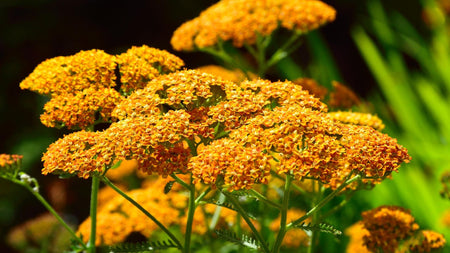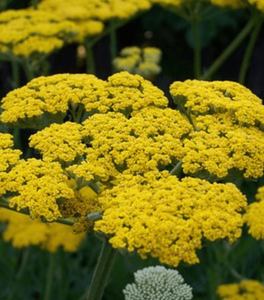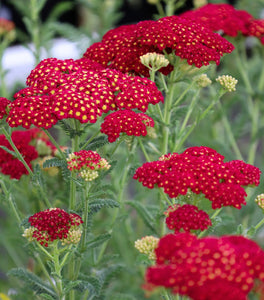
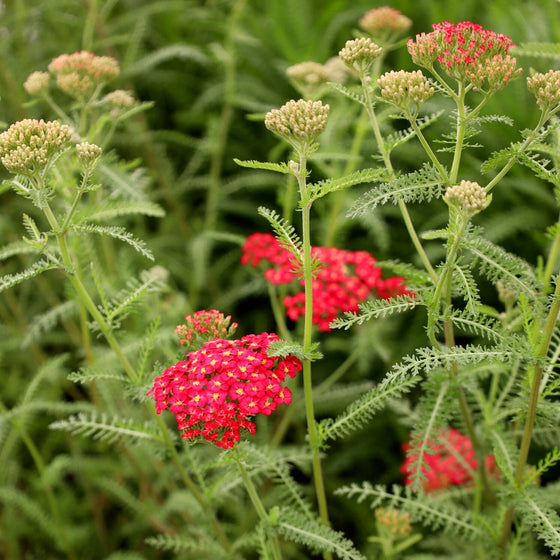


Images Depict Mature Plants
Paprika Yarrow
Achillea millefolium Paprika
Paprika Yarrow is one of those perennials that makes sunny gardens easier and more colorful at the same time. The flower color has more warmth and movement than a lot of other yarrows, and the plant is tough enough to handle the hot, lean spots where fussier perennials tend to fall apart.

15% OFF FOR MOTHER'S DAY
Use Code MOMDAY15 At Checkout
📦 Free shipping on orders over $99.
Delay shipping by leaving us a message at Checkout.
Share:

Paprika-red blooms and silver foliage for sunny, low-maintenance gardens
A bright yarrow that keeps changing as it blooms.
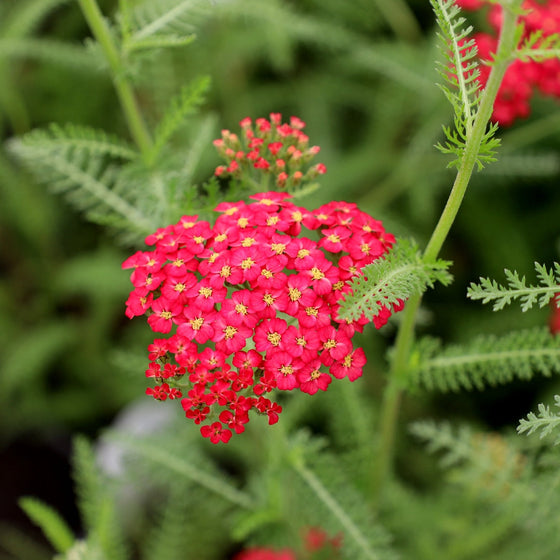
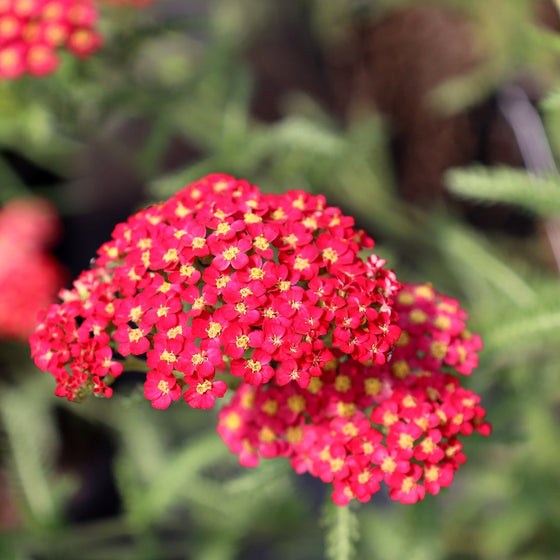
Paprika Yarrow is grown for its vivid flower color and easy performance in hot, sunny gardens. The blooms open in rich paprika-red shades with yellow centers, then soften through salmon and rose tones as they mature. That color shift gives the plant more depth and movement than many perennials that bloom in only one flat shade.
Silver-toned foliage makes the flowers stand out even more.
Before the flowers even open, Paprika Yarrow brings value with its ferny, silver to gray-green foliage. That soft-textured mound provides a cool-toned base layer that contrasts beautifully with the warm bloom color. It is one of the reasons this perennial looks good even outside its peak flowering window.
A strong fit for hot, bright, well-drained sites.
Paprika Yarrow performs best in full sun and well-drained soil, and it is especially well-suited to dry, lean, or rocky garden conditions. Once established, it is notably drought-tolerant and is often chosen for gardens where reliable color is needed without frequent watering. Rich soil is not necessary and can actually make the plant looser than gardeners want.
A natural choice for borders, pollinator gardens, and cut flowers.
This perennial works beautifully in sunny borders, cottage gardens, pollinator beds, xeric-style plantings, and cutting gardens. The flat flower heads attract bees, butterflies, and other beneficial insects, and the stems are useful in arrangements both fresh and dried. When planted in groups, Paprika Yarrow creates a bright repeated rhythm that helps tie a planting together.
Easy care helps it stay compact and floriferous.
Paprika Yarrow is very low-maintenance once established. Deadheading can help extend the display, and dividing every few years helps maintain vigor and a tidier clump. For gardeners who want summer color without heavy feeding or constant watering, it is one of the more dependable options.
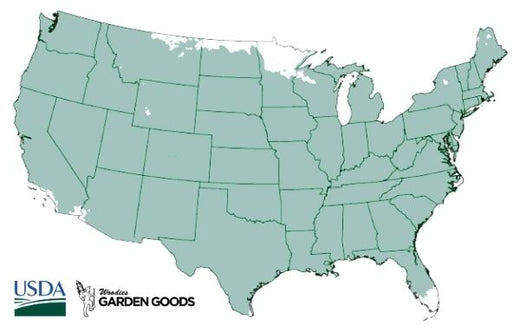
| Hardiness Zone: | 4-9 |
|---|---|
| Mature Height: | 18 to 24 inches |
| Mature Width: | 1.5 to 2 feet |
| Sunlight: | Full Sun |
| Soil | Well-drained soil; thrives in average to poor soils |
| Water | Water well until established; drought tolerant once established |
| Bloom Time / Color | Summer; paprika-red flowers aging to salmon-pink tones |
| Ornamental Features | Warm red flower clusters, silver foliage, long bloom season |
| Wildlife Value | Attracts bees, butterflies, hoverflies, and other pollinators |
| Resistance (deer/disease/drought/etc.) | Deer resistant, drought tolerant, heat tolerant once established |
| Landscape Uses | Sunny borders, pollinator gardens, cottage gardens, cut flower gardens, xeric plantings |
How to Care for Paprika Yarrow
Be sure to read our planting instructions to ensure a healthy and happy Paprika Yarrow for years to come!
-v1777318945997.png?92x91)
How should I plant Paprika Yarrow?
Plant Paprika Yarrow in full sun in well-drained soil. Dig a hole about twice as wide as the root ball and no deeper than the plant is growing in its container, then set it level with the surrounding soil and backfill carefully. Water deeply after planting and mulch lightly if needed, but avoid burying the crown. In heavier soils, improving drainage is often more important than adding fertility, since this perennial performs best when the roots stay on the drier side.
-v1777318974239.png?89x84)
How often should I water Paprika Yarrow after planting?
Water Paprika Yarrow regularly through the first growing season while it establishes. Deep watering during dry spells is better than frequent shallow watering and helps the roots settle in more effectively. Once established, Paprika Yarrow becomes much more drought tolerant and usually needs only occasional supplemental watering during extended dry periods. Overwatering can reduce vigor and make the plant softer than gardeners want.
-v1777318992803.png?90x89)
When should I fertilize Paprika Yarrow?
Paprika Yarrow usually needs very little fertilizer. In many landscapes, no additional feeding is necessary beyond decent soil preparation at planting time. If your soil is extremely poor, a very light feeding in spring is enough. Avoid heavy fertilization, since richer conditions can encourage weaker stems and less attractive growth.

When and how should I prune Paprika Yarrow?
Deadhead spent flowers during the season to encourage continued bloom and keep the plant looking fresh. Once the main flush is finished, you can trim stems back to the basal foliage to encourage tidier regrowth. In late fall or early spring, clean away old stems as needed. Dividing the clumps every few years also helps keep Paprika Yarrow vigorous, compact, and productive.