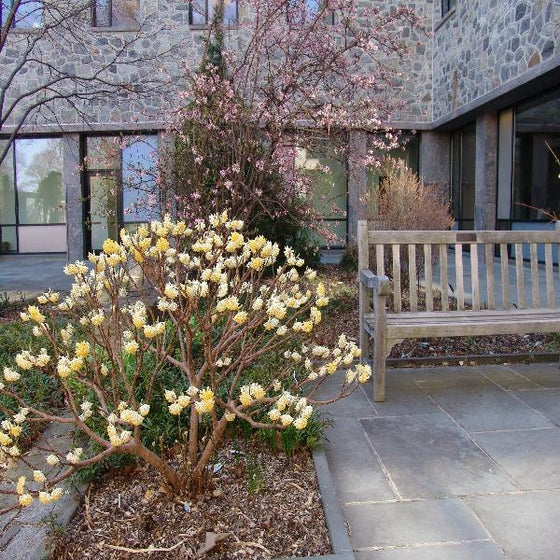


Images Depict Mature Plants
Edgeworthia chrysantha
Edgeworthia chrysantha
Edgeworthia chrysantha is one of those shrubs that can make a winter garden feel downright magical. The fragrant yellow flowers arrive when the landscape is usually at its quietest, the bare branching structure is beautiful even before bloom, and the whole plant has a refined, almost sculptural presence that works especially well near entries and protected shade gardens. For homeowners who want a winter-blooming shrub that feels unusual, elegant, and genuinely memorable, paperbush is a really special choice.

15% OFF SITEWIDE, USE CODE 'ENDOFSUMMER15'
📦 Free shipping on orders over $99.
Delay shipping by leaving us a message at Checkout.
Share:

Fragrant Winter Yellow Blooms and Architectural Branching for Shade Gardens and Seasonal Interest
A Winter-Blooming Shrub That Brings the Garden Back to Life
Edgeworthia chrysantha is one of those rare shrubs that can completely transform the winter garden. Long before most spring bloomers are even thinking about waking up, paperbush begins showing rounded clusters of silky flower buds at the ends of its bare branches. As those buds open, they reveal fragrant yellow tubular flowers that hang like little lanterns, bringing real life back to the landscape in late winter and early spring. This is the kind of plant that makes homeowners stop in their tracks, especially because it blooms when so little else is happening.
Its branching habit is another major part of the appeal. Even without leaves, Edgeworthia has a naturally sculptural look, with smooth tan stems that branch in a clean, rounded framework. That gives the shrub strong presence in winter before the flowers even open. In the growing season, the plant fills out with lush, blue-green to dark green deciduous foliage, but it is that bare-branch flowering habit that makes it feel so special in a landscape.
Because it blooms on bare wood, the flower display feels even more dramatic. The yellow blooms are not buried in foliage or hidden in the center of the plant. They are suspended at the tips of every branch, where they can be seen and smelled from a surprising distance. That makes paperbush especially rewarding near paths, entries, porches, and windows where homeowners can appreciate both the flowers and the fragrance in winter.
For homeowners looking for a shrub that can add excitement to the garden during the coldest months of the year, Edgeworthia chrysantha is a standout choice. It brings fragrance, bloom, and strong winter structure at exactly the moment the landscape needs it most.
Fragrance and Bloom Timing Make Paperbush Unforgettable
One of the biggest reasons to plant Edgeworthia chrysantha is the fragrance. The yellow flower clusters are widely described as intensely fragrant, often noticeable before the shrub is even seen up close. In a winter landscape where scent is usually almost absent, that kind of perfume makes an enormous difference. It turns the plant from something visually interesting into something immersive and memorable.
The bloom timing adds even more value. Paperbush typically flowers in late winter into early spring, though in milder regions, some extension sources note bloom beginning as early as December and continuing through winter. That timing makes it especially important in landscapes designed for four-season interest, because it helps bridge the gap between the dormant season and the first wave of spring-flowering shrubs.
The flower clusters themselves are also highly distinctive. The buds are fuzzy and silvery before opening, then expand into clusters of small tubular flowers with yellow interiors. That progression gives the plant ornamental value before, during, and just after bloom. Homeowners are not getting only a brief flash of color. They are getting a whole seasonal sequence, from bud to fragrance to flower display.
For gardeners who want a shrub that brings more than just one dimension of beauty, paperbush is a very satisfying choice. It offers bloom, scent, texture, and timing in a way that few shrubs can match.
A Strong Fit for Woodland Borders, Specimen Planting, and Protected Sites
Edgeworthia chrysantha works best in landscapes where a shrub can be appreciated up close and given enough room to develop its naturally rounded shape. It is especially effective as a specimen near an entry, in a protected foundation bed, in a woodland edge planting, or as a focal point in a mixed shade border. Because it has such a strong winter personality, it deserves a spot where homeowners will actually see and enjoy it during the colder months.
Its mature size is important to understand before planting. Missouri Botanical Garden lists Edgeworthia chrysantha at about 4 to 6 feet tall and as wide, while some experienced regional gardeners report older plants in favorable part-shade settings eventually getting somewhat larger. For most homeowners, it is safest to treat paperbush as a medium deciduous shrub that needs real elbow room rather than a tight little accent plant.
This shrub is especially good in part- and dappled-shade gardens, where the winter flowers can glow against darker backgrounds and the leaves are less likely to stress in harsh afternoon heat. It also looks beautiful with ferns, hellebores, camellias, Japanese maples, and other woodland or transitional shrubs that benefit from a more sculptural winter companion.
For homeowners who want an unusual specimen with real design value, Edgeworthia chrysantha is an excellent option. It brings the kind of winter drama and four-season character that can anchor an entire planting plan.
Easy-Care Performance with Better Results in Shelter and Drainage
Edgeworthia chrysantha performs best in part shade to filtered sun and in rich, well-drained soil with consistent moisture. It appreciates a site protected from harsh winter winds, especially in colder parts of its range, and it generally performs best when the root zone stays evenly moist but never waterlogged. Good drainage matters as much as moisture, because paperbush does not want to sit in soggy soil.
Once established, the shrub is generally low-maintenance, but it is not a plant that thrives in rough conditions. It rewards good siting more than constant intervention. A protected location with some winter shelter, organic soil, and room to spread will usually give the best performance. Several sources also note that pruning needs are minimal, since the natural branching pattern is one of the plant’s greatest ornamental assets.
This is also a shrub where restraint pays off. Young plants do not usually need much shaping, and older shrubs are best pruned only lightly, mainly to remove suckers or damaged wood. Heavy pruning can reduce the plant’s elegant framework, which is such a big part of its winter value.
For gardeners seeking a fragrant winter-blooming shrub with a low-maintenance care routine, Edgeworthia chrysantha is a rewarding choice. Give it shelter, organic soil, and consistent moisture, and it can become one of the most memorable plants in the garden.
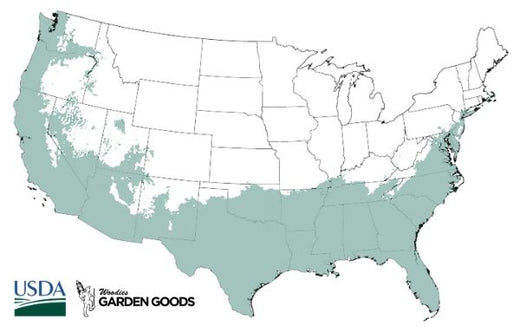
| Hardiness Zone: | 7-10 |
|---|---|
| Mature Height: | 4 to 6 Feet |
| Mature Width: | 4 to 6 Feet |
| Sunlight: | Part shade to filtered sun |
| Bloom Time / Color: | Late winter to early spring; fragrant yellow flowers |
| Soil Condition: | Rich, moist, well-drained soil |
| Water Requirements: | Medium; keep evenly moist, especially during establishment |
| Wildlife Value: | Pollinator support during bloom |
| Resistance (deer/disease/drought/etc.): | Low-maintenance, best in protected sites, dislikes soggy soil |
| Landscape Uses: | Specimen shrub, woodland border, protected foundation planting, winter-interest garden, entry garden |
How to Care for Edgeworthia chrysantha
Before you buy your Edgeworthia chrysantha Paper Bush, read these recommended care instructions to keep it healthy and thriving.
-v1774109059561.png?92x91)
How should I plant Edgeworthia chrysantha?How do I prune Edgeworthia?
Plant Edgeworthia chrysantha in part shade or filtered sun in rich, well-drained soil with consistent moisture. Dig a hole about twice as wide as the root ball and no deeper than the root ball itself, then set the shrub so the top of the root flare sits level with or slightly above the surrounding soil. A protected site near an entry, woodland edge, or sheltered foundation bed is often ideal because this plant performs best where harsh wind is reduced. Backfill with native soil, water deeply, and apply mulch to help moderate moisture and soil temperature. Give the plant enough room to mature into its natural rounded form, because paperbush is best appreciated when it is allowed to keep its elegant branching structure.
-v1774109087442.png?89x84)
How often should I water Edgeworthia chrysantha after planting?
Water Edgeworthia chrysantha deeply right after planting, then keep the soil evenly moist during the establishment period. In the first growing season, that usually means watering during dry spells so the roots can settle in and support healthy foliage and winter bloom development. Once established, continue watering during extended dry weather so the soil does not dry out severely. This shrub likes consistent moisture, but it also needs good drainage, so the goal is steady hydration rather than wet, stagnant soil.
-v1774109124785.png?90x89)
When should I fertilize Edgeworthia chrysantha?
Edgeworthia chrysantha usually needs only moderate feeding if it is planted in organic, fertile soil. A light topdressing of compost in spring is often enough to support healthy growth and flowering. Avoid heavy fertilizing, because good soil structure, moisture, and protection matter more than aggressive feeding. In most gardens, paperbush responds best to steady soil health rather than frequent fertilizer applications.

When and how should I prune Edgeworthia chrysantha?
Edgeworthia chrysantha needs very little pruning. Most young shrubs require only removal of dead, damaged, or awkward growth, and older shrubs are usually best left largely alone so they can maintain their natural architectural branching. If pruning is needed, keep it light and selective rather than aggressive. The goal is to preserve the shrub’s shape and winter framework, not force it into a tighter outline, since that sculptural form is one of its biggest ornamental strengths.