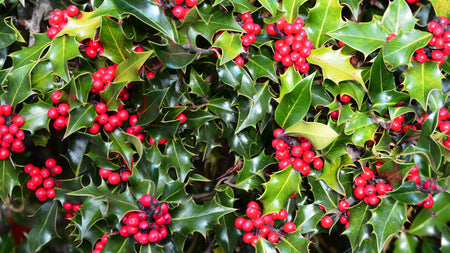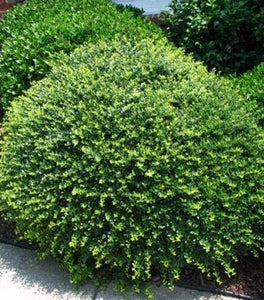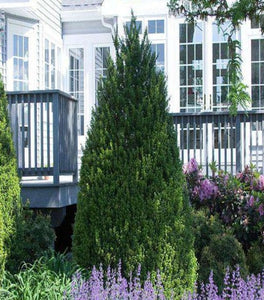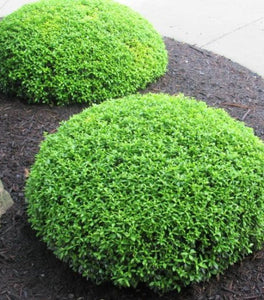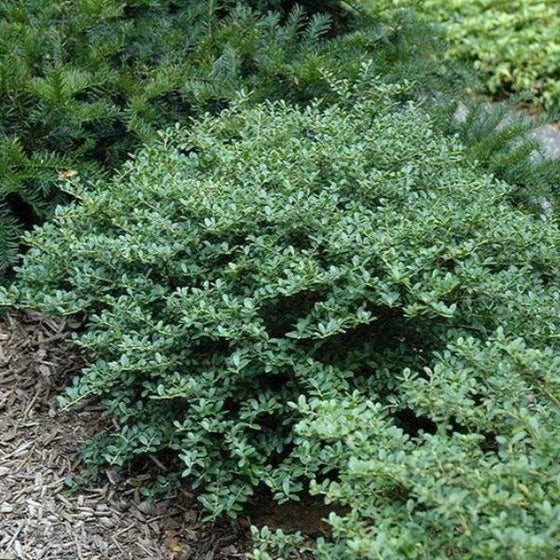
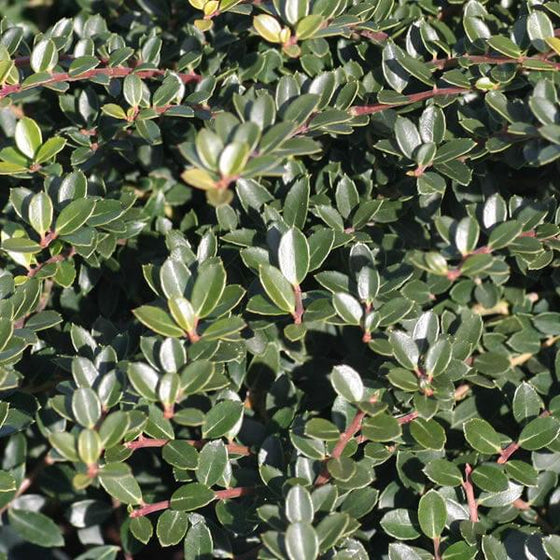
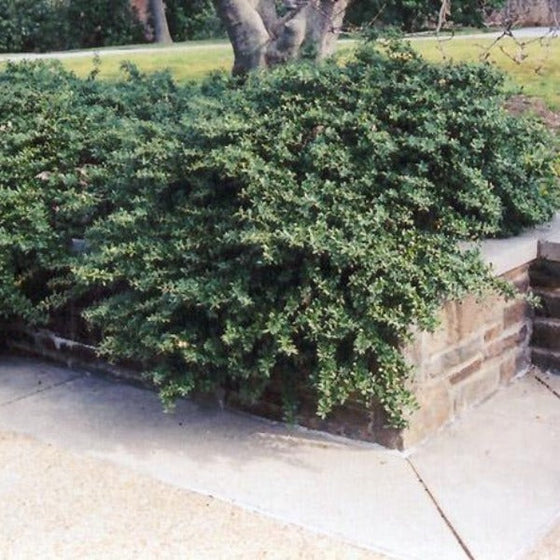
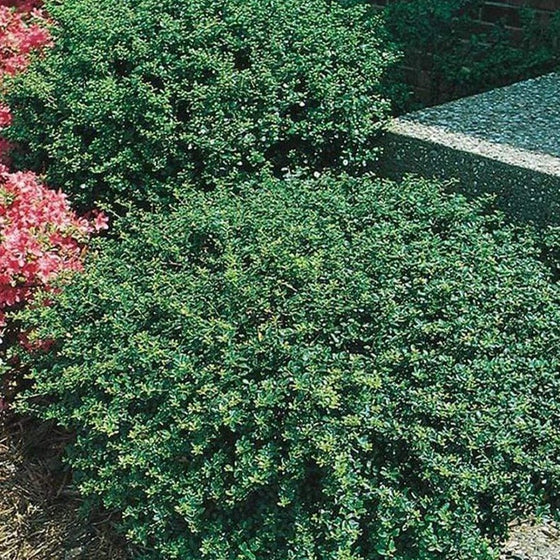


Images Depict Mature Plants
Helleri Holly
Ilex crenata 'Helleri'
Helleri Holly is one of those evergreen workhorses that fits into a lot of landscapes without making a fuss. It stays low, keeps a good shape, and gives you that dense holly texture all year, which makes it a really useful choice for borders, low hedges, and foundation beds that need dependable structure.

Save Up to 25% On Your Order! Limited Time Only!
Discount Applied Automatically At Checkout
📦 Free shipping on orders over $99.
Delay shipping by leaving us a message at Checkout.
Share:

Dense Evergreen Texture for Borders, Foundations, and Low Hedges
A compact holly that brings structure without taking over
Helleri Holly is an excellent choice for homeowners who want an evergreen structure in a manageable size that's easy to place. This dwarf Japanese holly stays low and mounded, making it a strong fit for landscape spots where a larger shrub would quickly become too bulky. It gives beds and borders a clean, finished look while still feeling soft enough to blend naturally with other shrubs and perennials.
Glossy evergreen foliage keeps the landscape looking polished
The small, rich green leaves create a dense surface that looks neat year-round. Because Helleri Holly stays evergreen, it continues to provide shape, color, and visual weight through winter when deciduous plants drop their leaves. That makes it especially useful in foundation beds, border edges, and mixed evergreen plantings where homeowners want lasting structure, not just seasonal interest.
Naturally mounded growth reduces maintenance
One of the best features of Helleri Holly is its natural form. It grows in a dense, rounded mound that usually looks tidy without much intervention, which makes it a good option for homeowners who want a polished planting without constant pruning. It also responds well to shaping when needed, so it can be kept a little tighter for a more formal look or left to develop naturally for a softer outline.
Very useful for borders, low hedges, and foundation plantings
Helleri Holly is especially effective at the front of borders, in low evergreen hedges, and in foundation beds where a compact shrub helps define the planting without blocking windows or overwhelming nearby plants. It can be repeated for rhythm in a landscape design, grouped in mass plantings for broader evergreen coverage, or used as a dependable filler shrub between larger accents and flowering plants.
Low maintenance and durable, with careful berry language
This Japanese holly performs best in full sun to partial shade and in slightly acidic, well-drained soil. Once established, it is relatively low-maintenance and easy to care for, though good drainage is important because overly wet soil can cause problems. Deer resistance is commonly cited for Helleri Holly, but it is still best described as relative rather than absolute in high-pressure areas. Since it is a female cultivar, black berries may appear, but flowering and fruiting are often light enough that this plant should be purchased primarily for its dense evergreen habit and not for dependable berry display.
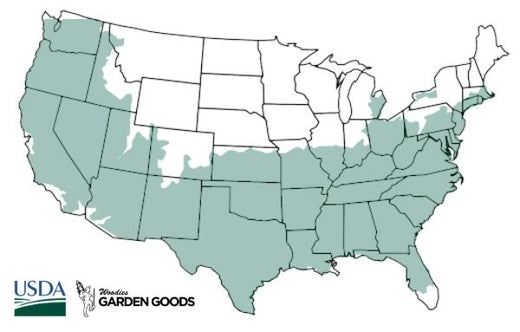
| Hardiness Zone: | 6-9 |
|---|---|
| Mature Height: | 2 to 4 Feet |
| Mature width: | 3 to 5 Feet |
| Sunlight: | Full sun to partial shade |
| Soil: | Slightly acidic, well-drained soil |
| Water: | Moderate during establishment; avoid soggy soil |
| Bloom Time / Color: | Spring; small white flowers |
| Ornamental Features: | Dense mounded habit, glossy small green leaves, compact low-growing form |
| Wildlife Value: | Dense evergreen cover; some plants may rarely produce black berries |
| Resistance (deer/disease/drought/etc.): | Relatively deer resistant, easy to prune, low maintenance |
| Landscape Uses: | Borders, low hedges, foundation beds, mass plantings, evergreen edging, small-space landscapes |
How to Care for Helleri Holly
Before you buy Helleri Holly, make sure to read about the recommended care instructions to keep this plant healthy and thriving.

How should I plant Helleri Holly?
Plant Helleri Holly in full sun to partial shade in well-drained soil, ideally on the slightly acidic side for best long-term growth. Dig a hole about twice as wide as the root ball and no deeper than the root ball itself, then set the shrub so the top of the root ball sits level with or slightly above the surrounding soil. Backfill with the native soil, water deeply, and add mulch around the base to help conserve moisture and reduce weed competition. If you are planting Helleri Holly as a low hedge or border shrub, give each plant enough room to fill into its natural rounded form without becoming crowded too quickly.

How often should I water Helleri Holly after planting?
Water Helleri Holly deeply right after planting, then keep the soil evenly moist during the first growing season while the roots establish. In most home landscapes, that means watering about once or twice per week depending on rainfall, temperature, and drainage. Once established, this evergreen becomes easier to manage, but it still performs best when the soil does not stay dry for long stretches or wet for extended periods. Consistent moisture with good drainage helps keep the foliage healthy and the growth habit dense.

When should I fertilize Helleri Holly?
Fertilize Helleri Holly lightly in early spring with a balanced slow-release fertilizer for evergreens or acid-loving shrubs. A modest spring feeding supports healthy green foliage and steady growth without pushing soft, overly lush growth. In many landscapes, this shrub does not need aggressive fertilizing. Good drainage, proper pH, and regular watering during establishment usually matter more than heavy feeding when it comes to long-term performance.

When and how should I prune Helleri Holly?
Prune Helleri Holly in late winter or early spring if shaping is needed. Start by removing any dead, damaged, or stray branches, then make light cuts to preserve the shrub’s dense rounded habit. This plant responds well to pruning, but heavy shearing is usually unnecessary. Most homeowners find that occasional cleanup and light shaping are enough to keep Helleri Holly looking neat and balanced.