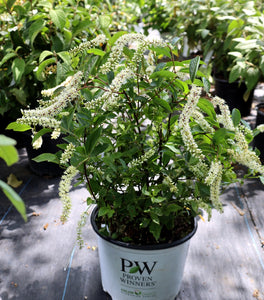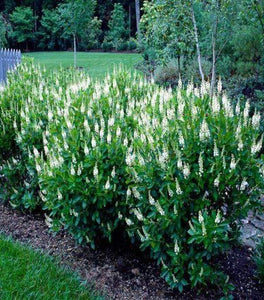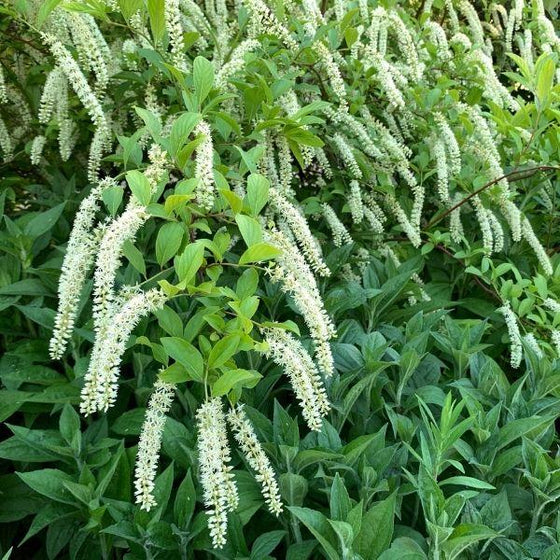
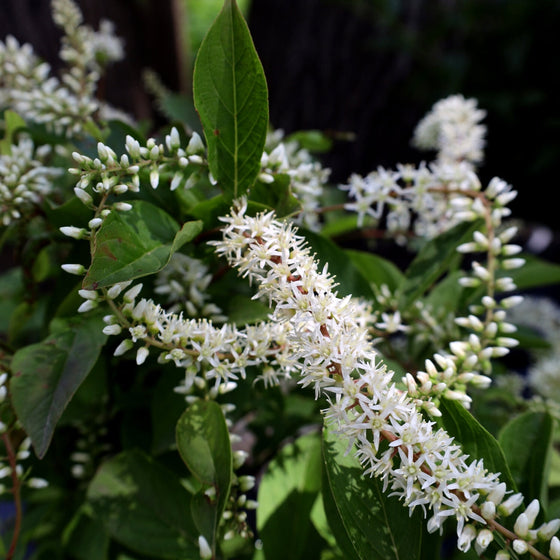
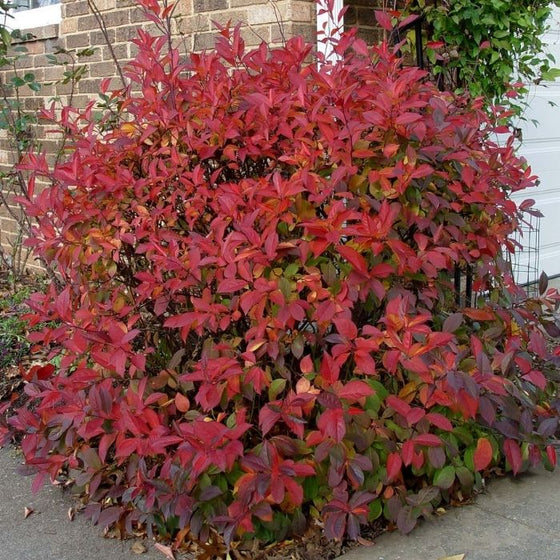
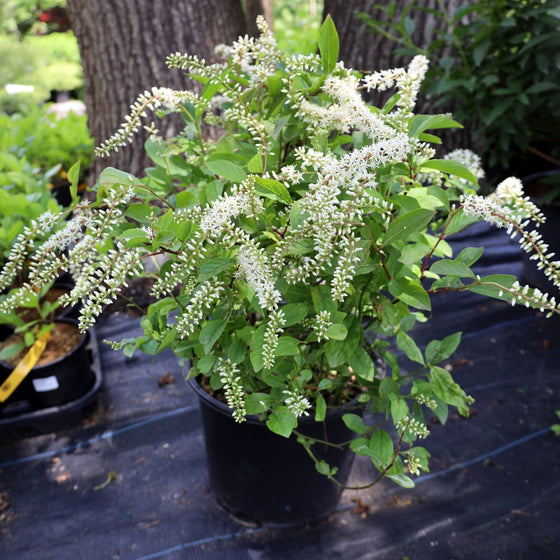


Images Depict Mature Plants
Henry’s Garnet Sweetspire
Itea virginica 'Henry's Garnet'
Henry’s Garnet is one of those shrubs I really like because it solves a lot of landscape problems without feeling boring. It blooms, it colors up beautifully in fall, and it handles conditions that can be frustrating for other shrubs. For homeowners who want a native plant that is easy to use and gives something back in more than one season, this is a really smart choice.

20% Off Sitewide Sale!
Use Code 'ENDOFSEASON20' At Checkout
📦 Free shipping on orders over $99.
Delay shipping by leaving us a message at Checkout.
Share:

Fragrant White Blooms and Brilliant Red Fall Color
A Native Shrub With Season-Long Appeal
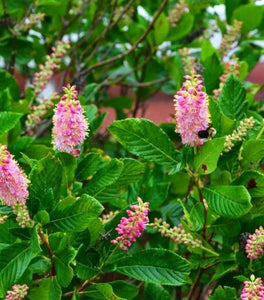
Henry’s Garnet Sweetspire is one of those shrubs that earns its place in the landscape over and over again. In late spring to early summer, it produces graceful, bottlebrush-like spikes of fragrant white flowers that brighten beds and borders with a soft, natural look. Later in the year, the foliage turns rich shades of garnet red, burgundy, and deep crimson, giving the plant a second major season of interest.
That combination of bloom and fall color is one of the biggest reasons homeowners choose it. Instead of peaking for only a short stretch, Henry’s Garnet contributes beauty across multiple seasons and helps a planting feel more complete from spring through fall.
Fragrant White Flowers That Light Up the Garden
The flower display on Henry’s Garnet Sweetspire has a relaxed, elegant look that works especially well in naturalistic and layered landscapes. The white flower spikes arch slightly and stand out beautifully against the deep green foliage, creating a clean and refreshing effect in the garden. The flowers also bring a light fragrance that adds another layer of appeal near walkways, patios, and entry gardens.
This bloom style is especially useful for homeowners who want something softer than a bold flowering shrub but still want clear seasonal interest. It has enough presence to stand out, yet it blends beautifully with other shrubs, perennials, and native plantings.
Outstanding Fall Color for Shade or Sun
One of the strongest reasons to plant Henry’s Garnet is its fall performance. As the season shifts, the foliage develops rich red to burgundy tones that can be especially striking in mass plantings or mixed borders. That kind of dependable fall color makes it a smart choice for homeowners who want their landscape to stay visually active later in the year.
Its ability to provide strong color in part shade is another big advantage. Many shrubs lose some visual energy in lower-light settings, but Henry’s Garnet still brings ornamental value where brighter bloomers may struggle to perform as well.
A Versatile Native Shrub for Difficult Spots
Henry’s Garnet Sweetspire is especially useful because it tolerates a wide range of landscape conditions. It performs well in average garden soil, but it is also a strong choice for moist areas, low spots, woodland edges, and rain-friendly planting zones where other shrubs may be less reliable. That adaptability makes it a very practical plant for real residential landscapes.
It can be used in foundation beds, native borders, mixed shrub groupings, slope plantings, and naturalized areas. It also looks especially strong when planted in drifts or repeated in groups, where the flowers and fall color can create more visual impact.
Easy-Care Native Beauty With Long-Term Value
Henry’s Garnet Sweetspire is a low-maintenance shrub that fits beautifully into landscapes designed for beauty and function. Once established, it is dependable, adaptable, and easy to work into both formal and more relaxed garden styles. It does not need constant shaping to stay attractive, and its natural form is part of what makes it so useful.
For homeowners seeking a native shrub with fragrant white flowers, rich red fall color, and flexible landscape performance, Henry’s Garnet Sweetspire is one of the best options.
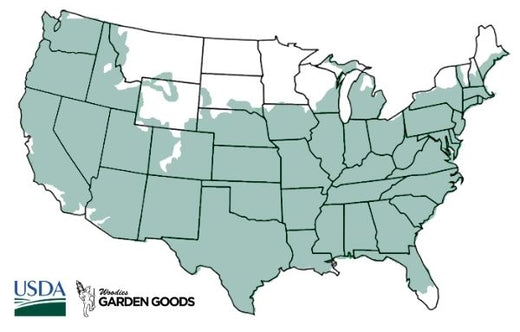
| Hardiness Zone: | 5-9 |
|---|---|
| Mature Height: | 3 to 4 feet |
| Mature width: | 3 to 4 feet |
| Sunlight: | Full Sun to Part Shade |
| Bloom Time / Color: | Late spring to early summer; fragrant white flowers |
| Soil Condition: | Average to moist, well-drained, slightly acidic soil |
| Water Requirements: | Regular moisture during establishment; average to moist soil preferred |
| Ornamental Features: | Bottlebrush flower spikes, arching rounded habit, rich red to burgundy fall color |
| Wildlife Value: | Pollinator-friendly native shrub |
| Resistance (deer/disease/drought/etc.): | Deer resistant, adaptable, and low-maintenance |
| Landscape Uses: | Foundation planting, native border, woodland edge, rain garden edge, mass planting, mixed shrub bed |
How to Care for Henry’s Garnet Sweetspire
Be sure to read our planting instructions to ensure a healthy and happy plant for years to come!

How should I plant Henry’s Garnet Sweetspire?
Plant Henry’s Garnet Sweetspire in full sun to part shade in soil that stays evenly moist during establishment. Dig a hole two to three times as wide as the root ball but no deeper than the root ball itself, and set the shrub so the top of the root ball sits level with or slightly above the surrounding soil. Backfill gently and water thoroughly after planting. This shrub works especially well in foundation beds, mixed borders, woodland-edge plantings, and areas that hold a little more moisture than average. It also looks best when given enough room to develop its natural spreading, arching habit rather than being squeezed into a tight space.

How often should I water Henry’s Garnet Sweetspire after planting?
Water deeply right after planting and keep the soil evenly moist during the first growing season. Deep watering is more helpful than frequent shallow watering because it encourages stronger root development and helps the shrub establish more successfully. Once established, Henry’s Garnet is fairly adaptable, but it performs best when the soil does not stay overly dry for long stretches. It is especially useful in sites with more moisture, so consistent watering during dry periods helps preserve the best foliage quality and flowering.

When should I fertilize Henry’s Garnet Sweetspire?
Henry’s Garnet Sweetspire usually does not need heavy feeding. A light application of balanced slow-release fertilizer in early spring is usually enough if the shrub appears to need support. In many landscapes, good soil and proper moisture are more important than frequent fertilization. Too much fertilizer can push soft growth at the expense of the natural dense, graceful habit that makes this shrub so useful. A moderate approach is generally best for a plant grown mainly for flowers, foliage, and seasonal color.

When and how should I prune Henry’s Garnet Sweetspire?
Henry’s Garnet Sweetspire usually needs only light pruning. If shaping is needed, prune soon after flowering so you do not remove the next season’s bloom potential. Remove any dead, damaged, or awkward stems and preserve the plant’s natural arching form. It can also be thinned lightly to keep the shrub looking fresh and balanced. In most cases, it does not need aggressive pruning, and a lighter touch creates the most natural and attractive result.