

Images Depict Mature Plants
Pachysandra (Japanese Spurge)
Pachysandra Terminalis
Pachysandra is one of my favorite answers for those shady spots that never quite feel finished. When a homeowner has ground under trees, along foundations, or in deep shade where grass struggles and weeds keep creeping in, this plant steps in and solves a real problem. I like it because it gives you evergreen coverage, a cleaner-looking bed, and a dependable ground layer that makes the whole planting feel more settled and intentional.

20% Off Sitewide Sale!
Use Code 'ENDOFSEASON20' At Checkout
📦 Free shipping on orders over $99.
Delay shipping by leaving us a message at Checkout.
Share:



Evergreen Shade Coverage for Problem Areas and Understory Beds
Dense evergreen coverage for shady spaces
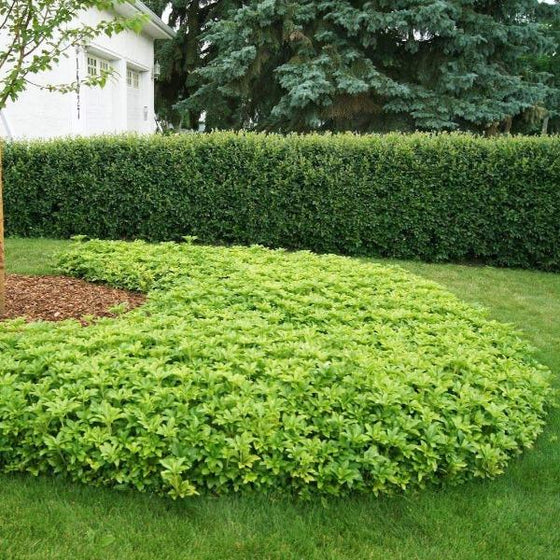
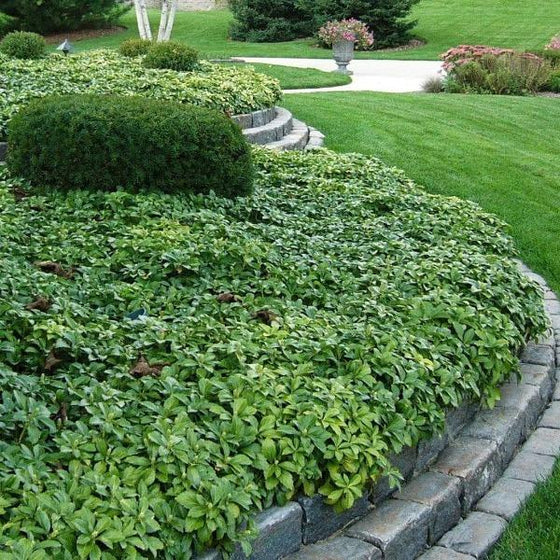
Pachysandra is one of the most dependable evergreen ground covers for shaded landscapes. It spreads by underground runners to form a dense carpet of glossy dark green foliage, which makes it especially useful where turf struggles and bare soil becomes a maintenance issue. Under trees, along north-facing foundations, and beneath larger shrubs, it creates a cleaner, more finished look while helping reduce open patches that invite weeds.
Because it stays low and uniform, Pachysandra serves as a living mulch, visually tying shaded planting areas together. Instead of asking a difficult site to behave like a sunny lawn, it turns those lower-light spaces into intentional garden zones. That is a big part of its appeal for homeowners who want shade to look lush and controlled rather than sparse and patchy.
Low-growing habit with practical weed-suppressing value
Pachysandra typically grows 6 to 12 inches tall, keeping it low enough to serve as a true ground cover while still looking substantial once it fills in. The foliage forms a layered mat that helps shade the soil surface, slowing weed germination and reducing the need for hand weeding in established beds. That makes it especially valuable in large shade plantings where maintenance time adds up quickly.
Its spreading nature is a major advantage when the goal is coverage, not individual specimen plants. Rather than planting dozens of unrelated shade perennials to patch together a bed, gardeners can use Pachysandra to create a unified evergreen base layer. It works beautifully as the connective tissue beneath flowering shrubs, woodland perennials, and small ornamental trees, giving the whole planting a calmer, more cohesive look.
A smart solution for dry shade, slopes, and under trees
Pachysandra performs best in part shade to full shade and prefers rich, medium-moisture, well-drained soil, but it is widely valued because it can also handle tougher sites once established. It is commonly used in dry shade, on gentle slopes, and beneath mature trees where root competition makes many other plants struggle. In those situations, it offers a practical way to stabilize the bed's appearance and provide year-round green coverage.
That adaptability is part of what has made Japanese Spurge such a longstanding landscape staple. It is not planted for flashy bloom, but for dependable performance where gardeners genuinely need help. If a bed gets limited direct sun, dries out faster than expected, or needs erosion control on a shaded bank, Pachysandra often solves several of those issues at once while still looking neat and intentional.
Subtle spring flowers with lasting foliage appeal
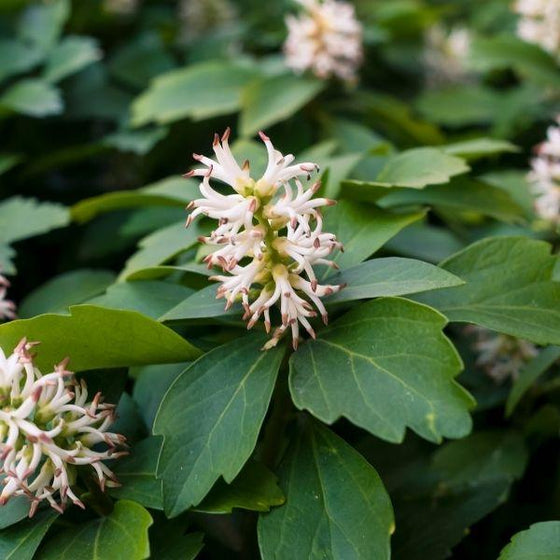
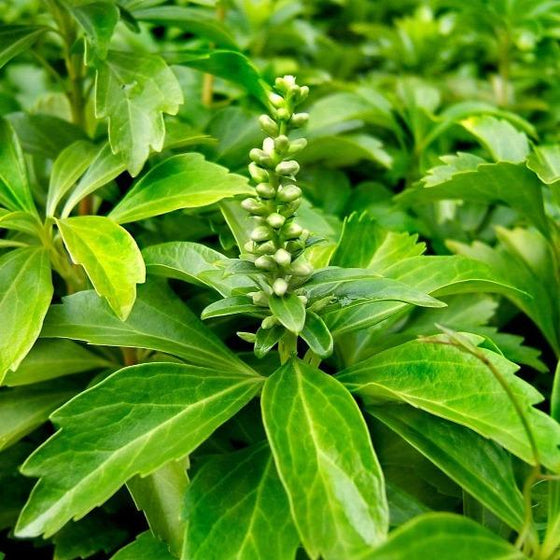
Although Pachysandra is grown mainly for its foliage, it also produces small white flower spikes in early spring. The flowers are not especially showy from a distance, but they add a soft seasonal detail up close and signal the start of fresh spring growth. That subtle bloom is a nice bonus in shady beds, where flower displays can sometimes be harder to come by.
The real long-term value, though, is the evergreen foliage. Its glossy texture and consistent height give the landscape structure year-round, even when deciduous trees and perennials are dormant. For homeowners who want a shade ground cover that looks finished through much of the year and does real work suppressing weeds and covering soil, Pachysandra remains one of the strongest choices available.
Choose a 4-Inch Pot or a Flat of 50 Pachysandra Plants Based on Project Size
Choose the 4-inch pot when you need a small number of Pacysandra plants for containers, replacement spots, small edging areas, or a limited groundcover patch. A 4-inch pot gives you a more established individual plant that is easy to place into a planter, tuck into a smaller bed, or use where only a few plants are needed.
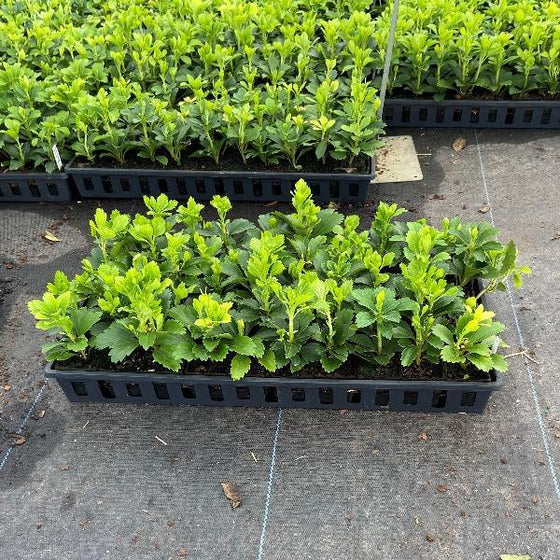
The flat of 50 plants is designed for larger groundcover projects that require more plants at a lower cost per plant. Each flat includes 50 individual 2-inch-by-2-inch peat pots for direct planting in the ground, saving time during installation and reducing transplant disturbance. These smaller peat-pot plants are ideal when you are planting a bank, slope, shaded bed, or broad groundcover area and want to space many plants evenly for faster coverage. For best results, prepare the soil first, lay out the plants before planting, water the flat well before installation, plant each peat pot level with the surrounding soil, and water thoroughly after planting so the young Pachysandra roots settle into the ground.
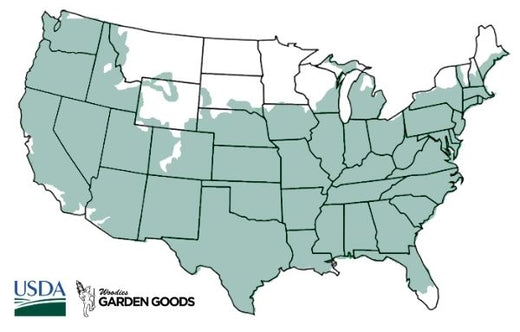
| Botanical Name | Pachysandra terminalis |
|---|---|
| Hardiness Zone: | 5-9 |
| Mature Height: | 6 to 12 inches |
| Mature Width: | 1 to 1.5 feet per plant |
| Sunlight: | Part shade to full shade |
| Water Requirements: | Regular water during establishment; moderate moisture preferred |
| Soil: | Rich, medium-moisture, well-drained soil; adaptable once established |
| Bloom Time / Color | Early spring / white |
| Wildlife Value | Provides low cover and protective habitat structure in shaded beds |
| Resistance (deer/disease/drought/etc.) | Deer resistant, rabbit resistant, somewhat drought tolerant once established |
| Landscape Uses | Shade ground cover, under trees, foundation beds, woodland gardens, erosion control on shaded slopes |
How to Care for Pachysandra (Japanese Spurge)
After you buy Pachysandra terminalis online from Garden Goods Direct, follow the planting and care instructions below for the best outcome:

How should I plant Pachysandra (Japanese Spurge)?
Plant Pachysandra in part shade to full shade in well-drained soil, setting the root ball level with the surrounding grade. Dig a hole just wide enough to comfortably fit the roots, backfill with native soil, and firm gently so the plants sit securely without being buried too deeply. Water thoroughly after planting, then mulch lightly between plants to help hold moisture while the bed fills in. For the fastest, most even coverage, plant in staggered rows rather than a single straight line so the foliage can knit together into a dense carpet more naturally.

How often should I water Pachysandra (Japanese Spurge) after planting?
Water Pachysandra regularly during the first growing season so the roots can establish and begin spreading. The soil should stay evenly moist but not soggy, and in most landscapes that means watering deeply once or twice a week, depending on rainfall, tree-root competition, and soil type. After establishment, Pachysandra becomes more tolerant of short dry periods, especially in shade, but it still looks best when it does not dry out for long stretches. Deep, occasional watering is better than frequent shallow watering because it encourages stronger rooting and a more durable groundcover bed.

When should I fertilize Pachysandra (Japanese Spurge)?
Fertilize Pachysandra lightly in early spring if the planting needs a boost, especially in poorer soil or older beds that are thinning. A balanced slow-release fertilizer or a light layer of compost is usually enough to support healthy foliage and steady spread without pushing overly soft growth. In rich woodland-style soil, heavy feeding is usually unnecessary. The goal is not rapid top growth as much as steady fill-in and dense evergreen coverage, so a restrained feeding program usually produces the best-looking long-term planting.

When and how should I prune Pachysandra (Japanese Spurge)?
Pachysandra usually needs only light grooming rather than formal pruning. In early spring, trim away winter-damaged stems or lightly shear the top of an older planting if you want to encourage denser fresh growth and a more uniform appearance. If the bed begins to spread beyond its intended edge, simply cut back runners or redefine the border with a spade. Occasional cleanup keeps the planting tidy, but most of the time Pachysandra looks best when it is allowed to develop into a soft, natural carpet.