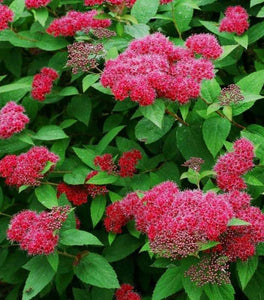
Images Depict Mature Plants
Double Play® Doozie® Spirea
Spiraea x ‘NCSX2’
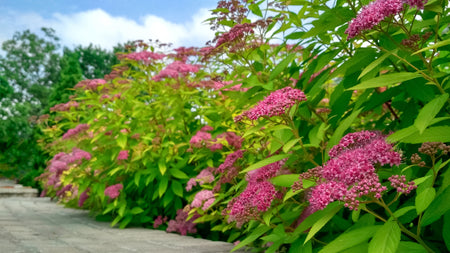
Double Play® Doozie® Spirea is the kind of flowering shrub that earns its space in a landscape because it solves several problems at once. It stays compact, blooms for a very long season, does not need deadheading, and gives you deer-resistant color in sunny borders, foundations, and low hedges. I especially like it for mass plantings where you want a clean, repeatable look with bright red-pink flowers and very little fuss.

15% OFF SITEWIDE SALE
Use Code 'PRIMETIME15' At Checkout
📦 Free shipping on orders over $99.
Delay shipping by leaving us a message at Checkout.
Share:



Reblooming Red-Pink Flowers on a Compact, Deer-Resistant Spirea
A Modern Spirea with Months of Color.
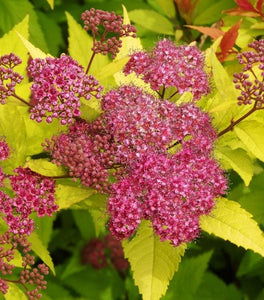
Double Play® Doozie® Spirea is a compact flowering shrub bred for bold color, easy care, and exceptional reblooming performance. In spring, the foliage emerges with vivid red and lime-green tones before maturing to a clean, deep green backdrop. By late spring to early summer, bright red-pink flower clusters begin opening and continue in waves through the growing season, giving sunny landscapes a long-lasting display without the need for constant deadheading.
Seedless, Non-Invasive, and Built to Rebloom.
One of the most important features of Double Play® Doozie® Spirea is its seedless, non-invasive nature. Because it does not spend energy producing seeds, the plant redirects that energy into producing more flowers. This makes it a stronger choice for gardeners who want the beauty and usefulness of spirea with improved landscape responsibility and a longer bloom season. Spent flowers naturally tuck into the foliage as new blooms and growth continue to cover the plant.
Compact Growth for Borders, Low Hedges, and Foundation Plantings.
Growing about 2 to 3 feet tall and wide, Double Play® Doozie® Spirea fits easily into front-yard borders, foundation beds, curb appeal plantings, low hedges, and mass plantings. Its naturally rounded habit gives it a polished look without constant trimming, while the compact size makes it easy to use in small landscapes or repeat along walkways and driveways. It also works well in mixed shrub borders with evergreens, ornamental grasses, roses, hydrangeas, and other sun-loving perennials.
Low-Maintenance Performance in Sunny Landscapes.
Double Play® Doozie® Spirea performs best in full sun, where it develops the strongest flower production and best foliage color. It adapts to a range of soil types as long as drainage is good and the plant is not left in extended soggy conditions. Once established, it offers good drought tolerance and dependable performance in sunny landscapes. Regular watering during the first growing season helps the roots establish and supports the plant’s long bloom cycle.
Deer-Resistant Color with No Deadheading Required.
This spirea is a strong choice for gardeners who want an easy flowering shrub that can handle real-world landscape conditions. It is deer-resistant, drought-tolerant once established, compact, reblooming, and easy to maintain. No deadheading is required to keep the show going, though a light trim after the first flush can encourage colorful new growth and keep the mound especially tidy. Use it where you want bright seasonal color, low upkeep, and a shrub that works hard from spring into fall.
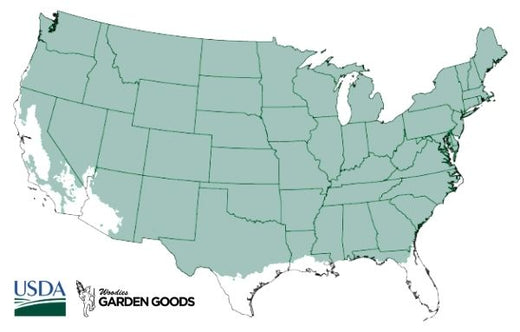
| Hardiness Zone: | 3-8 |
|---|---|
| Mature Height: | 2 to 3 Feet |
| Mature Width: | 2 to 3 Feet |
| Sunlight: | Full sun to part sun; best flowering with 6+ hours of sun |
| Soil: | Average, well-drained soil; adaptable to many soil types |
| Water: | Moderate during establishment; drought tolerant once established |
| Bloom Time / Color: | Late spring to fall; red-pink to purple-red flowers |
| Foliage: | Red and lime-green new spring growth maturing to dark green |
| Ornamental Features: | Reblooming flowers, colorful spring foliage, compact rounded habit, long bloom season |
| Wildlife Value: | Flowers attract bees, butterflies, and hummingbirds |
| Resistance (deer/disease/drought/etc.): | Deer resistant, drought tolerant once established, non-invasive, seedless |
| Landscape Uses: | Low hedges, borders, foundation plantings, mass plantings, edging, sunny beds, containers, curb appeal plantings |
How to Care for Double Play® Doozie® Spirea
Be sure to read our planting instructions to ensure a healthy and happy Double Play® Doozie® Spirea for years to come!
-v1777986881568.png?92x91)
How should I plant Double Play Doozie Spirea?
Plant Double Play Doozie Spirea in full sun to part sun, choosing a location that receives at least 4 hours of direct sunlight daily and ideally 6 or more hours for best flowering. Select a site with well-drained soil, since spirea adapts to many soil types but does not tolerate extended soggy conditions. Before planting, loosen the soil and mix in compost if the area is compacted or low in organic matter. Dig a hole about twice as wide as the root ball and just as deep. Set the plant so the top of the root ball sits level with the surrounding soil, backfill gently, and water thoroughly. Space plants about 2 to 3 feet apart for mass plantings, low hedges, or repeated border use, allowing the compact rounded habit to fill in naturally.
-v1777986882576.png?89x84)
How often should I water Double Play Doozie Spirea after planting?
Water Double Play Doozie Spirea deeply after planting, then keep the soil evenly moist through the first growing season. During hot or dry weather, water when the top few inches of soil feel dry. Deep, less frequent watering is better than shallow watering because it encourages stronger root growth. Once established, Double Play Doozie Spirea is drought tolerant and can handle normal sunny landscape conditions with less frequent watering. It will still flower and perform best with occasional deep watering during extended dry periods. Avoid keeping the soil constantly wet, especially in heavy clay or poorly drained areas.
-v1777986883529.png?90x89)
When should I fertilize Double Play Doozie Spirea?
Fertilize Double Play Doozie Spirea in early spring as new growth begins. Use a balanced slow-release fertilizer formulated for shrubs, or apply a light layer of compost around the root zone. This helps support healthy foliage, strong flowering, and vigorous new growth. Avoid over-fertilizing, especially with high-nitrogen products, because too much fertilizer can encourage leafy growth at the expense of flowers. If the shrub is growing well and blooming strongly, it may only need a light annual feeding or compost topdressing.

When and how should I prune Double Play Doozie Spirea?
Prune Double Play Doozie Spirea in early spring if shaping is needed. Remove any dead, damaged, or weak stems, then lightly shape the shrub to maintain its compact rounded form. This spirea blooms on new wood, so early spring pruning helps encourage fresh growth and flowering. A light trim after the first bloom flush in late spring can encourage a fresh wave of colorful new growth and keep the plant looking tidy. Every couple of years, remove a few of the oldest, woodiest stems near the base to promote vigorous new growth. Deadheading is not required for reblooming.