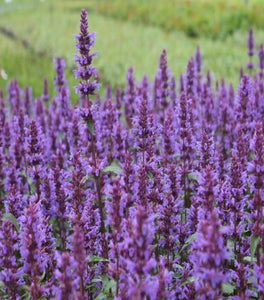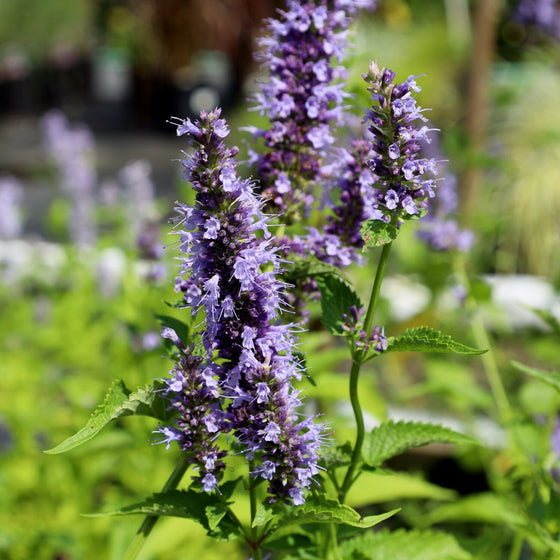
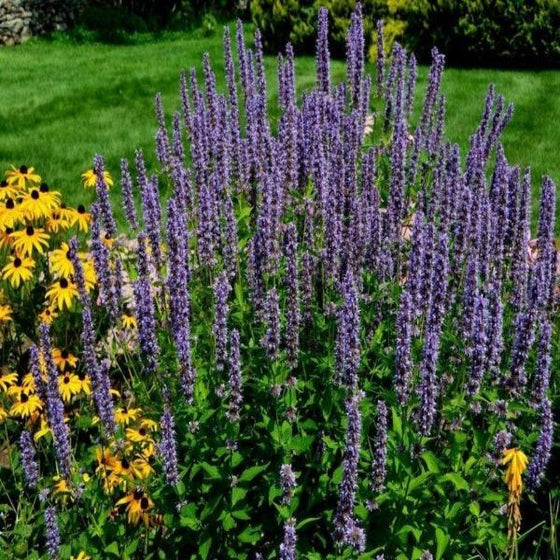
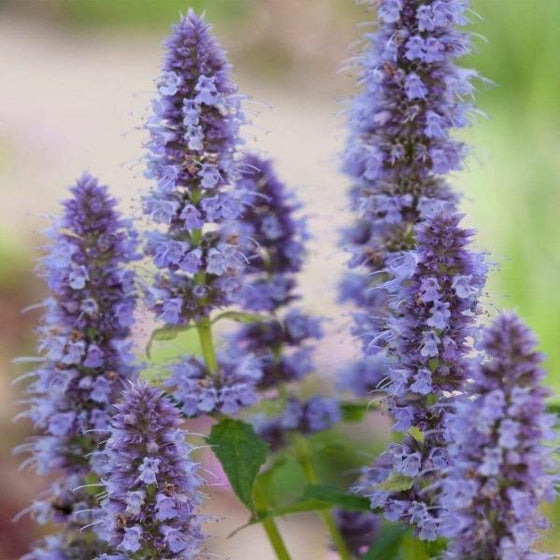
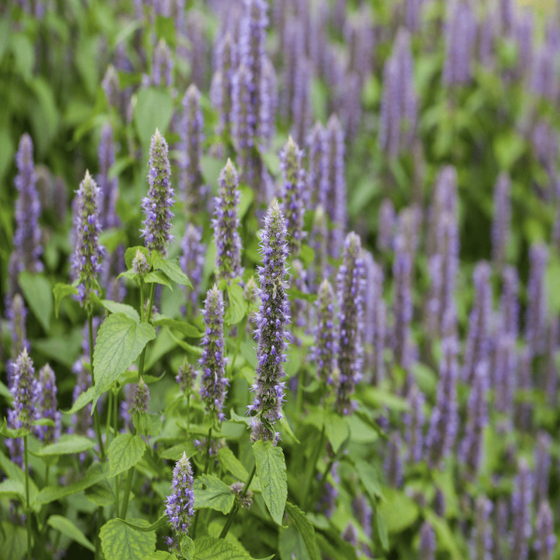


Images Depict Mature Plants
Blue Fortune Agastache
Agastache foeniculum 'Blue Fortune'
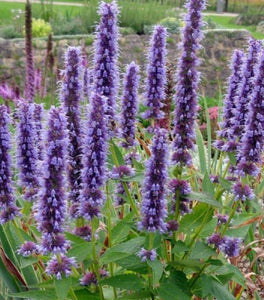
Blue Fortune is one of the most useful Agastache varieties because it gives you that classic lavender-blue spike look, strong pollinator value, and fragrant foliage without a lot of fuss. It works beautifully in sunny borders where you need height, color, and movement from midsummer into fall. The key is drainage. Give it full sun, avoid wet winter soil, and plant it in groups if you want the pollinator show to really come alive.

20% OFF SITEWIDE SALE
Use Code 'OCTOBER20' At Checkout
📦 Free shipping on orders over $99.
Delay shipping by leaving us a message at Checkout.
Share:Recommended Add-Ons



Blue Fortune Agastache Brings Lavender-Blue Spikes and Pollinator Energy
Lavender-Blue Flower Spikes for Sunny Gardens
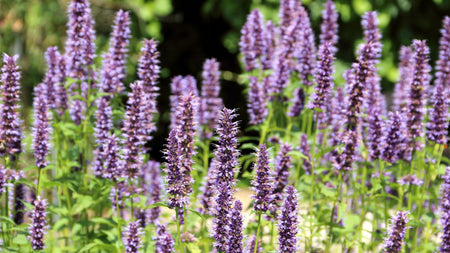
Blue Fortune Agastache is a long-blooming perennial known for upright lavender-blue flower spikes that add cool color and vertical texture to sunny gardens. The flowers rise above fragrant green foliage from midsummer into early fall, creating a clean, airy look that pairs beautifully with coneflowers, black-eyed Susans, salvia, catmint, yarrow, ornamental grasses, and sedum.
This is one of the best Agastache varieties for homeowners who want color, fragrance, and pollinators from one easy-care plant. It brings structure without feeling stiff, and the soft blue-lavender flowers blend naturally into cottage gardens, pollinator beds, herb gardens, meadow-style plantings, and modern low-water landscapes.
A Pollinator Magnet for Bees, Butterflies, and Hummingbirds
Blue Fortune Agastache is a favorite for pollinator gardens because the nectar-rich flowers attract bees, butterflies, and hummingbirds. The upright flower spikes make it easy for pollinators to find the blooms, and the long flowering season helps keep the garden active through the hotter months of summer.
Plant several together for the strongest effect. A single plant adds color, but a group of three to five creates a more visible landing zone for pollinators and gives the garden a designed, intentional rhythm. Use Blue Fortune near patios, walkways, and seating areas where you can enjoy the flowers, fragrance, and constant activity up close.
Fragrant Foliage With Anise-Licorice Scent
Blue Fortune is also known as Blue Fortune Anise Hyssop because its leaves release a pleasant minty, anise, or licorice-like fragrance when brushed or crushed. This aromatic foliage adds sensory value to the garden and helps make the plant less appealing to deer and rabbits.
The foliage stays attractive through the growing season and supports the plant’s upright, clump-forming habit. It is not grown for foliage color like Golden Jubilee Agastache, but its clean green leaves provide a strong backdrop for the lavender-blue flowers and make it useful in herb-style plantings, sensory gardens, and pollinator borders.
Full Sun and Good Drainage Keep Plants Strong
Blue Fortune Agastache performs best in full sun and well-drained soil. It can tolerate heat and dry conditions once established, but it does not like heavy, wet clay or poorly drained soil, especially in winter. Good drainage is the difference between a plant that thrives and one that struggles from crown or root problems.
Plant it in average to lean soil rather than overly rich, wet soil. If your garden soil stays damp, choose a raised bed, a slope, a berm, or a container to improve drainage. Blue Fortune can also tolerate humidity better than some Agastache selections, making it a useful choice for Mid-Atlantic and southeastern gardens when planted in the right site.
Easy-Care Perennial for Borders, Cutting Gardens, and Mass Plantings
Blue Fortune Agastache typically grows about 2 to 3 feet tall and 1.5 to 2 feet wide, making it a strong mid-border perennial. It is tall enough to add movement and structure but not so large that it blocks views or overwhelms neighboring plants. The flower spikes also make good cut flowers and can add a soft, natural look to summer arrangements.
Deadhead spent flower spikes to keep plants tidy and encourage continued blooming. In colder climates, leave stems standing through winter to help protect the crown, then cut back old growth in spring when new shoots appear. With full sun, sharp drainage, and modest watering after establishment, Blue Fortune is a dependable, low-maintenance perennial for sunny landscapes.
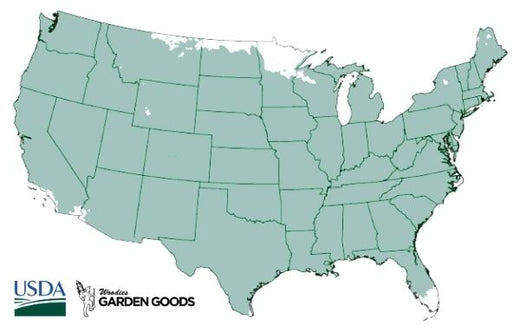
| Hardiness Zone: | 4-9 |
|---|---|
| Mature Height: | 24 to 36 inches |
| Mature Width: | 18 to 24 inches |
| Sunlight: | Full sun is best; tolerates partial shade with reduced bloom |
| Soil | Well-drained average to lean soil; avoid heavy wet clay |
| Water | Average to low once established; water regularly during establishment |
| Bloom Time / Color | Midsummer into early fall; lavender-blue to violet-blue flower spikes |
| Foliage: | Fragrant green foliage with minty-anise or licorice scent |
| Ornamental Features | Lavender-blue flower spikes, fragrant foliage, upright habit, long bloom season, pollinator value |
| Wildlife Value | Attracts hummingbirds, bees, butterflies, and other beneficial pollinators |
| Resistance | Deer resistant, rabbit resistant, heat tolerant, drought tolerant once established |
| Landscape Uses | Pollinator gardens, hummingbird gardens, cottage gardens, sunny borders, herb gardens, cutting gardens, mass plantings, meadow-style gardens, containers, low-water landscapes |
How to Care for Blue Fortune Agastache
aBe sure to read our planting instructions to ensure a healthy and happy Blue Fortune Agastache for years to come!

How should I plant Blue Fortune Agastache?
Plant Blue Fortune Agastache in full sun with well-drained soil. Choose a site that receives at least 6 hours of direct sunlight per day and does not stay wet after rain. If your soil is heavy clay or poorly drained, use a raised bed, berm, slope, or container to improve drainage. Dig a hole about twice as wide as the root ball and set the crown level with the surrounding soil. Backfill with native soil, water deeply, and space plants about 18 to 24 inches apart. Avoid burying the crown too deeply, because Agastache performs best when the crown stays dry and well-aerated.

How often should I water Blue Fortune Agastache after planting?
Water Blue Fortune Agastache regularly during the first growing season while the roots establish. Keep the soil lightly moist after planting, but do not keep it constantly wet. This perennial prefers deep, occasional watering over frequent shallow watering once it has settled into the garden. After establishment, Blue Fortune becomes drought tolerant and usually needs less supplemental water than many flowering perennials. During extended heat or dry spells, water deeply and then allow the soil to dry slightly. Avoid soggy soil, especially in cool weather or winter.

When should I fertilize Blue Fortune Agastache?
Fertilize Blue Fortune Agastache lightly in spring only if growth is weak or the soil is very poor. A small amount of compost or a light application of balanced slow-release fertilizer is enough in most garden beds. Agastache generally performs best in average to lean soil. Avoid heavy feeding or high-nitrogen fertilizer. Too much fertilizer can create soft, floppy growth and reduce the plant’s naturally sturdy habit. The most important success factors are full sun, sharp drainage, good airflow, and moderate watering.

When and how should I prune / cut back Blue Fortune Agastache?
Deadhead spent flower spikes during the growing season if you want a tidier look and more continued bloom. Cut faded spikes back to a set of leaves using clean pruners. You can also leave some seed heads standing for texture and winter interest. In colder climates, avoid cutting the plant all the way to the ground in fall. Leaving stems standing can help protect the crown through winter and provide shelter for beneficial insects. Cut back old stems in spring when new growth begins.