
Spring-Blooming Camellias for Elegant Flowers & Evergreen Beauty
Glossy evergreen structure with rose-like blooms from late winter into spring
Spring-blooming camellias are what I reach for when I want a landscape to feel instantly classic—deep green, glossy foliage all year, then a wave of big, rose-like flowers right when the garden is ready to wake up. Most spring bloomers are in the Camellia japonica group (and close hybrids), known for their refined, evergreen presence and showy flowers that often open from late winter into spring, depending on the variety and climate. If you’ve got an entry bed, a sheltered foundation line, or a bright woodland edge that needs an evergreen anchor with a “wow” season, these shrubs deliver in a way few plants can. They also age beautifully: slow, steady growth that thickens over time and looks more established every year you own it.
The biggest secret to camellia confidence is placement and timing—give them bright shade or morning sun with afternoon protection, keep soil organic-rich and well-drained (slightly acidic is ideal), and don’t get pruning-happy at the wrong moment. Many guides recommend pruning right after flowering, because camellias set next year’s buds later, and poorly timed pruning can reduce bloom. Add consistent moisture during summer (bud-set season), and you’ve basically solved the puzzle. That’s exactly what the We Grow Together Promise is for: clear guidance, realistic expectations, and shrubs that reward you for doing the simple things well.


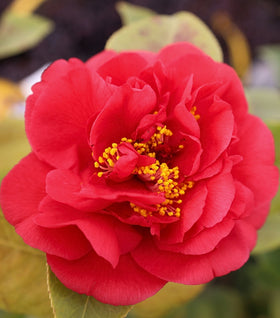


Add spring elegance with evergreen shine.
Spring-blooming camellias earn their keep twice: first as a year-round evergreen that makes beds look finished, and then as a bloom-season headliner when many shrubs are still ramping up. These are premium “structure plants” for foundations, courtyards, and sheltered borders—especially where you want an evergreen presence that looks polished instead of bulky. The flowers are the moment, but the foliage is the long-term value: glossy leaves that hold color and texture through every season.
This collection is also versatile in how it fits real landscapes. Use one as a specimen near an entry to create a focal point, or repeat a variety along a foundation line for a high-end evergreen rhythm that still blooms its heart out in spring. They pair beautifully with azaleas, hydrangeas, hellebores, ferns, and shade perennials—plants that love similar light and soil conditions—so you can build a cohesive “bright shade” garden without mixing incompatible needs.
If you’re planning for livability, camellias are the kind of shrub you place where people actually walk and linger—front stoops, patios, along paths—because the blooms feel special up close. Many selections in this spring-blooming group are classic japonica-style shrubs chosen for bold flower form, evergreen presence, and reliable seasonal impact, which is exactly the combination most homeowners and installers want when they’re investing in a statement shrub.
See bloom form, fragrance, and mature size.
Spring camellias are famous for their flower variety: singles with visible stamens (a lighter, more natural look), semi-doubles, and formal doubles that read almost “tailored.” That range lets you design by mood—airy and botanical, or classic and formal—while keeping the same evergreen backbone. Many blooms are larger and fuller in the japonica group than fall-blooming sasanquas, which is one reason spring camellias feel so luxurious in the landscape.
Mature size depends on cultivar, but many spring-blooming camellias commonly grow into substantial shrubs—often in the mid-single digits to low-teens for height and width over time—while still remaining “shrubby” enough for foundation use when matched to the right space. Growth rate is typically slow to establish and steady thereafter, which is a big plus if you want a plant that holds its shape and doesn’t turn into an annual pruning project. Choosing by mature width is the smartest move: it protects airflow, reduces disease pressure, and keeps future maintenance simple.
Bloom timing is one of the biggest buying advantages. Spring-blooming camellias generally flower from late winter into spring (timing shifts by variety and region), and those blooms can arrive when color is scarce. If you want a longer spring window, mix varieties that peak at slightly different times—so you don’t put all your color on one week of weather.
Plant in bright shade for bigger blooms.
Light is the bloom engine. Many spring-blooming camellias prefer shade to part shade, and they typically do best with protection from drying winds and harsh afternoon exposure—think morning sun with afternoon shade, or bright filtered light beneath a high canopy. That balance supports good bud development and helps flowers last longer once they open.
Soil and drainage matter just as much as light. Camellias are happiest in well-drained, organic-rich soil that leans acidic (commonly referenced around pH 5.5–6.5), and they strongly dislike “wet feet.” If your site holds water, a raised planting area and broad organic amendment are your best friends—because root stress is the fastest way to lose vigor and blooms.
Spacing should follow your goal. For specimen shrubs, a practical baseline is often 5+ feet between plants (more is fine), so each camellia can mature without crowding; for a hedge or screen effect, about 3 feet on center can be used to knit plants together. The key is planning with mature width in mind so you get density without trapping humidity inside the planting.
Easy care that protects next year’s buds.
Watering is simple but important: keep moisture consistent during establishment, then maintain even moisture during dry spells—especially through summer, when camellias are forming next season’s flower buds. Mulch helps stabilize moisture and temperature and protects the shallow root zone from heat swings. The goal is steady, well-drained moisture—not soggy soil and not repeated drought stress.
Feeding should support healthy growth, not force it. If foliage looks pale or growth stalls, soil pH and nutrient availability may be the real issue, so a soil test is often more useful than “more fertilizer.” Keeping soil in the camellia-friendly acidic range and adding organic matter tends to improve vigor and bloom more reliably than heavy feeding.
Pruning timing is where you protect your spring show. Many extension resources recommend pruning after flowering—often in spring—so you don’t remove developing buds, and aiming to finish heavier pruning before midsummer when bud set is underway. If you need to shape, thin for airflow, or reduce size, “enjoy the blooms, then prune” is a great rule of thumb.