
Anemone Plants for Graceful Blooms & Late-Season Garden Color
Late-season windflowers that lift your garden when summer fades.
Anemones are the kind of perennial that makes neighbors stop and ask, “What is that?”—tall, wiry stems topped with clean, simple flowers that float above a tidy mound of foliage. Most gardeners fall hardest for Japanese anemones (often sold as hybrids) because they bloom when so many beds are winding down: late summer into fall, with pink or white flowers that look fresh in borders, woodland edges, and mixed perennial plantings. They’re also surprisingly flexible for light—often happy in sun or partial shade—so you can use them to brighten those “not quite sunny, not quite shady” spaces where other perennials struggle to perform.
These plants have an elegant look, but the care is refreshingly practical: rich soil, consistent moisture (especially in dry spells), and enough room to spread and breathe. Expect them to build into clumps and gradually expand by rhizomes, which is great when you want a naturalized drift—but something you’ll want to plan for near tight foundation beds. In the first couple of seasons, a good mulch layer going into winter can help prevent frost heaving in colder climates, and simple cleanup in late winter/early spring keeps them vigorous for the next bloom cycle. You’ll get guidance when you need it through the We Grow Together Promise.

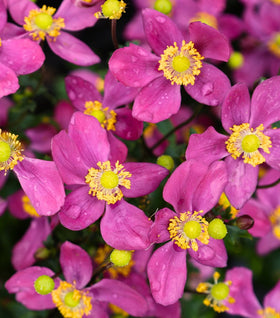

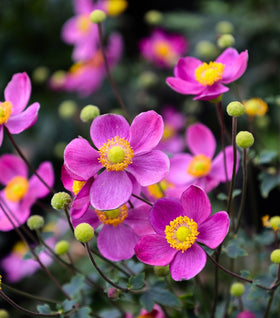


Add late-season flowers that feel effortless.
Anemones earn their spot because they solve a real late-season problem: your garden still needs color and lift, but many perennials have already finished. Japanese anemones (often labeled as windflowers) are known for blooming from late summer into fall, bringing a clean wave of flowers when the light starts to soften, and borders can feel tired. The blooms hover on slender stems above the foliage, which creates an airy, layered look—perfect for homeowners who want “natural and elegant” rather than heavy or overly formal.
They’re also versatile in how you use them. Plant them as a back-of-border finisher, tuck them into a woodland edge where they can mingle with ferns and shade companions, or use them in a mixed bed where shrubs provide structure and the anemones provide that floating, seasonal sparkle. Because the flower stems can range widely (roughly 20 inches to 5 feet depending on cultivar and conditions), you can choose a variety that fits anything from a smaller bed to a big, layered landscape border.
If you like cut flowers, anemones are an easy win. Their long stems and clean bloom form make them useful in simple bouquets—especially in late summer and fall when you’re craving something fresh. And if deer are part of your reality, many Japanese anemones are commonly described as deer- and rabbit-resistant (though nothing is completely immune under pressure), making them a smart “try this first” perennial in areas with browsing.
Know the blooms, height, and spread before you plant.
Most of the anemones featured in this collection are Japanese anemones and hybrids (windflowers), known for pink-to-white blooms and a mounding habit topped by tall flowering stems. A practical size expectation is a foliage mound around 1–1.5 feet tall, with bloom stems that can reach roughly 3 feet (and sometimes more), depending on variety and growing conditions. That “mound + tall stems” structure is exactly what makes them look so light and intentional in the garden.
Bloom timing is one of their biggest selling points: late summer into fall is the headline, and reputable growing guides specifically call out Japanese anemones for late-season flowering. You’ll see the most flowers when plants get consistent moisture and decent light, and you can plan them to bridge the gap between summer bloomers and fall perennials—so the garden doesn’t feel like it hits a wall in August.
Growth habit is the one “watch this” detail—and it’s not a dealbreaker, just a planning note. Japanese anemones and hybrids can spread via underground rhizomes and tend to expand, which is fantastic when you want a colony effect, but something to contain or monitor in smaller beds. The upside is that this spreading habit can also make them an effective, flowering groundcover-style drift when you give them room.
Place them for sun-to-shade success and tall stems.
Anemones are most satisfying when you match them to the right light and soil. Japanese anemones are commonly recommended for sun or partial shade, and many guides emphasize rich soil with consistent moisture—think “woodland border that’s been improved,” not dry, sandy ground that bakes. If you garden in hotter areas, a bit of afternoon shade can help foliage stay fresher, while in cooler areas, they often handle more sun when moisture is steady.
Spacing is where you set the plant up for long-term beauty. Many planting references suggest spacing Japanese anemones about 1–2 feet apart, which gives the clumps room to develop and keeps airflow moving through the planting. For a fuller look faster, plant closer to the 12–18-inch end; for easier maintenance and more breathing room (especially in humid regions), lean toward 18–24 inches.
In terms of placement, treat them like a “lift plant.” Put them behind lower mounding perennials, along fences where the stems can rise above mid-height plantings, or near patios where late-season blooms feel like a bonus. If wind is strong, position them where nearby shrubs or a structure breaks gusts—tall, wiry stems can sway (that’s part of the charm), but you’ll get the cleanest look when plants aren’t constantly battered.
Keep care simple and avoid common setbacks.
Water and soil are the two levers that make anemones feel “easy.” Japanese anemones are widely described as thriving in average to moist soil that drains well, and they appreciate consistent moisture to avoid stress—especially during hot late-summer weeks when they’re building buds. A mulch layer helps moderate moisture swings and can also protect young plants from frost heaving in their first couple of winters in colder regions.
Pruning and cleanup are straightforward: remove tired stems and foliage as the season ends, and do your main cleanup as new growth starts in late winter or early spring. Many guides specifically note spring as the time to prune dead foliage and tidy plants for the new season. If clumps outgrow their space or bloom slows down, division in spring is a common way to rejuvenate and manage spread.
Finally, know the cautions so you can plant with confidence. Japanese anemones can spread by rhizomes, so give them room or plan a simple containment strategy in smaller beds. They can also be toxic to pets if ingested due to irritating compounds (protoanemonin is commonly cited), so place them thoughtfully if dogs or cats are prone to nibbling. On the pest side, guides commonly mention slugs and other chewing pests, and overly wet or poorly drained conditions can increase disease risk, such as mildew or root problems—another reason spacing and drainage matter.