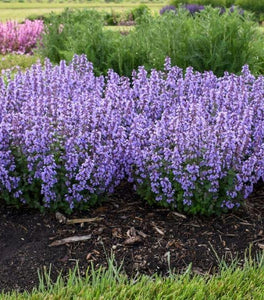
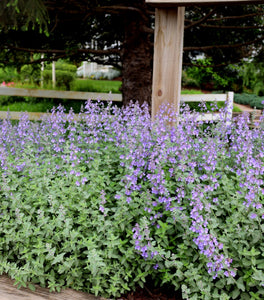
Images Depict Mature Plants
Honeysong Purple Stokesia
Stokesia Honeysong Purple
Honeysong Purple Stokesia is the kind of perennial I like when a sunny border needs flower color that feels bold but still polished. The royal purple blooms are big for the plant's size, the compact habit makes it easy to tuck into real garden spaces, and it does a great job carrying the border through midsummer and into early fall. For homeowners who want a native-style perennial that attracts pollinators, provides strong color, and creates a cleaner garden habit, this is a really useful and good-looking choice.

15% OFF WITH CODE PLANTING15
Save 15% Off Your Entire Order! Limited time.
📦 Free shipping on orders over $99.
Delay shipping by leaving us a message at Checkout.
Share:Recommended Add-Ons


Compact Royal Purple Stokesia Color for Sunny Borders and Pollinator Gardens
A Compact Native Perennial with Bold Purple Bloom Power
Honeysong Purple Stokesia is an excellent choice for homeowners who want strong flower color in a plant that stays tidy and easy to place. This compact selection of Stokes' Aster produces large royal purple blooms with deeply fringed petals, giving it a texture and richness that stand out in sunny borders and mixed perennial beds. The flower size feels generous for the plant’s overall scale, which makes the display especially satisfying in smaller gardens where every bloom needs to count.
Its compact habit is one of its best features. Instead of stretching tall and becoming awkward in the border, Honeysong Purple stays low and mounded enough to work comfortably in the front or middle of a sunny planting. That makes it especially useful in patio-adjacent beds, foundation borders, smaller cottage gardens, and mixed perennial combinations where homeowners want vivid summer color without a plant taking over the design.
The flower form also adds a lot of character. The blooms have a fringed, almost thistle-like texture, but the overall effect is polished and ornamental rather than wild or rough. That makes this perennial especially easy to combine with grasses, salvias, coneflowers, coreopsis, and other warm-season bloomers that benefit from a bolder flower shape nearby.
For homeowners looking for a compact purple perennial with native roots and real visual impact, Honeysong Purple Stokesia is a very smart choice. It brings rich color and a cleaner habit together in a way that works beautifully in residential landscapes.
Long Bloom and Pollinator Activity Keep the Garden Engaged
Honeysong Purple Stokesia is especially valuable because it blooms from midsummer into late summer and often into early fall when deadheaded. That bloom timing helps keep gardens colorful when spring perennials are well past their prime, and many beds need a second wave of energy. It gives homeowners a stronger late-season display without relying entirely on larger or looser fall-blooming plants.
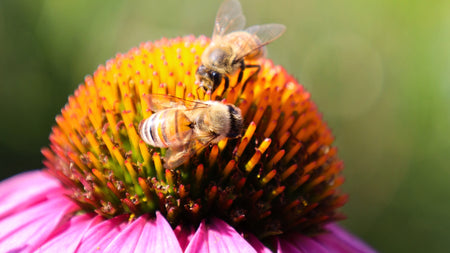
The flowers are also highly attractive to pollinators. Bees and butterflies are frequent visitors, which makes this perennial a natural fit for pollinator gardens and wildlife-friendly sunny borders. In a planting designed to feel active, bright, and ecologically useful, Honeysong Purple adds both visual punch and real insect activity during the heart of the growing season.
Another strong advantage is the way the flowers hold themselves above the foliage. The deep green, neatly mounded leaves help the blooms stand out clearly, and the contrast between the purple petals and the lighter stamens gives the flowers even more presence. That makes the plant read well from a distance, but still rewards close-up viewing along paths and patios.
For gardeners who want a summer perennial that combines long bloom, strong color, and pollinator support, Honeysong Purple Stokesia is a very rewarding choice. It keeps the garden feeling alive when the season is at full strength.
A Strong Fit for Borders, Containers, and Sunny Mixed Beds
Honeysong Purple Stokesia works best in landscape settings where a compact, flowering perennial can play a very visible role. It is especially effective in sunny borders, pollinator beds, patio containers, and cottage-style plantings where the large purple flowers can be appreciated up close. Because it stays compact, it is easier to work into smaller residential gardens than many taller midsummer perennials.
Its mature size makes it especially practical. Honeysong Purple generally reaches about 14 inches tall and spreads about 12 to 15 inches wide, giving it enough presence to stand out without making the planting feel crowded. It works especially well toward the front of a border, repeated in small groups, or tucked into a mixed perennial design where a strong burst of purple is needed.
This perennial also pairs especially well with yellow, pink, and white companions, making it easy to weave into a wider color palette. Used in mass, it creates a vibrant ribbon of color. Used in smaller numbers, it can act as a bright accent that helps carry the border from midsummer toward fall.
For homeowners who want a compact perennial that fits containers and beds equally well, Honeysong Purple Stokesia is a very flexible option. It gives the garden a strong floral presence without requiring much square footage.
Easy-Care Growth with Better Performance in Sun and Good Drainage
Honeysong Purple Stokesia performs best in full sun and in well-drained soil. It can adapt to average garden conditions and even tolerate some moisture, but it does not want to sit in standing water. In the right site, it is a very easy perennial to grow and one that asks for relatively little beyond sun, drainage, and some regular water while establishing.
During establishment, steady moisture helps the roots settle in and supports strong flowering. Once rooted in, the plant becomes more drought-tolerant and can handle hot summer conditions with less fuss than many other large-flowered perennials. That makes it especially appealing to homeowners who want strong bloom without a plant that needs constant attention.
Maintenance is simple. Deadheading spent flowers can help extend the bloom period and keep the plant looking fresh, while cutting the flowered stems back to the basal foliage after the main bloom can encourage a cleaner appearance. At the end of the season or in late winter, old top growth can be removed to make room for fresh new growth.
For gardeners who want a compact native-style perennial with strong summer color and a straightforward care routine, Honeysong Purple Stokesia is a great choice. Give it sunlight, drainage, and a little seasonal cleanup, and it will reward you with weeks of vivid blooms.
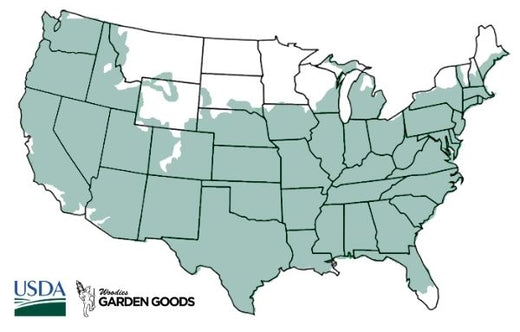
| Hardiness Zone: | 5-9 |
|---|---|
| Mature Height: | 12 to 14 Inches |
| Mature Width: | 12 to 15 Inches |
| Sunlight: | Full sun |
| Bloom Time / Color | Midsummer into early fall; royal purple flowers with white stamens |
| Soil Condition: | Well-drained soil; adaptable to poor, average, or fertile soils |
| Water Requirements: | Average; regular water during establishment, then moderate to low water needs once established |
| Wildlife Value | Attracts butterflies, bees, and other pollinators |
| Resistance (deer/disease/drought/etc.) | Deer resistant, rabbit resistant, drought tolerant once established, heat tolerant |
| Landscape Uses | Sunny border, pollinator garden, patio container, mass planting, cut flower garden, cottage garden |
How to Care for Honeysong Purple Stokesia
Before you purchase your Honeysong Purple Stokesia, be sure to read the recommended care instructions to ensure your plant remains happy and healthy for years to come!
-v1774033515514.png?92x91)
How should I plant Honeysong Purple Stokesia?
Plant Honeysong Purple Stokesia in full sun in well-drained soil. Dig a hole about twice as wide as the root ball and no deeper than the root ball itself, then place the plant so the crown sits level with the surrounding soil and backfill with the native soil. Water thoroughly after planting and give the clump enough room to mature without crowding nearby plants. This perennial works especially well in sunny borders, pollinator beds, and patio containers where the flowers can be seen and enjoyed up close.
-v1774033532923.png?89x84)
How often should I water Honeysong Purple Stokesia after planting?
Water Honeysong Purple Stokesia deeply right after planting, then keep the soil evenly moist during the establishment period. In the first growing season, that usually means watering during dry spells so the roots can settle in and support strong bloom production. Once established, continue watering during prolonged hot or dry weather, but let the soil drain well between waterings. This plant is more tolerant of drought once rooted in, but it still flowers best when it is not pushed into repeated severe dryness.
-v1774033552783.png?90x89)
When should I fertilize Honeysong Purple Stokesia?
Fertilize Honeysong Purple Stokesia lightly in spring if the soil is lean. A balanced slow-release fertilizer or a modest topdressing of compost is usually enough to support healthy growth and good flowering. Avoid heavy feeding, because too much fertilizer can create lush growth that is not necessary for a compact perennial like this. In most gardens, sunlight, drainage, and reasonable soil fertility are enough to keep the plant performing well.

When and how should I prune Honeysong Purple Stokesia?
Deadhead spent flowers during the season to prolong blooming and keep Honeysong Purple Stokesia looking tidy. Once the main flowering cycle is finished, you can cut the stems back to the basal foliage if you want a fresher, cleaner look. At the end of the season or in late winter, cut back old growth to make room for new spring foliage. The goal is straightforward cleanup rather than heavy pruning, since the plant naturally keeps a neat, mounded habit.