

Images Depict Mature Plants
Glacier Ivy Plants
Hedera helix 'glacier'
I love Glacier Ivy because it makes a container look more finished almost instantly. That white-edged foliage brightens everything around it, and the trailing habit gives porch pots and mixed planters the soft movement they need to feel complete. When I want a spiller that works with almost any flower color and still looks good even when blooms come and go, this is one of the easiest plants to reach for.

20% OFF SITEWIDE SALE
Use Code 'OCTOBER20' At Checkout
📦 Free shipping on orders over $99.
Share:



Variegated Trailing Ivy for Containers and Evergreen Color
Crisp Variegated Foliage That Brightens Every Planting
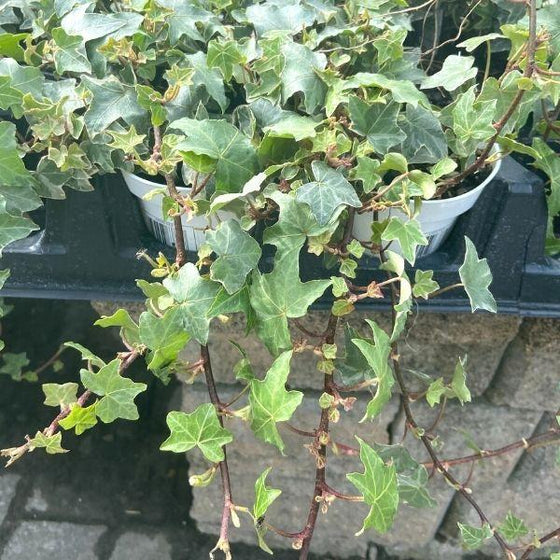
Glacier Ivy is the kind of foliage plant that instantly sharpens a planting design. Its small evergreen leaves are edged in creamy white against soft green centers, giving containers, borders, and mixed seasonal arrangements a cleaner, brighter look. That variegation helps it stand out even when flowers are not at peak bloom, which makes it especially useful in planters where foliage has to carry part of the visual weight. Variegated ivies are valued for holding color best in bright light, and English ivy remains prized primarily for foliage rather than flowers.
That visual contrast is a big reason Glacier Ivy works so well as an add-on purchase. It pairs easily with bold annual flowers, evergreen accents, upright thriller plants, and other trailing companions without looking busy or overpowering. For shoppers who want porch pots, patio planters, or entry containers to feel fuller and more polished, this ivy brings a finished look very quickly.
A Trailing Habit That Softens Pots, Beds, and Edges
One of the best reasons to plant Glacier Ivy is its movement. Instead of staying stiff or upright, it trails naturally over the edge of containers, softens hard lines, and helps mixed plantings look more relaxed and complete. That spilling habit makes it an easy “spiller” choice in the thriller-filler-spiller design approach, especially when paired with upright accents and rounded flowering plants. English ivy is widely used for enhancing container plantings and as a groundcover or trailing accent.
That same habit also makes it useful beyond containers. In landscape beds, Glacier Ivy can knit along the front edge of a planting, soften stones and curbs, or fill in around larger shrubs and seasonal flowers. Because it stays low and spreads rather than forming a heavy mound, it adds texture and continuity without blocking neighboring plants. For shoppers who want a versatile trailing foliage plant that works in more than one setting, Glacier Ivy offers a lot of design value in a small footprint.
Evergreen Appeal With Flexible Growing Uses
Glacier Ivy brings year-round foliage value, which is one of the biggest reasons gardeners continue to use English ivy in containers, groundcover plantings, and decorative designs. Its evergreen nature means it can keep contributing even when flowering companions slow down, and the variegated leaves prevent the planting from feeling too flat or dark. English ivy is generally considered evergreen and easy to grow, with container and groundcover uses among its most common landscape roles.
It is also flexible in how it can be used. In containers, it trails. In beds, it can creep and fill. In some settings, it can climb if given support, though most shoppers buying Glacier Ivy for seasonal displays will use it primarily as a spiller or ground-hugging accent. That adaptability gives gardeners more room to experiment and makes it easier to justify as a practical foliage purchase rather than a one-use novelty.
Easy Care for Polished Seasonal and Permanent Plantings
Glacier Ivy is appealing because it brings good looks without demanding complicated care. It performs best in well-drained soil and appreciates regular watering while establishing, but once settled, it becomes more forgiving. English ivy care guidance also notes the importance of good drainage, moderate moisture, airflow, and avoiding constantly saturated soil.
For the everyday gardener, that means Glacier Ivy is straightforward to manage in both containers and beds. Water it consistently, give it decent light to hold strong variegation, and trim it as needed to keep the shape neat. It can be used in formal porch pots, casual mixed planters, or lower-maintenance groundcover edges without becoming fussy. For gardeners who want foliage that trails well, brightens combinations, and stays useful across multiple design styles, Glacier Ivy is an easy choice.
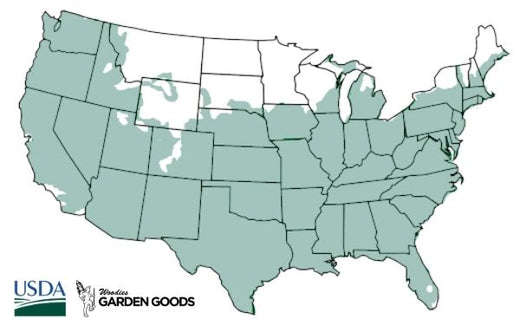
| Hardiness Zone: | 5-11 |
|---|---|
| Mature Height: | 4 to 6 Inches on the ground |
| Mature Width: | 2 to 4 Feet as a groundcover |
| Sunlight: | Bright light to part shade; avoid harsh direct sun for best foliage quality |
| Bloom Time / Color | Inconspicuous; grown for variegated foliage |
| Soil Condition: | Average, well-drained soil or quality potting mix |
| Water Requirements: | Moderate; water thoroughly, then allow the soil surface to dry slightly between waterings |
| Wildlife Value | Primarily ornamental foliage value |
| Resistance (deer/disease/drought/etc.) | Evergreen, easy care, somewhat drought tolerant once established |
| Landscape Uses | Containers, trailing accents, groundcover, edging, climbing support plantings |
How to Care for Glacier Ivy Plants
Before you buy a Glacier English Ivy, make sure to read about the recommended care instructions to keep this plant healthy and flourishing.

How should I plant Glacier Ivy Plants?
Plant Glacier Ivy in well-drained soil or potting mix, setting it at the same depth it was growing in its nursery container. In mixed planters, it works best near the edge so the trailing stems can spill naturally over the side, while in beds it can be placed along borders or in front of taller plants where it has room to spread. English ivy is commonly used in containers and as a groundcover, and it benefits from containers with good drainage. Give it enough room to show its variegated foliage clearly rather than burying it behind denser companions. In a porch pot, pair it with upright thrillers and mounded fillers. In the landscape, use it where the trailing habit can soften stone, mulch lines, or the front edge of a bed. Bright light helps variegated ivies hold their best color.

How often should I water Glacier Ivy Plants after planting?
Water Glacier Ivy thoroughly right after planting, then keep the soil moderately moist while it establishes. The best routine is to water well and then let the soil dry slightly at the surface before watering again, rather than keeping the root zone constantly soggy. Clemson’s ivy guidance recommends watering thoroughly and then allowing the soil to dry to the touch near the surface. In containers, you may need to water more often because pots dry faster, especially in bright light or breezy conditions. In beds, once the plant has rooted in, it becomes more forgiving and can handle short dry periods better than many softer annual fillers. The key is consistent moisture early on and good drainage all season.

When should I fertilize Glacier Ivy Plants?
Fertilize Glacier Ivy while it is actively growing, especially in spring and summer, or anytime container growth needs a boost. A balanced foliage-plant fertilizer or a general container fertilizer, applied lightly and consistently, is usually enough. Clemson recommends monthly feeding for ivies during active growth. Container-grown ivy tends to benefit most from regular watering, as nutrients wash out faster. In garden beds, lighter feeding is often sufficient if the soil is already reasonably fertile. Avoid overfeeding, since the goal is steady healthy foliage rather than excessive soft growth.

When and how should I prune Glacier Ivy Plants?
Prune Glacier Ivy whenever it starts to look too long, too loose, or out of scale with the rest of the planting. Regular trimming helps keep the plant fuller, neater, and more balanced, especially in containers where the spiller role should look intentional rather than unruly. Ivy topiary and training guidance also notes that ivies respond well to frequent pruning to maintain shape. Use clean pruners or scissors to shorten runners and remove any tired or all-green shoots if you want to preserve the variegated look. In beds, pruning can also help keep the plant from spreading farther than intended. The best approach is light, routine shaping rather than one heavy cutback.