
Yew Shrubs (Taxus)
Dense evergreen hedges that stay elegant in sun or shade.
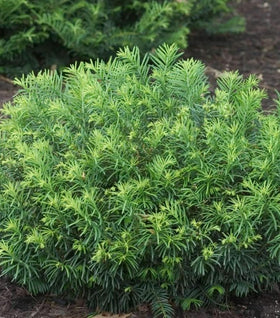
Yew shrubs (Taxus) are the “quiet luxury” evergreen for landscapes, with deep green needles, naturally dense branching, and a look that can swing from soft and natural to crisp and formal with a single trim. They’re famously adaptable in light, growing in full sun to partial shade (and often tolerating more shade than many evergreens), which makes them a go-to for foundation beds, north-side borders, and privacy screens where sunlight isn’t perfect all day. Give them a site with good drainage, water consistently while they establish, and you’ll get a long-lived hedge or specimen that looks finished in every season. Yew is also one of the most forgiving evergreens when it comes to shaping. Regular pruning helps keep density and form, and established hedges are commonly trimmed in summer or early autumn for a tidy outline.

Privacy hedges that look instantly refined.
Yew is a classic choice for privacy because it builds a dense, evergreen wall that doesn’t look coarse or bulky, just clean, tailored, and calm. In a hedge line, the foliage reads smooth and continuous, which is why yew is so often used to frame entries, define property edges, and create “outdoor rooms” that feel private without feeling boxed in.
This collection works for multiple hedge styles: a formal clipped screen, a softer, natural privacy border, or a foundation planting that gives year-round structure behind perennials. Because yews tolerate pruning well, you can maintain a narrow footprint where space is tight, one of the biggest advantages for side yards and fence lines, where width matters as much as height.
For spacing, hedge goals drive the plan. Many practical references suggest planting hedge types roughly 2–4 feet apart for a faster knit-in screen, while wider spacing is used when you want more individual plant definition and airflow. If you’re not hedging and want larger shrubs to develop naturally, wider spacing is common (several feet apart, depending on cultivar size).
Deep green foliage and flexible form.
Yews are evergreen conifers with needles that hold color through winter, giving you a dependable “green backbone” for four-season landscapes. The look is intentionally understated, no flashy flowers, so yew plays perfectly with flowering shrubs and perennials, letting seasonal color pop while the hedge keeps everything grounded and structured.
Mature size varies a lot by type (upright hedging forms vs. low spreaders vs. larger specimens), which is why choosing the right cultivar matters. The planning advantage is that yews can be maintained at very specific sizes through pruning, making them useful in both compact foundation beds and larger perimeter screens.
Growth rate is typically steady, and established hedges can gain meaningful annual growth (often around a foot per year in good conditions for hedging yew). That pace is fast enough to build privacy on a reasonable timeline, but controlled enough that you’re not fighting constant overgrowth if you keep to a simple trimming routine.
Planting spots that set yews up to win.
Yews perform best in full sun to partial shade, with the practical rule being: more light usually means faster growth, but young plants can dry out if exposed to too much sun and wind without consistent moisture. If your site is windy, give yews some protection so they hold a cleaner shape and don’t dry out as easily during cold, exposed weather.
Drainage is the non-negotiable. Multiple plant health references warn that Taxus is prone to serious decline in poorly drained soils, with Phytophthora root rot a major issue when the root zone stays too wet. If your soil is heavy, improving drainage (amending, raising the bed, or avoiding low, wet pockets) is the best “insurance policy” you can buy for long-term success.
Spacing depends on whether you’re building a hedge or growing plants as individual shrubs. For specimen-style plantings, wider spacing is commonly recommended (often several feet apart) to allow plants to develop full form and to improve airflow; for hedges, closer spacing creates a continuous screen sooner. Build the plan around mature width and the hedge density you want, not the size in the pot.
Easy shaping with serious safety awareness.
Pruning is straightforward: many guides recommend a structural prune in early spring before new growth for shaping and cleanup, then summer (or early autumn) trimming for formal hedges. Yews handle pruning better than many conifers, but you’ll get the most natural-looking results by shaping gradually and avoiding drastic, one-time reshaping unless you’re intentionally rejuvenating.
Keep watering consistently during establishment, then transition to deep watering during prolonged dry spells once plants are rooted in. Most long-term yew problems trace back to stress, especially drought stress in sun/wind exposure or root stress from wet soils, so “right moisture + right drainage” is the maintenance formula that keeps hedges dark green and dense.
Watch for the common troublemakers: root rot/Phytophthora in wet soils, twig/branch dieback triggered by winter injury or stress, and scale insects that can weaken foliage over time. Airflow, drainage, and basic plant hygiene do a lot of the heavy lifting, and early identification matters because stressed yews recover more slowly than many fast-growing hedging plants.