
Willow Trees
Fast shade and flowing branches that bring instant movement to the landscape.
Willow trees (Salix) are the quickest way to add motion and “soft drama” to a yard; those long, flexible branches and fine-textured leaves make the whole landscape feel alive in the breeze. They’re also practical when you need fast shade or want to green up a larger space quickly, especially in areas with consistently moist soil. Plant a willow near a pond edge, at the back of a wide lawn, or as a bold specimen where you want a living focal point that changes with every season and every wind.
The key to success is matching willow to the right site: most prefer full sun and moisture, and many tolerate wetter ground better than typical shade trees. Keep the first year watered, then plan smart maintenance. Late winter to early spring pruning is a common time to shape many willows, and some types respond beautifully to periodic cutbacks when you want a denser, more controlled canopy. You’re backed by the We Grow Together Promise.
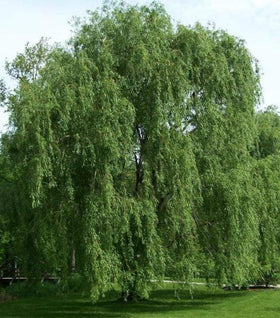
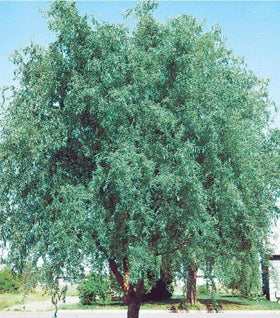
Fast shade with a signature silhouette.
Willows are a classic pick when you want a quick canopy and a distinctive look, arched, sweeping, and instantly recognizable. In the right spot, they’re a “one tree transformation,” turning open space into a shaded destination and giving the landscape a relaxed, natural feel that’s hard to replicate with stiffer shade trees.
They’re also problem-solvers for moisture. Many willows thrive where soil stays evenly damp, making them a strong option near ponds, streams, rain-garden edges, and low areas that hold moisture, places where other trees can struggle. If your yard naturally runs moist, willow lets you lean into that condition rather than fight it.
Because growth can be fast, willows reward good planning. Give them a real “drop zone” (room for branches, leaves, and natural shedding), and you’ll enjoy the beauty without constant cleanup stress. In tighter spaces, choose smaller-growing forms or plan a pruning routine that keeps size and structure in bounds.
Early-spring catkins and breezy summer texture.
Willows are early-season stars. Many types produce catkins in early spring (the classic “pussy willow” effect), then shift into fine, fluttering foliage that looks cool and fresh through summer heat. It’s a great way to add seasonal rhythm: spring texture, summer movement, and strong winter branch character.
Mature size varies widely by species and cultivar, from smaller ornamental willows to very large shade trees, so shopping by mature footprint is essential. If you want a large, sweeping canopy, plan for a big tree; if you want ornamental foliage and color on a smaller scale, choose compact forms and let pruning do the fine-tuning, rather than forcing a giant tree into a small bed.
Growth rate is often one of willow’s biggest selling points: they can establish quickly and put on noticeable size in a short time when water is consistent. That speed is exactly why proper spacing and a clear pruning plan matter; fast growth looks incredible when it’s guided, and messy when it’s ignored.
Plant it where water and sun do the work.
Most willows perform best in full sun, with soil that stays moderately moist. While many tolerate wet soils, they’re typically happiest when the site isn’t bone-dry for long stretches; consistent moisture builds stronger growth and a fuller canopy.
Spacing depends on the willow you’re planting, but the planning principle stays the same: space for mature width and airflow. Large willows need generous open room so branches can develop naturally; smaller ornamental forms can be planted closer, especially when you’re using them as a screen or feature grouping. Airflow is a health tool here; crowding can increase disease pressure and make pruning harder.
Choose placement with long-term function in mind: near water for naturalistic impact, along a property edge for soft screening, or as a specimen where the branch form can be appreciated from a distance. If you’re planting where storms hit hard, remember that some willows are known for breakage risk in high wind, and smart pruning helps reduce problems.
Simple pruning and important watch-outs.
Pruning timing is a confidence maker. Many ornamental willows are commonly pruned in late winter to early spring for shape and vigor, and some gardeners do an annual cutback on certain types to encourage fresh, colorful growth and tighter density. If you want a controlled form, a consistent annual prune beats occasional drastic cutting.